A hybrid heat-pump water heater does not make heat the way a normal electric tank does. Instead of running current through a resistance element, it runs a small refrigeration cycle in reverse, pulling warmth out of the surrounding air and pumping it into the tank. That one design choice cuts the energy a household spends on hot water by roughly two-thirds. It also brings a list of catches — upfront cost, space, noise, and cooler air in the room — that decide whether one belongs in your house or not.
How a heat-pump water heater actually works
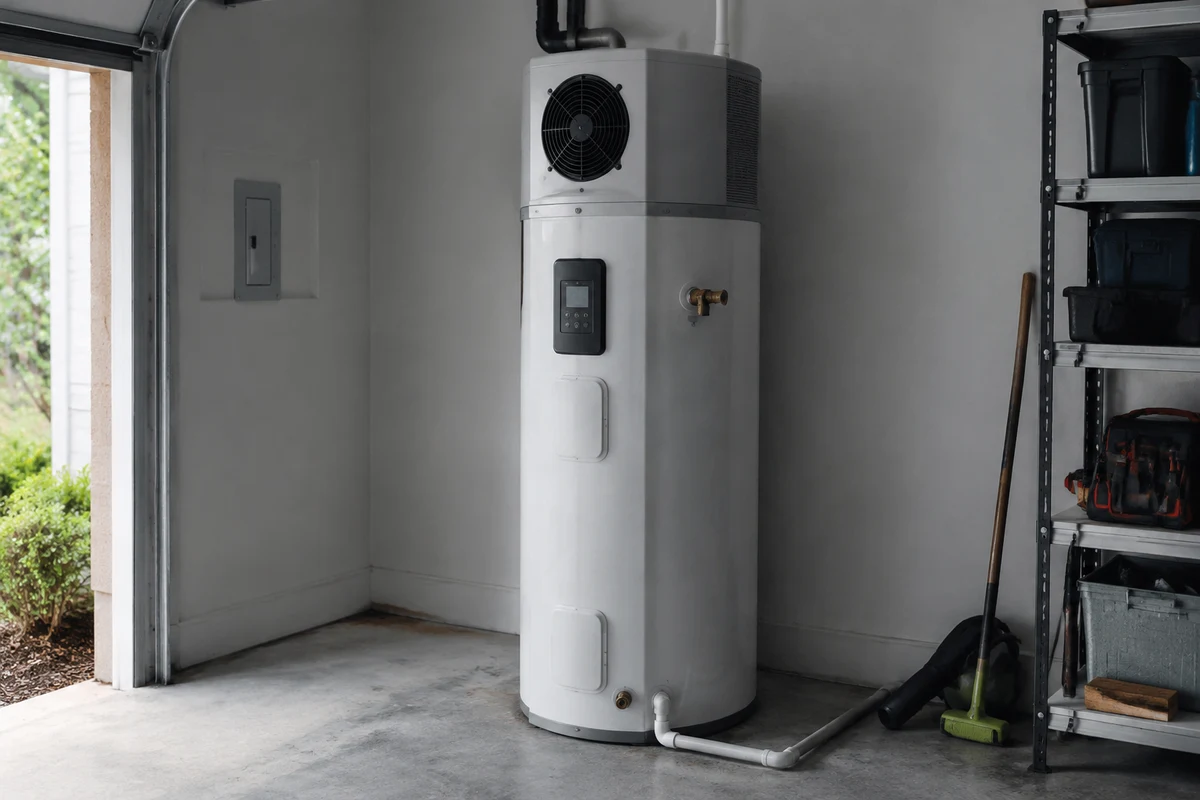
On top of the tank sits a compressor, an evaporator coil, and a fan. The fan pulls room air across the coil, a refrigerant absorbs the heat from that air, the compressor concentrates it, and a second coil dumps that heat into the water. Because it is moving existing heat rather than creating it from scratch, it delivers far more hot water per kilowatt-hour than a resistance element can. That efficiency is measured as UEF, the Uniform Energy Factor. A standard electric tank runs a UEF around 0.90 to 0.95. A good heat-pump model runs 3.5 or higher, meaning it delivers about three and a half units of heat for every unit of electricity it draws.
The word "hybrid" matters. These units keep a pair of conventional resistance elements as backup. In their default hybrid mode the controller uses the heat pump for normal demand and only fires the elements when hot-water draw outruns what the pump can supply. You can force heat-pump-only mode to squeeze out maximum savings, or force electric mode to recover fast before a houseful of guests. That flexibility is the whole point of the design.
The pros, in plain numbers
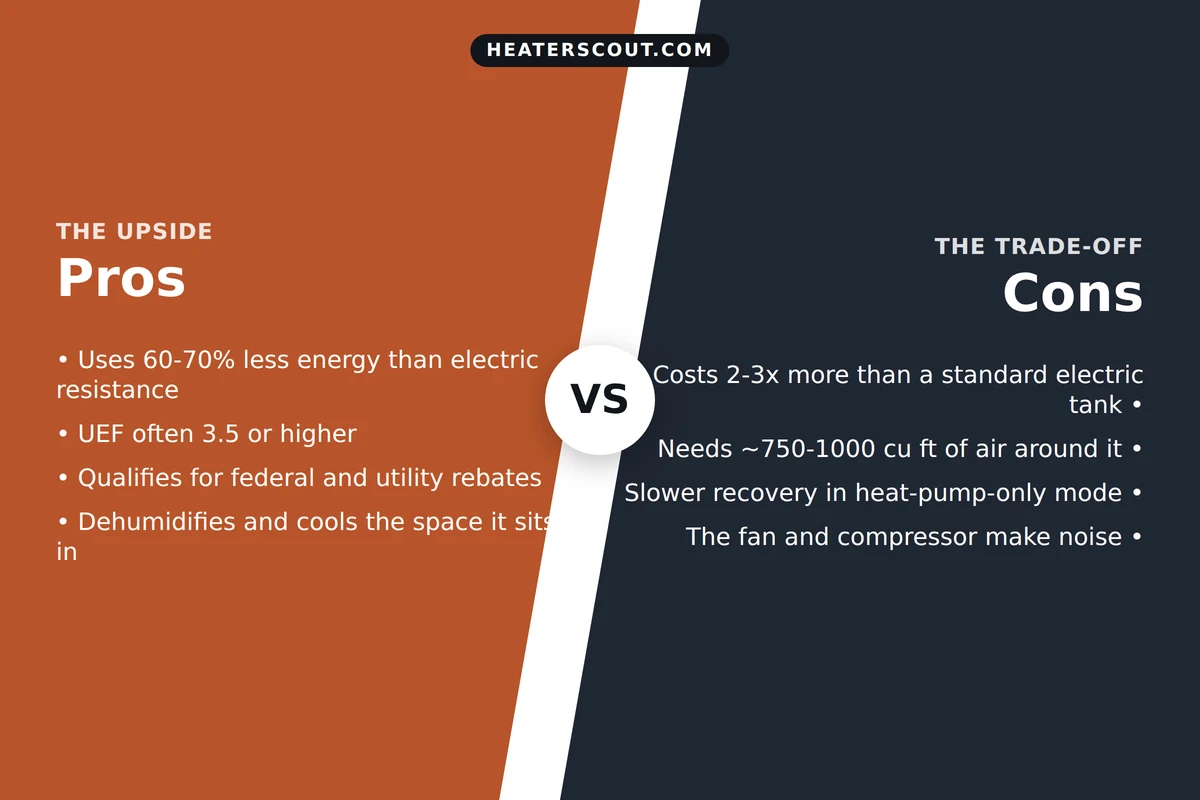
The savings are the headline and they are real. A resistance electric tank is often the second-biggest electricity user in a home after heating and cooling. Swapping it for a heat-pump model typically cuts that portion of the bill by 60 to 70 percent. For a family of four on electric water heating, that can be a few hundred dollars a year. Over a ten-year life the running-cost gap easily covers the higher purchase price and then some.
Then there are the incentives. Heat-pump water heaters qualify for a federal tax credit and, in most regions, a utility or state rebate on top. Between the two, the sticker-price gap against a standard tank shrinks a lot, sometimes by more than half. There is also a side benefit people underrate: the unit dehumidifies and slightly cools the space it sits in. In a muggy basement that is a genuine plus — you get drier air for free while it heats your water.
The cons, told honestly
The first is price. A heat-pump model runs two to three times the cost of a plain electric tank before any rebate. The payback is solid, but you feel the outlay on day one. The second is space and air. The unit pulls its heat from the room, so it needs a decent volume of air — roughly 750 to 1000 cubic feet, or a space around 100 square feet with a normal ceiling. Drop one into a tight closet with no ventilation and it will starve for air, run inefficiently, and lean on the backup elements, erasing the savings. Basements, garages, and utility rooms are ideal; sealed interior closets are not.
The third is recovery speed. In heat-pump-only mode the tank refills with hot water more slowly than a resistance element would. For most households that is invisible, but a home that draws a lot of hot water in quick succession may run into it. The hybrid mode manages this by firing the elements when needed, at the cost of some efficiency during those spikes. The fourth con is noise. The compressor and fan run at roughly the level of a window air conditioner or a dishwasher. In a basement nobody notices. Under the floor of a bedroom, someone might.
The fifth is the cooling side-effect working against you in the wrong season or climate. That free dehumidification is welcome in a warm, damp basement. In a cold basement in winter, the unit is pulling heat out of a space your furnace is trying to keep warm, which nudges the heating bill up a little. In a genuinely cold, unconditioned space, efficiency also drops because there is less ambient heat to harvest — which is exactly why the backup elements exist.
Who should buy one, and who should not
A heat-pump water heater is a strong choice if you currently heat water with electric resistance, have a basement or garage with room to breathe, and plan to stay in the house long enough to bank the savings. In warm and mixed climates with a big basement, it is close to a no-brainer once the rebates are counted. It is a weaker choice if your only install spot is a small sealed closet, if you are on cheap natural gas already, or if you are selling the house next year and will not see the payback.
Maintenance is a little different
Everything a normal tank needs still applies: flush the sediment yearly, check the anode rod every few years, test the T&P valve. A heat-pump model adds one item — the air filter over the evaporator coil, which you rinse every few months so the fan keeps breathing. A clogged filter is the single most common reason one of these underperforms. There is also a condensate drain, since the unit pulls moisture out of the air; keep that line clear so it does not back up. None of it is hard, but skip the filter and you lose efficiency quietly.
The bottom line on the trade
The math almost always favors the heat pump on running cost. What it comes down to is whether your house gives it what it needs: enough air, a spot where the noise and cooling do not bother anyone, and enough years left in your ownership to earn back the price. Get those three right and it is one of the few appliance upgrades that pays you back in cash every month. Get the install spot wrong and you have bought an expensive resistance heater that hums.
Frequently asked
Are hybrid heat-pump water heaters worth it?
For most homes that currently use electric resistance heating, yes. They cut water-heating energy by 60 to 70 percent and qualify for federal and utility rebates, so the higher purchase price usually pays back within a few years. They are worth it only if you have enough air space around the unit and plan to stay in the house long enough to bank the savings.
How much does a heat-pump water heater save?
Typically 60 to 70 percent off the water-heating portion of an electric bill. For a family of four that can be a few hundred dollars a year. Over a ten-year life the running-cost savings comfortably exceed the higher upfront price, especially after rebates.
How much space does a heat-pump water heater need?
About 750 to 1000 cubic feet of air, roughly a 100-square-foot room with a normal ceiling. The unit pulls heat from the surrounding air, so a tight, sealed closet starves it and forces it onto the backup elements. Basements, garages, and open utility rooms are ideal.
Do heat-pump water heaters work in cold climates?
Yes, but with a caveat. In a cold, unconditioned space there is less ambient heat to harvest, so efficiency drops and the backup resistance elements run more often. They perform best in a space that stays above about 40 to 50 degrees, such as a basement. In warm climates they are near-ideal year round.
Are heat-pump water heaters noisy?
They make about as much noise as a window air conditioner or dishwasher, from the compressor and fan. In a basement or garage nobody notices. Directly beneath a bedroom the sound may be noticeable, so location matters when you plan the install.
What maintenance does a heat-pump water heater need?
Everything a normal tank needs, plus two extras: rinse the air filter over the evaporator coil every few months so the fan breathes, and keep the condensate drain line clear. Still flush sediment yearly, check the anode rod every few years, and test the T&P valve. A clogged filter is the most common cause of poor performance.
Why does a heat-pump water heater cool the room?
Because it extracts heat from the surrounding air to warm the water, the air it blows back out is cooler and drier. In a warm, humid basement that free dehumidification is a benefit. In a cold basement in winter it slightly raises your heating bill, since it is removing heat the furnace is trying to add.