Quick answer
A tankless heater burns 24–34% less energy than a storage tank in a typical home (under ~41 gallons of hot water a day, per the U.S. Department of Energy), but it costs far more to install. Tankless wins on lifespan and running cost; a tank wins on upfront price. Which is cheaper for you depends on the install premium and your energy savings — run the numbers below.
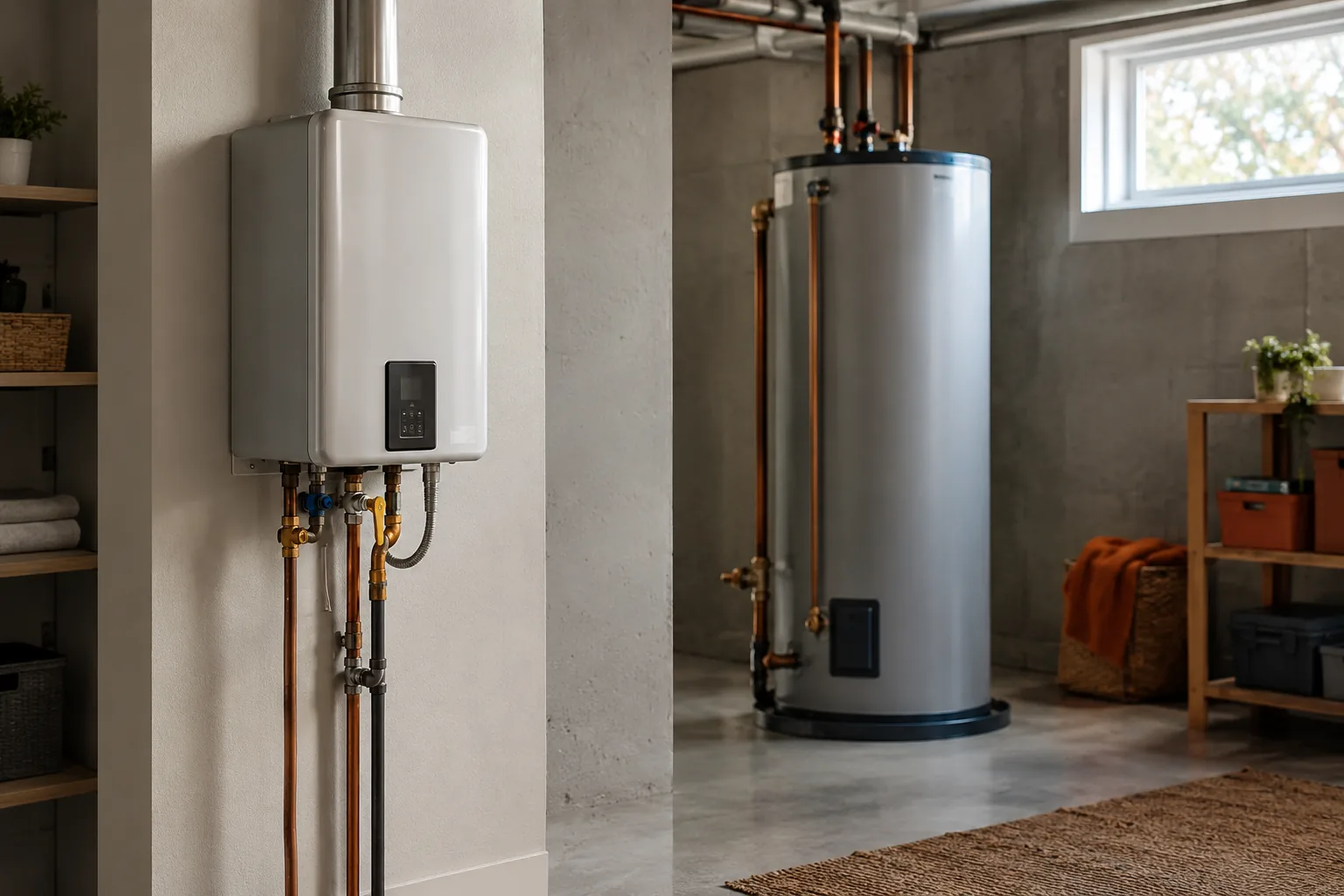
Here is the number that trips people up: the DOE’s 24 to 34 percent efficiency edge is real, but on a typical gas bill that translates to roughly $100 a year saved, not $1,000. Meanwhile the tankless unit can cost two to three times as much to put in. The efficiency headline is true and the payback headline is slow, and both things matter.
What actually differs between them
A storage tank keeps 40 to 50 gallons of water hot every hour of every day, whether anyone showers or not. That standby loss is energy spent doing nothing. A tankless unit heats water only as it flows, so it skips that waste entirely, which is where the DOE’s efficiency figure comes from. In a household that uses less than about 41 gallons of hot water a day, that gap is 24 to 34 percent. Push usage up toward 86 gallons a day and the edge narrows to 8 to 14 percent, because a hard-working tank spends less time idling.
The tradeoff is flow. A tank can dump its whole stored volume at once for a big simultaneous draw; a tankless unit is limited by how fast it can raise incoming water to temperature, measured in gallons per minute. Size it too small and two showers plus a dishwasher will out-run it. That is why sizing a tankless unit to a home’s peak demand, not just its daily total, is the step installers care about most.
Climate quietly bends the same math. A tankless unit is rated at a given flow only for a given temperature rise. In a warm-inlet region where groundwater comes in near 65°F, reaching a 110°F shower is only a 45°F lift, and the unit hits its rated gallons per minute easily. In a cold northern winter with inlet water near 40°F, that same shower is a 70°F lift, and the unit’s effective flow drops sharply. The same model that feels endless in one home can feel starved in another, which is why a spec sheet number alone never settles the sizing question.
The upfront cost gap is the whole argument
Swapping a tank for another tank is a cheap, familiar job. Moving to tankless often is not, because a gas tankless unit fires at a much higher BTU rate and needs infrastructure a tank never did.
A like-for-like tank replacement usually lands between $900 and $1,800. A tankless install typically runs $3,000 to $4,500, and a full conversion — new gas line, new venting, sometimes an electrical upgrade — can reach $7,000 or more. Two line items drive most of that gap. Most existing tanks are fed by a 1/2 inch gas line, but a gas tankless usually needs 3/4 inch or larger, an upsize that runs about $300 to $1,200. And tankless units need their own dedicated venting, another $200 to $800. Those upgrades are one-time, but they land entirely on the tankless side of the ledger.
Lifespan is where tankless earns it back
This is the part the sticker price hides. A storage tank typically lasts 8 to 12 years before the tank itself corrodes through and has to be replaced. A tankless unit, well maintained, runs 15 to 20 years or more. Over a 20-year window you buy roughly two tanks but only one tankless unit. When you fold that replacement into the math, the upfront premium shrinks, because part of what you paid for tankless was simply not having to do the job twice.
The maintenance line nobody mentions at the sale
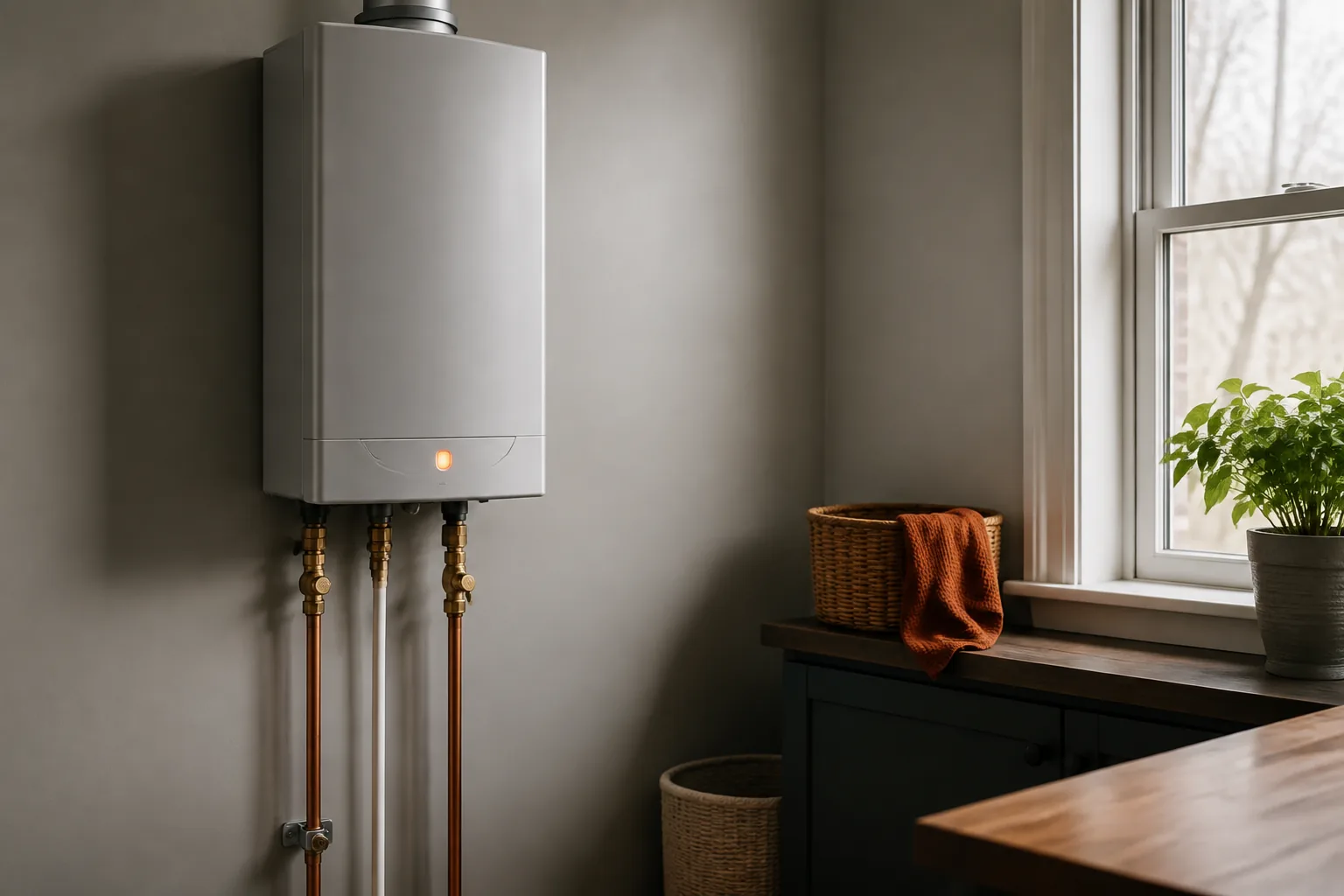
A tank you can largely ignore until it fails. A tankless unit you cannot. Hard water leaves scale on the heat exchanger, and skipped descaling is the single most common reason tankless units die early — a neglected unit in a hard-water home can fail in 8 to 10 years instead of its rated 20. Descaling runs about $150 to $300 a year if a plumber does it, or roughly $100 to $150 for a DIY kit and a bucket of white vinegar once you own the isolation valves. If your water is above about 7 grains per gallon of hardness, budget for it or watch the lifespan advantage evaporate.
Run your own payback
National averages only get you so far, because the two numbers that decide this — your install premium and your actual energy savings — are local. Plug in a real tank quote, a real tankless quote, and an honest savings estimate (ENERGY STAR pegs a gas family of four around $95 to $108 a year; electric closer to $44). The calculator returns simple payback and a 20-year net that already assumes one tankless outlives nearly two tanks.
Tankless vs tank payback calculator
Enter installed prices and your yearly energy savings. The lifetime figure runs a 20-year horizon and counts the tank being replaced about every 11 years.
Assumes tankless lasts ~20 yr, tank ~11 yr, over a 20-year horizon. Energy savings held flat (real savings often grow with rising rates). Descaling and repair costs not included — subtract $150 to $300 a year if your water is hard.
So which should you buy
Lean tankless if you plan to stay in the home well past a decade, your hot-water use is light to moderate (so the DOE efficiency edge is near its 34 percent peak), and either your gas line and venting are already adequate or you are renovating anyway. Lean tank if you need the cheapest working replacement today, you have a large simultaneous demand a single tankless can’t feed, or you are selling soon and won’t be around to collect the slow payback. The calculator above tends to tip toward tankless the longer your horizon and the smaller your install premium, and toward the tank when a conversion balloons the upfront cost or the energy savings come in thin.
One caution about that decision: get two or three real quotes before you trust any average. The single biggest swing in this whole comparison is not the efficiency figure or the lifespan, it is whether your particular home needs a conversion. A house that already has a 3/4 inch gas line and a spot to vent turns tankless into a near drop-in job near the low end of the range. A house that needs a longer gas run, fresh venting through a finished ceiling, and a panel upgrade lands at the top end, and no calculator can guess which one you are until an installer looks at the mechanical room. Price the actual job, not the category.
And do not overweight the monthly bill. The efficiency savings are the smallest lever in this decision by a wide margin. What actually moves the 20-year number is avoiding a second tank replacement and, on the other side, whether you keep up with descaling. Two homeowners who buy identical tankless units can end up thousands of dollars apart over two decades purely on maintenance discipline. The machine sets the ceiling; how you treat it decides where you land under that ceiling.
Frequently asked
Is a tankless water heater really more efficient than a tank?
Yes. The U.S. Department of Energy puts tankless at 24 to 34 percent more energy efficient than a storage tank in homes using under about 41 gallons of hot water a day, because there is no standby loss from keeping a tank hot around the clock. The edge shrinks to 8 to 14 percent in heavy-use homes near 86 gallons a day, where the tank idles less.
How much does a tankless water heater cost to install vs a tank?
A typical tank runs about $900 to $1,800 installed. A tankless unit usually costs $3,000 to $4,500, and a full conversion with a new gas line, venting, or electrical upgrade can reach $7,000 or more. The gas-line upsize (about $300 to $1,200) and dedicated venting ($200 to $800) are what push a tankless install well above a like-for-like tank swap.
How long does each type last?
A storage tank typically lasts 8 to 12 years before it corrodes through. A well-maintained tankless unit lasts 15 to 20 years or more. Over a 20-year span you generally buy two tanks but only one tankless unit, which is a large part of how the higher upfront tankless price pays itself back.
What is the payback period on a tankless water heater?
Divide the extra you pay to install tankless by your yearly energy savings. With a $2,000 install premium and roughly $100 a year saved, simple payback is about 20 years on energy alone. Fold in avoiding a second tank replacement over that span and the effective payback is much shorter. Rising energy rates and light usage both speed it up.
Do tankless water heaters need more maintenance?
Yes. Tankless units need descaling every year or two to clear mineral buildup on the heat exchanger, roughly $150 to $300 with a plumber or $100 to $150 for a DIY kit. Skipping it in hard water (above about 7 grains per gallon) is the most common cause of early failure and can cut the unit's life to 8 to 10 years. A tank needs far less routine care.
Can I put a tankless unit where my tank used to be?
Sometimes, but rarely as a simple swap. A gas tankless fires at a much higher BTU rate, so it usually needs a larger gas line (3/4 inch or more versus the 1/2 inch most tanks use) and its own dedicated venting. Electric whole-house tankless often needs a service-panel upgrade. Those requirements are why a conversion costs more than dropping in another tank.