Quick answer
Size by peak-hour demand, not by how many people live there. Match a storage tank’s First Hour Rating (FHR) to the most hot water you’ll draw in one busy hour: roughly 40 gal for 1–2 people, 50 for 3–4, and 66–80 for 5 or more. For tankless, add up simultaneous GPM and size for your winter temperature rise.
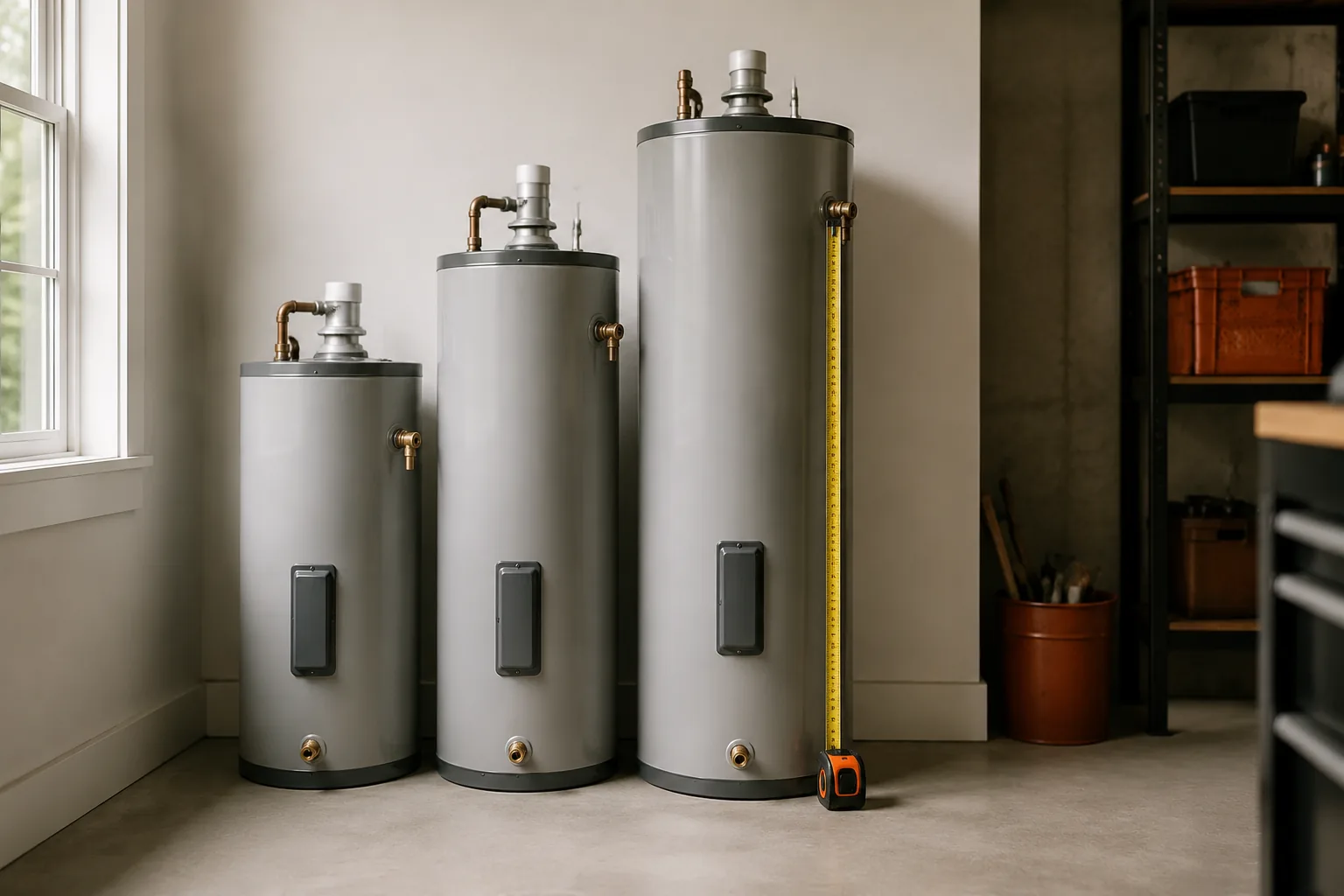
A 50-gallon tank does not mean 50 gallons of hot water on tap. Once you draw water, cold refills the tank and dilutes what’s left, so a 50-gallon heater usually gives you about 35 usable gallons before the shower turns tepid. That gap between tank size and delivered hot water is exactly why sizing by peak-hour demand beats sizing by bedroom count.
The number that actually matters: First Hour Rating
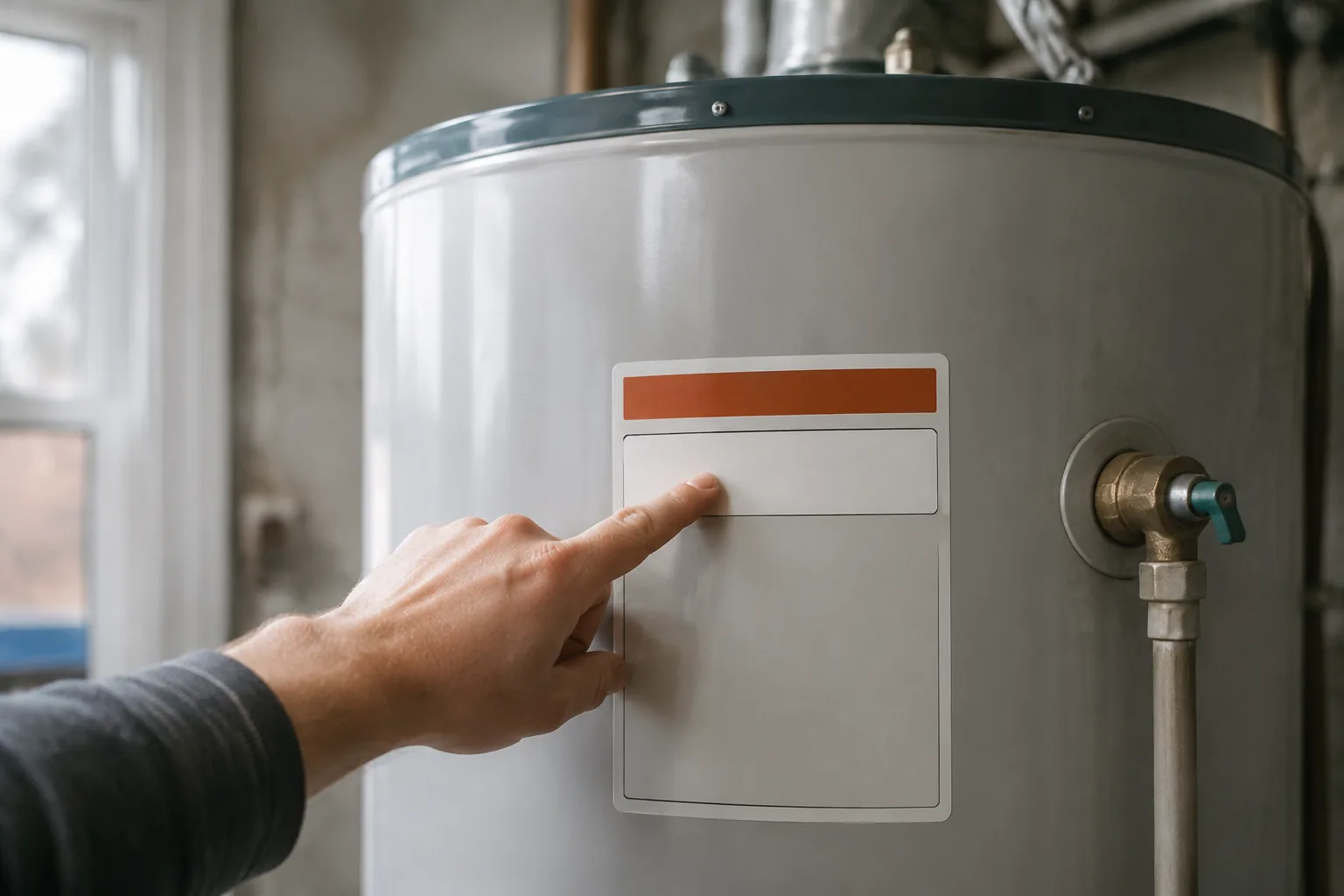
Every storage water heater sold in the US carries a yellow EnergyGuide label, and near the top sits a figure called the First Hour Rating. FHR is the gallons of hot water the unit can supply in one hour starting with a full, hot tank. It combines two things: the usable stored volume (about 70 percent of the tank, since the last third gets too diluted to use) plus the recovery rate, meaning how fast the burner or elements reheat incoming cold water. The working formula is:
FHR ≈ (tank gallons × 0.7) + recovery rate per hour. A 50-gallon gas unit that recovers 40 gal/hr delivers about 35 + 40 = 75 gal in the first hour. A 50-gallon electric that recovers 20 gal/hr delivers only about 55.
That’s the whole reason two tanks with the same gallon number can serve very different households. A gas 40 with a fast burner can out-deliver an electric 50 in the first hour. So when you shop, compare FHR figures, not just the tank size printed on the box.
Step one: find your peak-hour demand
The Department of Energy’s sizing method starts with your busiest hour, not your daily total. Pick the hour when your home uses the most hot water. In most houses that’s the morning rush: back-to-back showers, maybe a load of laundry, the kitchen sink running. Add up the hot water each fixture pulls in that hour. Rough per-use figures:
| Use in the peak hour | Hot water |
|---|---|
| Shower | ~10–20 gal each |
| Bath | ~20 gal |
| Shaving / hand wash | ~2 gal |
| Kitchen / dishes by hand | ~4 gal |
| Dishwasher | ~6 gal |
| Clothes washer (hot) | ~7 gal |
Total those up and you have your peak-hour demand. The goal is simple: buy a tank whose FHR lands within about 10 gallons of that number, above or below. Undersize it and the hot water runs out mid-shower. Oversize it and you pay to keep water hot that nobody uses.
Household size, as a starting point
Peak-hour demand is the precise method, but most people want a ballpark before they run numbers. Here’s the widely used rule of thumb, which assumes a typical planning figure near 17 gallons of hot water per person per day and normal fixture habits:
Electric tank
- 1–2 people: 30–40 gal
- 2–3 people: 40–50 gal
- 3–4 people: 50–60 gal
- 5+ people: 66–80 gal
Gas tank
- 1–2 people: 30–40 gal
- 2–3 people: 40 gal
- 3–4 people: 40–50 gal
- 5+ people: 50–80 gal
Notice the gas column runs a size smaller at the same household count. That’s recovery again: gas burners reheat water two to three times faster than electric resistance elements, so a gas tank refills fast enough to serve more people from fewer gallons. A family of four often does fine on a 40-gallon gas unit but wants a 50 in electric.
Try it: size your heater
Plug in your numbers. People sets the baseline, bathrooms and peak simultaneous uses drive the peak-hour demand and the required FHR. The tankless line updates too.
Water heater sizing calculator
Enter your household. Recommended tank size, required First Hour Rating, and a tankless GPM figure update as you type.
“Peak simultaneous uses” is the count of hot-water draws happening at the same moment during your busiest hour: two showers running at once is 2, a shower plus the dishwasher is 2, one shower alone is 1. That single number does more to determine the right size than total occupancy, because it’s the collision of demand that empties a tank or overruns a tankless unit.
Tankless is a different math: GPM and temperature rise
A tankless heater has no stored gallons to run out of, so tank size is irrelevant. Instead you size two things together: flow rate in gallons per minute (GPM) and temperature rise. Flow is how much hot water you draw at once; add up the fixtures that might run simultaneously. Typical figures: a shower pulls about 2 to 2.5 GPM, a bathroom or kitchen faucet about 1 GPM, a hot-fill washer 2 to 3 GPM. Two showers at once is roughly 4 to 5 GPM.
Temperature rise is the difference between your incoming water temperature and your target, usually 110 to 120°F. If groundwater comes in at 50°F and you want 120°F, that’s a 70°F rise. Here’s the catch that trips people up: a tankless unit’s rated GPM only holds at a small rise. Demand a bigger rise and the same unit delivers far less flow, because it has a fixed heating power.
A unit rated 8 GPM at a 35°F rise might manage only 4 to 5 GPM at a 70°F rise. In cold-climate winters, size for your coldest incoming water, not the summer number, or the shower will drop to a trickle in January.
So the tankless question is never just “how many GPM.” It’s “how many GPM at my winter temperature rise.” A southern home with 65°F inlet water and a mild rise gets full flow from a mid-size unit; a northern home with 40°F inlet water needs a larger unit or accepts fewer simultaneous fixtures.
Recovery rate: the spec that hides in plain sight
Two 50-gallon tanks can behave nothing alike because of recovery rate, the gallons per hour the heater can reheat. Gas units typically recover 30 to 40+ gal/hr; standard electric resistance runs 13 to 21 gal/hr depending on element wattage. High recovery is what lets a smaller gas tank keep up with a busy household: it refills the usable hot volume before the next shower starts. If your peak-hour demand is spread out rather than all at once, a smaller tank with strong recovery can beat a bigger tank with weak recovery. This is why the FHR figure, which folds recovery in, is the honest comparison.
Common sizing mistakes
The instinct to “buy big to be safe” costs money every day. An oversized tank holds more water at temperature around the clock, and standby heat loss runs on whether or not you use it. Buy for your actual peak-hour demand plus a modest margin, not for a hypothetical houseful of guests. The opposite error is copying whatever was there before: if the old tank always ran cold, replacing it with the same size repeats the problem. And ignoring recovery, or fuel type, sends people to an electric 50 when a gas 40 would have served better for less standby loss. Read the FHR, know your peak hour, and the right size falls out of the numbers.
Frequently asked
What size water heater do I need for a family of 4?
A family of four usually wants a 50-gallon electric tank or a 40-gallon gas tank, because gas recovers faster. The precise answer depends on your peak-hour demand: add up the hot water used in your busiest hour (back-to-back showers plus laundry, for example) and match the unit’s First Hour Rating to that total within about 10 gallons.
What is First Hour Rating and why does it matter?
First Hour Rating (FHR) is the gallons of hot water a heater can deliver in one hour starting with a full hot tank. It combines usable stored volume with recovery rate, so it reflects real delivery rather than just tank size. Two 50-gallon tanks can have very different FHRs. Compare FHR figures on the EnergyGuide label when you shop.
Is a 40 or 50 gallon water heater better?
It depends on fuel and demand, not just gallons. A 40-gallon gas unit with fast recovery often delivers the same first-hour hot water as a 50-gallon electric. For a busy household on electric, the 50 gives more cushion. Size by peak-hour demand and First Hour Rating rather than assuming bigger is better, since an oversized tank wastes standby energy.
What size tankless water heater do I need?
Size a tankless unit by flow rate and temperature rise together. Add up the GPM of fixtures you run at once (about 2 GPM per shower, 1 GPM per faucet), then check the unit’s rated flow at your winter temperature rise. A unit rated 8 GPM at a small rise may deliver only 4 to 5 GPM at a 70°F rise, so size for your coldest incoming water.
How do I calculate peak hour demand?
Find the hour your home uses the most hot water, usually the morning, and add up each use: roughly 10 to 20 gallons per shower, 20 for a bath, 6 for a dishwasher, 7 for a hot laundry load, 2 for hand washing. That total is your peak-hour demand. Buy a heater whose First Hour Rating lands within about 10 gallons of it.
Does a bigger water heater use more energy?
Yes, a larger tank loses more standby heat because it keeps a bigger volume hot around the clock, whether you use it or not. That’s why oversizing is a real cost, not free insurance. Match the First Hour Rating to your peak-hour demand plus a small margin. Tankless units avoid standby loss entirely since they heat only on demand.