Quick answer
A pilot that lights but dies the moment you release the knob is almost always a thermocouple problem. That sensor tip has to sit in the pilot flame and make about 25 to 30 millivolts to hold the gas valve’s safety solenoid open. If it’s dirty, bent out of the flame, or worn out, the voltage drops and the valve slams shut. First fix: relight and hold the knob a full 30 to 60 seconds so the tip actually heats up.
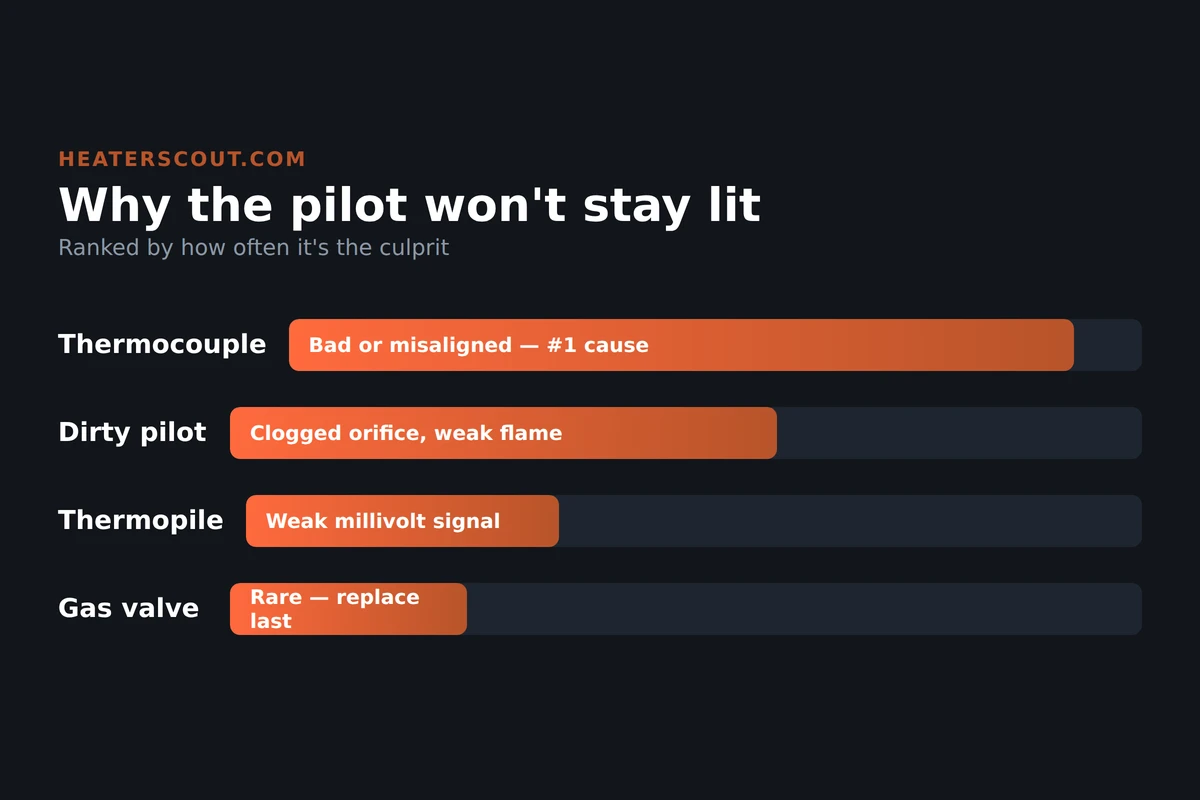
Here is the mechanism most people miss: your pilot doesn’t stay lit because of electricity it generates itself. No wall power, no battery. The flame heats a metal probe, the probe makes a tiny voltage, and that voltage is the only thing holding the gas valve open. Understand that one loop and every symptom below makes sense.
Before anything else: if you smell gas, don’t touch the valve or any switch. Leave the house and call your gas utility from outside. When you do relight, wait a full 5 minutes between attempts so unburned gas clears the chamber.
How the thermocouple holds the valve open
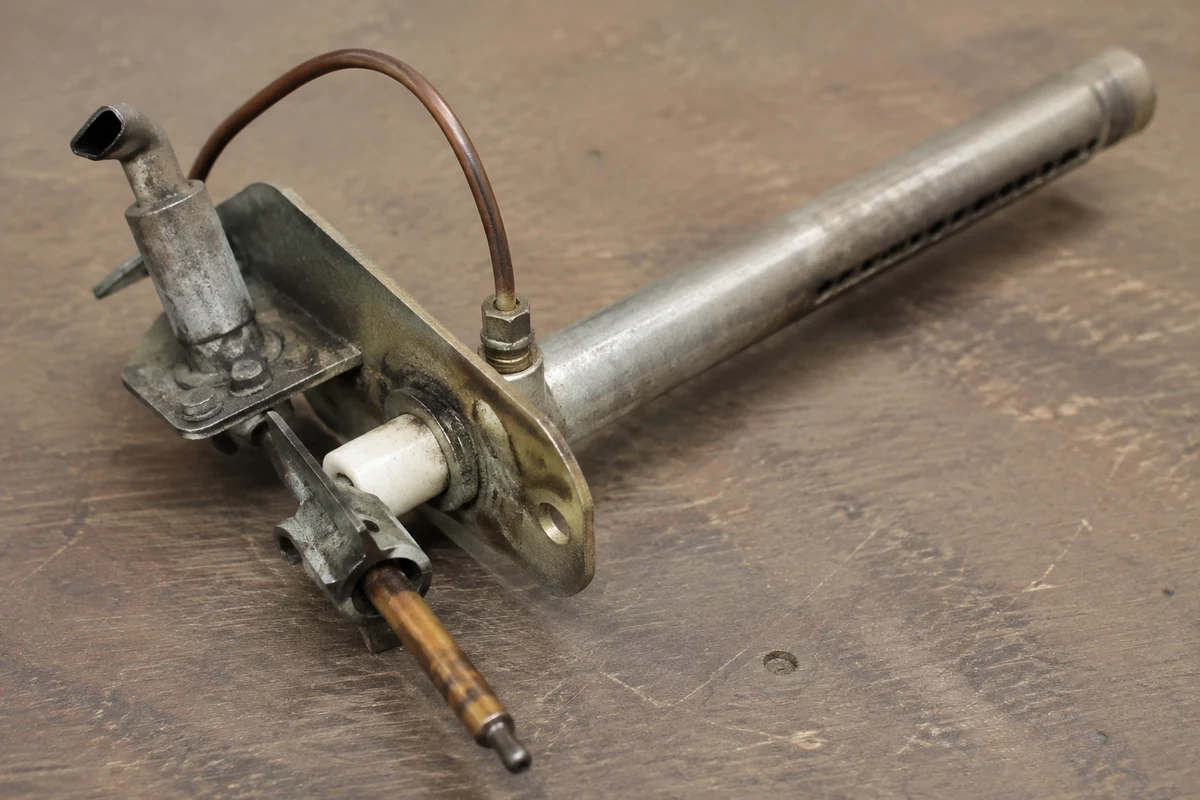
When you light the pilot and press the knob, you are manually holding the safety valve open with your thumb. The pilot flame wraps around the thermocouple tip and heats it. A thermocouple is two dissimilar metals joined at that tip; heat them and they generate a small DC voltage, the Seebeck effect. That voltage, roughly 25 to 30 millivolts when the tip is fully hot, travels down the copper lead to an electromagnet inside the gas valve. The magnet pulls a small plunger and holds the pilot safety valve open. Let the knob go and the electromagnet is now doing the job your thumb was doing. If the voltage is there, the valve stays open and the pilot keeps burning. If it isn’t, the spring wins, the valve closes, and the pilot goes dark.
The number one reason: hold time, then the thermocouple itself
Plenty of “dead” water heaters are just people letting go of the knob too soon. The tip needs time to reach operating temperature. Release at 10 seconds and the electromagnet has nowhere near enough voltage to grab, so the valve shuts the instant your thumb lifts. The fix costs nothing: relight and hold the knob down a solid 30 to 60 seconds before you release. If it still drops out after a proper hold, the thermocouple is the next suspect, and it fails in three ways worth knowing.
1. It’s dirty
Soot and oxide build up on the tip over years of burning. That film insulates the junction so it can’t reach full temperature, and the voltage sags. Gently cleaning the tip with fine steel wool or emery cloth sometimes brings a marginal one back, at least long enough to confirm that’s the issue.
2. It’s bent out of the flame
The tip has to sit inside the pilot flame, not beside it. If someone nudged it during a filter cleaning, or it sagged, the flame licks past instead of engulfing it. It reads low not because it’s worn but because it’s in the wrong spot. The flame itself should be a steady blue cone wrapping the top half-inch of the probe.
3. It’s simply worn out
Thermocouples fatigue. The junction degrades, and a unit that once made 28 millivolts now makes 12. Below about 15 millivolts it can no longer hold the electromagnet, and no cleaning brings it back. A replacement thermocouple is a cheap part, often under twenty dollars, and it’s the most common cure for this exact complaint.
Try the hold yourself
This is the technique, not a toy. Press and hold the button below. A real relight works the same way: keep the knob down while the flame heats the tip. Let go before the thermocouple is hot and the valve closes on you.
Hold-the-pilot timer
Press and hold. Release before 30 seconds and watch what happens to the valve.
A weak pilot flame: the clogged orifice
Sometimes the thermocouple is fine and the flame is the problem. The pilot gas passes through a tiny orifice, and carbon or lint can partly clog it. A restricted orifice gives a small, weak, or yellow-tipped flame that simply can’t deliver enough heat to the tip, so even a good thermocouple reads low. Blowing out the orifice with compressed air or a soft brush often restores a strong blue flame. If the flame looks lazy, orange, or split rather than a firm blue cone, treat the flame before you condemn the thermocouple.
Newer FVIR heaters: the sensor and the intake screen
Water heaters built since 2003 are FVIR, flammable vapor ignition resistant. They pull combustion air through a screen at the base and have a one-shot thermal sensor near the thermocouple. Two things on these units mimic a bad thermocouple. First, the flammable vapor sensor: if it detects fumes from gasoline, solvents, or fresh paint stored nearby, it shuts the burner down as a safety trip and the pilot won’t stay lit. Move those materials out, ventilate, and reset. Second, and more common, the air intake screen clogs with dust, lint, and pet hair. Once it’s roughly 40 to 50 percent blocked the pilot is starved of air, the flame goes lazy, and on many models a thermal switch trips the whole thing off. Vacuum the screen at the base and brush out the flame arrestor. That single cleaning fixes a lot of repeat outages that look like a dying thermocouple.
Drafts, downdrafts, and thermopile systems
A strong draft can blow the pilot around so it never steadily heats the tip. Downdrafts through the flue on a windy day, or a nearby furnace return pulling air across the burner, can snuff a marginal pilot. If the pilot only dies in certain weather or when another appliance runs, suspect air movement rather than the part. Separately, some standing-pilot heaters use a thermopile instead of a single thermocouple. A thermopile is a stack of junctions that makes far more voltage, 350 to 900 millivolts, enough to run the gas valve and controls with no outside power. It fails the same way, dirty, out of the flame, or worn, but it reads in the hundreds of millivolts, not the twenties. Anything under 350 on a thermopile means replace it.
The order that actually saves time
Relight and hold 30 to 60 seconds first, because it’s free and it’s the most common miss. If it still drops out, look at the flame: strong blue cone or weak and yellow? Weak means clean the orifice and, on an FVIR unit, vacuum the intake screen. Strong flame that still won’t hold means the thermocouple is dirty, out of position, or worn, and a replacement is the usual answer. Check for a flammable-vapor trip and drafts along the way. Get through that list and the pilot either holds or you’ve found the part that needs replacing.
Frequently asked
Why does my water heater pilot light go out when I release the knob?
Because the thermocouple has not reached full temperature yet. That sensor makes about 25 to 30 millivolts when hot, and that voltage is what holds the gas valve solenoid open after you let go. Release too soon and the voltage is too low to hold, so the valve closes. Relight and keep the knob pressed a full 30 to 60 seconds before releasing.
How long should I hold the pilot button down?
Hold it a full 30 to 60 seconds. That is how long the pilot flame needs to heat the thermocouple tip enough to generate the roughly 25 to 30 millivolts that keep the gas valve open. Letting go at 10 or 15 seconds is the single most common reason a pilot will not stay lit.
How do I know if the thermocouple is bad?
If the pilot lights and burns steady while you hold the knob but dies within seconds of release, and you have held a full 30 to 60 seconds, the thermocouple is the prime suspect. A healthy one reads about 25 to 30 millivolts when hot; under roughly 15 millivolts it cannot hold the valve. Cleaning the tip or repositioning it in the flame may help, but a worn one needs replacing.
Can a dirty pilot orifice cause this?
Yes. The pilot gas passes through a tiny orifice, and carbon or lint can partly clog it. That gives a weak, small, or yellow flame that cannot heat the thermocouple enough, so even a good sensor reads low and the valve drops out. Clearing the orifice with compressed air or a soft brush usually restores a strong blue flame.
Why does a new FVIR water heater pilot keep going out?
Two FVIR features mimic a bad thermocouple. The flammable vapor sensor trips if it detects fumes from gasoline, solvents, or paint stored nearby, shutting the burner off until you clear the air and reset. More often the air intake screen at the base clogs with dust and lint; once it is 40 to 50 percent blocked the pilot is starved of air and trips off. Vacuum the screen and brush the flame arrestor.
Is it safe to relight the pilot myself?
Relighting a standing pilot is a normal homeowner task, with one rule: if you smell gas, do not touch anything, leave the house, and call your gas utility from outside. Otherwise, follow the label on the tank, and wait a full 5 minutes between relight attempts so any unburned gas clears the chamber before you spark it again.