Someone's brand-new heat-pump water heater started flashing a leak alarm three weeks after install, and the homeowner was sure the tank had failed. It had not. The tank was fine. The little clear tube coming off the side had sagged into a low spot behind the unit, filled with water, and stopped draining, so condensate backed up into the pan and tripped the float. That is the whole story of HPWH condensate. This heater cools and dries the air to heat your water, so it drips like an air conditioner, and if that drip has nowhere to go the pan fills and the unit protects itself by shutting down.
Condensate
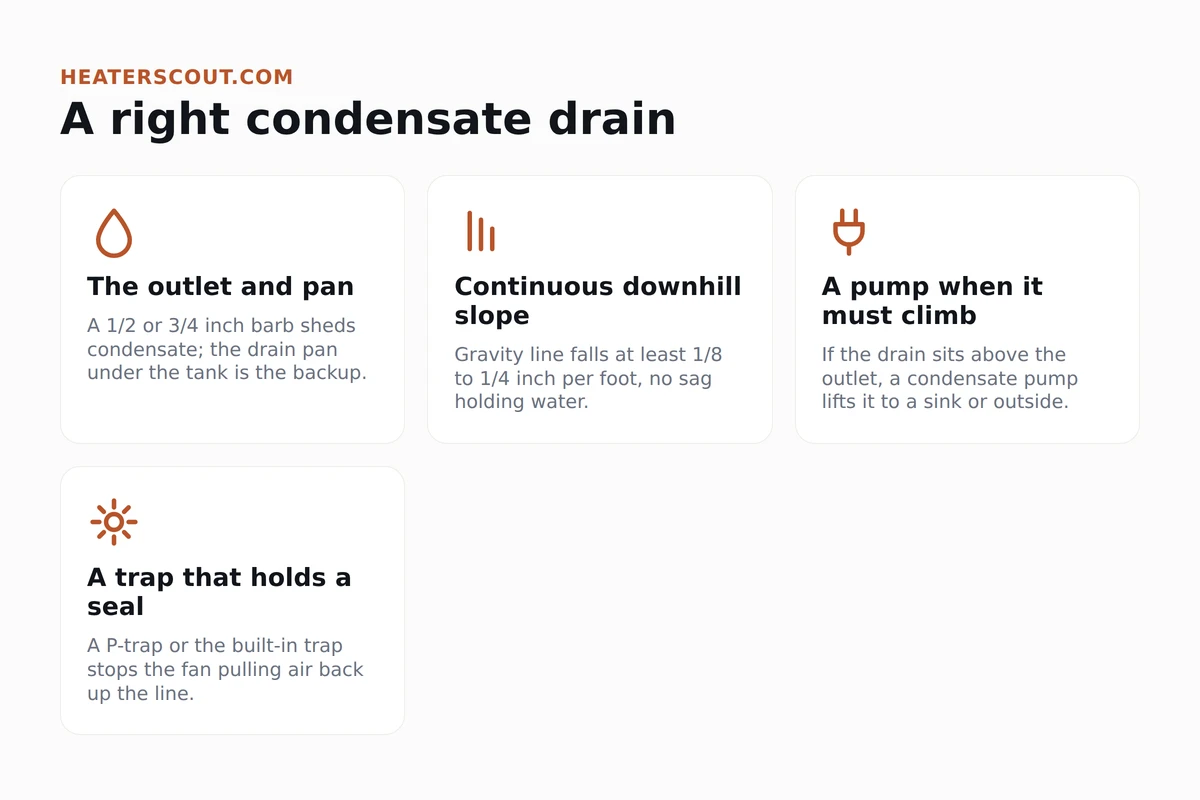
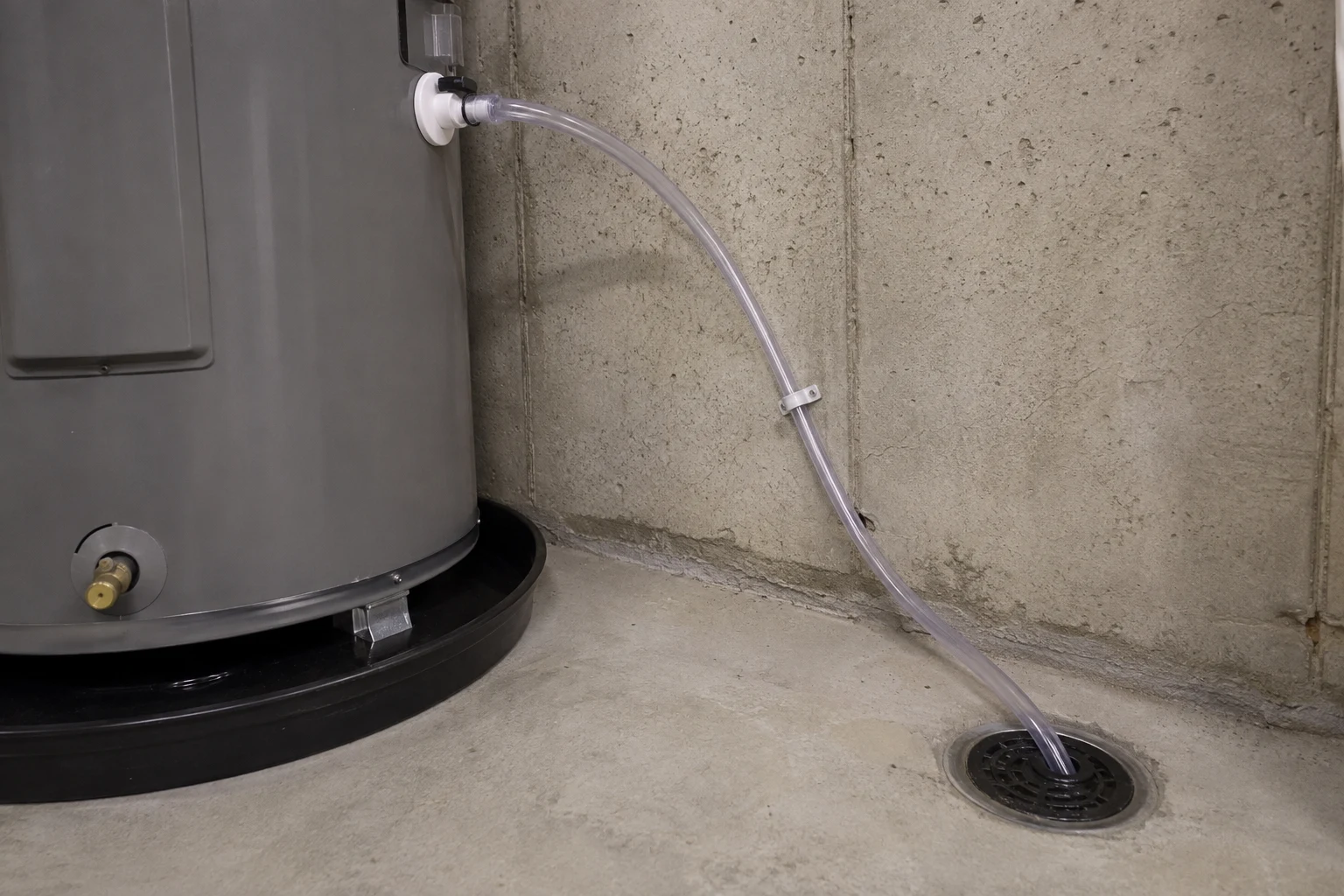
The water a heat-pump water heater pulls out of the air as it cools and dehumidifies the room, exactly the way a central air conditioner does. The unit runs a refrigeration cycle and its evaporator coil runs cold, so room-air moisture condenses on it and drips off through a condensate outlet, usually a half or three quarter inch barbed fitting or a hose stub on the side. The tank sits in a drain pan as backup. Volume tracks humidity: almost nothing in dry air, a pint to a couple of gallons a day in a humid basement in summer. It is water from the air, not a tank leak, and it is roughly neutral, unlike the acidic condensate a gas condensing unit makes, so no neutralizer is needed.
Three ways to carry the water away
The right drain depends entirely on one thing: is there a drain lower than the condensate outlet, or not. Answer that and the method picks itself. And because a HPWH's condensate is roughly neutral, not acidic like a gas condensing unit's, none of these paths need an acid neutralizer; you run it straight to a drain the way you would an air conditioner's line.
| Drain method | When to use it |
|---|---|
| Gravity drain to a floor drain or standpipe | The drain is lower than the outlet; run a continuous downhill line to it |
| Condensate pump | The drain is higher than the outlet; the pump lifts the water up to a sink or outside |
| Drip pan plus a pan drain | A backup or last resort; the outlet drips into the pan and the pan drain carries it off |
Setting it up so it stays dry
Most condensate problems are install problems that showed up later. A line that was flat or sagging from day one runs fine for a few weeks while it is clean, then clogs once algae has somewhere to grow. Get these right at the start.
Reading a full pan or an alarm
When a heat-pump water heater alarms, the very first thing to check is the pan, not the tank. Most models put a leak or float sensor in the pan, and when condensate backs up and fills it, that sensor trips and the unit can shut the compressor or the whole heater down. A wet pan almost always means the drain path failed rather than the tank leaking. Walk this list to find where the water stopped moving.
- A sagging line holding a slug of water in a low spot behind the unit.
- An algae or biofilm clog, a soft green or black sludge narrowing the pipe.
- A hose that popped off or was never seated on the condensate outlet.
- No slope at all, so the water simply sits in a flat run and never drains.
- A frozen outdoor termination in a cold snap, backing water up the line.
Matching your install to a method
Where your drain sits decides everything. These three common layouts cover most basements and utility closets.
Run a gravity line
A floor drain or laundry standpipe lower than the outlet is the simplest path. Slope a line continuously downhill into it, keep the trap, and you are done, no pump and no power needed.
Add a condensate pump
When the only drain sits higher than the condensate outlet, gravity cannot help. A small pump collects the water in a reservoir with a float and lifts it up to a sink or outside.
Pump to a laundry sink
No floor drain at all in a damp basement means the outlet has to climb. Route a condensate pump's discharge to the nearest laundry sink so the summer's couple of gallons a day has somewhere to go.
Frequently asked
Why does a heat-pump water heater produce condensate?
Because it works like an air conditioner. To heat your water it runs a refrigeration cycle in reverse and pulls heat out of the surrounding air across an evaporator coil. That coil runs cold, so moisture in the room air condenses on it and drips off, exactly the way a cold glass sweats on a humid day. The drier the air, the less you get. In a dry winter basement the outlet may barely drip. In a humid basement in July the same unit can put out a pint to a couple of gallons a day. This is normal and expected. The condensate is not a leak from the tank, it is water the unit pulled out of the air, so a HPWH doubles as a modest dehumidifier for the room it sits in.
How do you drain a heat-pump water heater condensate line?
Three ways, and the right one depends on where your drain sits. If there is a floor drain or a laundry standpipe lower than the condensate outlet, run a gravity line to it with a continuous downhill slope of at least an eighth to a quarter inch per foot and no dips. If the only drain is higher than the outlet, a small condensate pump collects the water and lifts it to a sink or outside. The third path uses the drain pan the unit sits in: the outlet drips into the pan and the pan drain carries it away. Whichever you use, keep a trap in the line, because the unit's fan can otherwise pull air back through the drain and let it gurgle or blow dry.
Why is my heat-pump water heater's drain pan full of water?
The condensate is not getting out, so it backs up into the pan the tank sits in. The usual reason is a blocked or badly-run condensate line: a sag in the tubing holding a slug of water, an algae or biofilm clog choking the pipe, no downhill slope so the water just sits, a hose that popped off the outlet, or a frozen outdoor termination in winter. A full pan is the backup doing its job, not the fix. Trace the line, find where water stops moving, clear it, and make sure the whole run falls downhill. If the pan itself has a drain, confirm that is open too, since a plugged pan drain fills the pan even when the primary line is fine.
Why did my heat-pump water heater alarm or shut down?
Many models have a leak or float sensor in the drain pan. When condensate backs up and the pan fills, that sensor trips, the unit posts a leak or condensate alarm, and it can shut the compressor or the whole heater down to keep water off the floor and out of the electronics. So an alarm usually means the drain path failed, not the tank. Check the pan first. If it is wet or full, the problem is the condensate line, not a tank leak. Clear the blockage, dry the pan, and the sensor resets. If the pan is dry and it still alarms, then look at the actual tank fittings and the T&P valve for a real leak.
How do I clear a clogged heat-pump water heater condensate line?
Start by disconnecting the tubing at the outlet and looking for standing water or slime. Algae and biofilm are the common clog, a soft green or black sludge that narrows the pipe until it stops. Flush the line with a mix of white vinegar and warm water, or run it through until it drains clear; a small hand pump or a wet vacuum on the far end pulls a stubborn plug loose. Then fix why it clogged: give the line continuous downhill slope so nothing pools, support it so it cannot sag, and flush it once or twice a year during the humid season. Keep the pan drain clear as well. You do not need a neutralizer, which matters for the next question.
Does a heat-pump water heater's condensate need a neutralizer?
No. This is where people confuse it with a gas condensing furnace or a condensing tankless water heater. Those burn fuel and their condensate is acidic, roughly a pH of 3 to 5, acidic enough to eat cast iron and concrete over time, so code often makes you run it through a neutralizer before it hits the drain. A heat-pump water heater does not burn anything. Its condensate is just water pulled out of the air, close to neutral, so no neutralizer is required. You can run it straight to a floor drain, a standpipe, or a condensate pump the same way you would an air conditioner's drain. Do not add an acid neutralizer meant for a gas unit, it is unnecessary and only another thing to clog.
Why does the condensate line need a trap or slope?
Both solve different problems. The slope, at least an eighth to a quarter inch per foot of continuous fall, is what actually moves the water. Without it the line becomes a flat pool that grows algae and eventually stops draining. A sag does the same thing on a smaller scale, trapping a slug of water that blocks flow. The trap, whether a P-trap you add or one built into the unit, holds a small water seal that stops the fan from pulling room air back up the drain. A trapped fan can suck the line dry or push air through it, which makes it gurgle and lets condensate drip where it should not. Get the slope right so it drains and the trap right so it seals, and the line runs quietly for years.
Frequently asked
Why does a heat-pump water heater produce condensate?
Because it works like an air conditioner. To heat your water it runs a refrigeration cycle in reverse and pulls heat out of the surrounding air across an evaporator coil. That coil runs cold, so moisture in the room air condenses on it and drips off, exactly the way a cold glass sweats on a humid day. The drier the air, the less you get. In a dry winter basement the outlet may barely drip. In a humid basement in July the same unit can put out a pint to a couple of gallons a day. This is normal and expected. The condensate is not a leak from the tank, it is water the unit pulled out of the air, so a HPWH doubles as a modest dehumidifier for the room it sits in.
How do you drain a heat-pump water heater condensate line?
Three ways, and the right one depends on where your drain sits. If there is a floor drain or a laundry standpipe lower than the condensate outlet, run a gravity line to it with a continuous downhill slope of at least an eighth to a quarter inch per foot and no dips. If the only drain is higher than the outlet, a small condensate pump collects the water and lifts it to a sink or outside. The third path uses the drain pan the unit sits in: the outlet drips into the pan and the pan drain carries it away. Whichever you use, keep a trap in the line, because the unit's fan can otherwise pull air back through the drain and let it gurgle or blow dry.
Why is my heat-pump water heater's drain pan full of water?
The condensate is not getting out, so it backs up into the pan the tank sits in. The usual reason is a blocked or badly-run condensate line: a sag in the tubing holding a slug of water, an algae or biofilm clog choking the pipe, no downhill slope so the water just sits, a hose that popped off the outlet, or a frozen outdoor termination in winter. A full pan is the backup doing its job, not the fix. Trace the line, find where water stops moving, clear it, and make sure the whole run falls downhill. If the pan itself has a drain, confirm that is open too, since a plugged pan drain fills the pan even when the primary line is fine.
Why did my heat-pump water heater alarm or shut down?
Many models have a leak or float sensor in the drain pan. When condensate backs up and the pan fills, that sensor trips, the unit posts a leak or condensate alarm, and it can shut the compressor or the whole heater down to keep water off the floor and out of the electronics. So an alarm usually means the drain path failed, not the tank. Check the pan first. If it is wet or full, the problem is the condensate line, not a tank leak. Clear the blockage, dry the pan, and the sensor resets. If the pan is dry and it still alarms, then look at the actual tank fittings and the T&P valve for a real leak.
How do I clear a clogged heat-pump water heater condensate line?
Start by disconnecting the tubing at the outlet and looking for standing water or slime. Algae and biofilm are the common clog, a soft green or black sludge that narrows the pipe until it stops. Flush the line with a mix of white vinegar and warm water, or run it through until it drains clear; a small hand pump or a wet vacuum on the far end pulls a stubborn plug loose. Then fix why it clogged: give the line continuous downhill slope so nothing pools, support it so it cannot sag, and flush it once or twice a year during the humid season. Keep the pan drain clear as well. You do not need a neutralizer, which matters for the next question.
Does a heat-pump water heater's condensate need a neutralizer?
No. This is where people confuse it with a gas condensing furnace or a condensing tankless water heater. Those burn fuel and their condensate is acidic, roughly a pH of 3 to 5, acidic enough to eat cast iron and concrete over time, so code often makes you run it through a neutralizer before it hits the drain. A heat-pump water heater does not burn anything. Its condensate is just water pulled out of the air, close to neutral, so no neutralizer is required. You can run it straight to a floor drain, a standpipe, or a condensate pump the same way you would an air conditioner's drain. Do not add an acid neutralizer meant for a gas unit, it is unnecessary and only another thing to clog.
Why does the condensate line need a trap or slope?
Both solve different problems. The slope, at least an eighth to a quarter inch per foot of continuous fall, is what actually moves the water. Without it the line becomes a flat pool that grows algae and eventually stops draining. A sag does the same thing on a smaller scale, trapping a slug of water that blocks flow. The trap, whether a P-trap you add or one built into the unit, holds a small water seal that stops the fan from pulling room air back up the drain. A trapped fan can suck the line dry or push air through it, which makes it gurgle and lets condensate drip where it should not. Get the slope right so it drains and the trap right so it seals, and the line runs quietly for years.