A water heater drip pan is the shallow tray the tank sits in, plumbed to a drain, so that when the tank eventually leaks — and most do, at the end of their life — the water goes somewhere harmless instead of into your ceiling or across a finished floor. Whether one is required comes down to a single question in most codes: is there anything below the heater that water could damage? If the answer is yes, you need a pan and a drain line. If the heater sits on a concrete slab in a garage with a floor drain nearby, often you do not.
What the code actually says
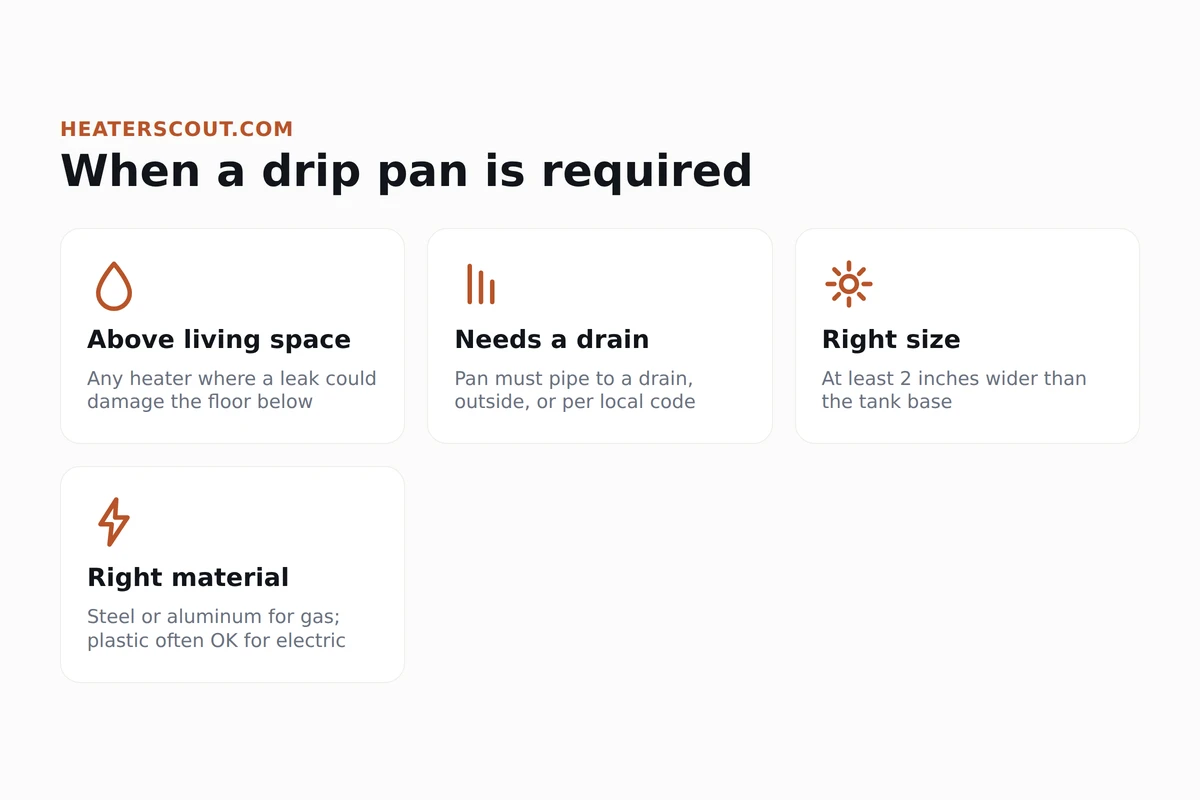
The plumbing codes most US jurisdictions follow — the IPC and UPC — require a drain pan under a water heater where a leak could cause damage to the structure or anything below it. That language is the heart of it. A heater in a second-floor closet above a bedroom, in an attic, or anywhere over finished living space clearly qualifies. A heater in a basement or garage on a slab, where a leak would just run to a floor drain, often does not, though many local codes and inspectors require a pan there anyway as cheap insurance. Your local jurisdiction has the final say, and some amend the model codes to be stricter, so when in doubt, ask the local building department or put a pan in regardless.
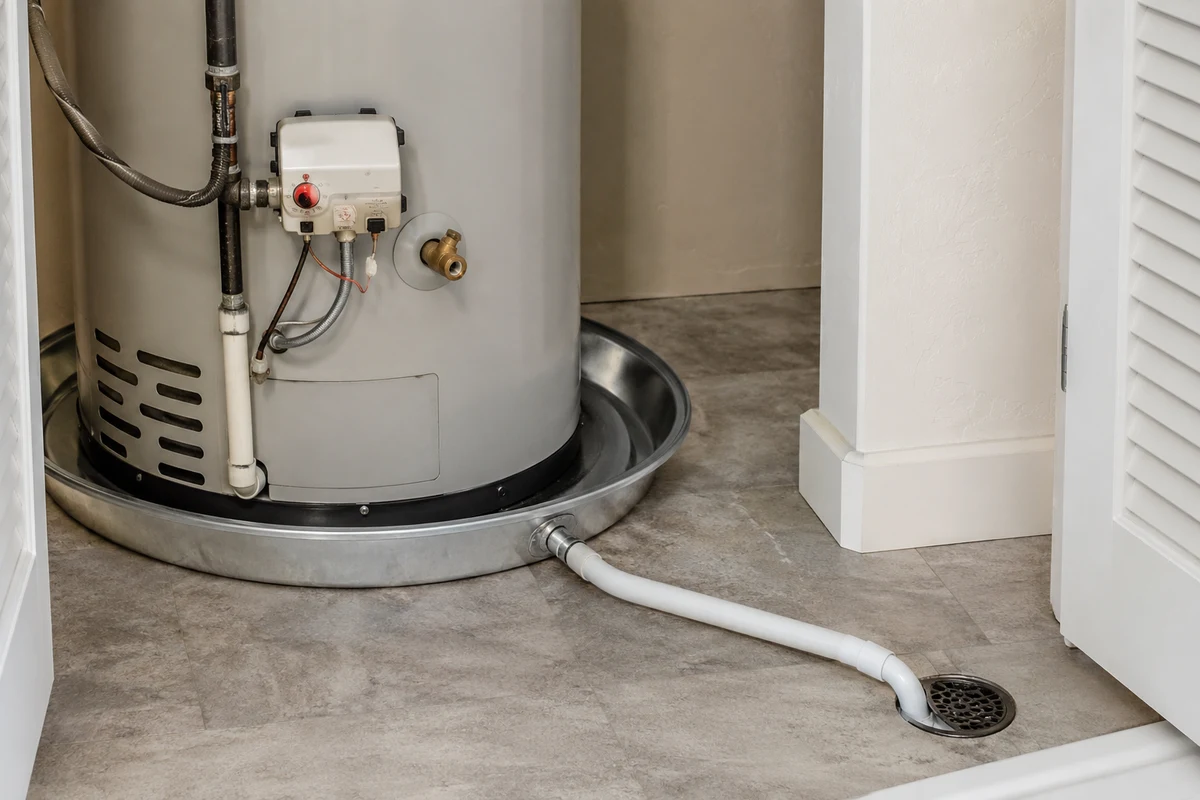
The pan is only half the requirement. It has to drain. A pan with no outlet just fills up and overflows, which defeats the purpose. Code calls for the pan to be piped — usually with a 1-inch minimum drain line — to an approved discharge point: a floor drain, a laundry standpipe, the exterior of the building, or another location the local code accepts. The drain has to run downhill the whole way and terminate where the discharge will be noticed and cause no damage, so a homeowner sees the leak rather than discovering it months later as a stain.
Sizing and material
The pan has to be bigger than the tank it holds — a common rule is at least 2 inches larger in diameter than the base, so a 20-inch tank wants a 22-inch or larger pan, with a raised lip an inch and a half to two inches high to actually hold water. Too small and the tank barely fits with no margin; too shallow and a fast leak sloshes over the edge. Pans come in standard sizes to match common tank diameters, so match the pan to your heater's footprint.
Material matters more than people expect, and it splits by fuel type. For an electric water heater, a sturdy plastic pan is usually fine and is what most stores sell. For a gas water heater, many codes and manufacturers require a metal pan — galvanized steel or aluminum — because the pan sits directly beneath an appliance with a burner and a draft hood, and a plastic pan near that heat and potential flame is a poor idea. Check your local code, but the safe default is metal under gas, plastic acceptable under electric.
What the pan does and does not protect against
A drip pan handles slow tank leaks and the steady weeping of a tank that has rusted through at the seams — the way most heaters actually fail. It catches the gallon-an-hour seep that would otherwise soak a subfloor for days before anyone noticed. What it does not handle is a catastrophic tank rupture, where dozens of gallons dump at once. No standard pan and 1-inch drain can keep up with that volume; the water goes over the lip. For real protection against a burst, the pan is paired with something else: a leak sensor that shuts off the water, or a spot where even a full-tank dump runs to a drain. The pan is for the common slow failure, not the rare violent one.
It also does nothing for leaks that come from above the pan — a weeping T&P valve, a loose flex connector, or a fitting at the top of the tank. Those drip down the outside of the tank and may or may not land in the pan depending on where they originate. The pan protects against the tank bottom giving out, which is the classic end-of-life failure, and that is the case it is designed for.
Installing or adding a pan
Retrofitting a pan under an existing heater means draining and moving the tank, since the pan has to go under it. That is why the ideal time to add one is when the heater is being replaced — the tank is coming out anyway. During a replacement, a good installer sets the new pan, seats the heater in it, and runs the drain line to an approved point as part of the job. If you are adding a pan to a heater you are keeping, it is a drain-down-and-lift operation: shut off water and power or gas, drain the tank, slide the pan under, reseat, connect the drain line, and refill. On a gas unit, take care not to disturb the venting when you move the tank.
Why inspectors care
Water damage from a failed heater is one of the more common and expensive home insurance claims, and much of it is preventable. An attic heater that lets go over a bedroom can cost far more in drywall, flooring, and mold remediation than the heater itself. That is why the code language keys on damage potential and why inspectors are firm about pans above living space. Treating the pan and its drain as a required part of the install, not an afterthought, is the whole point — it turns an eventual leak into a puddle in a pan instead of a ceiling collapse.
Frequently asked
Is a drip pan required under a water heater?
It is required wherever a leak could damage the structure or anything below the heater, which is the standard in most US plumbing codes. That means attics, upper-floor closets, and any heater over finished living space always need one. A heater on a garage or basement slab with a floor drain often does not, though many local codes and inspectors require or recommend a pan there anyway.
What size drip pan do I need for a water heater?
The pan should be at least 2 inches larger in diameter than the tank base, with a raised lip about an inch and a half to two inches high to hold water. So a 20-inch tank needs a 22-inch or larger pan. Match the pan to your heater's footprint; pans come in standard sizes for common tank diameters.
Does a water heater drip pan need a drain?
Yes. A pan without a drain just fills and overflows, defeating its purpose. Code requires the pan to be piped, usually with a 1-inch minimum line running downhill to an approved discharge point such as a floor drain, a laundry standpipe, or the building exterior. If a gravity drain is impossible, the accepted alternative is a pan with a water-sensing automatic shutoff.
Can I use a plastic drip pan under a gas water heater?
Usually no. Many codes and manufacturers require a metal pan, galvanized steel or aluminum, under a gas water heater because the pan sits directly beneath a burner and draft hood. Plastic pans are generally acceptable under electric heaters, which have no flame. Check your local code, but the safe default is metal under gas.
Will a drip pan stop a water heater flood?
Only a slow one. A drip pan and its 1-inch drain handle the gradual leaking of a tank that has rusted through, which is how most heaters fail. It cannot keep up with a catastrophic full-tank rupture, where the water overflows the lip. For protection against a burst, pair the pan with a leak sensor that shuts off the water supply.
When should I add a drip pan to my water heater?
The easiest time is during a heater replacement, since the tank is already coming out and the pan has to go underneath it. Adding one to a heater you are keeping means draining and lifting the tank to slide the pan in, then connecting the drain line. If your heater is above living space and has no pan, it is worth doing sooner rather than waiting for the tank to leak.
Why do inspectors require drip pans above living space?
Because water damage from a failed heater over a bedroom or living room is a common and expensive claim, often costing far more than the heater in drywall, flooring, and mold remediation. The code language keys on damage potential, so inspectors are firm about pans and drain lines anywhere a leak would run into finished space below.