Quick answer
A standard tank water heater lasts about 8 to 12 years; a tankless unit runs 15 to 20 or more. Those are averages, not deadlines. Water chemistry, temperature, and whether anyone ever touched the anode rod swing the real number by years in either direction. Age alone should not send a heater to the curb — pair it with the warning signs below to decide.
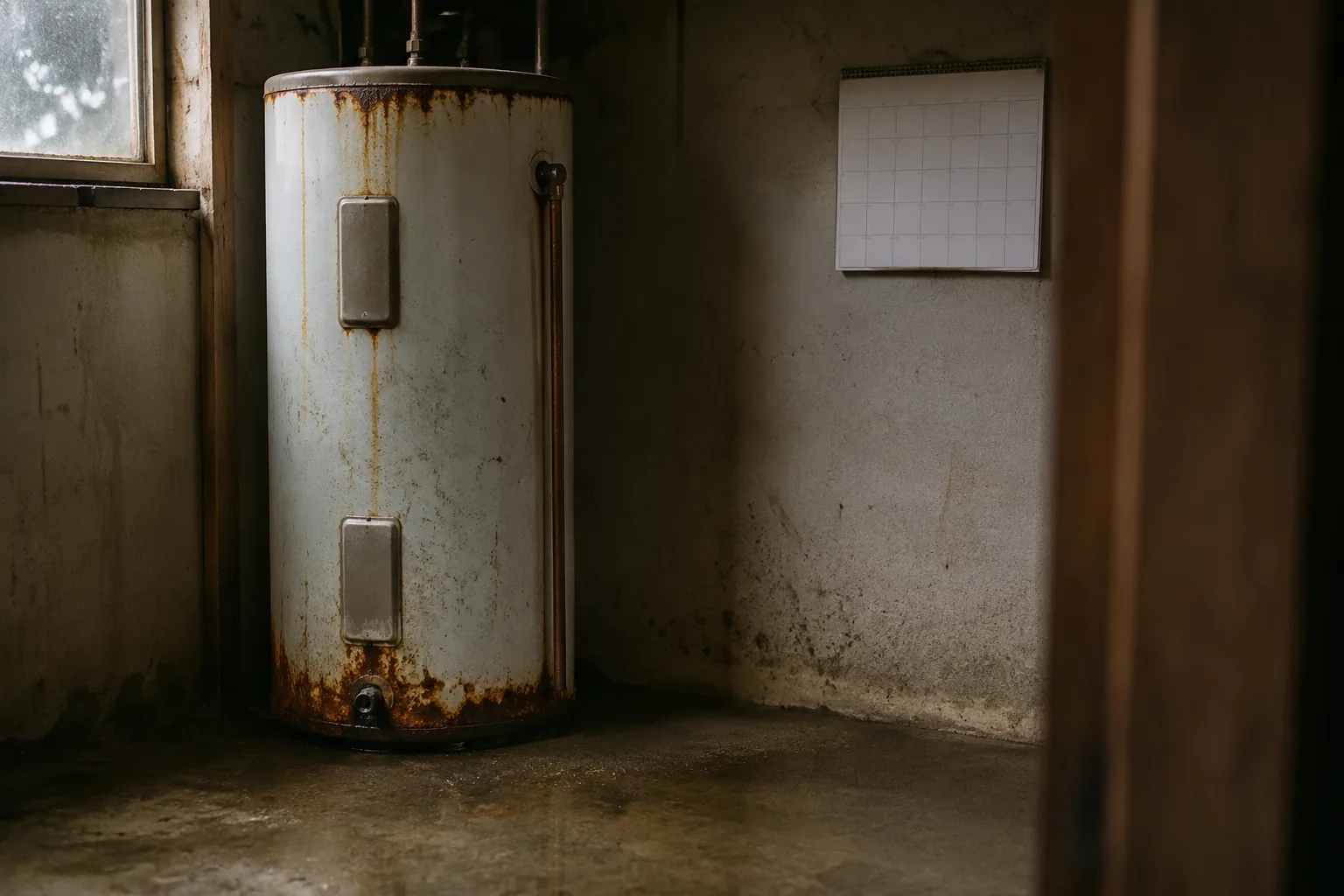
A neighbor with the same brand and the same install year can get five extra years out of their heater and never know why. The difference usually is not luck. It is the anode rod, the water hardness, and how hot the thermostat was run. Understand those three, and you can read your own tank instead of guessing.
Where the 8-to-12 number comes from
The clock on a tank heater is really a clock on corrosion. Inside every glass-lined steel tank sits a sacrificial anode rod, a metal bar that corrodes on purpose so the tank walls do not. Once that rod is used up, rust attacks the steel, and the day the tank rusts through is the day the heater dies, often with a puddle on the floor. Manufacturers assume a decade of typical use to reach that point, which is where 8 to 12 years comes from. Tankless units skip this entirely: no standing tank of water means no tank to rust, so the failure mode that ends most storage heaters simply is not there.
Score your own heater
Set the age, check the symptoms you actually see, and the bar reads out where your unit sits. It weighs a leak at the base far heavier than a little rumble, because those failures are not equal.
Repair or replace? Age and symptom scorer
Slide to your heater’s age, then tick every sign you notice. The verdict updates as you go.
What actually shortens a heater’s life
Three things do most of the damage, and all three are within your control or at least worth knowing.
Hard water. Dissolved calcium and magnesium drop out as sediment and scale. In a tank they blanket the bottom, trapping heat against the steel and making the burner or element work harder; in a tankless heat exchanger they choke the flow passages. A house on hard well water can knock years off a heater that would sail past a decade on soft municipal water.
High temperature. Every degree above roughly 120°F speeds corrosion and scale and raises the risk of scalding. Cranking the thermostat to 140°F for more hot water trades life for a short-term fix.
A used-up anode rod. This is the big one. The rod is a consumable, not a permanent part, and once it is gone the tank corrodes with nothing to stop it.
The maintenance that adds years
Two habits do most of the heavy lifting. First, check the anode rod every three to five years and swap it when more than half is eaten or the bare steel core is showing. A rod costs under 50 dollars, and a tank that gets one changed on schedule can reach 15 years, roughly five more than a neglected twin. Second, drain a few gallons off the bottom once a year to flush out sediment before it bakes into a crust. On a tankless unit the equivalent is an annual descale of the heat exchanger, more often on hard water. None of this is glamorous, and all of it is cheaper than an emergency replacement.
How to read the serial number for its true age
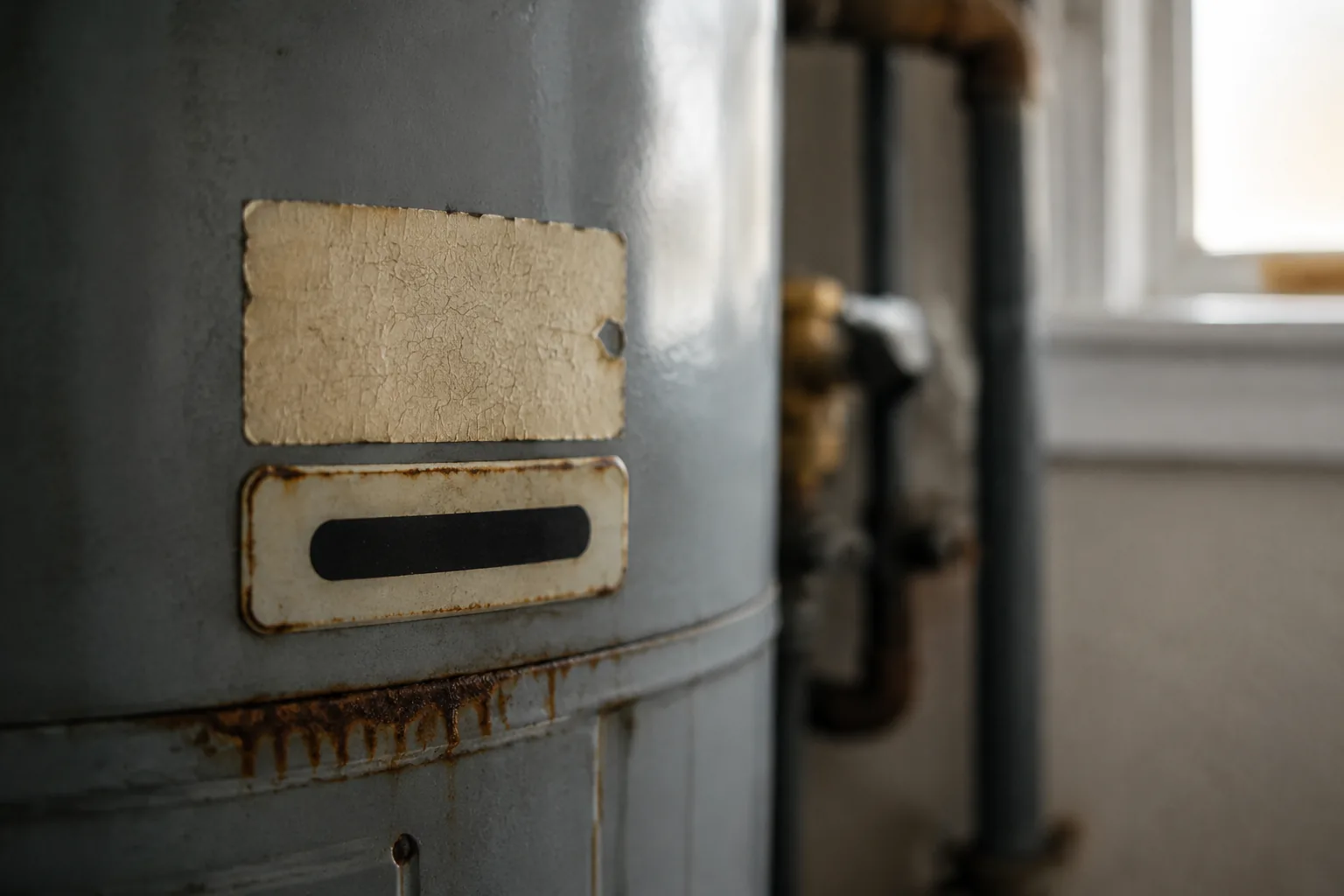
Before you trust your memory on install date, read the rating plate. The manufacture date is coded into the serial number, and the format depends on the brand. On most Rheem and its sister brands, the serial starts with the month and year: a serial beginning 0720 means July 2020. A.O. Smith and State units flip it to year then week: a serial starting 2107 means the 7th week of 2021. The trap is applying one brand’s rule to another, which gives a wrong answer by years, so match the format to the maker. If the plate is faded past reading, a permit or the old install invoice is the fallback.
Repair, or replace?
Some failures are worth fixing; some are the tank telling you it is done. A dead heating element, a bad thermostat, a stuck gas valve, or a leaking drain valve are repairs, and on a heater under 8 years they are usually worth it. Rusty hot water or water pooling at the base is different: those mean the tank shell itself has failed, and no repair brings it back. The middle ground is the honest one. A 10-year-old tank with a rumble and a warranty that lapsed is not an emergency, but it is the moment to price a replacement and choose an installer on your schedule rather than at 6 a.m. on the coldest day, when the old one has flooded the utility room.
There is also a cost line worth drawing. When a single repair on an out-of-warranty heater approaches half the price of a new one, replacement almost always wins, because you are paying to keep a tank that is still aging out from under you. A new element in a 6-year-old heater is money well spent; the same part in a 13-year-old tank with a tired anode just resets the clock on the wrong failure. Efficiency matters too. A modern heater, tank or tankless, wastes less energy than one built a decade or more ago, so a replacement quietly trims the monthly bill in a way a repair never does.
Does location change the answer?
Same brand, same install year, wildly different outcomes by ZIP code. The variable is almost always the water. Regions with hard, mineral-heavy supply chew through anode rods and pack tanks with sediment faster, so a heater that would cruise to 12 years elsewhere might need real attention at 8. Areas with soft or treated water are gentler, and heaters there routinely beat the average. Softened water is its own wrinkle: it can be aggressive toward the anode rod, so homes with a whole-house softener sometimes benefit from a powered anode that does not sacrifice itself the same way. If you know your water runs hard, treat every interval in this guide as the outer limit, not the target, and inspect sooner.
Frequently asked
How long does a water heater last on average?
A standard tank water heater lasts about 8 to 12 years, and a tankless unit lasts 15 to 20 years or more. Those are averages. Water hardness, thermostat temperature, and anode-rod maintenance move the real number by several years in either direction, so a well-kept tank can outlive the range while a neglected one fails early.
Why do tankless water heaters last longer than tank models?
Tankless heaters have no standing tank of water to corrode, so the rust-through failure that ends most storage tanks does not exist for them. They still need care: annual descaling of the heat exchanger, more often on hard water, keeps scale from choking the flow passages and shortening their life.
Does the anode rod really extend water heater life?
Yes, more than any other single factor on a tank heater. The rod corrodes on purpose so the steel tank does not. It wears out in roughly 3 to 5 years, and a tank that gets the rod replaced on schedule can reach 15 years, about five more than an identical unit whose rod was never touched. A new rod costs under 50 dollars.
How can I tell how old my water heater is?
Read the serial number on the rating plate. Most Rheem and sister brands code it as month then year, so a serial starting 0720 means July 2020. A.O. Smith and State use year then week, so 2107 means the 7th week of 2021. Match the format to the brand, because using one maker’s rule on another gives a wrong age by years.
What are the signs a water heater needs to be replaced?
Rusty or discolored hot water and any moisture or pooling at the base of the tank are the serious ones, since both usually mean the steel shell has corroded through and cannot be repaired. Rumbling from sediment, running out of hot water sooner, and being well past warranty are warnings to start budgeting rather than emergencies.
Does hard water shorten a water heater’s life?
It does. Calcium and magnesium in hard water drop out as sediment and scale, blanketing a tank’s bottom so heat bakes against the steel and clogging a tankless heat exchanger’s passages. On hard well water a heater can lose years compared with the same unit on soft water, which is why annual flushing or descaling matters most there.