A plumber quotes you $420 to fix a water heater that a new one would cost $1,500 installed. That single ratio, repair cost against replacement cost, settles most of these decisions before age or rust even enter the picture. The rest is knowing which failures are cheap parts and which mean the tank is finished.
Find your heater's age on the scale
typical tank life 15+
A storage tank heater lasts about 8 to 12 years. The older it is, the more the money tips toward replacing: run the 50% rule in every zone. If the repair quote tops half the price of a new unit (a $700 part against a $1,500 replacement), replace instead of fixing.
Repair-or-replace decision quiz
Five questions. Each answer adds weight toward replacing. Answer all five and you get a verdict with the reasoning, not just a yes or no.
How old is the heater?
Is it leaking from the tank body itself, not a fitting or valve?
How does the repair quote compare to a new unit installed?
Does the hot water come out rusty or brown while cold water stays clear?
Is this the second failure in a short stretch?
Answer all five to get a verdict.
The score updates as you go. Tank leaks and a second failure carry the most weight, because those two are what actually end a heater.
Start with the 50% math
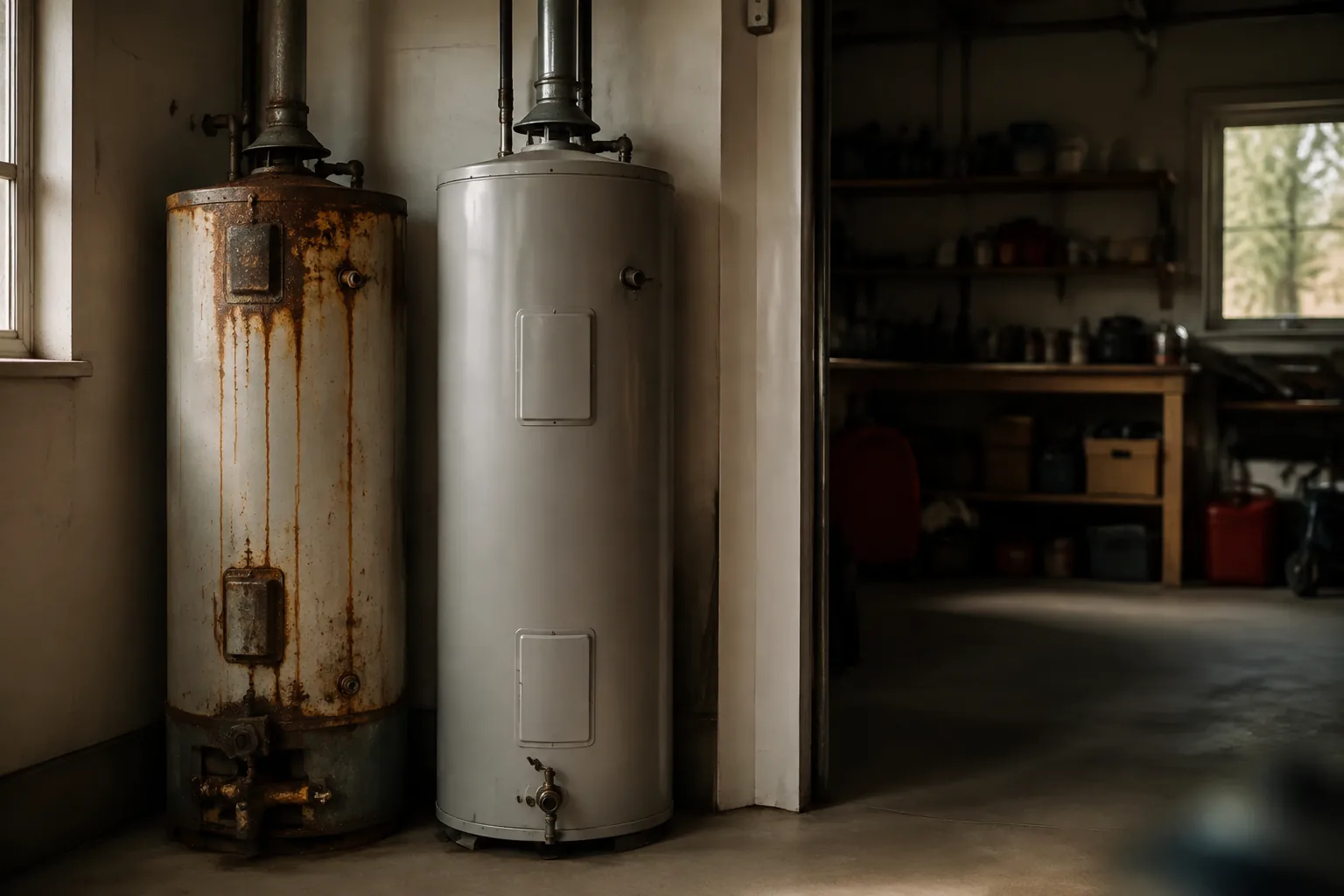
The cleanest way to cut through the noise is a ratio plumbers have used for years: if a repair costs more than half the price of a comparable new unit installed, replace it. That is the whole rule. A $150 heating element on a $1,500 replacement is 10%, an easy fix. A $700 gas control valve on that same $1,500 unit is nearly half, and now you are pouring real money into a heater that owes you nothing.
The reason the rule works is that it forces you to price the alternative honestly. People fixate on the repair number in front of them and forget that the new unit comes with 8 to 12 fresh years, a new warranty, and often better efficiency. When the repair climbs past the halfway mark, you are buying a short extension on old equipment at nearly the cost of new equipment. The math stops making sense.
Get the replacement quote before you approve the repair, not after. You cannot run the 50% rule without both numbers, and a plumber standing in your basement with a failed part is not the moment to guess what a new heater costs. Two phone calls settle it.
When the tank is the problem, it is over
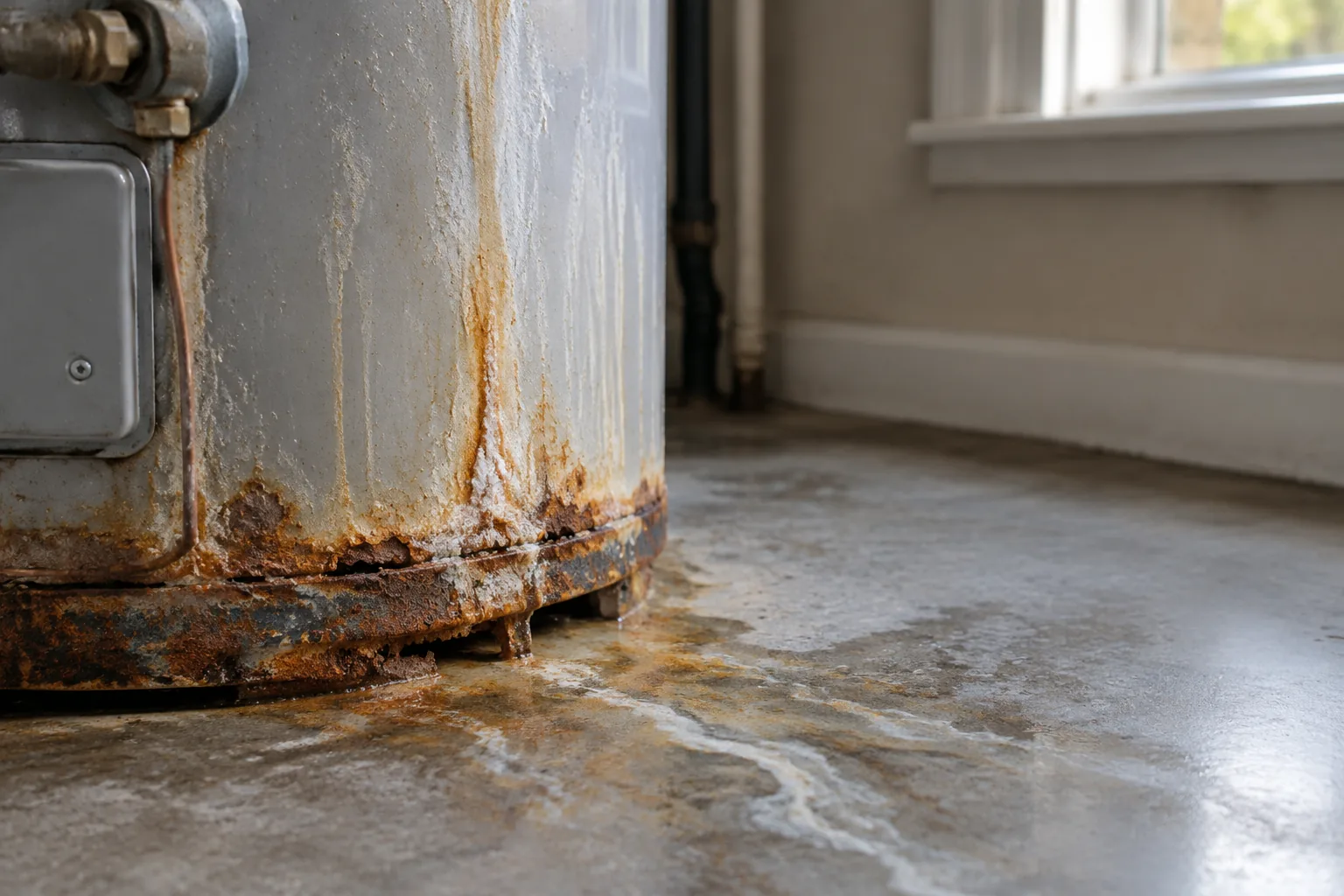
There is one failure the 50% rule does not even apply to: a leak from the tank body itself. Storage tanks are steel, glass-lined on the inside, and protected by a sacrificial anode rod that corrodes in place of the steel. Once that anode is used up, usually somewhere in years 5 through 10 if nobody ever checked it, the tank wall starts to rust from the inside. By the time water is weeping from the bottom seam or the shell, the steel is perforated. No weld, epoxy, or clamp brings it back. A tank leak is a replacement, full stop, regardless of the heater's age.
Learn to tell a tank leak from a fixable one, because they look similar at first. Water pooling under the heater can come from the drain valve, the temperature and pressure relief valve, or a loose cold or hot connection at the top. Those are all repairs, sometimes a $15 part. Dry everything, then watch where the water actually returns from. If it is a fitting or a valve, fix it. If it seeps from the body of the tank or the bottom seam with no valve involved, the tank has rusted through and the decision is made for you.
Rusty hot water and repeat failures
Two softer signals push hard toward replacement even when nothing is actively leaking yet. The first is rusty or brown hot water while the cold stays clear. That split matters. If only the hot side is discolored, the rust is coming from inside the tank, which means the anode is gone and the steel is corroding. You are seeing the early stage of the leak that has not happened yet. Sometimes a fresh anode rod buys time if you catch it early, but on an older tank, rusty hot water is usually the tank telling you its number is nearly up.
The second signal is a pattern of failures. One dead element on a six-year-old heater is a repair. A dead element, then a leaking valve, then a thermostat, all inside a year, is a heater coming apart at the seams. Multiple repairs in a short window point at broader internal wear that no single fix resolves; you would just be chasing the next failure. When the repairs start stacking up, stop repairing and price the replacement instead.
Age ties both signals together. Under the 8 to 12 year range, an isolated fault on an otherwise sound tank is worth fixing. Push past 10 or 12 years and every one of these signals gets heavier, because you are repairing equipment that is already living on borrowed time. A perfect repair on a 13-year-old tank still leaves you with a 13-year-old tank.
The cheap fixes worth doing
Not every problem is a death sentence, and it would be a waste to replace a young heater over a $20 part. Three components are made to be replaced and cost almost nothing next to a new unit.
The anode rod is the cheapest insurance in the whole appliance. It is a metal rod that dissolves so the tank does not, and a replacement runs around $20 to $50. Swapping it every 3 to 4 years is the single thing that most extends a tank's life. If you catch a depleted anode before the tank starts rusting, you have effectively reset the corrosion clock.
Heating elements and thermostats are the other two. On an electric tank, a burned-out element gives you no hot water or water that runs cold fast, and a failed thermostat gives you water that is too hot, too cold, or nothing. Both are inexpensive parts, well under a service call plus a new heater, and both are routine swaps on a tank that is otherwise healthy. On a gas unit, the equivalent cheap fix is a thermocouple when the pilot will not stay lit. None of these mean the tank is finished. If the heater is young, the tank is sound, and one of these parts failed, repair it and move on.
Sediment is the quiet wildcard. Years of mineral buildup on the tank floor makes popping and rumbling noises, drops efficiency, and can even mimic a failing element. A flush costs nothing but time and can revive a heater that seemed to be dying. On a hard-water home, a heater that never got flushed will age faster than its years suggest, which is worth remembering when you weigh its real condition against the calendar.
Putting it together
Run the answers in order. If the tank body leaks, replace it and skip the rest. If not, price the repair against a new unit and apply the 50% rule. Fold in age, whether the hot water runs rusty, and whether this is the second failure in a short span. A young tank with one cheap fault gets repaired. An old tank with a costly repair, rusty water, or a string of breakdowns gets replaced. Everything in between is where the 50% number breaks the tie. The quiz above walks the same logic and hands you the verdict at the end.
Frequently asked
What is the 50% rule for water heaters?
If the repair costs more than half the price of a comparable new unit installed, replace it instead of fixing it. A $150 element on a $1,500 replacement is an easy repair at 10%. A $700 part on that same unit is nearly half, so you would be spending close to new-unit money to extend old equipment. Get the replacement quote first so you have both numbers to compare.
Should I repair a leaking water heater?
It depends on where it leaks. If water comes from the drain valve, the temperature and pressure relief valve, or a loose connection at the top, those are cheap repairs. If it leaks from the tank body itself or the bottom seam, the steel has rusted through and no repair works. A tank leak means replacement regardless of the heater's age.
How long does a water heater last?
A standard storage tank heater lasts about 8 to 12 years. Tankless units run longer, roughly 15 to 20 years or more with maintenance. Hard water, skipped flushes, and a never-replaced anode rod shorten the life. Checking the anode every 3 to 4 years and flushing sediment is what pushes a tank toward the top of that range.
Why is my hot water rusty but my cold water clear?
Rust on the hot side only means the corrosion is inside the tank, not in your pipes or supply. The sacrificial anode rod has worn out and the steel tank is starting to rust from the inside. Caught early, a new anode can buy time. On an older tank, rusty hot water usually signals the tank is near the end and a leak is coming.
Are heating elements and thermostats worth replacing?
Yes, on a heater that is otherwise sound. Elements, thermostats, and anode rods are inexpensive parts designed to be swapped, and none of them mean the tank is finished. On a young tank with an isolated fault, replacing one of these is far cheaper than a new heater. It only stops making sense when the repairs start stacking up or the tank itself is corroding.
Does a second failure mean I should replace the heater?
Usually, yes. One failed part is a repair. Several failures in a short window, an element then a valve then a thermostat inside a year, point at broad internal wear that a single fix will not solve. You would just be chasing the next breakdown. When repairs start stacking up, especially past the 10 year mark, put the money toward a replacement.