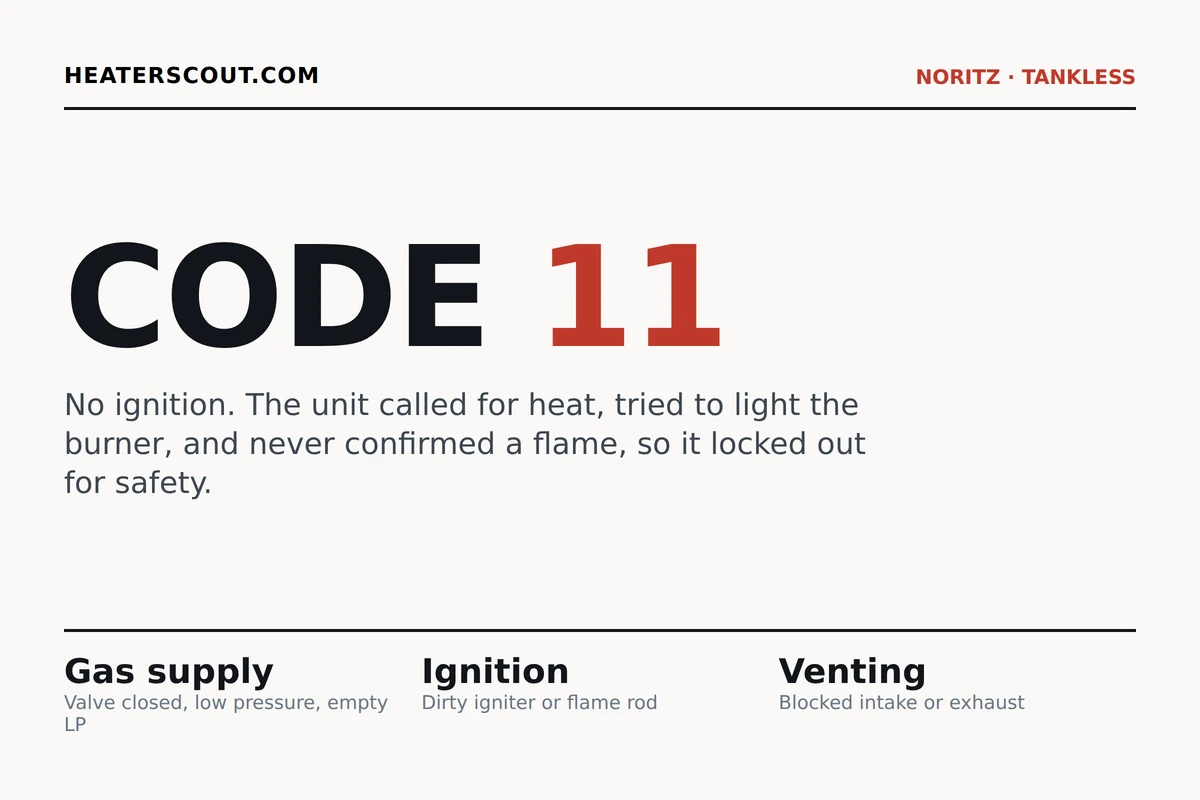
Code 11 on a Noritz tankless water heater means ignition failure: the unit tried to light the burner and never saw a flame, so it shut the gas off and locked out. It is not a random fault. The heater called for heat, sparked, and got nothing — which narrows the problem to a short list. Almost every Code 11 comes down to gas not reaching the burner, an igniter or flame rod that cannot do its job, or venting that is choking the flame. Work those three in order and most cases clear without a service call.
What Code 11 is telling you
When you open a hot tap, a Noritz unit senses the flow, opens the gas valve, and fires the igniter. A flame rod then confirms a flame is actually burning. If the controller never gets that confirmation within its ignition window, it assumes the burner did not light, closes the gas valve, and posts Code 11. The key detail is that the unit tried and failed to light — not that it lit and lost the flame later (that would be a different fault). So every useful question starts with: why did the burner not catch? Gas, spark, or air.
Start with gas — it is free to check
Confirm the manual gas valve at the heater is fully open, in line with the pipe, not half-turned. On a new install this is the number-one cause: the valve was left closed or only cracked. Next, run another gas appliance — a stove burner or the furnace. If that flame is weak and yellow, or the appliance struggles, the gas supply to the whole house is the problem, not the heater. On propane, check the tank gauge: a nearly empty LP tank drops pressure, and a tankless heater at full fire is the first thing to starve. After a propane delivery, air in the line can also cause a few failed ignitions until it purges — run the unit a few times and it may clear.
Gas volume, not just pressure, matters on a tankless. These units demand a lot — often well over 100,000 BTU wide open, several times what a tank heater draws. A gas line that was fine for the old tank heater, or a meter and regulator sized for a smaller load, may not feed the tankless at full fire, especially when the furnace runs at the same time. If Code 11 shows up mainly under high demand or on cold days, suspect gas volume and line sizing, which is a job for a technician with a manometer.
Then ignition components
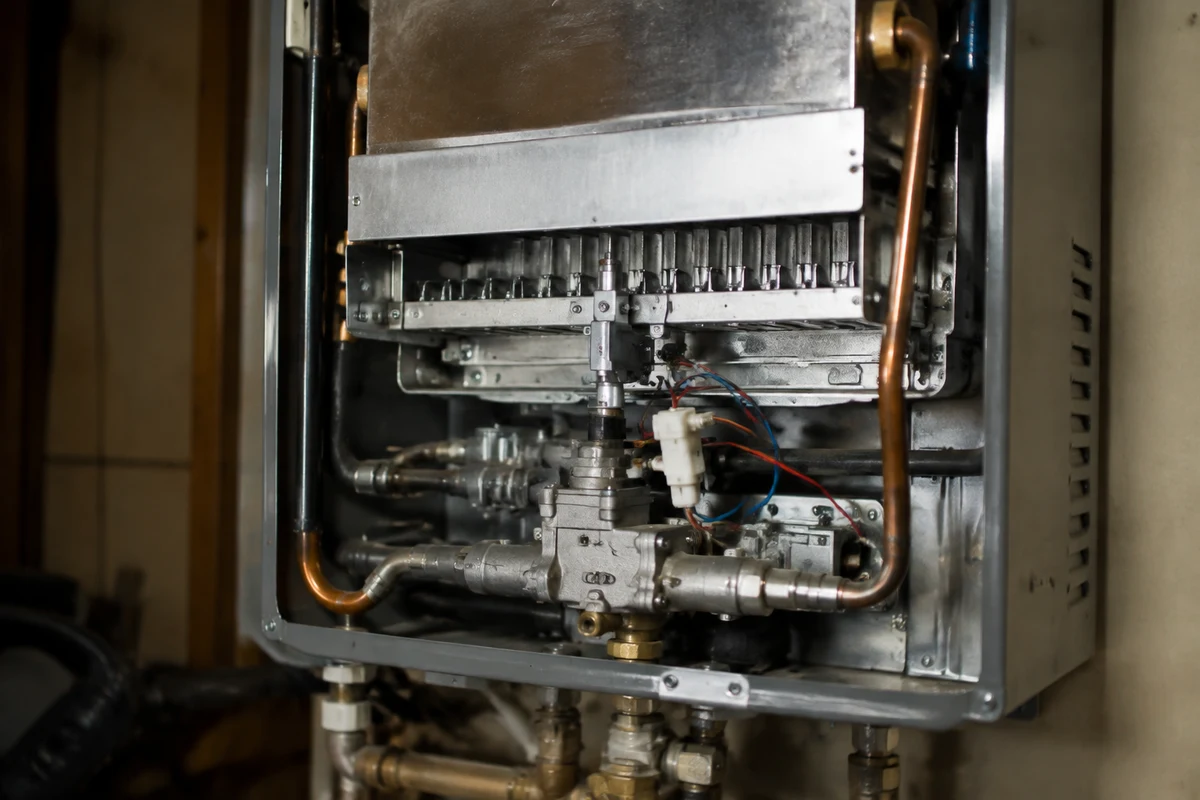
If gas is confirmed good and Code 11 persists, the igniter or flame rod is next. The igniter has to produce a strong, consistent spark; over time the electrode can foul or wear. The flame rod has to sense the flame current; a film of carbon or oxide on its tip makes it fail to confirm a flame that is actually there, which the controller reads as no ignition. On many Noritz units these are serviceable: with the gas and power off, the flame rod can be inspected and gently cleaned, and the igniter checked for a good spark gap and clean electrode. If cleaning does not hold, the part is failing and needs replacing. This is the same sensing logic as a gas tank heater's thermocouple, so the troubleshooting will feel familiar if you have chased pilot problems.
Do not forget venting
A tankless burner needs clean intake air and a clear exhaust to light and stay lit. A blocked or partially blocked vent — a wasp nest, snow, leaves, lint, or a bird screen packed with debris over the outdoor termination — starves the flame and can trip Code 11, especially on ignition. Walk outside and look at the intake and exhaust caps. Clear anything covering them. If the code shows up only in high wind, the termination may be catching gusts; that is a venting configuration issue worth raising with an installer.
How Code 11 differs from a flame-loss code
It helps to know what you are hearing. Code 11 is a failure to light at all: the igniter clicks, the burner does not catch, and the unit locks out. A flame that lights and then drops out a second later is a different failure mode and often a different code. Watching and listening at startup tells you which you have. If there is a spark attempt and no flame, you are firmly in gas-supply and ignition territory. That distinction keeps you from chasing the wrong parts.
The causes, ranked
Notice the first two buckets cover most Code 11 cases and cost nothing but time. Do not jump to replacing the board or the valve before gas and venting are confirmed.
New install throwing Code 11 right away?
A brand-new Noritz that codes 11 on startup almost always has a supply issue, not a defect. The usual suspects: the manual gas valve was never fully opened, the gas line was reused from a low-BTU tank heater and cannot feed the tankless, the meter or regulator is undersized for the added load, or air is still in a propane line after filling. When the whole house's gas demand peaks, pressure sags and the burner cannot light. This is why sizing the gas supply to the unit's BTU rating matters as much as the heater itself, and why a rushed swap without checking line size comes back as Code 11 on the first cold morning.
When to stop and call a pro
Reset the unit and run hot water. If Code 11 clears and stays gone, a temporary gas or venting hiccup caused it. If it returns after you have confirmed the gas valve is open, other appliances burn cleanly, the propane is full, and the vents are clear, stop guessing. A recurring Code 11 with good gas and clear venting usually means a gas-pressure or line-sizing problem or a failing igniter or flame rod — all of which want a manometer and a technician. A pro can measure inlet and manifold pressure in minutes, the one reading a homeowner cannot safely take.
Frequently asked
What does error code 11 mean on a Noritz tankless water heater?
Code 11 is an ignition failure. The unit called for heat, opened the gas valve, and fired the igniter, but never confirmed a flame within its ignition window, so it shut the gas off and locked out. It almost always points to a gas supply problem, a fouled igniter or flame rod, or blocked intake or exhaust venting.
How do I fix Noritz code 11 myself?
Work in order: confirm the manual gas valve at the heater is fully open, check that other gas appliances burn cleanly, verify the propane level if you are on LP, and clear anything blocking the outdoor intake and exhaust. If it keeps returning, the igniter or flame rod likely needs cleaning, which can be done with the gas and power off, or the unit needs a pressure check by a tech.
Why does my new Noritz tankless show code 11?
A brand-new unit that codes 11 immediately usually has a gas-supply issue, not a defect. Common causes are a manual gas valve left closed or only cracked open, a gas line reused from a smaller tank heater that cannot feed the tankless at full fire, an undersized meter or regulator, or air still in a propane line after filling.
Can a dirty flame rod cause Noritz code 11?
Yes. The flame rod senses the current a real flame conducts to confirm ignition. If it is coated with carbon or oxide, it fails to confirm a flame that is actually burning, and the controller reads that as no ignition and posts Code 11. On many Noritz units the flame rod can be cleaned with the gas and power off; if that does not hold, it needs replacing.
Is Noritz code 11 caused by venting problems?
It can be. A tankless burner needs clear intake air and exhaust to light. A blocked or partially blocked vent from a nest, snow, leaves, or lint over the outdoor termination can starve the flame and trip Code 11, especially on ignition or in high wind. Walk outside and clear the intake and exhaust caps as one of your first checks.
When should I call a professional for Noritz code 11?
If the code keeps returning after you have confirmed the gas valve is open, other appliances burn cleanly, the propane is full, and the vents are clear, stop guessing. A recurring Code 11 with good gas and clear venting usually means a gas-pressure or line-sizing problem or a failing igniter, all of which need a manometer and a licensed technician to diagnose safely.