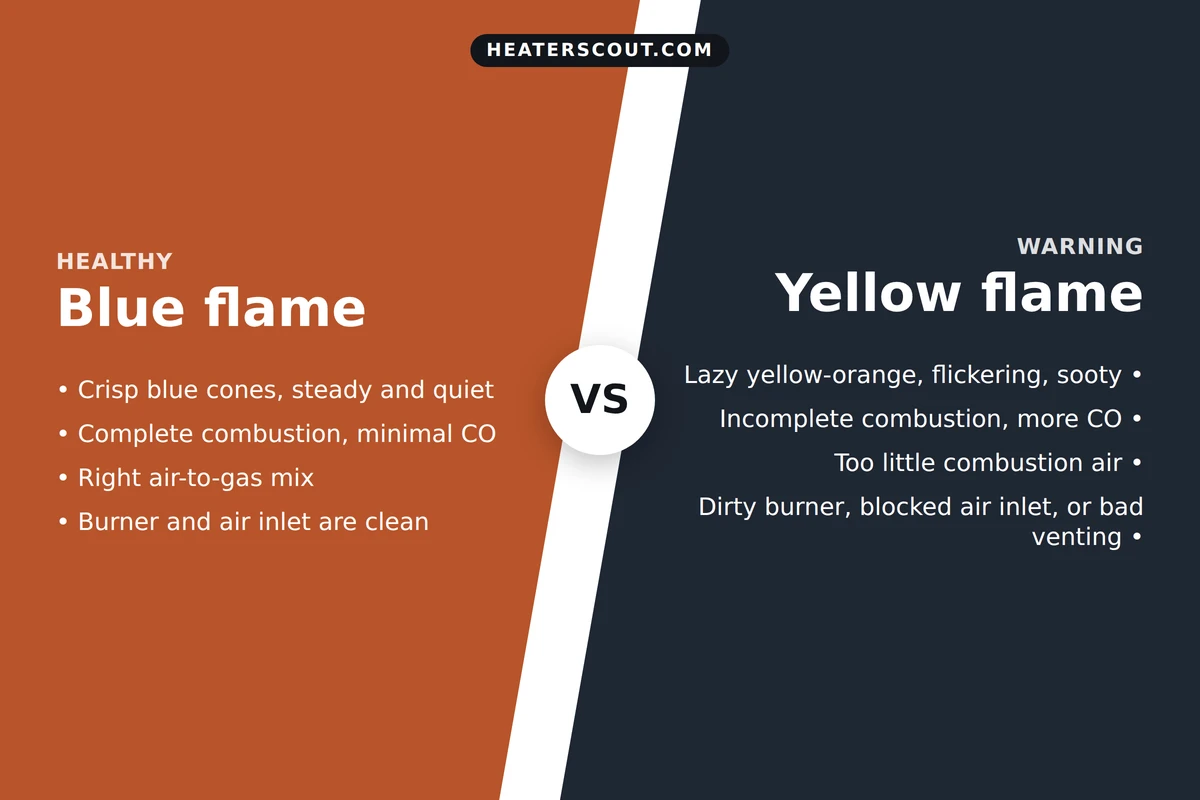
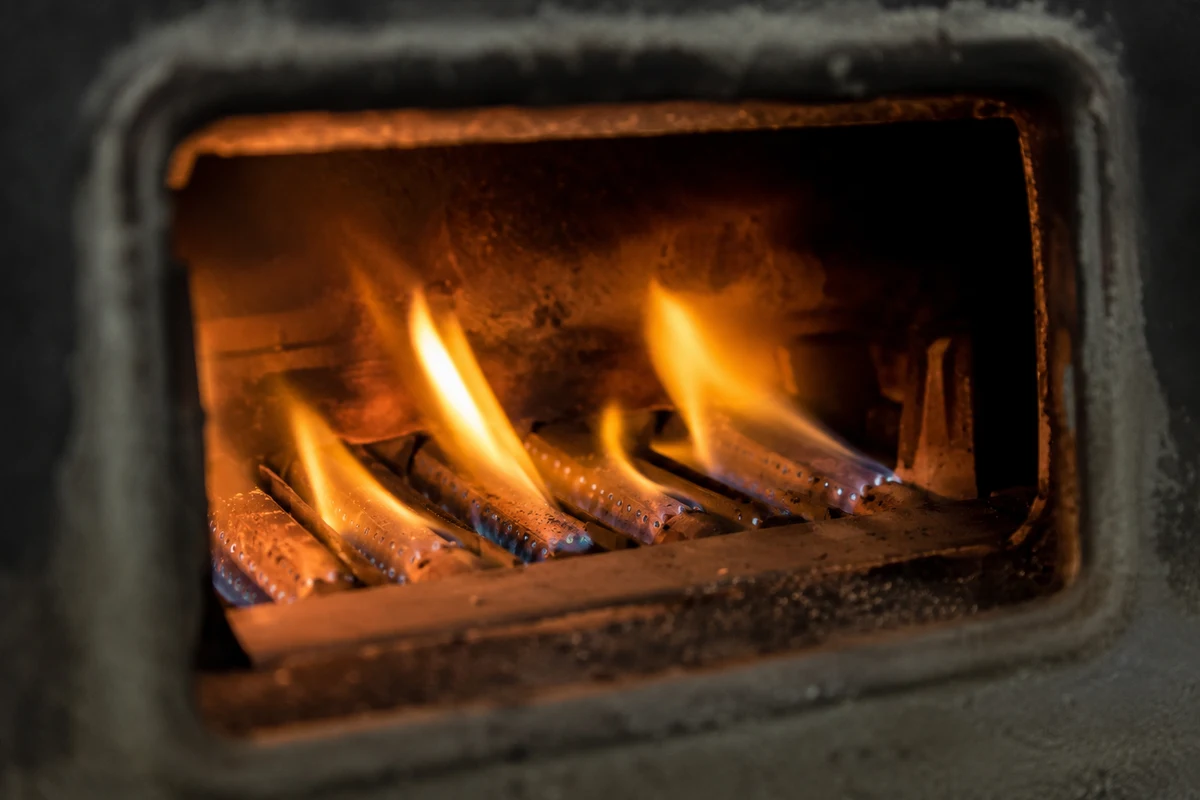
A healthy gas water heater burns with a crisp blue flame. When you look through the sight window and see a lazy, flickering yellow or orange flame instead, the burner is not getting enough air to burn the gas cleanly. That incomplete combustion wastes fuel, deposits soot, and — the part that matters most — produces more carbon monoxide. A yellow flame is not a cosmetic quirk. It is the burner telling you the air-to-gas mix is wrong, and it is worth stopping to diagnose rather than ignoring.
Why the color tells you everything
Gas burns blue when it gets enough oxygen to combust completely. The blue cones are the signature of a correct air-to-gas ratio. When the burner cannot pull in enough combustion air, the gas burns incompletely, and incomplete combustion glows yellow or orange and produces soot and carbon monoxide. So the color is a direct readout of combustion quality: blue is complete and safe, yellow is incomplete and a warning. A little flicker or an occasional yellow tip as dust burns off is normal; a persistently lazy, yellow, sooty flame is not.
The three things that starve a burner for air
Almost every yellow flame traces back to one of three causes, all of which reduce the air reaching the burner. First, a dirty burner. Dust, lint, and rust flakes accumulate on the burner ports and the air shutter, choking the mix. This is the single most common cause, especially in a heater that sits in a dusty garage or a laundry room full of lint. Second, a blocked air inlet or flame arrestor screen. Modern heaters have a screen at the base to keep flammable vapors out; when it clogs with dust and pet hair, the burner suffocates. Third, poor venting or a backdrafting flue. If exhaust cannot leave, fresh air cannot come in, and the flame goes yellow — and a backdrafting flue is also spilling combustion gases into the room, which raises the carbon monoxide stakes considerably.
The carbon monoxide angle — take it seriously
The reason a yellow flame matters more than a dirty filter is carbon monoxide. Incomplete combustion produces more CO, and CO is odorless, colorless, and dangerous. A water heater that is burning yellow and venting properly sends that CO up the flue, but a water heater burning yellow because the flue is blocked or backdrafting is putting it into your home. That combination — yellow flame plus signs of backdrafting like soot around the draft hood, a burning smell, or condensation on nearby surfaces — is a stop-and-address situation. Every home with a gas appliance should have a working carbon monoxide detector, and if yours is sounding or your family has headaches or nausea that ease when you leave the house, treat it as an emergency and get everyone out and the appliance shut off.
What you can check yourself
When it is not just dirt
If cleaning the burner and intake does not restore a blue flame, the cause is deeper. The gas pressure could be off, the burner orifice could be wrong for the fuel (a heater set up for natural gas will burn yellow on propane and vice versa without the right conversion), or the venting could be undersized or partially blocked in a way you cannot see. Fuel-conversion mistakes are a classic source of a persistently yellow flame right after an install or a move — the wrong orifice for the gas supply. These need a technician with a manometer and the right parts, not more cleaning. Do not keep running a heater that burns yellow after a good cleaning; get the combustion checked properly.
Keeping the flame blue
Most yellow flames are preventable with the same habits that keep any gas appliance healthy: keep the area around the heater clear of dust, lint, and stored chemicals; vacuum the air intake screen a couple of times a year; and do not store laundry or a litter box right next to the intake. A heater in a clean, well-ventilated space with a clear flue burns blue for years. One buried in a dusty corner behind stacked boxes is the one you find burning yellow. The flame color is a running report card on both the burner's cleanliness and the room's air supply.
Frequently asked
Why is my gas water heater flame yellow instead of blue?
A yellow flame means the burner is not getting enough combustion air, so the gas burns incompletely. That produces soot and more carbon monoxide. The usual causes are a dirty burner, a clogged air intake or flame arrestor screen, or poor venting. A healthy burner with the right air-to-gas mix burns with crisp blue cones.
Is a yellow flame on a water heater dangerous?
It can be. Incomplete combustion produces more carbon monoxide, which is odorless and dangerous. If the heater vents properly, that CO goes up the flue, but if the flame is yellow because the flue is blocked or backdrafting, CO can enter your home. A yellow flame with soot at the draft hood or a CO alarm is a stop-and-address situation. Every home with gas appliances should have a working CO detector.
How do I fix a yellow flame on my gas water heater?
With the gas and power off, vacuum the air intake and flame arrestor screen at the base, then clean the burner of dust and rust per your manual. Confirm the flue draws properly by checking that smoke near the draft hood is pulled up and not blown back. Relight and look at the flame; a clean burner with clear airflow should burn blue again.
Can a yellow flame be caused by the wrong gas type?
Yes. A burner orifice set up for natural gas will burn yellow on propane and vice versa without the correct conversion. This is a common cause of a persistently yellow flame right after an install or a move. It needs a technician to fit the right orifice and set the pressure, not more cleaning.
What should I do if I see soot around my water heater?
Soot on the burner, draft hood, or flue confirms ongoing incomplete combustion. Check the flue draft with smoke near the draft hood; if it blows back into the room you have a venting or backdraft problem. If you also see a yellow flame, or a CO detector alarms, turn the gas control off and have it inspected before running it again, because soot plus backdrafting means CO in the room.
Should I keep using a water heater with a yellow flame?
Not after a proper cleaning fails to fix it. A brief yellow tip as dust burns off is normal, but a persistently lazy yellow flame means bad combustion. Clean the intake and burner first; if it stays yellow, the cause is gas pressure, the wrong orifice, or venting, and you should have a technician check the combustion rather than keep running it and generating carbon monoxide.