Smells like rotten eggs or sulfur in the air near a gas unit? Stop reading and leave. That odor is the additive utilities put in natural gas and propane so leaks are easy to detect. Do not flip a switch or use a phone indoors, get everyone out, and call your gas utility or 911 from outside. Come back to this page once you are safe.
A burning smell from a water heater is not one problem; it is four separate faults with wildly different danger levels, from harmless dust to a house fire. Naming the smell in the first thirty seconds decides whether you flip a breaker, crack a window, or walk out the door.
Sort yourself by smell
Pick the card that matches what you actually smell. Each one expands a colored risk panel: green means you are usually fine, amber means investigate before you keep using it, and red means stop and, in the gas case, evacuate. When two smells seem close, always act on the most dangerous match. The card is the diagnosis, and the panel is the action.
Burning smell risk grid
Tap the smell that matches. A colored risk panel opens with the exact action. If you are unsure, act on the worst-case match.
First: is it electric or gas?
The single fastest filter is your heater type, because it rules out whole categories of cause. An electric tank has a thick power cable running into the top and no flue pipe or gas line. It has no flame at all, so any burning smell from it is electrical by definition: wiring, a terminal, an element, or insulation. A gas tank has a gas line feeding it and a metal flue venting out the top. It burns fuel, so it can produce combustion smells, dust burn-off, and, in the worst case, the odorant added to natural gas.
That split matters because the same word, "burning," points at completely different physics. On an electric unit there is nothing that is supposed to burn, so a burning smell is always a fault. On a gas unit, controlled burning is the whole job, so some smells are normal and only specific ones are alarms. Do not skip this step. Chasing a gas-leak procedure on an electric tank wastes time, and treating scorched electrical insulation as harmless dust burn-off is how small faults become fires.
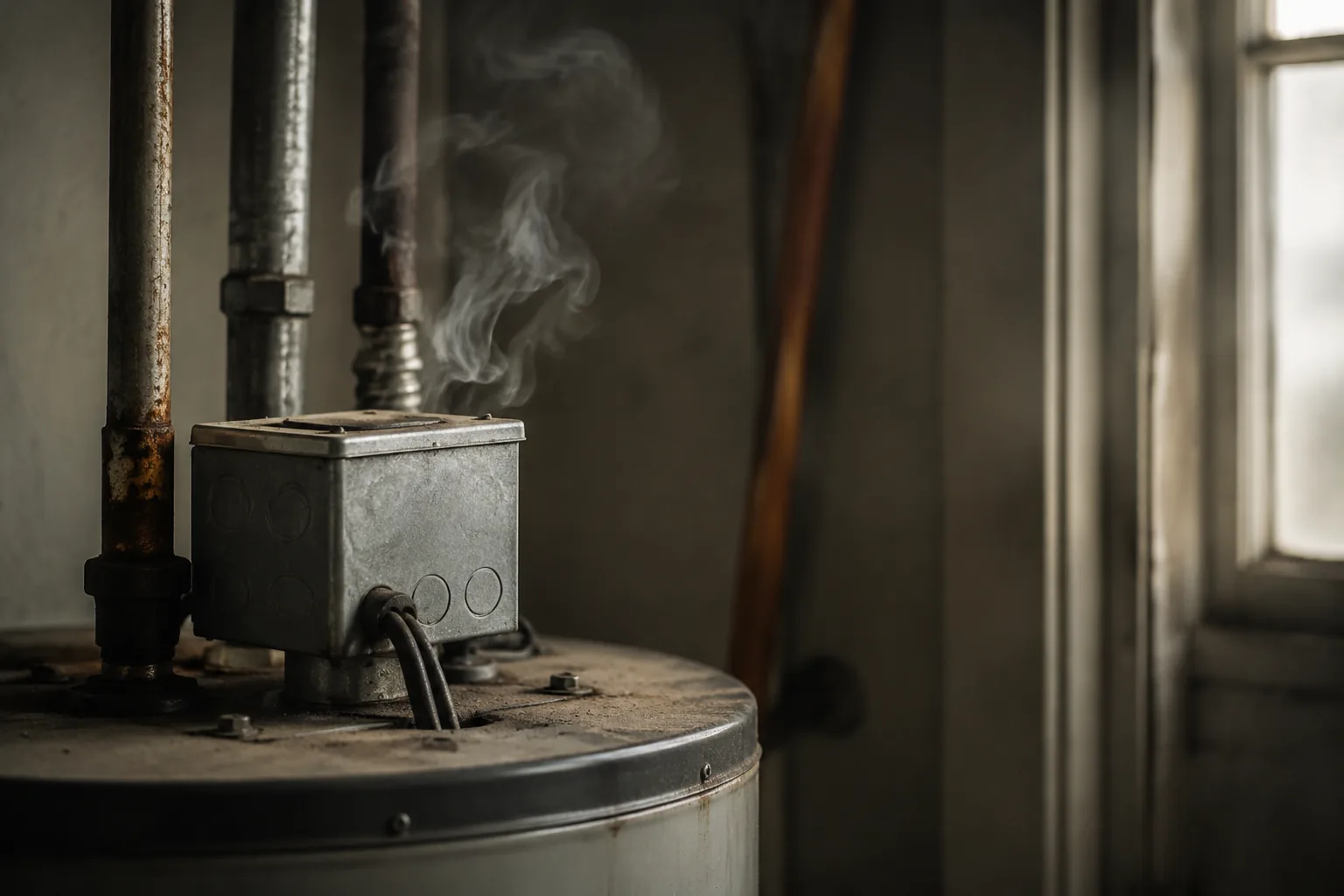
The electrical smell: why it is the scary one
On an electric water heater, nothing is supposed to burn, so a burning smell is always telling you something has gone wrong with the flow of current. The most common source is a loose terminal. Elements and thermostats connect with screw terminals, and over years of heating and cooling, those screws can loosen. A loose connection has resistance, resistance under load makes heat, and heat scorches the insulation right at the joint. That is the hot-plastic or ozone smell people describe. Left alone, a loose terminal arcs, and an arc inside a metal enclosure packed with insulation is a genuine fire hazard.
The second source is an element or wiring that is overloaded or degrading. A cracked element sheath, a pinched wire, or a controller that is not switching off can push more heat into a spot than it was built for. The insulation on the wire jacket starts to cook and gives off that sharp smell before it ever shows flame. This is why the first move is always the breaker, not the access panel. You want the current gone before you get your hands near it, both so nothing can shock you and so the fault stops heating while you investigate.
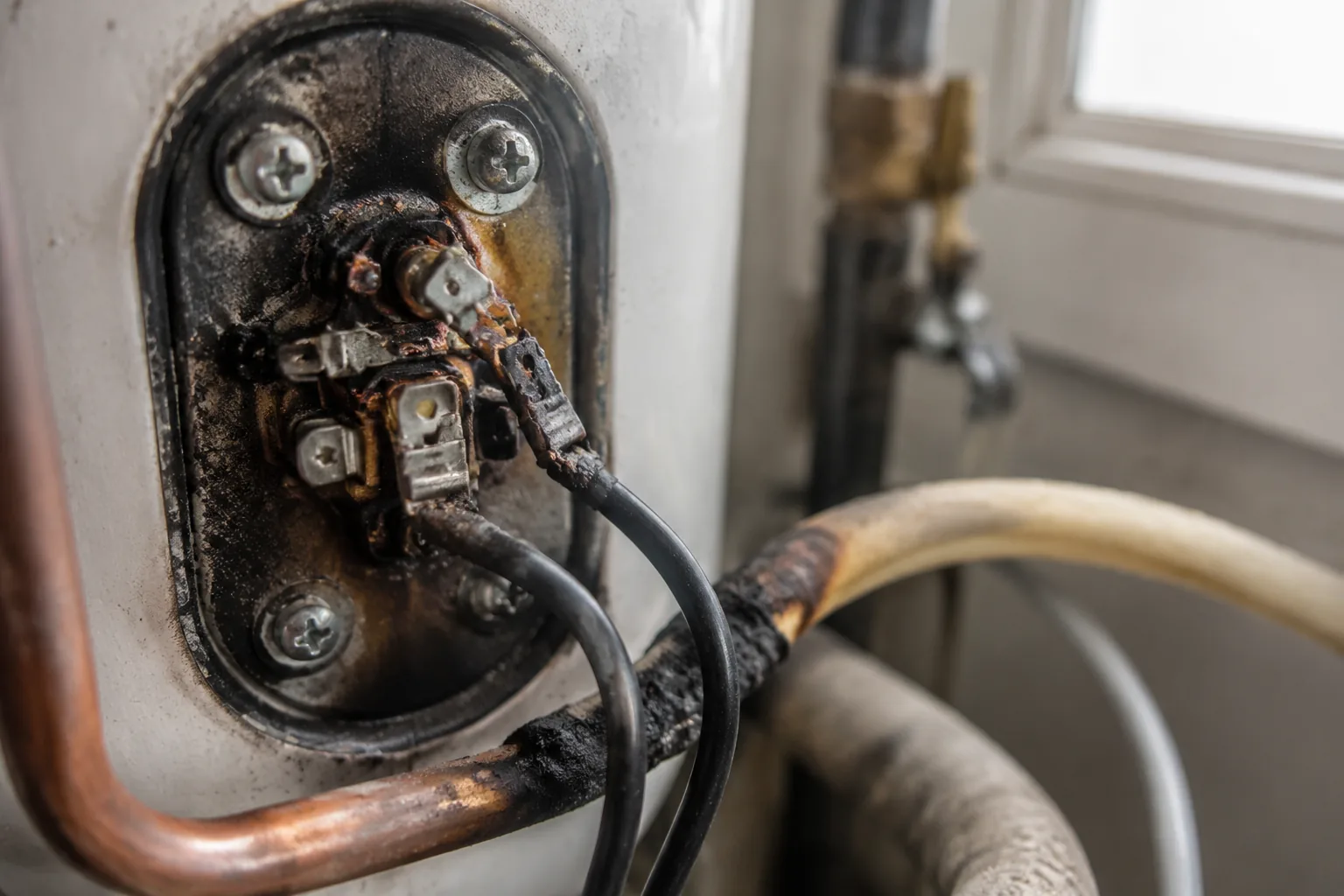
Once power is off and the unit has cooled, a visual check tells you most of what you need. Browned insulation, a melted wire jacket, a terminal that is discolored blue or black, or a screw you can wiggle by hand all confirm the diagnosis. A discolored or pitted terminal should be repaired by someone who can assess whether the element and wiring survived the heat. Do not just retighten a charred screw and switch the power back on. Heat damage compounds, and a joint that has already scorched once will run hotter the next time. If you see damage, the breaker stays off until a pro looks at it.
The dusty first-use smell: usually nothing
The friendliest smell on the list shows up when a gas heater fires for the first time, or the first time after a long idle stretch. New burners and flue passages carry a film of manufacturing oil and settled dust. When the burner lights and the metal gets hot, that film cooks off, and the result is a dusty, slightly acrid odor that can catch you off guard. It is the same phenomenon as the smell from a new oven's first bake or a furnace on the first cold morning of fall. In a room with normal ventilation, it is not a safety problem.
The way to tell burn-off from trouble is time and trend. Real burn-off fades. Crack a window, give it ten minutes or so, and it should thin out and disappear as the dust is consumed. What it should not do is get stronger, turn sooty, pick up a rotten-egg note, or take on the hot-plastic edge of the electrical case. If any of that happens, or if the smell is still going strong twenty minutes in, it has stopped being harmless dust and you should shut the unit down and re-sort it by the new smell. When in doubt, ventilate and watch. A smell that is clearing on its own is doing exactly what dust burn-off does.
The gas smell: the one that ends the DIY
Natural gas and propane have no smell of their own. Utilities add a sulfur-based odorant, mercaptan, precisely so a leak smells like rotten eggs and gets your attention. So a rotten-egg or sulfur smell in the air near a gas water heater is not something to investigate with your nose. It is a leave-the-building event. Do not switch anything on or off, do not use a phone indoors, and do not try to sniff out the source, because any spark in a gas-rich space is the ignition you are trying to avoid. Get people and pets out, and call the gas utility or 911 from outside. Utilities treat gas-smell calls as emergencies and check them for free.
There is one important exception that trips people up. If the rotten-egg smell is only in the hot water coming out of the tap, not hanging in the air, that is not a gas leak at all. It is a chemical reaction inside the tank: sulfate-reducing bacteria feeding on the magnesium anode rod produce hydrogen sulfide, which smells like sulfur. That is a water-quality nuisance, not a fire hazard, and the usual fix is swapping the magnesium anode for an aluminum-zinc one and sanitizing the tank. The tell is location. Smell in the water only, harmless. Smell in the air near a gas unit, get out and call.
The oily smell: the amber middle
Some smells sit between the harmless dust and the fire hazard, and the lingering oily or chemical odor is the one that fits there. It is not the sharp, sudden hot-plastic edge of a scorching terminal, and it does not fade the way first-fire dust does. Instead it hangs around, faintly oily or like warm plastic, whenever the unit runs. The common causes are a controller running hot, a thermostat set far too high so the whole tank overheats, or a plastic drain valve softening where it meets the hot tank body. None of those is an instant emergency, but none is normal either, so the honest rating is amber: keep using it and you might be fine, or you might be watching a slow fault build.
The check is straightforward. Set the thermostat to a safe range near 120F and feel whether the tank is running much hotter than it used to. Water that comes out scalding, well past a comfortable shower temperature, points at a stuck or overset thermostat cooking components that were never meant to run that hot. Look at any plastic parts near the tank body for warping or drooping. If the oily smell keeps up after you have ruled out a too-high setting, shut the unit off and have the thermostat, controller board, and valve checked before it crosses from amber into the electrical red case.
What to do right now, by smell
Strip it down to the decision. If the smell is hot, sharp, or like melting plastic and the unit is electric, trip the breaker before you do anything else, then look for scorching with the power off. If it is a dusty, acrid smell on a new or just-restarted gas heater and it is fading, ventilate and let it finish. If it is a lingering oily smell, check the thermostat is not set too high and inspect for overheated parts, treating it as investigate-before-you-trust-it. If it is rotten eggs or sulfur in the air near a gas unit, leave the house and call the utility from outside. And if the sulfur is only in the hot water, relax; that is an anode-rod issue, not a leak. The smell is the diagnosis. Trust the category it puts you in and act on the most dangerous match when two seem close.
Frequently asked
Is a burning smell from my water heater dangerous?
It depends on the smell. A hot, sharp, or melting-plastic smell from an electric unit means overheating wiring or a loose terminal, which is a real fire risk, so shut off the breaker right away. A dusty, acrid smell on a new or just-restarted gas heater is usually harmless dust burning off and clears in minutes. A rotten-egg or sulfur smell in the air near a gas unit can be a gas leak, so leave the house and call the utility.
Why does my electric water heater smell like burning plastic?
That smell almost always comes from a loose or corroded electrical terminal. Screws on the element or thermostat loosen over time, the loose joint heats up under load, and it scorches the wire insulation, which is the hot-plastic odor. Left alone it can arc and start a fire. Turn off the 240V breaker first, let the unit cool, then look for browned insulation or a discolored terminal. If you see damage, keep the power off and call a pro.
My new gas water heater smells like burning on the first use. Is that normal?
Usually yes. New burners and flue passages carry manufacturing oil and dust that cook off the first time the unit gets hot, giving a dusty, slightly acrid smell. It is the same thing a new oven or a furnace does on its first run. Open a window, give it about ten minutes, and it should fade as the dust burns off. If it gets stronger, turns sooty, or picks up a rotten-egg or hot-plastic note, shut it down and treat it as a real fault.
What should I do if I smell gas near my water heater?
Treat it as a possible gas leak. Do not flip any switches, use a phone indoors, or try to find the source, because a spark could ignite the gas. Get everyone and any pets out of the house, then call your gas utility's emergency line or 911 from outside. They check gas-smell calls for free. Do not go back inside until they confirm it is safe. The rotten-egg smell is an odorant added to gas so leaks are easy to detect.
Why does my hot water smell like rotten eggs but there is no gas leak?
If the sulfur smell is only in the hot water and not in the air, it is not a gas leak. Sulfate-reducing bacteria in the tank feed on the magnesium anode rod and produce hydrogen sulfide, which smells like rotten eggs. It is a water-quality nuisance, not a fire hazard. The common fix is replacing the magnesium anode rod with an aluminum-zinc one and sanitizing the tank. The tell is location: smell in the water only is harmless, smell in the air is not.
When should I shut off the breaker versus leave the house?
Shut off the breaker when the smell is electrical: hot, sharp, or like melting plastic from an electric unit, which points at overheating wiring you want to stop and inspect with the power off. Leave the house when you smell gas or rotten eggs in the air near a gas unit, because that can be a leak and you should not risk a spark. When two smells seem close, act on the more dangerous one. A dusty burn-off smell that is fading needs neither; just ventilate.