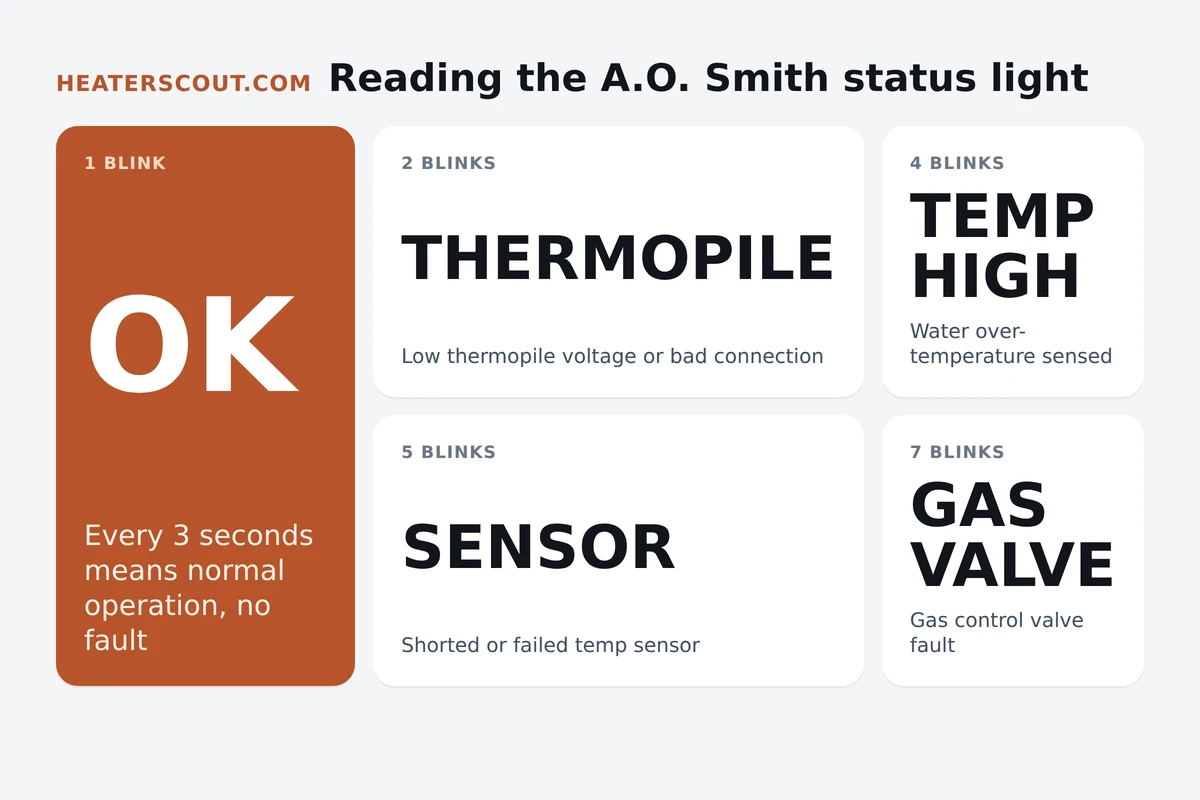
The little green light on the front of an A.O. Smith gas water heater is a diagnostic code, not decoration. One flash every three seconds means everything is fine. Any other pattern — two flashes, four, five, seven — is the gas control valve telling you exactly what it does not like, from a weak thermopile to a failed sensor. Reading the blink count turns a dead or misbehaving heater from a mystery into a short checklist, and most of the common codes point to something you can check yourself before calling anyone.
First, count the blinks correctly
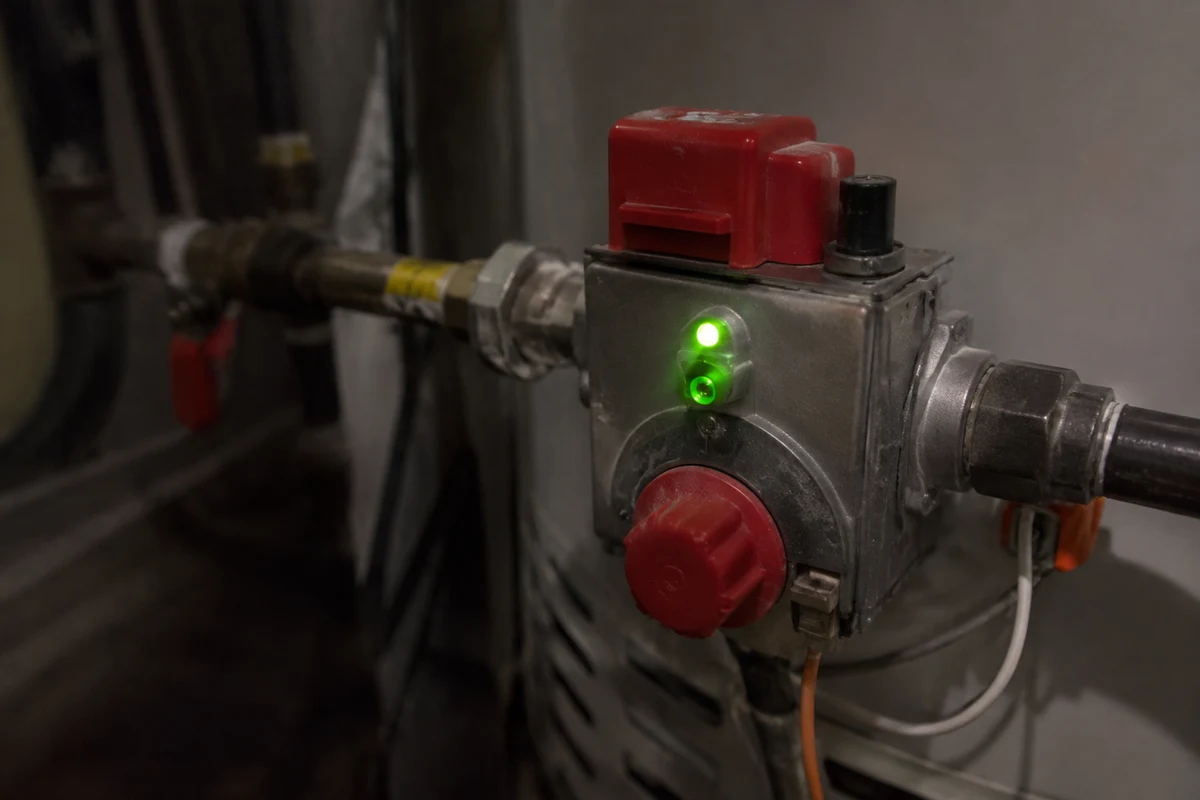
The status light sits on the gas control valve near the base of the tank. It repeats a pattern with a pause between cycles: a number of quick flashes, then a gap, then the same number again. Count the flashes in one burst, not the total over a minute. One flash, repeating every three seconds or so, is the heartbeat that says normal operation. Two, four, five, and seven flashes each mean something specific. The exact meaning can vary slightly between A.O. Smith models, so the label on the heater or the sticker inside the burner door is the final word — but the common codes below cover most units.
Two flashes: the thermopile
This is the most common non-normal code and often the easiest to fix. The thermopile is a bundle of thermocouples that the pilot flame heats to generate the small voltage that powers the control valve. Two flashes means that voltage is low. The usual causes: a pilot that is not burning steadily on the thermopile tip, a loose or dirty thermopile connection at the gas valve, or a thermopile that has simply worn out. Start by confirming the pilot lights and stays lit with a strong blue flame wrapping the thermopile. Then check that the thermopile lead is fully seated and finger-tight at the valve. If the pilot is good and the connection is clean but you still get two flashes, the thermopile is weak and needs replacing — a cheap, common part and a straightforward swap.
Four flashes: over-temperature
Four flashes means the control sensed the water getting too hot. Sometimes that is a genuine over-temperature from a thermostat or valve problem; sometimes it is a one-time trip that clears when the water cools. First, check your temperature setting — if someone cranked the dial toward the hot end, back it off to the normal midpoint (about 120 degrees). Let the water cool and see if the code clears and normal operation returns. If four flashes keeps coming back at a reasonable setting, the gas control valve is misreading temperature or failing to shut the burner off properly, and that is a valve that needs professional attention because an over-temperature fault is a safety matter.
Five flashes: the temperature sensor
Five flashes points to a shorted or failed temperature sensor built into the gas control. This is generally not a user-serviceable part on its own; the sensor is integral to the valve on most A.O. Smith units, so a persistent five-flash code usually means the gas control valve assembly needs replacing. Before assuming the worst, make sure the code is stable and repeatable rather than a momentary glitch — cycle the power or the gas control per the burner-door instructions and see if it clears. If it returns, plan on a valve replacement.
Seven flashes: gas control valve fault
Seven flashes is the control reporting an internal gas-valve fault. Like the five-flash sensor code, this generally means the gas control valve itself has failed and needs replacing. There is little to check externally; the intelligence is inside the valve and it has decided it can no longer operate safely. This is the code most likely to end in a new gas control valve, which on a newer heater is a covered warranty part and on an older one is a real repair-or-replace decision, since the valve is one of the more expensive components on the appliance.
When it is a warranty call, not a repair
The sensor and gas-valve codes — five and seven flashes — usually come down to the gas control valve, and that part carries a warranty on most A.O. Smith heaters (often six to twelve years on the tank and a shorter term on parts, depending on the model). Before buying a valve, check the heater's age and warranty status; a covered valve means you pay for labor, not the part. Have the model and serial number ready — they are on the rating label — when you call A.O. Smith or the dealer. For the thermopile code, the part is cheap enough that warranty rarely matters; you just swap it.
What the light cannot tell you
The status light reports what the control can sense electronically. It does not directly diagnose a blocked vent, a dirty burner, or a pilot that will not stay lit for mechanical reasons — those show up indirectly, often as a thermopile code, because a weak or unstable pilot flame is what drops the thermopile voltage. So if you are chasing a two-flash code, do not just replace the thermopile reflexively; confirm the pilot flame is strong and steady first, because a starved or dirty pilot will kill a brand-new thermopile just as fast as an old one. Fix the flame, and the code often clears on its own.
Frequently asked
What does a blinking status light mean on an A.O. Smith water heater?
The green status light on the gas control valve reports a diagnostic code by blink count. One flash every three seconds is normal operation. Other patterns each mean something: two flashes is low thermopile voltage, four is over-temperature, five is a failed temperature sensor, and seven is a gas control valve fault. Count the flashes in one burst and match them to the label on the burner door.
Why is my A.O. Smith water heater flashing twice?
Two flashes means low thermopile voltage. Check that the pilot lights and stays lit with a strong blue flame on the thermopile, and that the thermopile lead is clean and finger-tight at the gas valve. If the pilot is good and the connection is solid but you still get two flashes, the thermopile is worn out and needs replacing. It is a cheap, common part.
What does 4 blinks mean on an A.O. Smith water heater?
Four flashes means the control sensed the water getting too hot. First lower the temperature dial to the normal midpoint around 120 degrees and let the water cool to see if it clears. If four flashes keeps returning at a reasonable setting, the gas control valve is misreading temperature or not shutting the burner off properly and needs professional attention, since over-temperature is a safety issue.
How do I reset an A.O. Smith water heater status light?
Turn the gas control knob to OFF, wait a few minutes, and restart following the lighting instructions on the burner door. This clears momentary faults. If the blink code returns immediately after a proper reset, it is a real fault rather than a glitch, and the blink count tells you where to look. Always work with the gas off before touching the pilot or valve.
Do 5 or 7 blinks mean I need a new gas valve?
Usually, yes. Five flashes points to a shorted or failed temperature sensor, and seven flashes is an internal gas-valve fault. On most A.O. Smith heaters the sensor is integral to the gas control valve, so both codes generally mean the valve assembly needs replacing. Check the heater's age first, since the valve is often a covered warranty part.
Is an A.O. Smith gas control valve covered under warranty?
On most models, yes, for a period that varies by model, often several years. If a five or seven flash code points to the valve, check the heater's age and warranty status before buying one, because a covered valve means you pay only for labor. Have the model and serial number from the rating label ready when you call A.O. Smith or the dealer.
Can a bad pilot flame cause a thermopile blink code?
Yes. A weak, dirty, or unstable pilot flame does not fully heat the thermopile, so its voltage drops and the control reports a two-flash code even if the thermopile itself is fine. Always confirm the pilot burns strong and steady and wraps the thermopile tip before replacing the part, or a starved pilot will kill a new thermopile just as fast.