Quick answer
Water that comes out warm but never truly hot is a different problem from no hot water and from hot water that runs out fast. On an electric heater the usual causes are a thermostat set too low or a dead lower heating element. On a gas heater it is a low thermostat setting or sediment insulating the burner. And on either fuel, if only some faucets are lukewarm, the tank is probably fine — cold is crossing into the hot line at a mixing valve, a worn faucet cartridge, or a cracked dip tube.
Cross-section of an electric tank. Cold in (left), hot out (right).
The lower element is the usual cause of warm-not-hot. It does the bulk of the heating; when it fails the top third still gets warmed by the upper element while the rest of the tank goes cold.
of usable capacity is lost when the lower element or its thermostat quits, so warm water fades fast.
A short hot burst that dies fast points at the upper element instead. And on any fuel, a crossover at a bad mixing valve fakes the same lukewarm reading.
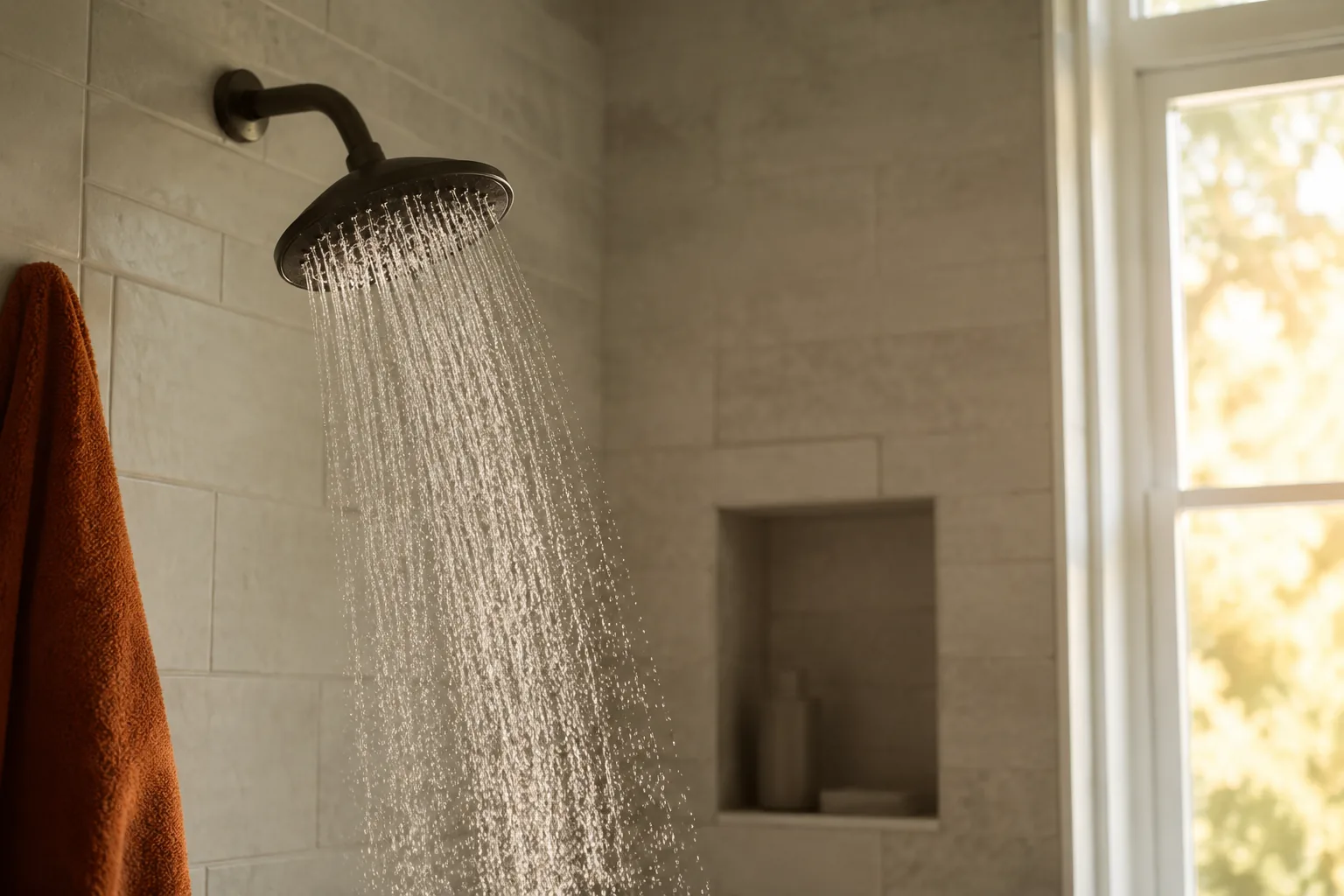
You crank the shower to full hot and it lands somewhere around bath temperature. Not cold, not scalding, just stubbornly warm. That in-between symptom actually narrows the field: a heater that is fully dead gives you cold, and a heater that is undersized gives you hot then cold. Warm-but-never-hot points at a shorter list of parts, and which one depends on your fuel and the exact timing.
Lukewarm is not the same as “no hot water” or “runs out fast”
These three complaints get lumped together, but they point at different parts. No hot water at all means the whole heating path is dead: a tripped breaker, both elements out, a pilot that will not stay lit. Hot water that runs out faster than it used to means the tank makes hot water fine but cannot hold enough of it, usually from sediment stealing capacity or a leaking dip tube. Lukewarm is the middle case: the burner or element is doing something, the water is getting warmed, but it never reaches the temperature you set. That distinction is what lets you skip half the usual checklist and go straight to the parts that produce warm water specifically.
Start with the thermostat setting
Before you condemn a single part, read the dial. A tank set below 120°F will feel lukewarm at the tap, and thermostats drift or get bumped. The standard recommendation is 120°F: hot enough to be genuinely hot at the fixture, low enough to avoid scald risk and slow scale buildup. On an electric heater the setting lives under the two access panels; on a gas heater it is the dial on the control valve. Nudge it up a notch, wait a few hours for the tank to recover, and test again. If the water is still tepid at a proper setting, the problem is a part, not a number.
Diagnose it: fuel type plus the pattern
Two questions tell you most of what you need. What fuel does the heater burn, and when exactly does the water go lukewarm — always and everywhere, only after a minute or two, or just at certain fixtures? Answer both and the six common causes collapse to one or two.
Lukewarm-water diagnoser
Pick your fuel type, then the pattern that matches. The two answers combine into a likely cause.
1. Fuel type
2. The pattern
Electric: the lower element is the prime suspect
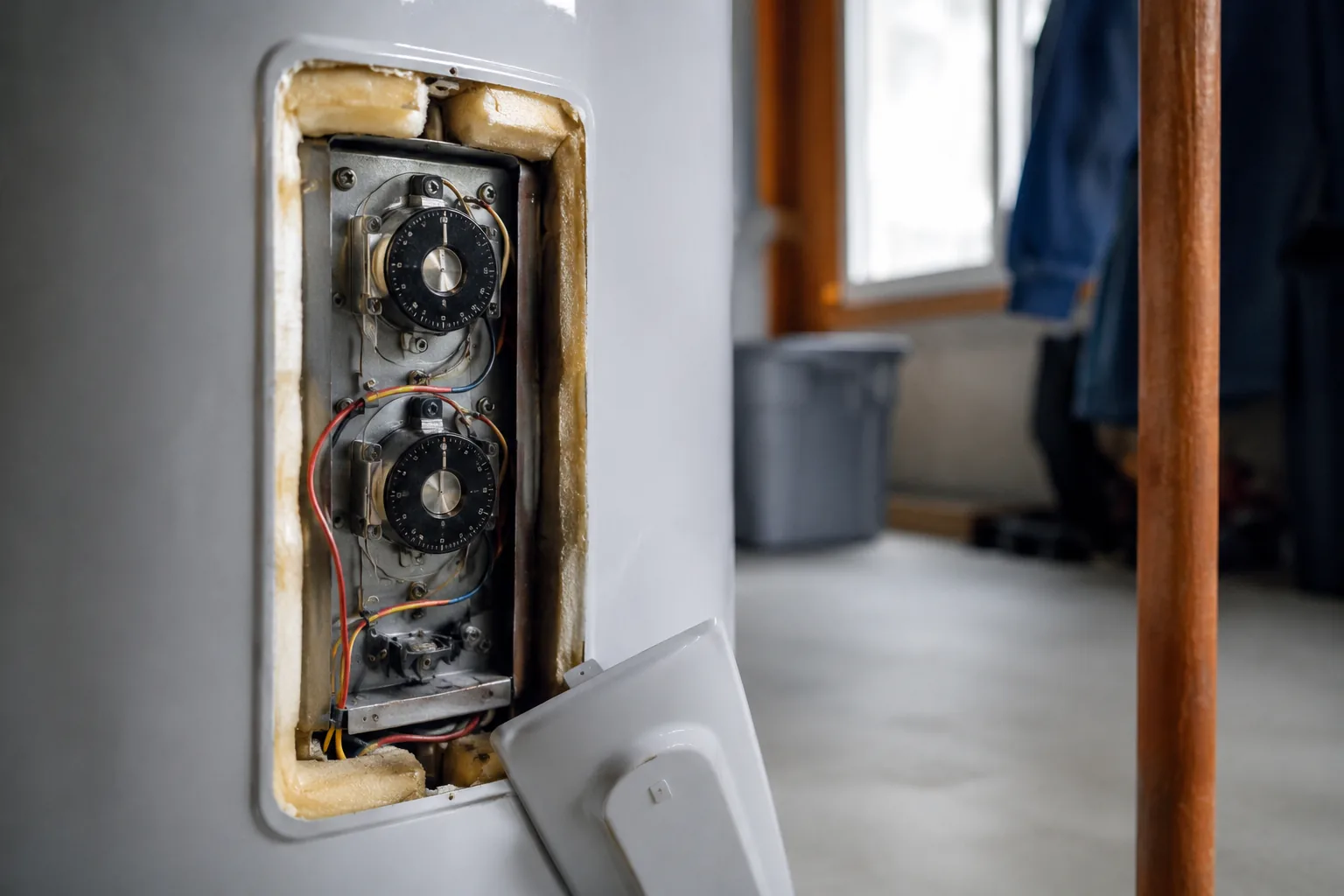
An electric tank has two heating elements and two thermostats. The upper pair heats the top of the tank; the lower pair does the bulk of the work and keeps the whole tank hot. When the lower element burns out, the upper element still warms the top few gallons, so you get a short slug of genuinely hot water followed by warm that turns cold fast. That is why a dead lower element reads as lukewarm rather than stone cold. Kill the power at the breaker, pull the access panels, and test each element for continuity with a multimeter: no continuity means the element is open and needs replacing. Check the lower thermostat while you are in there, since a failed one starves the good element the same way.
The crossover: when the heater is not the problem at all
Here is the case people chase for weeks because they keep blaming the tank. If some fixtures run hot and one or two run only warm, cold water is bleeding into your hot line somewhere downstream. Plumbers call it a crossover, and it dilutes hot with cold before it ever reaches the tap. The three usual doors for it are a worn single-handle faucet cartridge that no longer seals hot from cold, a thermostatic or anti-scald mixing valve that has failed open, and a recirculation loop missing or fitted with a bad check valve so cold pushes backward into the hot side. A quick test: shut off the cold supply to a suspect faucet or shower. If the hot side still runs lukewarm with the cold isolated, cold is crossing in through that fixture, and the fix is the cartridge or valve, not anything at the heater.
The dip tube: cold shortcutting to the top
Cold water enters the tank through a long plastic dip tube that carries it down to the bottom, where the burner or lower element heats it before it rises to the outlet. When that tube cracks or breaks off short, incoming cold spills out near the top and mixes straight into the hot outlet. The result is lukewarm water that also fades fast, on both gas and electric tanks. Two tells point at a dip tube: small white plastic flecks showing up in faucet aerators and strainers, and a heater roughly a decade old, since tubes wear with age and chlorinated water. Replacing a dip tube is a modest job, but confirm it first, because the symptom overlaps with a dead lower element.
Gas: sediment insulating the burner
On a gas heater the tank floor sits directly over the burner, and that is exactly where sediment settles. A thick mineral layer acts as insulation between the flame and the water. The gas control senses that its own probe has reached temperature and shuts the burner off, but the water above the sediment never got there, so it comes out lukewarm and short-lived. Flushing the tank clears the layer and often restores full heat. If the tank is flushed, the thermostat is set correctly, and the water is still tepid, look at the burner itself: a partly clogged burner or a gas control that will not run long enough leaves an aging heater unable to keep up. That is the point to bring in a licensed tech, since burner and gas-valve work is not a homeowner job.
Working through it in order
Read the thermostat setting first, because it is free and it is often the whole answer. If the setting is right, split by fuel: on electric, test the lower element and thermostat; on gas, flush the sediment. On either fuel, if only certain fixtures are affected, stop looking at the heater and hunt the crossover at the faucet or mixing valve. And if warm water shows up with plastic flecks in the aerators on a ten-year-old tank, put the dip tube high on your list before you buy an element you may not need.
Frequently asked
Why is my hot water lukewarm but never actually hot?
Lukewarm water means the heater is warming the water but not to your set temperature. On an electric tank the usual causes are a thermostat set below 120°F or a failed lower heating element. On a gas tank it is a low thermostat setting or sediment insulating the burner. On either fuel, if only some fixtures are affected, cold is crossing into the hot line at a mixing valve, a worn faucet cartridge, or a cracked dip tube.
How is lukewarm water different from hot water running out fast?
They point at different parts. Water that runs out fast means the tank makes hot water fine but cannot hold enough, usually from sediment stealing capacity. Lukewarm means the water never reaches the set temperature in the first place, which points at the thermostat setting, a bad lower element on electric, sediment on gas, or a crossover diluting hot with cold. The first draw tells you which: hot then quickly cold is a capacity problem, warm from the start is a heating problem.
Can a bad lower heating element cause lukewarm water?
Yes, and it is the most common cause on an electric heater. The upper element heats the top of the tank while the lower element keeps the whole tank hot. When the lower element burns out, you get a short burst of hot from the top, then warm water that turns cold. Kill the power at the breaker and test both elements for continuity with a multimeter. No continuity means the element is open and needs replacing.
What is a hot and cold water crossover?
A crossover is cold water bleeding into your hot water line somewhere in the plumbing, so hot arrives at the tap already diluted and lukewarm. It usually comes from a worn single-handle faucet cartridge, a failed thermostatic mixing valve, or a recirculation line with a bad check valve. Test it by shutting the cold supply to a suspect fixture. If the hot side still runs warm with the cold off, cold is crossing in there, and the heater is not the problem.
Can a broken dip tube make water lukewarm?
Yes. The dip tube carries incoming cold to the bottom of the tank to be heated. When it cracks or breaks off short, cold spills out near the top and mixes into the hot outlet, so water comes out lukewarm and fades fast. Look for small white plastic flecks in faucet aerators and strainers, and suspect it more on a heater around ten years old. The symptom overlaps with a dead lower element, so confirm before replacing parts.
What temperature should a water heater be set to?
120°F is the standard target. It is hot enough to be genuinely hot at the fixture while limiting scald risk and slowing scale buildup. If your water feels lukewarm, check the dial before condemning any part, since a setting below 120°F reads as warm. On electric heaters the thermostats sit under the access panels; on gas heaters it is the dial on the control valve. Nudge it up, wait a few hours for recovery, and test again.