A 40,000 BTU gas water heater with a draft hood on top does not push its exhaust anywhere. Nothing forces it out. The heater relies on hot flue gas being lighter than room air, which makes it rise on its own up a metal vent and out the roof. That is natural draft, and it is fragile. Get the vent too narrow or too short and the draft stalls, the exhaust spills back into the room, and now you are breathing carbon monoxide. Sizing that vent is really about protecting the draft.
Atmospheric B-vent, not tankless PVC
This article is about Category I atmospheric venting: a gas storage heater with a draft hood, venting by natural draft up a double-wall Type B metal vent, usually into or alongside a chimney. It is not about tankless or power-vent units on PVC. Those are sealed-combustion appliances that force their exhaust out with a fan, follow completely different rules, and must never be mixed into an atmospheric vent. If your heater has a fan and white plastic pipe, this is the wrong guide.
Why input and height decide the size together
Two numbers drive an atmospheric vent, and they pull in opposite directions. The first is the BTU input on the rating plate, because that sets how much flue gas the heater makes per minute. More input means more exhaust volume, which needs a bigger opening to flow through. The second is the vertical rise of the vent, the height from the draft hood up to the termination. Rise is what creates the draft in the first place. A tall column of hot, light flue gas floats over the denser air outside, and that difference is the suction that carries the exhaust up. Taller column, stronger pull.
Those two work against each other in a useful way. A short vent has weak draft, so it needs a wider pipe to move the gas without choking. A tall vent has strong draft, so the same heater can sometimes run a smaller diameter, because the extra suction does the work the extra width would have done. That is why the vent tables in the National Fuel Gas Code, NFPA 54, are two-dimensional: you look up the input across the top and the vent height down the side, and the cell tells you the diameter. There is no single answer for a given BTU. The height is half the question.
| Heater input | Vertical rise | Round B-vent |
|---|---|---|
| Up to 50,000 BTU | 10 ft or more | 3 in |
| Up to 50,000 BTU | Under 10 ft | 4 in |
| 50,000 to 65,000 BTU | Any (per table) | 4 in |
| Over 65,000 BTU | Any (per table) | 4 in or larger |
Treat that table as a starting point, not the final word. It is a simplified read of the Category I tables and it assumes a dedicated vent for one appliance, a reasonable lateral length, and a normal termination. The real NFPA 54 tables add columns for the connector diameter, the number and length of horizontal runs, and the lateral offset. The calculator below walks the same logic so you can see how height and input move the answer, but the appliance manual and the code tables are what you cut pipe to.
Atmospheric B-vent size estimator
Set the heater input and the vertical rise, then choose whether the heater vents alone or shares a common vent with a furnace. Output is an estimated round B-vent diameter. This is a teaching tool for Category I atmospheric venting, not a substitute for the NFPA 54 vent tables or your inspector.
Estimated draft
Adequate
Grows with rise and input
B-vent diameter
3 in
Round Type B double-wall
—
How to check the vent you already have
Most of the time you are not designing a vent from scratch, you are looking at one that is already there and asking whether it is right. Run the vent from the heater up and check these in order. Any one of them failing can stall the draft.
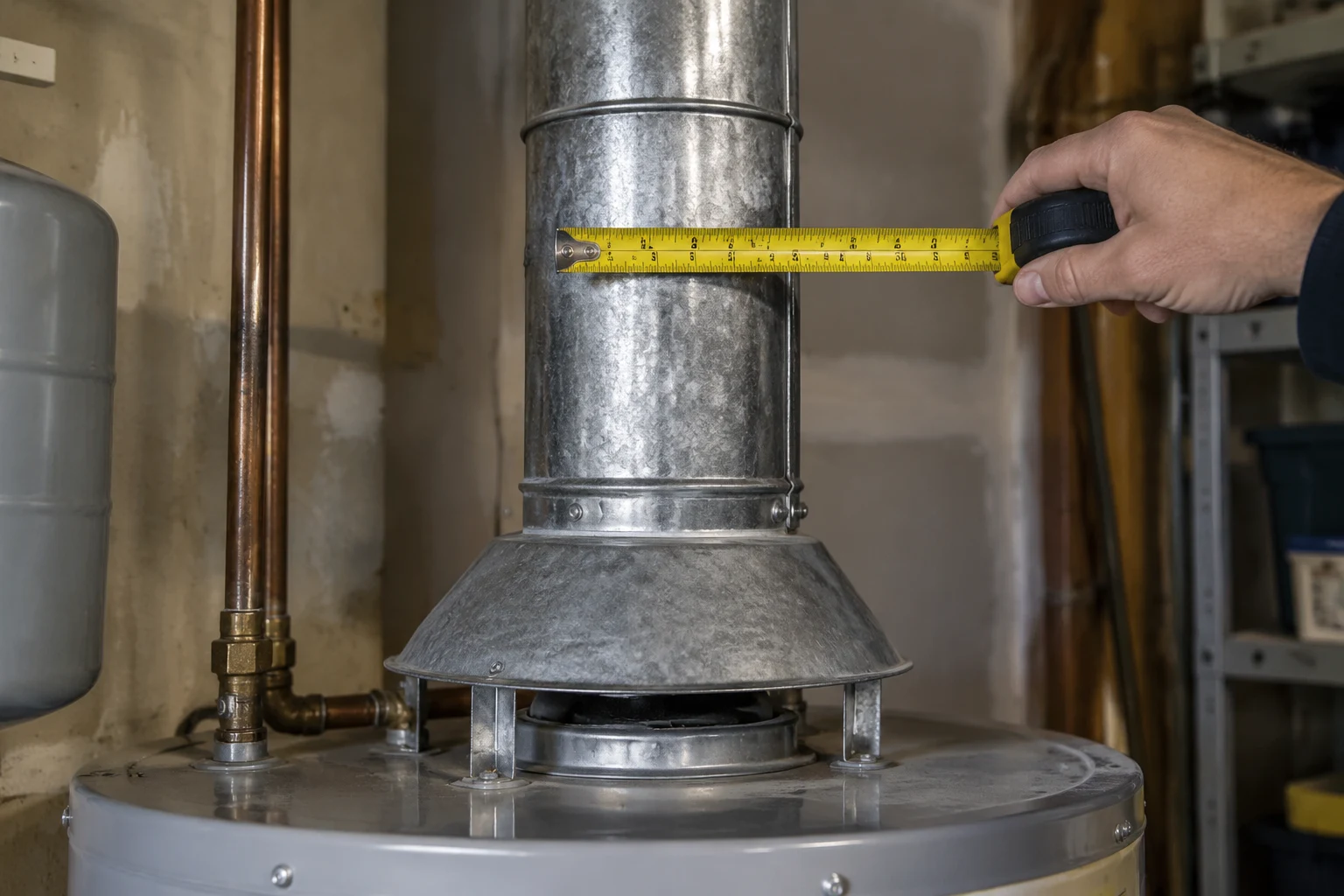
Confirm it is Type B double-wall, not single-wall or plastic
Type B vent is a double-wall metal pipe, usually galvanized outer with an aluminum inner, printed with a B-vent listing along the length. It is the standard for atmospheric gas appliances because the air gap keeps the inner wall hot, which keeps the draft strong and prevents condensation. Single-wall connector is only allowed for short connector sections in the same room, never as the main vertical. If you see white PVC on a draft-hood heater, stop: that is a dangerous mismatch.
Measure the vertical rise before the first elbow
From the draft hood outlet, you want the vent to go straight up. A common minimum is at least a foot of rise off the hood before any turn, and the more vertical rise you can get before going horizontal, the stronger the draft. Short, quickly-turned vents are the classic backdraft setup. If the vent elbows sideways right off the hood, the draft never gets established.
Check the horizontal connector slope and length
Any horizontal run has to pitch up at least 1/4 inch per foot toward the vertical, in the direction the gas flows. A flat or sagging run pools the flue gas and kills draft. The horizontal length is also capped relative to diameter in the code, so a long lateral is a red flag. Keep it short, keep it sloped up, and get vertical fast.
Look for backdraft evidence at the draft hood
Soot, rust streaks, or scorched paint above the draft hood mean exhaust has been spilling into the room. So does condensation on nearby cold surfaces and a pilot that keeps going out. A quick field test: with the burner running, hold a smoking match near the draft hood relief opening and watch that the smoke gets pulled in. If it blows back at you, the vent is not drafting.
Verify the diameter against the input and height
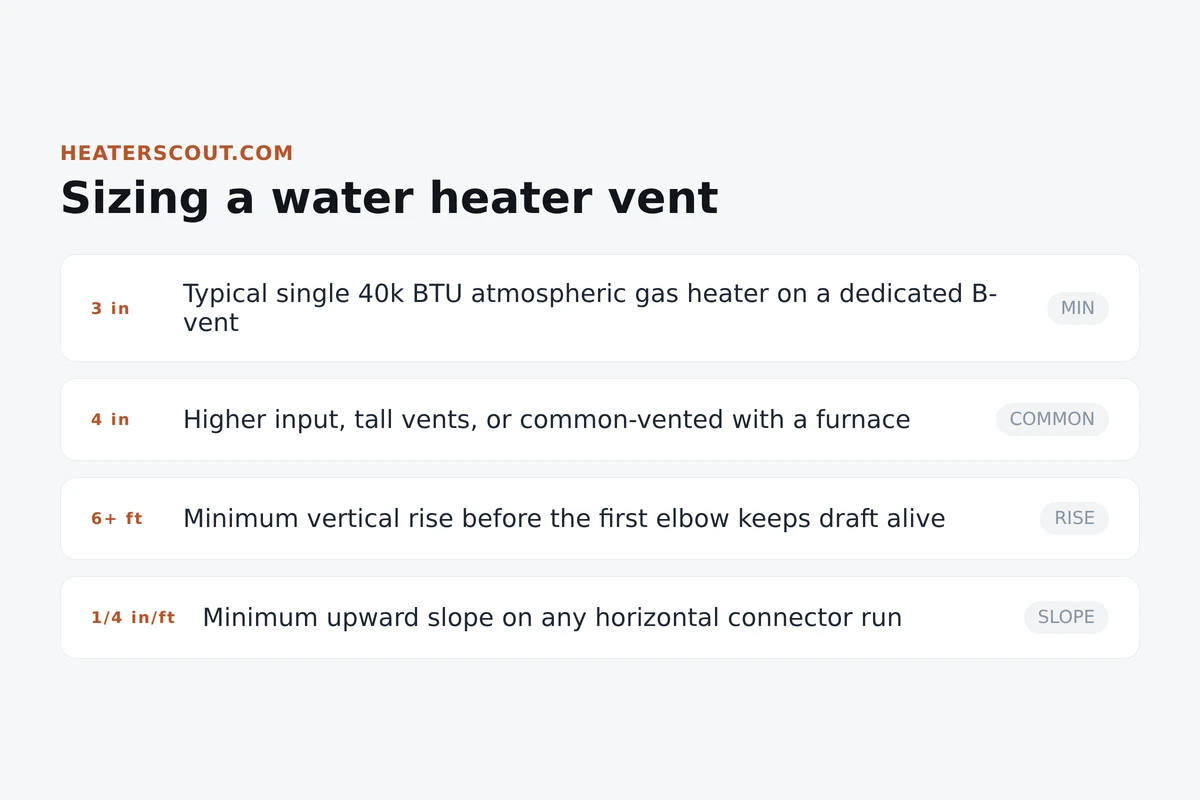
Now put it together. Read the BTU input off the plate, estimate the vertical rise, and check the diameter against the vent table. A 3 inch vent on a 40k heater with good rise is normal. A 3 inch vent on a 75k heater, or on a heater sharing a vent with a furnace, is undersized. When the numbers are borderline, that is the moment to call in a pro with a draft gauge rather than guess.
Category I appliance
A gas appliance that vents by natural draft and operates with a non-positive vent pressure, meaning it does not force its exhaust out with a fan. Atmospheric storage water heaters with a draft hood are Category I, which is why they use double-wall Type B vent and depend entirely on vertical rise for draft. Category IV appliances, by contrast, are condensing and use a fan to push exhaust through sealed PVC. The two categories share no venting, ever, and the appliance rating plate tells you which one you have.
| Vent type | Double-wall Type B, listed for gas appliances |
| Typical single-heater size | 3 in round for ~40k BTU with adequate rise |
| Steps up to 4 in | Higher input, short rise, or common-vented with a furnace |
| Minimum connector slope | 1/4 in per foot, pitched up toward the vertical |
| Minimum vertical rise | Get vertical off the draft hood before turning |
| Code reference | NFPA 54 National Fuel Gas Code vent tables; IFGC |
| Never use | PVC, CPVC, or any plastic on a draft-hood heater |
Why this one gets a pro
Combustion venting is the part of a water heater install where a mistake does not just leak water, it poisons the air. An undersized vent, too little rise, a common vent sized on the wrong input, a lateral run that is too long, any of these can backdraft carbon monoxide into a living space without an obvious warning until an alarm goes off. A licensed installer sizes the vent against the actual NFPA 54 tables, checks the draft with a gauge after firing, and pulls a permit that puts an inspector on it. If your heater shares a chimney with a furnace, or you are changing input, or the existing vent looks marginal, that is the point to bring in someone who does combustion venting for a living.
Frequently asked
What size vent pipe does a 40,000 BTU gas water heater need?
A standard 40,000 BTU atmospheric gas storage heater on its own dedicated Type B vent almost always takes 3-inch round double-wall pipe, provided you have at least about 10 feet of vertical rise. That draft height is what pulls the flue gases up. If the vent is short, under roughly 10 feet, or the heater shares a common vent with a furnace, you step up to 4 inch. The draft hood outlet on the heater itself is usually 3 inch, and you never neck the connector down below the appliance outlet.
Can I use PVC to vent an atmospheric gas water heater?
No. An atmospheric, or Category I, water heater vents hot flue gases by natural draft, and those gases are well above the temperature PVC can survive. PVC and CPVC are only for Category IV appliances, meaning sealed-combustion power-vent or condensing units that the manufacturer specifically lists for plastic venting. Putting a Category I heater on PVC is a fire and carbon monoxide hazard. If your heater draws combustion air from the room and has a draft hood on top, it belongs on metal B-vent up a chimney, not plastic.
Why does vent height affect the pipe size?
Because atmospheric venting runs entirely on natural draft, and draft is buoyancy. Hot flue gas is lighter than the outside air, so a tall column of it creates suction that pulls the exhaust up and out. A taller vent makes a taller column, which makes stronger draft. Stronger draft moves the same volume of gas through a smaller opening, so a tall vent can sometimes use a smaller diameter than a short one at the same BTU input. Drop below the minimum rise and the draft gets weak, the flue gases slow down, and you have to open the diameter up to keep them moving.
What happens if the water heater vent is too small or too short?
Weak or blocked venting causes backdrafting: instead of going up the flue, combustion products spill back out the draft hood into the room. That exhaust contains carbon monoxide. Signs include soot or rust streaks above the draft hood, a pilot that keeps blowing out, condensation on nearby surfaces, and a carbon monoxide alarm that trips. An undersized diameter, too little vertical rise, or a long horizontal run with too little slope all choke the draft the same way. This is why combustion venting is not a guess-and-check DIY job.
How do I vent a water heater and furnace together?
That is a common vent, and it changes the sizing. The shared vent has to carry the combined BTU input of both appliances at the same time, so you size on the total, not on the water heater alone. The National Fuel Gas Code has specific common-vent tables that account for the combined input, the connector sizes, and the vent connector rise. As a practical rule the common vent is at least one size larger than the water heater would need by itself, and it is never smaller than 4 inch. The smaller appliance connector usually ties in below the larger one. Get this sized by a pro against the tables.
What is the minimum slope for a horizontal water heater vent connector?
Any horizontal section of vent connector has to rise at least 1/4 inch per foot toward the vertical vent, in the direction of flow. That upward pitch keeps the buoyant flue gases climbing instead of pooling or sagging in a low spot. The code also limits how long a horizontal connector can be relative to its diameter, because a long flat run kills draft. Keep the horizontal length as short as possible, hold the quarter-inch-per-foot slope, and get the vent turned vertical quickly so the draft can take over.
Does a taller vent always mean I can go smaller on the diameter?
Only up to a point, and only within the vent tables. More rise does buy more draft, and the tables do allow a smaller diameter at higher vent heights for a given input. But BTU input sets a floor: past roughly 50,000 BTU on a single appliance the sheer volume of flue gas needs the larger throat no matter how tall the vent is. Height helps draft, input demands flow, and the published tables balance the two. You cannot shrink a vent below what the manufacturer's table allows just because the chimney is tall.