Quick answer
An electric water heater runs on a 240 volt, double-pole breaker (two switches joined by a bar). When that breaker trips, it caught a fault, and the timing tells you which one. A trip the instant you reset it points to a dead short or a heating element grounded to the tank. A trip after 20 to 40 minutes of heating usually means an element failing under load, both elements firing at once from a stuck thermostat, or a weak breaker. Random trips point to a loose, arcing connection. This is the panel breaker, not the red reset button on the heater.
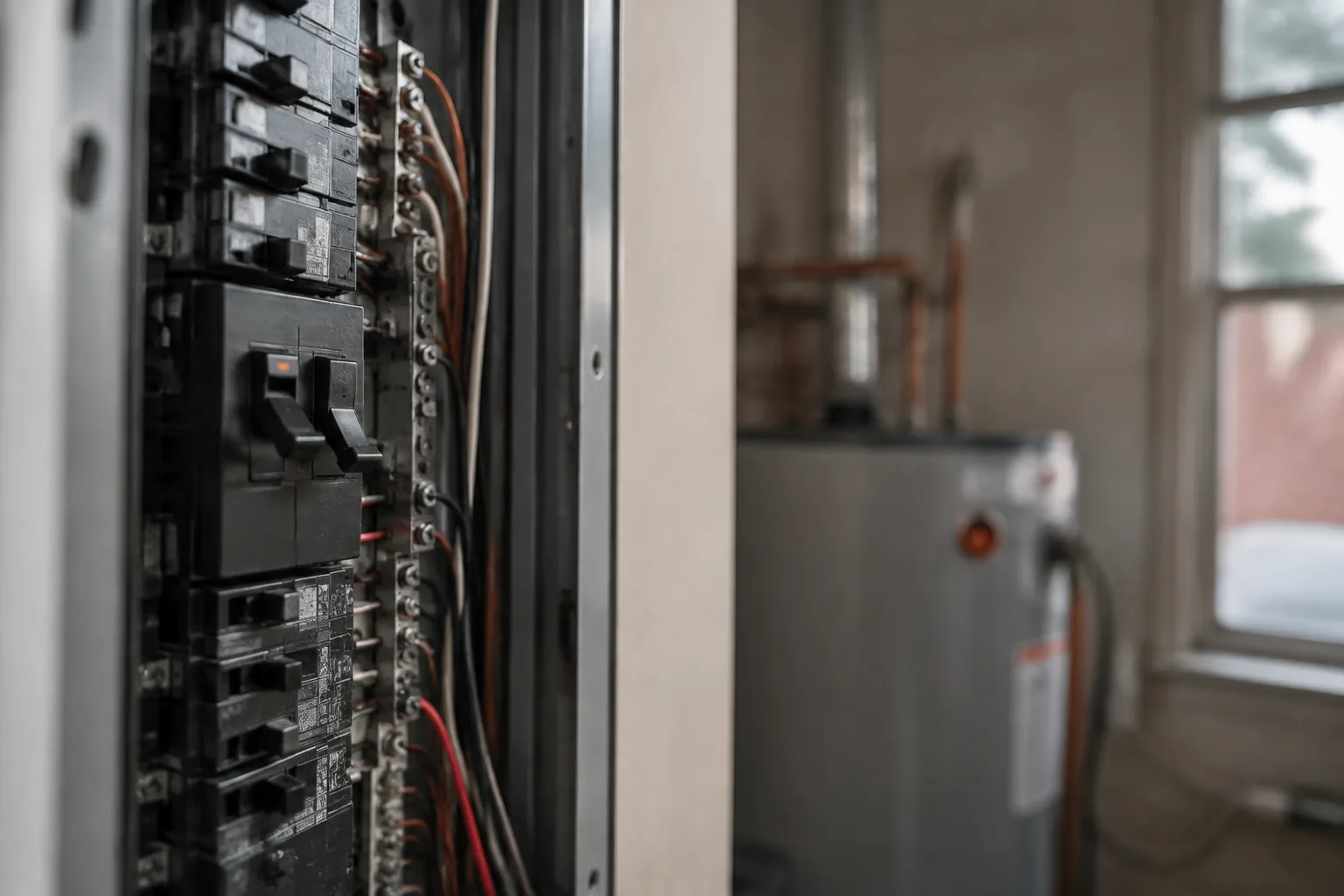
You flip the breaker back on, walk away, and within the hour it snaps off again. Frustrating, but the breaker is doing exactly its job. Somewhere between the panel and the two heating elements, current is going where it should not, and the double-pole breaker is the last line before that becomes a fire. The clue you already have is timing.
First, know what you are dealing with
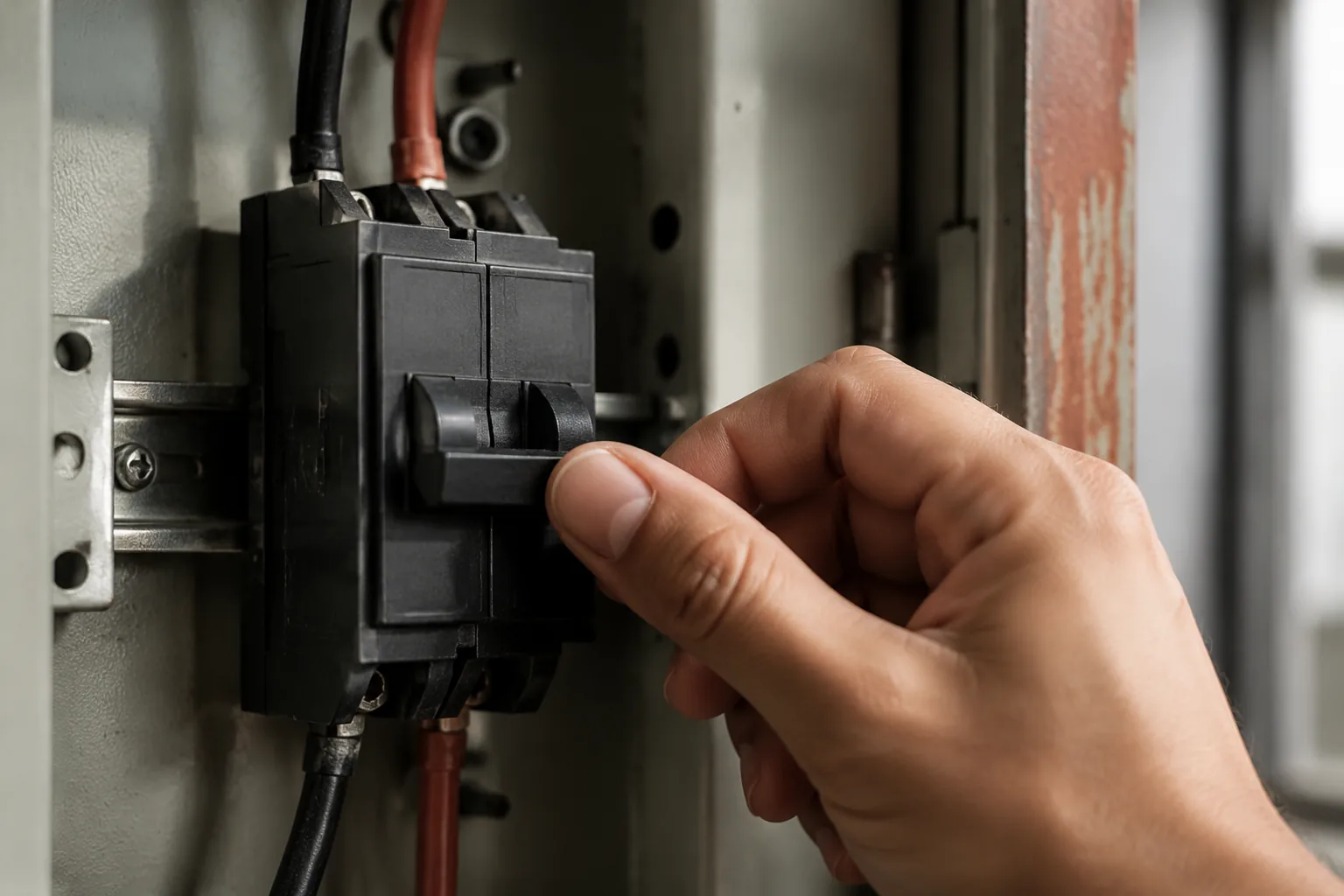
A residential electric tank draws 240 volts through a dedicated double-pole breaker, typically 30 amps on 10-gauge wire. Double-pole means two breaker switches tied together with a handle bar: both legs of the 240 volt supply cut at once. Inside the heater sit two heating elements and two thermostats. Under normal operation they never run at the same time. The upper thermostat heats the top element first, then hands off to the lower element, so the load stays around 4,500 watts, roughly 19 amps. A 30-amp breaker has comfortable headroom for that. So when it trips, either the current spiked past 30 amps or a ground fault let current leak to the tank, and the breaker cut power to stop it.
Before you test anything: turn the breaker off at the panel and confirm zero volts at the heater terminals with a multimeter or non-contact tester. The two large screws under the top and bottom access covers stay live until you do. Water and 240 volts do not forgive shortcuts. If you are unsure at any point, stop and call a licensed electrician.
The timing tells you where to look
Pick when your breaker trips. Each answer routes to the likely cause and the exact multimeter test that confirms it.
When does the breaker trip?
Choose the pattern that matches yours. Same fault, different fingerprint.
Instant trip: a dead short or an element grounded to the tank
If the breaker will not even stay on, current is finding a straight path to ground the moment power hits. The usual culprit is a heating element whose metal sheath cracked, letting water reach the internal coil and dumping current straight into the steel tank. A pinched or chafed wire against the cabinet does the same thing.
Test: element resistance to ground. With power off and confirmed dead, pull the wires off one element. Set the multimeter to ohms. Put one probe on an element screw terminal and the other on the bare metal tank or the element flange.
- A healthy element reads infinite / OL to ground. Good.
- Any continuity, even a few hundred ohms, means it is grounded. Replace that element.
Repeat on the other element. Also eyeball the wiring for a burned or pinched spot before you close up.
Trips after it heats: an element failing under load, both firing at once, or a weak breaker
A trip 20 to 40 minutes in is the signature of a fault that only shows up hot. An element can read fine cold, then leak to ground once it expands and the crack opens. More often the lower thermostat has stuck closed, so both elements energize together, roughly 38 amps through a 30-amp breaker, and it takes a few minutes of that to trip. A breaker that has weakened with age also trips below its rating once it warms up.
Test 1: element resistance across the terminals. Ohms across a single element’s two screws should read about 10 to 16 ohms for a 4,500 W / 240 V element. Near zero means shorted; infinite means burned open.
Test 2: are both elements on together? With power restored (careful) and the tank calling for heat, a clamp meter on one supply leg reading close to 38 amps means both elements are energized at once. That points at a stuck thermostat, not the elements. Replace the thermostat.
Test 3: if elements and thermostats check out, suspect the breaker itself and have it swapped.
Random trips: a loose, arcing connection
No pattern usually means a loose connection somewhere, at the breaker lug, in the junction box on top of the heater, or at a thermostat or element terminal. A loose screw adds resistance, the joint heats and arcs under load, and the breaker trips on the current spike. This one is worth taking seriously fast: loose, arcing connections are a fire risk and tend to get worse.
Test: inspect and tighten every connection. Power off and confirmed dead, open the breaker panel cover and both heater access panels. Look for browned or blackened insulation, melted terminals, or wires you can wiggle.
- Discoloration or a scorched smell means that joint has been arcing. Repair it.
- Snug every terminal screw and the breaker lugs to spec.
If nothing is obviously loose yet it still trips at random, an electrician can find a hidden high-resistance joint faster than trial and error.
The element-to-ground fault, in plain terms
This is the single most common reason an electric water heater trips its breaker, so it is worth understanding. Each element is a resistance coil sealed inside a metal sheath that sits directly in the water. When that sheath cracks, from age, sediment, or a dry-fire when the tank was drained, water seeps in and touches the live coil. Now current has a second path: instead of flowing through the element and back, some of it leaks straight into the grounded tank. A standard breaker sees that imbalance as excess current and trips. The multimeter test above catches it: a healthy element shows no continuity between its terminals and the tank, so any reading there condemns the element.
The stuck thermostat that overloads the breaker
The design promise is that only one element runs at a time. The upper thermostat is the traffic cop: it heats the top of the tank, then transfers power down to the lower element. When a thermostat sticks closed, that handoff breaks and both 4,500-watt elements pull at once. Two elements together draw close to 38 amps, well over a 30-amp breaker, so after a few minutes of combined heating the breaker gives up. The tell is timing plus the clamp-meter reading in the router above. The fix is a new thermostat, and it is worth replacing both the thermostat and the element on that circuit if the element also shows damage.
The weak breaker, and how to be sure it is the breaker
Breakers wear out. After years of heat cycling, the internal mechanism can trip below its rated amperage, especially once it warms up during a heating cycle. But a weak breaker is a diagnosis of exclusion, not your first guess. Homeowners often swap the breaker first because it is easy, then find the real fault was a grounded element all along. Rule out the elements, the wiring, and the thermostats before you blame the breaker. If all of those test clean and it still trips at normal load, replacing the breaker is reasonable, and it is a job for someone comfortable working inside a live panel.
One 4,500 W element at 240 V pulls about 18.75 A. The 30 A breaker sits at the edge of the dial — a grounded element or both firing at once pushes the needle into the red.
The breaker is not the red reset button
These get confused constantly, and they are two different devices. The breaker lives in your electrical panel and cuts the 240 volt supply to the whole circuit. The red button is the ECO, a high-temperature limit switch on the heater itself behind the upper access panel, and it trips when the water gets dangerously hot, not when current spikes. If it is the red button popping and not the panel breaker, that is a different chase, often a stuck thermostat cooking the water. We cover that separately in the guide on why the water heater reset button keeps tripping. Sort out which one is actually tripping before you start testing, because the parts and tests differ.
When to hand it off
A good number of these faults are within reach of a careful homeowner with a multimeter: testing elements, spotting a scorched terminal, swapping a thermostat with the power off. Where it stops being a DIY job is anything inside the live panel, a breaker that trips with every element and thermostat testing clean, or a random trip you cannot localize. Repeated tripping you cannot explain is the point to stop guessing and bring in a licensed electrician, both for the shock risk and because an undiagnosed arcing joint is a fire waiting to happen.
Frequently asked
Why does my water heater keep tripping the circuit breaker?
The most common cause is a heating element that has shorted to ground: its metal sheath cracked, water reached the coil, and current now leaks into the tank, which the breaker reads as a fault. Other causes are a stuck thermostat firing both elements at once, a loose arcing connection, or a weak breaker. The timing of the trip narrows it down: instant means a short, after heating means an element or thermostat, random means a loose connection.
How do I test a water heater element to see if it is tripping the breaker?
Turn the breaker off and confirm zero volts at the heater. Pull the wires off one element and set your multimeter to ohms. Across the two terminals a healthy 4,500-watt element reads about 10 to 16 ohms. Then put one probe on a terminal and the other on the tank: a healthy element reads infinite or OL, while any continuity means it is grounded and must be replaced.
My breaker trips instantly when I flip it back on. What does that mean?
An instant trip means a dead short: current is finding a straight path to ground the moment power hits. Usually that is a heating element grounded to the tank, or a pinched wire touching the cabinet. Test each element to ground with a multimeter and inspect the wiring. Do not keep resetting a breaker that trips instantly, because it is protecting you from a real fault.
Why does the breaker trip only after the water heater runs a while?
A trip 20 to 40 minutes in points to a fault that shows up under heat and load. An element can leak to ground only once it expands and the crack opens, or a stuck thermostat lets both elements run together at nearly 38 amps, overloading a 30-amp breaker after a few minutes. A breaker weakened with age can also trip once it warms up. Test the elements and check whether both are energizing before blaming the breaker.
Is a tripping breaker the same as the red reset button popping?
No. The breaker is in your electrical panel and cuts the 240-volt supply when it sees a current fault. The red button is the ECO high-limit switch on the heater, and it pops when the water gets too hot, not when current spikes. They point to different problems and need different tests, so identify which one is actually tripping first.
Can I replace the breaker myself to fix the tripping?
You can, but a weak breaker is a diagnosis of exclusion, not a first guess. Most tripping traces to a grounded element, a stuck thermostat, or a loose connection, and swapping the breaker without finding that fault just moves the problem. Rule out those causes first. Working inside a live panel carries real shock risk, so if you are not fully comfortable there, have a licensed electrician do it.