Rusty hot water almost never means what people fear first, which is that the city is pumping dirty water. If the brown only shows up on the hot side, the city is off the hook and your water heater is the suspect. Inside the tank is a sacrificial anode rod, a bar of reactive metal whose whole job is to corrode so the steel tank does not. When that rod is used up, the tank starts rusting from the inside, and the first thing you see is a tint in the hot water. There is a two-minute test that tells you whether to blame the heater or the plumbing, and it is where every diagnosis should start.
Run the hot-vs-cold tap test first
Fill a clear glass from a cold-only tap, then one from a hot-only tap. Both rusty means the problem is upstream in your pipes or the city main. Hot only means the water heater. Do this before anything else.
Hot only: check the anode and the tank age
Rust in the hot side points at a depleted sacrificial anode and a steel tank corroding inside. Note the tank's age off the rating plate. Past ten years, corrosion is the leading explanation.
Flush the tank and watch what comes back
Drain and flush with the supply and power or gas off. If the water clears and stays clear, it was loose sediment. If rust returns within a day or two, the steel itself is corroding and no flush fixes that.
Both taps rusty: look at the plumbing
Corroding galvanized supply pipe in an older home, or a stirred-up municipal main after a break or hydrant flush. Heat corrodes galvanized faster, so the hot line can look worse even when both are affected.
Rule out a sulfur smell as a separate issue
A rotten-egg smell without visible rust is hydrogen sulfide from the anode chemistry, not tank corrosion. It gets an anode swap to aluminum or zinc, not a new heater. Do not confuse the two signals.
Key takeaways
- Rust in the HOT water only points at the heater: a spent anode rod and a steel tank corroding from the inside.
- Rust in BOTH hot and cold points upstream at galvanized supply pipes or the municipal main, not the heater.
- The anode rod is sacrificial. Magnesium lasts about 1 to 2 years, aluminum about 3 to 5. Once it's gone, the tank corrodes next.
- A flush clears loose sediment. Rust that returns within a day or two of a full flush is the steel tank, and no flush fixes that.
- A rotten-egg smell is hydrogen sulfide from the anode chemistry, a separate problem cured by swapping to an aluminum or zinc anode.
- Hot-only rust that returns after flushing, on a tank past ten years, usually means the tank is near the end and needs replacing.
The sacrificial anode rod
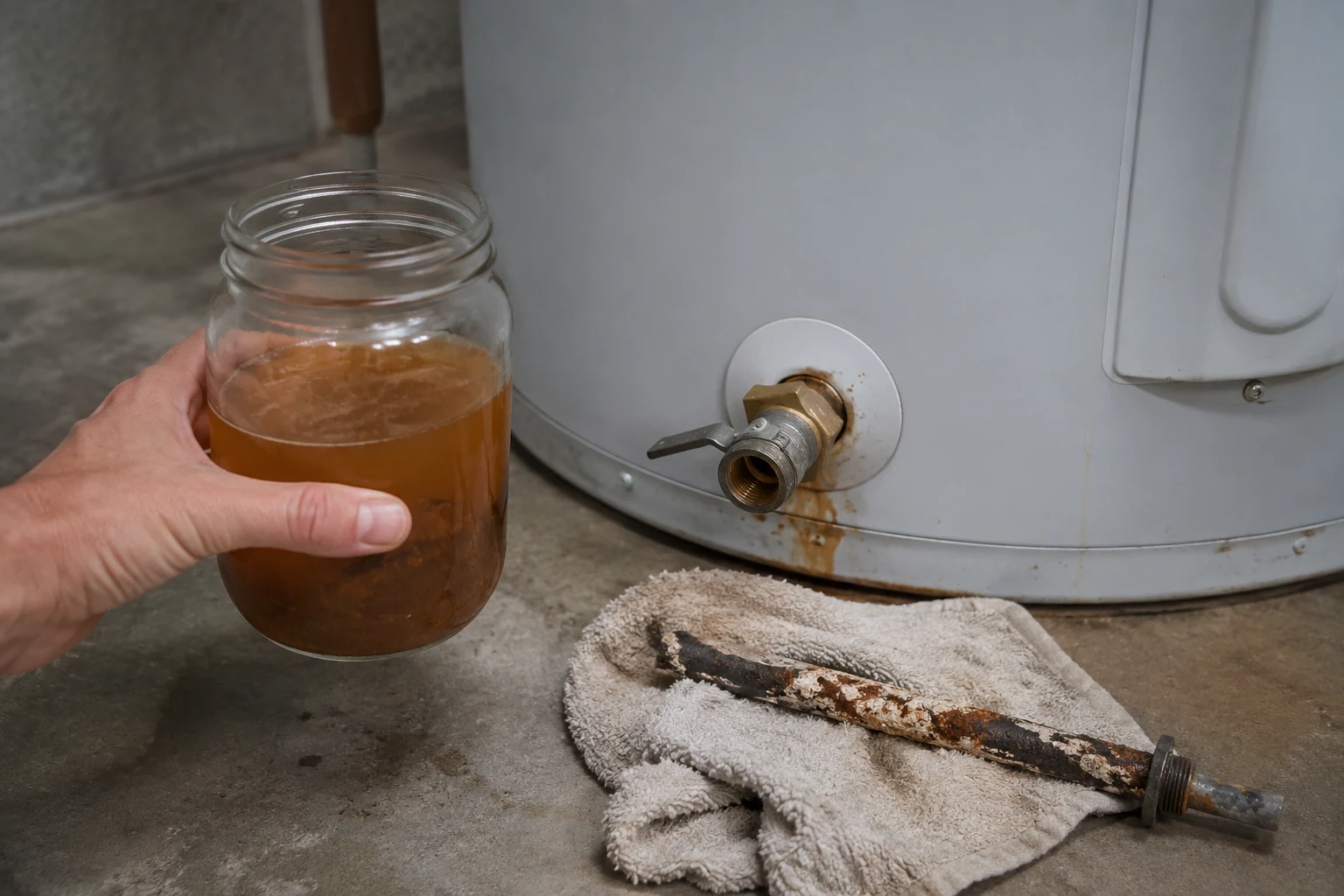
A rod of magnesium or aluminum, both more reactive than the steel of the tank, threaded into the top of the water heater. Electrochemistry sends the corrosion at the more reactive metal, so the rod dissolves over time in place of the tank walls. It is sacrificial by design: you are supposed to replace a consumed rod, cheaply, before it disappears. A magnesium rod usually lasts one to two years, an aluminum rod three to five, and once it is eaten down to the bare steel core wire the tank has no protection left and begins to rust from the inside out.
Why hot water rusts before cold
The hot side going brown first is not a coincidence, and it holds whether the problem is your heater or your pipes. Heat accelerates the electrochemical reaction that drives corrosion. Inside the tank, warm water speeds the consumption of the anode and the rusting of exposed steel once the anode is gone. Out in the plumbing, a hot galvanized line corrodes faster than a cold one of the same age, so an old house with galvanized pipe often shows rusty hot water while the cold still looks fine. That overlap is exactly why the tap test matters. Rusty hot water alone does not prove the heater is the cause.
Run the test cleanly. Use a tap with separate hot and cold, like a bathroom sink, and let each run ten or fifteen seconds into its own clear glass so you are not judging water that sat in the line overnight. Hold both up to a window. Cold clear and hot tinted isolates the problem to the heater and everything downstream of it. Both the same rusty color sends you to the pipes and the municipal supply. This one comparison saves people from buying a water heater that was never the problem.
A new water heater does nothing for rusty pipes. Check the cold tap before you spend a dollar.The tap test, in one sentence
When the heater is the cause
Say the test comes back hot-only. Now you are looking at the tank, and there are three things it could be, roughly in order of how easy they are to live with. The mildest is loose sediment: mineral scale and a little rust that settled on the tank floor and got stirred up, which flushes out. The middle case is a depleted anode with the tank corrosion still early, which a new anode can arrest. The worst case is a tank that has already corroded through its steel, which nothing repairs. The way you sort between them is a flush, an anode check, and the age on the rating plate.
Flush first, because it is cheap and it answers a question. Kill the power or the gas, close the cold inlet, open a hot tap somewhere to break the vacuum, and run a hose from the drain valve until the water comes out clean. Clear afterward and clear for a week means you had sediment and you are done for now. Brown again in a day or two proves the point: the rust is coming from the tank walls, not silt on the floor, and that is corrosion you cannot rinse away. Pair it with an anode check. Pull the rod and look at it. A healthy rod is a thick bar. A rod eaten to a thin twisted wire, or gone, means the tank has run unprotected, and rusty hot water is the result.
Before you touch the tank
Working on the tank means hot water and, on gas units, a live burner. Shut off the power at the breaker or set the gas control to off before you drain, and let a full tank cool if you can. Never drain a tank against a closed system with no vent open, and never cap a leaking relief valve.
The anode replacement window
Timing is everything with an anode rod, because it only helps if you get to it before the tank corrodes. A magnesium rod, which protects best and is common in softer water, typically lasts a year or two. An aluminum rod, slower to dissolve and better suited to hard water, runs three to five years. Those are ranges, not guarantees, and hard water, high temperature settings, and heavy use all shorten them. The maintenance move that actually extends a tank's life is checking the rod every year or two and swapping it the moment it is more than half consumed, long before rust ever reaches your tap. Most people never look at it, the rod vanishes silently, and the first sign of trouble is brown water, by which point the tank has already started to rust.
If you catch a spent rod on a tank that is still relatively young and not yet leaking, replacing it is one of the best-value repairs on a water heater: a rod costs a fraction of a new unit and can buy years. If the tank is already past ten and the hot water is already rusty, a new anode becomes a gamble, because the steel may be corroded through in spots a rod can no longer save. That is the judgment call the rest of this comes down to.
When it is the plumbing, not the heater
If both taps run rusty, the heater is a bystander and you are looking upstream. In older homes the usual cause is galvanized steel supply pipe. Galvanized pipe is steel with a zinc coating, and once that coating wears through, the steel underneath rusts and sheds flakes into the water. It tends to show up worst first thing in the morning, when water has sat in the pipes, and it gets worse over years as more of the pipe interior corrodes. The fix is not a heater or an anode, it is re-piping the affected runs, which is a real plumbing job. The other both-taps cause is temporary and external: a water main break, a hydrant flush, or utility work stirred up iron in the municipal supply, and it clears on its own in a day once you run the taps a while. If your rusty water started the same week the city was working on the street, wait it out before assuming anything is wrong with your house.
Loose sediment
Rust vanished after a drain-and-flush and stayed gone. This was silt on the tank floor, not corrosion. Flush annually to keep it from stacking up, and check the anode while you are at it.
Replace the anode
Rust on a tank under about eight years with a rod eaten to a thin wire. Swapping the anode arrests the corrosion for the cost of a rod and can add years. The single best-value fix here.
Plan a replacement
Rust that comes back within days of a full flush on a tank past ten years. The steel has corroded through. There is no part to swap, because the tank is the part. Replace before it leaks.
It's the plumbing
Galvanized supply pipe shedding rust, or a disturbed municipal main. Re-pipe the bad runs, or wait out city work. A new heater does nothing for this, so do not buy one.
Swap the anode material
A rotten-egg sulfur smell without brown water is hydrogen sulfide, not corrosion. Swap the magnesium anode for aluminum or zinc and sanitize the tank. The heater is otherwise fine.
The sulfur smell is a different signal
One trap worth calling out: a rotten-egg smell in the hot water is not the same problem as rust, even though both point at the anode rod. The smell is hydrogen sulfide gas, and it comes from sulfate-reducing bacteria in the tank reacting with a magnesium anode. It is a chemistry and bacteria issue, not tank corrosion, and it does not mean the heater is failing. The cure is to swap the magnesium rod for an aluminum or zinc-aluminum one, which stops feeding the reaction, often paired with a hydrogen-peroxide flush to knock the bacteria back. Where it gets confusing is that an old tank can smell and run rusty at the same time. Keep them separate in your head. Rust means the steel is corroding and the tank is aging out. Smell means the anode chemistry needs a different rod. Do not junk a good tank over a smell, and do not ignore rust just because the water does not stink.
The verdict
Run the tap test first. Rust in both hot and cold is a plumbing problem, so leave the heater alone and look at galvanized pipe or the city main. Rust in the hot side only is the heater: flush it, and if the rust returns within a day or two, the steel tank is corroding through and, past about ten years, wants replacing. Catch a spent anode before that stage and a new rod for a few dollars adds years. A rotten-egg smell is a separate anode-material problem, not a reason to replace the tank.
Putting it together
The whole diagnosis fits on a napkin. The tap test decides heater versus plumbing, and it is not optional, because heat rusts hot lines faster and fools people into blaming the wrong system. If it is plumbing, you are re-piping galvanized runs or waiting out the city. If it is the heater, a flush separates sediment from corrosion, the anode tells you whether the tank has been protected, and the age on the rating plate sets your expectations. A young tank with a spent rod is a cheap save. An old tank with rust that keeps coming back is a replacement you should schedule on your own terms, before the corroded steel chooses the timing for you.
Frequently asked
Is rusty hot water dangerous to drink or shower in?
It is unpleasant and it stains laundry and fixtures, but a little rust in the water is not an acute health hazard for a healthy adult. Iron oxide is the same stuff that tints a lot of well water. The real problem is what it tells you. Rust in the hot side almost always means the sacrificial anode inside your water heater is gone and the steel tank has started corroding from the inside, which is a slow countdown to a leak. So do not drink or cook with visibly rusty water, run the tap until it clears when it flares up, and treat the discoloration as a warning to check the heater rather than a thing to live with. If the water is rusty at every tap, hot and cold, the source is your pipes or the city main instead, and that is a plumbing question, not a heater one.
How do I tell if the rust is from my water heater or my pipes?
Run the tap test, and it takes two minutes. Fill a clear glass from a cold-only tap, then fill another from a hot-only tap, and compare them side by side. If only the hot water is discolored, the water heater is the suspect: the anode rod has depleted and the tank is corroding. If both the cold and the hot come out rusty, the discoloration is coming from upstream, which means corroding galvanized supply pipes in an older home or a disturbance in the municipal supply after a main break or hydrant flush. One more clue. If the rust shows up at every fixture in the house it is systemic, but if it is only one bathroom the branch line feeding that room is the culprit. Do the test before you spend a dollar, because a new heater does nothing for rusty pipes.
Can flushing the tank fix rusty hot water?
Sometimes, and it is the cheap thing to try first. A drain-and-flush pulls out loose sediment and mineral scale that has settled on the tank floor, and if the discoloration was really stirred-up silt rather than corrosion, the water runs clear again and stays clear. Do it with the cold supply and power or gas off, open a hot tap upstairs to break the vacuum, and run the drain until it comes out clean. Here is the tell: if the water is rusty again within a day or two of a full flush, that is not sediment, that is the steel tank itself corroding, and no amount of flushing fixes rusted-through steel. Combine a fresh flush with an anode check. A spent anode plus rust that returns after flushing is the tank telling you its time is short.
How long does an anode rod last and does replacing it help?
A magnesium anode rod typically lasts about one to two years, and an aluminum rod about three to five, depending on how hard your water is and how much hot water you use. The rod is sacrificial: it is a more reactive metal bolted into the tank so corrosion eats the rod instead of the steel. Once it is consumed down to the bare core wire, the tank has no protection left and starts to rust. If you catch it early, before the tank itself has corroded, replacing the anode is absolutely worth it and can add years of life for the price of a rod. If the hot water is already rusty and the tank is past ten years, a new anode is a gamble, because the corrosion may already be through the steel. Check the anode every year or two and swap it before it disappears, not after.
My hot water smells like rotten eggs but does not look rusty. Same problem?
No, that is a separate issue with a different fix. A rotten-egg or sulfur smell is hydrogen sulfide gas, produced when sulfate-reducing bacteria in the tank react with a magnesium anode rod. It is a chemistry problem, not corrosion of the tank, and it does not mean the heater is failing. The usual cure is to swap the magnesium anode for an aluminum or zinc-aluminum rod, which stops feeding the reaction, and sometimes a sanitizing flush with hydrogen peroxide to knock back the bacteria. Rust discoloration and sulfur smell can show up together on an old tank, but they are not the same signal. Rust says the steel is corroding. Smell says the anode chemistry and some bacteria are misbehaving. Do not scrap a tank over a smell alone.
When is rusty hot water a sign I need a new water heater?
When the rust is on the hot side only, it comes back after a full flush, and the tank is around ten years or older. A residential tank typically lasts eight to twelve years, and rusty hot water on an aging unit usually means the sacrificial anode is long gone and the steel has corroded through from the inside. At that point there is no part to replace, because the tank is the part. Other signs that stack with it: water weeping or rust staining at the base of the tank, a rumbling or popping tank full of hardened sediment, and hot water that runs short. Any one of those on a ten-year-old tank with rusty hot water is the tank telling you to plan a replacement before it leaks on its own schedule, which is usually the worst possible one.