Recovery time is how long a tank takes to reheat after you drain the hot water, and it rides on one number: the recovery rate, or gallons per hour the heater can bring up to temperature. Get that number for your own tank and a slow reheat stops being a mystery, because either the physics explains it or you have a fault to chase.
Quick answer
Recovery rate is the gallons per hour a heater can raise from the incoming cold temperature to the thermostat setting. A typical electric tank recovers around 15 to 25 gph; a gas tank recovers around 40 to 50 gph, so gas is roughly twice as fast to refill a full tank. The math is one formula: electric gph = (element watts x 3.412) / (8.33 x temp rise), gas gph = (BTU input x 0.75) / (8.33 x temp rise). If your real recovery is far slower than that number, the usual causes are sediment on the tank floor, a failed lower element, or cold winter inlet water.
Run your own numbers first
Before reading photos of sediment or theories about elements, plug your own tank into the calculator. Set the size, pick the fuel and power off the rating plate, then set the incoming and target temperatures. The temp rise drives everything, so an honest incoming number matters: 50 degrees is a fair winter default in much of the country, warmer in summer or the south.
Recovery-time calculator
Enter your numbers and press Calculate. It returns recovery rate in gallons per hour and the minutes to reheat a full tank.
These are ideal figures. Real recovery runs a bit slower because the tank loses standby heat to the room, the thermostat cycles near the top of its band, and no burner or element is perfectly rated. Treat the number as the ceiling. If you are within 10 or 15 percent of it, the tank is fine. If real life is a small fraction of it, something is wrong.
What recovery rate actually measures
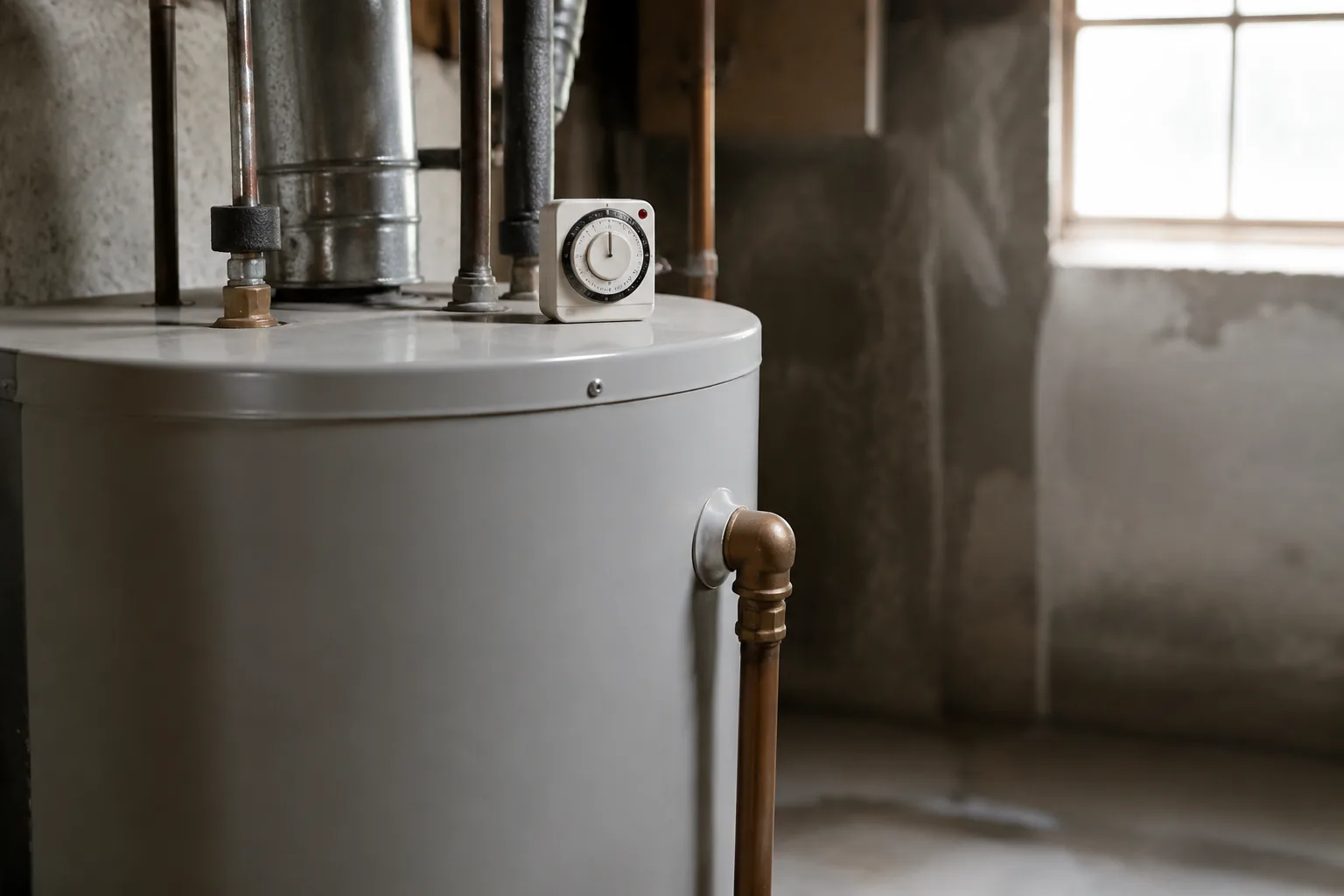
Recovery rate is gallons per hour that a heater can raise from the incoming cold temperature up to the thermostat setting. It is a rate of heating, not a rate of storage. A 40-gallon tank and an 80-gallon tank with the same burner recover at the same gph; the bigger tank just holds more before it runs dry. So two numbers matter together: the tank volume, which sets how much hot water you have on hand, and the recovery rate, which sets how fast you get it back once it is gone.
The rate is not fixed either. It depends on the temperature rise, meaning the target temperature minus the incoming water temperature. A heater that has to lift water 70 degrees recovers slower than the same heater lifting it 50 degrees, because it is doing more work per gallon. This is why the same tank feels slower in January than in July: the ground water feeding it is colder, the rise is larger, and every gallon takes longer to heat. The heater did not change. The math did.
The formula, in plain numbers
Every recovery calculation runs on one energy balance. It takes 8.33 BTU to raise one gallon of water by one degree Fahrenheit (that is the weight of a gallon, 8.33 pounds, times one BTU per pound per degree). Turn that around and you get gallons per hour from the heat you put in.
For an electric tank, the heat input is the element wattage converted to BTU per hour, where 1 watt equals 3.412 BTU/hr. Electric elements are nearly 100 percent efficient at putting heat into the water, so no loss factor is needed:
Electric gph = (element watts x 3.412) / (8.33 x temp rise)
Work a 4500-watt element lifting water 70 degrees: 4500 x 3.412 = 15,354 BTU/hr, divided by (8.33 x 70 = 583) gives about 26 gph at that rise. At a gentler 50-degree rise the same element does about 37 gph. That range, roughly the high teens to high 20s at real winter rises, is why electric tanks earn their slow reputation.
For a gas tank, the heat input is the burner rating in BTU per hour, but a chunk of that heat goes up the flue instead of into the water. Storage gas heaters run around 75 to 80 percent combustion efficiency, so the formula folds in a 0.75 factor:
Gas gph = (BTU input x 0.75) / (8.33 x temp rise)
Run a 40,000 BTU burner at a 70-degree rise: 40,000 x 0.75 = 30,000 BTU/hr, divided by 583 gives about 51 gph. That is roughly double the electric number for the same rise, and it is the whole reason a gas tank refills so much faster. A common residential element tops out around 4500 to 5500 watts, which is 15,000 to 19,000 BTU/hr of heat, while a gas burner in a standard tank runs 30,000 to 50,000 BTU/hr of input. More BTU per hour is more gallons per hour, full stop. That is the entire story of why electric tanks recover slowly and gas tanks recover fast, and it also shapes sizing: electric households lean on a bigger tank so they rarely wait on recovery, while a gas household gets away with a smaller tank because it refills fast between draws.
Is mine too slow? Read the thresholds
You already have your own gph and reheat time from the calculator above. Now hold your real, measured recovery next to these thresholds. To get the measured number, run the hot water until it turns cold, note the clock, then test the tap every 20 minutes until it is hot again at the top of the setting.
If your measured recovery is within 10 or 15 percent of the calculator number, stop looking; the tank is healthy and simply doing physics. If it is running two or three times the estimate, the gap is a fault. Walk the causes below in order. The single most common one is sediment, pictured next, so it leads the list.
What slows recovery below normal
When a tank recovers far slower than the formula says, walk this list in order.
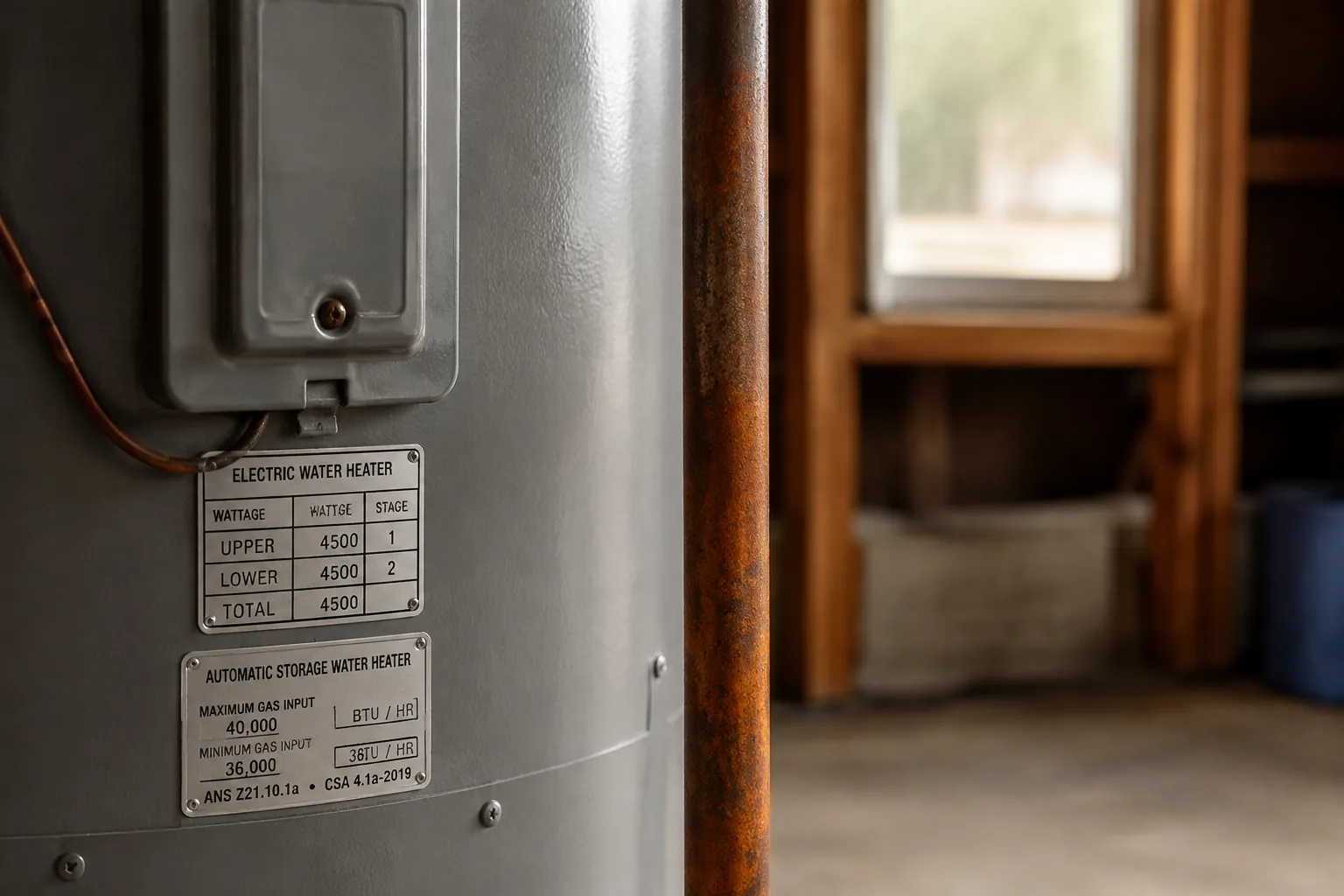
Sediment on the tank floor. Hard-water minerals settle to the bottom over the years and bake into a crust. On a gas tank, that crust sits between the burner flame under the tank and the water above it, insulating the two so heat crawls into the water instead of flooding in. On an electric tank, a lower element buried in sediment cannot shed its heat and can burn out. Sediment is the number-one reason an older tank recovers slowly, and flushing the tank is the first fix.
A failed lower element (electric). An electric tank has two elements; the lower one does most of the reheating once you draw down the tank. If it fails, the upper element still heats the top of the tank, so you get a small slug of hot water that runs cold fast and then takes forever to come back. That specific symptom, a little hot then a long slow crawl, points straight at a dead lower element. Testing it needs a multimeter with the power off.
Cold incoming water. This one is not a fault. In deep winter, ground water in northern states can arrive at 40 degrees or lower, pushing the temp rise past 80 degrees and stretching recovery well beyond the summer figure. Before condemning a part, plug the actual winter inlet temperature into the calculator; the slow recovery may simply be honest physics for the season.
An undersized element or burner. If a tank was spec-ed with a low-wattage element or a small burner, its recovery was always going to be slow; nothing is broken. This shows up when a tank feels underpowered from day one rather than degrading over time. Check the rating plate for the actual wattage or BTU input and run the numbers before assuming a fault.
A weak or partly blocked gas burner. On gas, a burner clogged with dust, a bad gas pressure, or a failing gas valve delivers less than its rated BTU, so recovery drops. If the flame looks yellow and lazy instead of crisp and blue, combustion is off and the burner needs cleaning or service.
A tighter way to measure actual gph
The stopwatch method above gives you a total reheat time, which is enough for most people. If you want your real gallons per hour to set beside the formula, there is a sharper check for a gas tank. Time how long the burner runs to bring a fully drawn-down tank back up to temperature, then divide the tank gallons by that run time in hours. That quotient is your measured gph.
Say a 50-gallon gas tank takes 70 minutes of burner run time to fully recover. That is 50 gallons over 1.17 hours, or about 43 gph. Set that against the formula figure for your burner and rise. If the formula predicted 51 gph and you measured 43, you are within striking distance and the tank is healthy. If the formula predicted 51 and you measured 20, roughly 40 percent of rated output, the burner is delivering far under its rating or sediment is stealing the heat, and that shortfall is your fault to fix.
When slow recovery is a fault, not physics
The dividing line is whether the formula, fed honest numbers, explains the delay. Plug in your true incoming water temperature, your target setting, and your element wattage or burner BTU from the rating plate. If the calculator says two hours and you are getting two hours, the tank is healthy and simply electric, or the winter is simply cold. If the calculator says one hour and you are getting three, the physics does not cover it, and you are looking at sediment, a failed lower element, or a burner running below rating. That is the moment to flush the tank, test the element, or have the burner checked, rather than living with cold showers and blaming the weather.
Frequently asked
What is a normal recovery time for a water heater?
It depends on fuel and temperature rise, but a rough guide is one to two hours to reheat a full tank. A gas tank recovering at 40 to 50 gph brings a 50-gallon tank back in about an hour. An electric tank recovering at 15 to 25 gph takes two hours or more for the same volume. Colder incoming water in winter stretches both figures because the temp rise is larger.
How do I calculate my water heater recovery rate?
Use gallons per hour. For electric: gph = (element watts x 3.412) / (8.33 x temp rise). For gas: gph = (BTU input x 0.75) / (8.33 x temp rise), where 0.75 accounts for heat lost up the flue. Temp rise is the target temperature minus the incoming water temperature. Divide your tank gallons by the gph to get the hours to reheat a full tank.
Why is my electric water heater so slow to recover?
Electric tanks are slow by design because a 4500 to 5500 watt element puts far less heat into the water per hour than a gas burner, so recovery of 15 to 25 gph is normal. If it is slower than that, suspect sediment buried around the lower element or a failed lower element, which leaves only the upper element working. Test the lower element with a multimeter with the power off.
Why does my gas water heater take so long to reheat now?
If a gas tank used to recover quickly and now crawls, the leading cause is sediment. Years of hard-water minerals bake into a crust on the tank floor, insulating the water from the burner flame underneath so heat transfers slowly. Flush the tank to clear it. A yellow, lazy burner flame or low gas pressure also cuts the delivered BTU and slows recovery, and needs service.
Does incoming water temperature affect recovery time?
Yes, strongly. Recovery rate depends on the temperature rise, which is the target minus the incoming water temperature. In winter, ground water in northern states can arrive at 40 degrees F or colder, pushing the rise past 80 degrees and stretching recovery well beyond the summer figure. The same heater is simply doing more work per gallon, so a slower winter recovery is often normal physics, not a fault.
When does slow recovery mean my water heater is broken?
Feed honest numbers into the recovery formula: your true incoming temperature, target setting, and rated wattage or BTU. If the formula predicts your actual recovery time, the tank is healthy and simply slow. If real recovery is far longer than the formula says, that gap points to a fault, usually sediment, a failed lower electric element, or a gas burner running below its rating. That is when to flush, test, or service the unit.