Pop the top off a 50-gallon electric tank and there are maybe a dozen parts inside, and any one of them can be the reason your shower went cold. A water heater is not complicated. It is a steel drum that holds water, a way to heat that water, a couple of safety devices, and one clever pipe that keeps the hot and cold from mixing.
Click a part to see what it does
This is a storage tank, cut open. Tap any numbered marker to read what that part does and how it fails. Cold water enters at the top, drops to the bottom through the dip tube, and hot water is drawn back off the top.
Cold and hot nipples
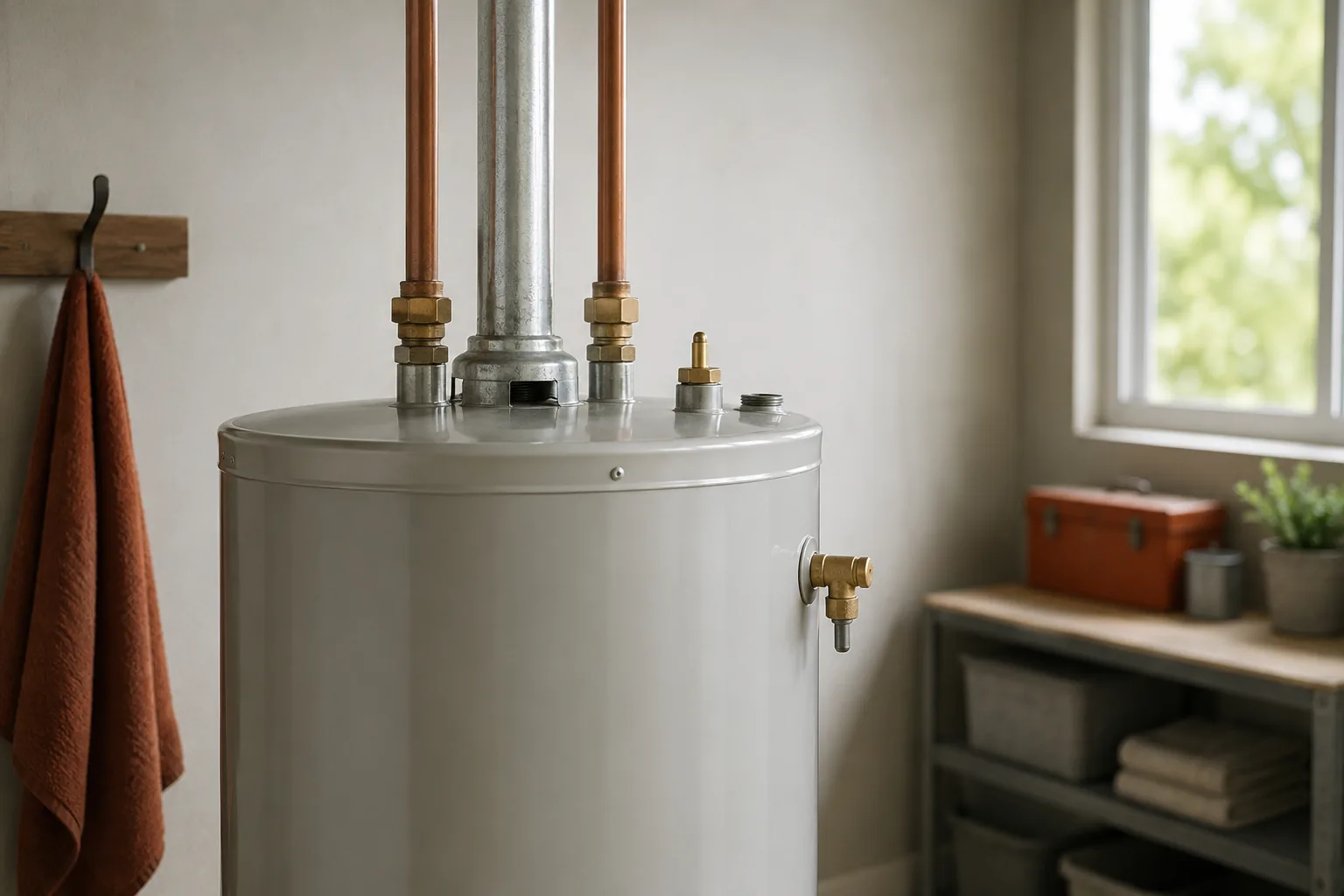
Two threaded fittings screw into the top of the tank. The cold water inlet feeds the supply in; the hot water outlet carries heated water out to your taps. Many models use heat-trap nipples with a small internal ball or flap that blocks heat from creeping up the pipes and wasting energy while the tank sits idle.
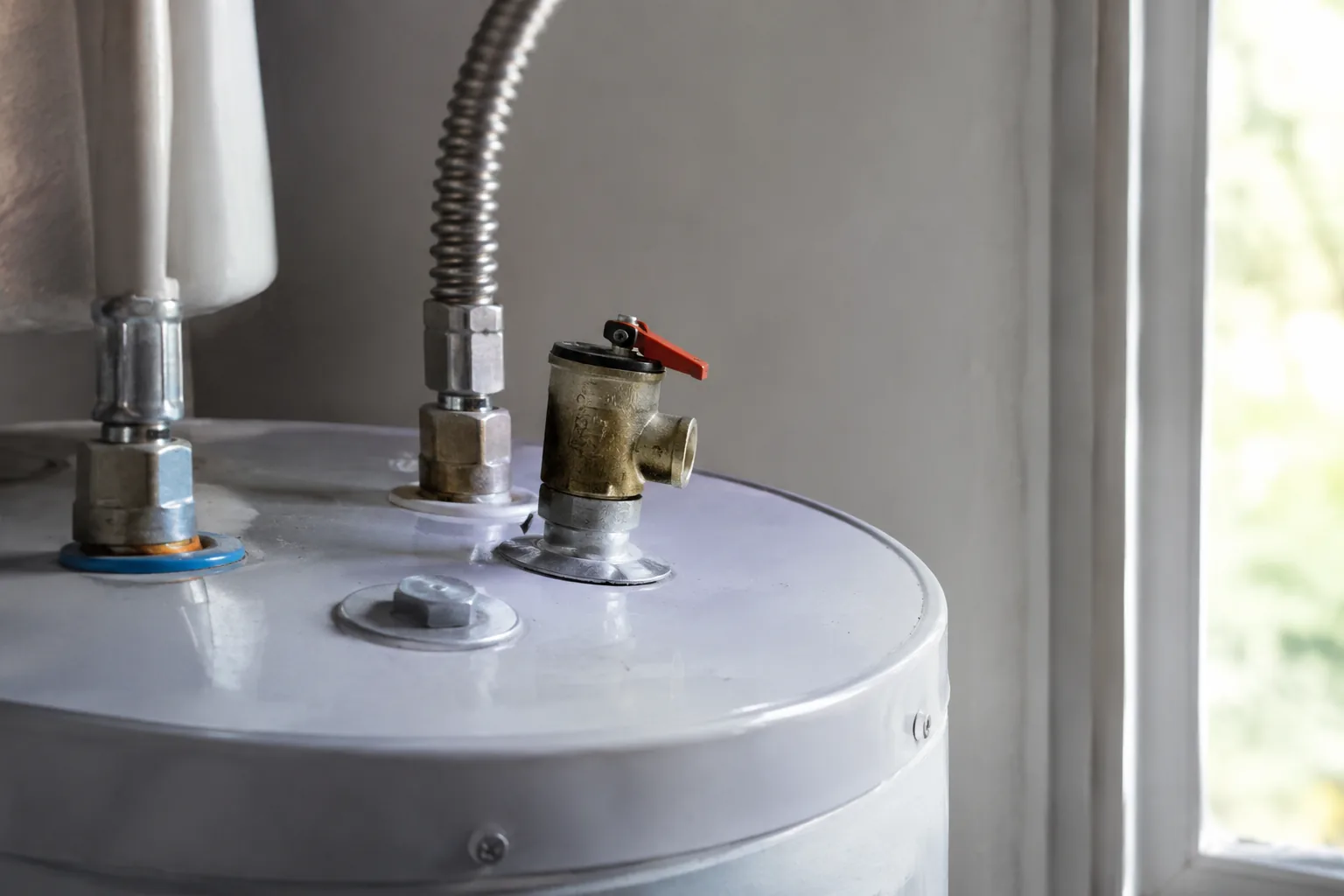
T&P relief valve
The temperature and pressure relief valve is the tank's last-line safety device. It sits near the top and opens if the water crosses about 210 degrees F or roughly 150 psi, dumping hot water down a discharge pipe so the tank cannot rupture. Steam holds far more energy than hot water, so a tank that fails without this valve can go off like a rocket.
Anode rod
The anode rod is a long metal rod, usually magnesium or aluminum wrapped around a steel core, threaded into the top of the tank. It corrodes on purpose. Because that metal is more reactive than the steel tank, minerals in the water attack the rod first and leave the tank wall alone. Plumbers call it the sacrificial anode, and it is the single reason a cheap steel tank lasts a decade instead of two years.
Upper heating element
On an electric tank, two elements do the heating. The upper element handles the top third of the tank and gets first priority; it fires when you start drawing hot water so the top of the tank recovers fast. Each element is a metal loop that heats when 240V current runs through it, governed by its own thermostat bolted to the tank wall behind the access panel.
Dip tube
The dip tube is a long plastic pipe that hangs from the cold inlet down to near the bottom of the tank. It routes incoming cold water straight to the floor of the tank instead of letting it mix in at the top. That keeps the hottest water stacked at the top where the outlet draws from, which is the whole trick behind how a tank delivers steady hot water: cold in the bottom, hot out the top.
Lower heating element
The lower element sits near the bottom and does most of the day-to-day work, reheating the bulk of the tank after the upper element has satisfied the top. The two never run at the same moment: the upper thermostat hands control down to the lower one once the top is hot. That handoff is why a healthy electric tank recovers steadily rather than in one big surge.
Drain valve
The drain valve sits at the very bottom of the tank. Open it with a hose attached and the tank empties, which is how you flush out the sediment that settles on the floor over months of use. Flushing a gallon or two every few months keeps that layer from building into a hard crust that insulates the burner or buries the lower element.
Numbers run top to bottom the way the parts actually sit in the tank.
How water actually moves through the tank
Everything about a storage tank comes back to one fact: hot water floats. Warm water is less dense than cold, so it rises and stacks at the top of the tank while cold water sinks. The whole design leans on that. When you open a hot tap, water leaves from the very top of the tank, the hottest layer. To replace it, fresh cold water comes in through the inlet, but instead of dumping in at the top where it would mix straight into your shower, the dip tube carries it all the way down to the floor of the tank.
That keeps a clean boundary between the hot layer on top and the incoming cold on the bottom. The heat source, an element or a burner, works the cold water at the bottom back up to temperature, and it slowly rises to join the hot layer above. This is why a tank delivers steady hot water for a while and then goes cold fairly abruptly: you are draining the hot layer from the top while cold rises up underneath it, and once that boundary reaches the outlet, the party is over. It is also why you get roughly 70 percent of the rated gallons as genuinely hot water before the temperature falls off.
The parts that heat the water
How the heating happens splits along fuel type, and it is the biggest fork in the whole machine. An electric tank uses two heating elements, metal loops that get hot when 240V current passes through them. They sit at two heights and never run together. The upper element covers the top third and fires first so the water you draw recovers quickly; once the top is satisfied, control hands down to the lower element, which reheats the rest of the tank. That handoff is deliberate, and it explains a common symptom: a dead lower element leaves you with a short burst of hot water that turns cold fast, because only the top is being heated.
A gas tank throws the whole thing out and heats from below with a burner. A gas flame under the tank floor warms the steel, and the heat rises through the water and up a central flue that runs like a chimney through the middle of the tank. Baffles inside that flue slow the exhaust so more heat transfers to the water instead of shooting straight up the vent. Guarding the burner is the thermocouple, a thin probe that sits in the pilot flame and generates a tiny voltage. If the pilot goes out, the thermocouple stops making that signal and the gas valve snaps shut, so the tank cannot pump raw gas into your basement. At the top of a gas unit, a draft hood catches the spent combustion gases and channels them into the vent pipe, pulling in a little room air as it goes.
The parts that keep it safe
Two devices exist purely to keep a tank of superheated water from becoming a hazard. The first is the temperature and pressure relief valve, the T&P, screwed into the top or upper side of the tank. It watches both heat and pressure and opens if either runs away, around 210 degrees F or 150 psi, sending water down a discharge pipe aimed at the floor. The reason it matters is physics: water heated past boiling under pressure holds enormous stored energy, and a tank that loses containment without a working relief valve can launch. A T&P valve that has never been tested tends to seize shut with scale, which is the worst way for a safety device to fail.
The second safety part is quieter and works for years without you noticing: the anode rod. It hangs from the top of the tank into the water, a rod of magnesium or aluminum around a steel core. Because that metal corrodes more easily than the tank's steel, the minerals in the water attack the rod instead of the tank wall. Plumbers call it the sacrificial anode for a reason. It gives itself up so the tank does not. In average water it wears down to a bare wire in three to five years, faster if you run a water softener, and once it is gone the tank itself becomes the thing that rusts.
The plumbing and the housekeeping parts
At the top, two threaded nipples handle the connections: cold water in, hot water out. Many are heat-trap nipples with a small internal ball that stops hot water from wicking up the pipes and bleeding heat while the tank sits idle. Where those nipples meet copper household plumbing, a dielectric fitting keeps dissimilar metals from corroding each other, though that junction is still a common spot for slow leaks at the top of the tank.
Down at the bottom sits the drain valve, the part you use most in maintenance and think about least. Hook a hose to it, open it, and the tank empties, which is how you flush out the sediment that settles on the floor over months of heating hard water. That sediment is not harmless. On a gas tank it forms an insulating crust between the flame and the water, making the burner work harder and popping and rumbling as trapped water flashes to steam under it. On an electric tank it buries the lower element and cooks onto it, which is why the bottom element usually burns out first. Flushing a couple of gallons every few months keeps that layer from ever building up.
Wrapping all of it is the insulation, a layer of foam or fiberglass between the inner steel tank and the outer jacket. It is not a part that fails in any dramatic way, but it decides how fast your heated water goes cold sitting overnight. A well-insulated tank holds its heat; a thin one runs the heat source more often just to fight standby loss.
Which part is behind your problem
Once you know what each piece does, symptoms start pointing at parts. No hot water at all on an electric tank points at the upper element or a tripped safety cutoff. Hot water that runs out fast points at the lower element or a broken dip tube. Lukewarm water that never gets hot is a dip tube dumping cold into the outlet. A rotten-egg smell is usually the anode rod reacting with bacteria in the water. Rusty water and a leaking tank means the anode is long gone and the steel is corroding. Rumbling from a gas tank is sediment the drain valve should have cleared. A puddle at the base can be the drain valve, the T&P discharge, or the tank itself, and telling them apart is mostly about where the water is coming from. The tank is simple enough that the part and the symptom usually line up once you can name the pieces.
Frequently asked
What are the main parts of a water heater?
A storage tank water heater has a steel tank, a dip tube that carries cold water to the bottom, a cold inlet and hot outlet nipple at the top, an anode rod that fights corrosion, a heat source (two electric elements or a gas burner with a thermocouple and flue), one or two thermostats, a T&P relief valve, a drain valve at the bottom, and a layer of insulation. That is roughly 8 to 12 parts that can fail.
How does water flow through a water heater tank?
Cold water enters at the top and drops straight to the bottom through the dip tube, so it does not mix with the hot water above. The heat source warms it at the bottom, and because hot water is less dense, it rises and stacks at the top. When you open a hot tap, water is drawn from that top layer, the hottest water in the tank. Cold in the bottom, hot out the top.
What does the anode rod do and how long does it last?
The anode rod is a sacrificial metal rod that corrodes in place of the steel tank. Because its metal is more reactive, minerals in the water attack it first and leave the tank wall alone. It typically lasts 3 to 5 years in average water, faster on a water softener. Once it is worn to a bare wire, the tank itself starts to rust, so replacing the rod on schedule is the cheapest way to extend tank life.
What is the difference between the upper and lower heating elements?
An electric tank has two elements that never run at the same time. The upper element heats the top third and fires first so the water you draw recovers quickly. Once the top is hot, control hands down to the lower element, which reheats the bulk of the tank. A dead upper element means no hot water at all; a dead lower element means you get a short burst of hot water that runs cold fast.
What does the T&P relief valve do?
The temperature and pressure relief valve is a safety device near the top of the tank. It opens if the water crosses about 210 degrees F or roughly 150 psi and dumps hot water down a discharge pipe so the tank cannot rupture. If it drips constantly, that usually means real overpressure from a bad thermostat or a missing expansion tank. If it has never been tested, it can seize shut with scale, which is the worst way for a safety valve to fail.
Why does a broken dip tube cause lukewarm water?
The dip tube carries incoming cold water to the bottom of the tank so it does not mix with the hot water on top. If it cracks or breaks, cold water dumps in near the outlet at the top and mixes straight into the water you draw. The result is water that never gets truly hot, or hot water that runs out far sooner than it should, since the cold is diluting the top layer.