A water heater is supposed to heat a batch of water, click off, and wait. When it never clicks off, the burner or the element runs against water that is already hot, and the temperature climbs with nowhere to stop. That is not a quirk. It is the setup for scalding taps and a temperature-and-pressure valve dumping onto your floor.
Runtime over 6 hours after a big hot-water draw
Red bands are burner or element on. A healthy tank recovers in roughly 1 to 2 hours, then idles. If yours runs almost nonstop and taps turn scalding, the top cause is a thermostat stuck closed, holding the heat on until the ECO trips near 180°F.
Do this first
If the tank is scalding hot or the relief valve is dripping, kill the heat now. On an electric unit, flip the double-pole breaker off. On a gas unit, turn the gas control knob to OFF or PILOT. A heater that will not stop heating is building temperature and pressure, and the only safe way to diagnose it is with the heat source cut.
Why a heater running nonstop is a real hazard
A normal cycle is boring on purpose. The thermostat senses the setpoint, usually 120°F, and opens its contacts to cut the element or burner. The water coasts, cools a few degrees, and the thermostat closes again to top it back up. Boring. Safe.
Break that off-switch and the picture changes fast. The heat source keeps pouring energy into water that has already reached temperature, so the water pushes past 130, past 140, toward 160 and beyond. Two bad things happen at once. Water hot enough to scald comes out of every tap. And because water expands as it heats, pressure inside the tank rises until the temperature-and-pressure relief valve, the T&P, opens and discharges to relieve it. A T&P that drips or blows is not the problem. It is the last line of defense doing its job because something upstream refused to shut off.
The electric high-limit, the ECO, is the backstop behind that. It is a separate switch that cuts all power around 180°F, well above any thermostat setting. When a runaway heater keeps tripping the ECO, people press the reset and move on, and the tank runs away again an hour later. The reset was never the fix. Something is holding the heat on, and the whole job is finding what.
Walk it: electric or gas, then the one test that proves it
The flowchart below is the fast version. Start by naming the fuel, answer one more question about how the tank behaves, and it lands you on the likely fault. Each box connects to the next; tap a choice and the connected node opens underneath it. Then read the matching section for the full test.
Runaway heater flowchart
Start at the top. Each answer reveals the next connected box, down to a likely diagnosis. Tap a different answer any time to re-route.
When a heater runs nonstop right after someone worked on it, suspect the wiring before any part. A thermostat wired to bypass its own contacts, or line voltage landed on the wrong terminal, keeps the element energized full time. Kill power and compare the wiring to the diagram on the access panel. This one is common and fully fixable without new parts.
The number-one cause. The thermostat contacts weld shut and never open, so the element runs until the ECO trips near 180°F. With power off, listen for the click when you turn the dial, or read continuity: a stuck stat shows continuity that never breaks. Sediment coating the sensor face mimics this, so flush the tank too. Thermostats are sealed and get replaced, not repaired.
An element whose coil has shorted to its metal sheath stays energized and can trip the breaker as it dumps current into the tank. Power off, pull the element wires, and test: any continuity between a terminal and the tank body means a grounded element. Replace it. This is the fault behind a breaker that trips the instant you reset it.
On a gas tank the thermostat lives inside the gas control valve. When that valve sticks open, it keeps feeding the burner past the setpoint and the water overheats until the ECO in the valve trips. There is no homeowner reset for a stuck valve. Turn the control to OFF and call a licensed tech; the gas valve is a replacement, not a field repair.
A standing pilot burns all the time by design, and that small flame is not your heater running away. If only the pilot is lit and the main burner cycles off when the water is hot, the tank is behaving. Watch the main burner: a runaway is the big burner refusing to shut off, not the pilot.
Thermostat stuck closed: the number-one cause
Inside an electric tank, each thermostat is a snap-action switch. It closes to send power to its element and opens to cut it. The mechanism is a bimetal disc that flexes with temperature. After years of cycling, or after one bad overheat, those contacts can weld together. Welded contacts never open, so the element runs flat out no matter what the water reads. The tank climbs until the ECO high-limit finally trips near 180°F, and that is the moment most people notice, either a scalding tap or a popped red reset button.
Confirming it is straightforward with the power off. A healthy thermostat gives an audible click as its contacts open and close when you turn the dial through the setpoint. No click at all is a strong sign the stat is stuck. Better, put a multimeter across the thermostat terminals: a working stat shows continuity below setpoint and no continuity above it, while a stuck-closed stat holds continuity that never breaks no matter where you set the dial. One trap here is sediment. A thick layer of mineral sludge coated around the upper thermostat insulates its sensor from the real water temperature, so the stat thinks the water is cold and keeps calling for heat when the tank is already hot. That mimics a stuck stat exactly. Flushing the tank clears it, and it is worth doing before you condemn the part.
Thermostats are sealed components. You cannot clean the contacts or bend them back; a failed one gets replaced. On a two-element tank the upper and lower thermostats both drive their own element, so identify which one is stuck before swapping.
Shorted or grounded heating element
The other classic electric fault sits in the element itself. A heating element is a resistance coil sealed inside a metal sheath. When the coil breaks down and shorts to that sheath, the element goes electrically grounded to the tank. A grounded element stays energized and can heat continuously, and it often trips the breaker because it is leaking current straight into the tank body. That is the signature of a breaker that pops the instant you reset it: not a bad breaker, a bad element.
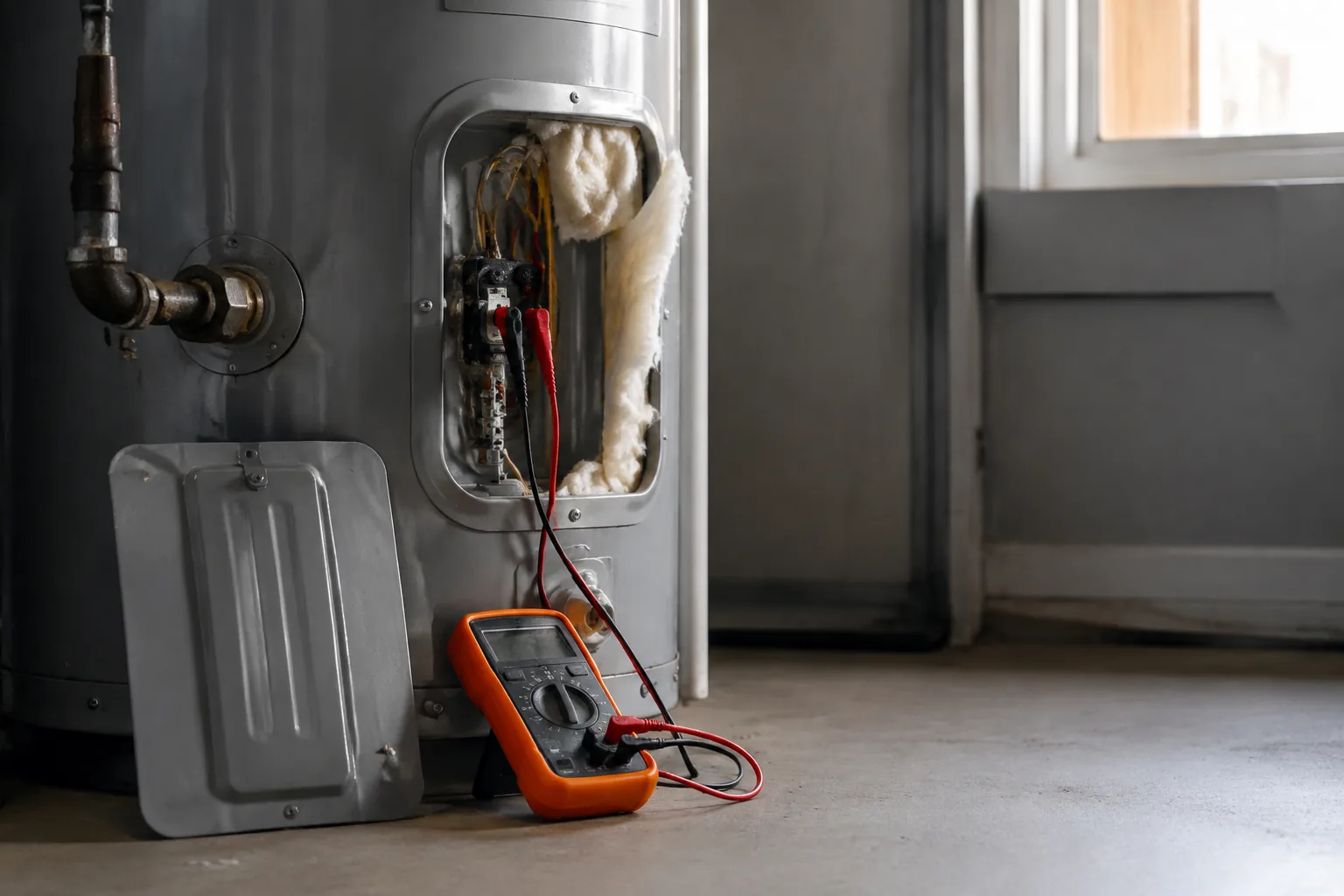
Test it with the power off and the wires pulled. Set a multimeter to read resistance and check between each element terminal and the bare metal of the tank. On a good element, that reads open, no continuity. Any continuity between a terminal and the tank means the element has shorted to ground and has to come out. While you are there, read across the two terminals for the element's own resistance: an open reading there means a burned-out element, which is a no-heat problem rather than a runaway, but it is worth knowing. Draining the tank and swapping an element is a moderate DIY job if you are comfortable around 240V and use an element wrench.
Miswired after a repair
Here is the cause people skip because it feels unlikely: the heater ran fine, someone changed a part, and now it never shuts off. When the runaway starts immediately after work on the unit, the wiring is the first suspect, not a coincidental part failure. A thermostat reinstalled with its leads reversed, a jumper left in place, or line voltage landed on the wrong terminal can route power around the thermostat's contacts entirely. The element then gets constant power and the stat never has a say. Cut the power, open the panel, and check the actual wiring against the diagram printed on the inside of the access cover. It is a quiet, common mistake, and the fix costs nothing but attention.
Gas: a stuck gas control valve
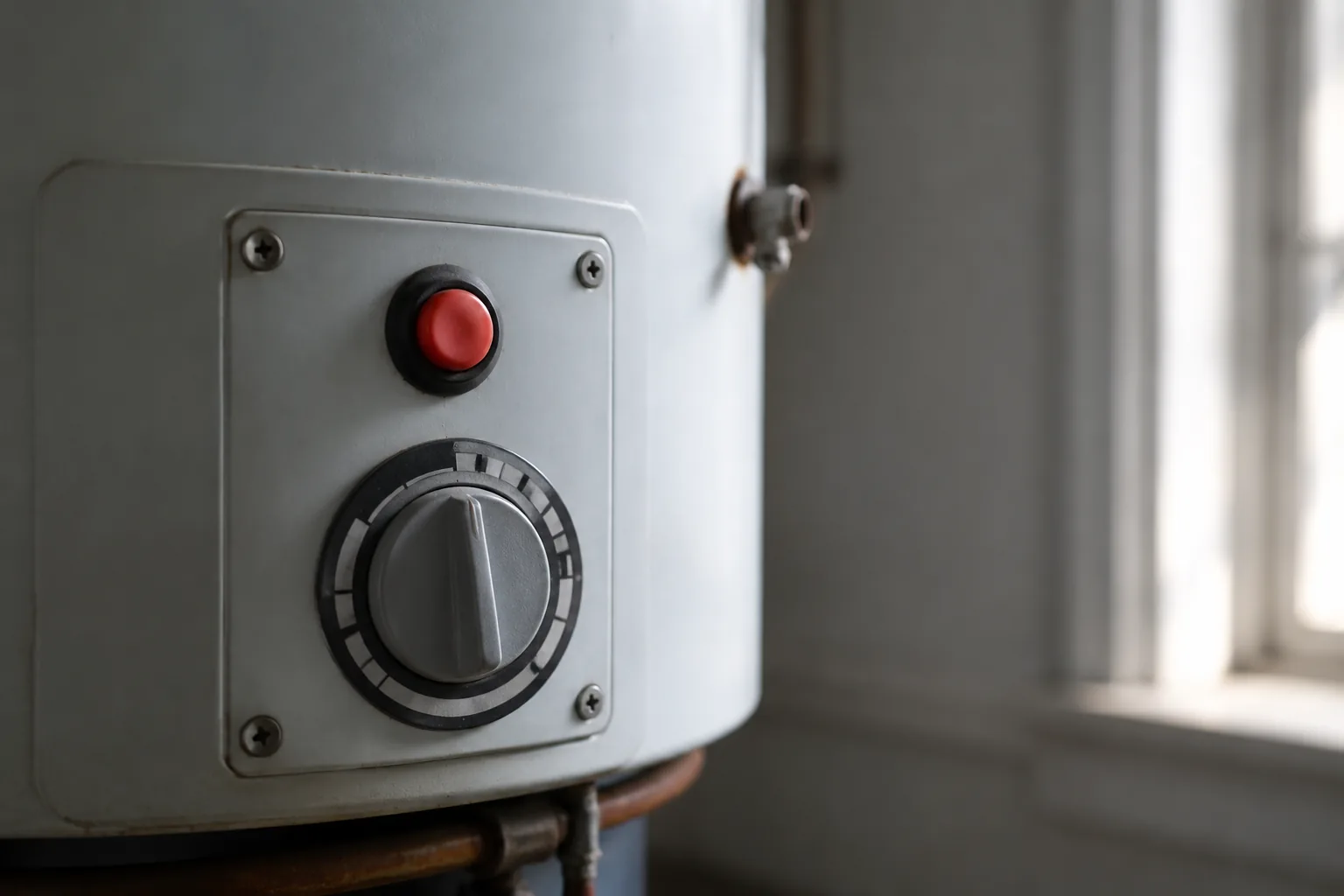
A gas tank does not have a separate thermostat you can probe. The temperature sensing, the setpoint dial, and the safety cutoffs all live inside one part, the gas control valve, with a probe that reaches into the tank. When that valve sticks in the open position, it keeps feeding gas to the main burner even after the water passes the setpoint. The burner roars on, the water overheats, and the valve's own high-limit eventually shuts the whole thing down. The important distinction on a gas unit: a standing pilot is meant to burn continuously, so a lit pilot is not a runaway. The runaway is the main burner refusing to cut off when the water is already hot.
There is no reset button for a stuck gas valve and nothing safe to disassemble on it. Turn the gas control knob to OFF, and if the water was overheating, open a hot tap carefully to relieve some heat once things settle. Then call a licensed tech. The gas control valve is a sealed safety device; it gets replaced as a unit, and gas work is not a place to improvise.
What each fault has in common, and where the line is
Every one of these ends the same way: the heat source never gets its shut-off signal, so temperature and pressure climb until a safety catches it. The safeties, the ECO and the T&P valve, are backstops, not fixes. Reset the ECO ten times and the tank still runs away because the real fault is upstream.
Some of this is homeowner territory. Flipping the breaker, flushing sediment, checking wiring against the panel diagram, and testing a thermostat or element for continuity with the power off are all reasonable if you are careful. Replacing a thermostat or a grounded element is a moderate DIY job around 240V. The clear hand-off points: a stuck gas control valve, a breaker that keeps tripping after you have replaced the element, or a T&P valve that keeps discharging after the heat source is confirmed off. Those need a pro. And never, ever cap or plug a weeping T&P valve to stop the drip. That valve is the one thing standing between a runaway tank and a real failure, and blocking it turns a repair into a rupture.
Frequently asked
Why does my water heater keep running and never shut off?
On an electric tank, the most common cause is a thermostat stuck closed: its contacts weld shut and never open, so the element runs until the ECO high-limit trips near 180°F. Other causes are a heating element shorted to ground, sediment insulating the thermostat sensor, or wiring that bypasses the thermostat after a repair. On a gas tank, a stuck gas control valve keeps feeding the burner past the setpoint.
Is it dangerous if my water heater runs constantly?
Yes. A heater that never shuts off keeps heating water that is already hot, so the temperature climbs toward scalding and the pressure inside the tank rises. That forces the temperature-and-pressure relief valve to discharge. If the tank is scalding or the relief valve is dripping, cut the heat: flip the electric breaker off or turn the gas control to OFF, then diagnose it with the heat source cut.
How do I know if my thermostat is stuck closed?
With the power off, turn the thermostat dial through its range. A healthy stat gives an audible click as the contacts open and close; no click suggests it is stuck. Confirm with a multimeter: a working thermostat shows continuity below the setpoint and none above it, while a stuck-closed stat holds continuity that never breaks. Flush the tank first, since sediment coating the sensor can mimic a stuck thermostat.
Can a bad heating element make the water heater run nonstop?
Yes. If the element's coil shorts to its metal sheath, it becomes grounded to the tank and can stay energized continuously. It often trips the breaker because it leaks current into the tank body, which is why the breaker pops the instant you reset it. Test with power off: any continuity between an element terminal and the bare tank metal means the element is grounded and needs replacing.
My water heater started running constantly right after a repair. Why?
Suspect the wiring before any part. A thermostat reinstalled with reversed leads, a jumper left in place, or line voltage on the wrong terminal can route power around the thermostat's contacts, so the element gets constant power. Cut the power, open the access panel, and compare the wiring to the diagram printed on the inside of the cover. It is a common mistake and usually costs nothing to fix.
What do I do about a gas water heater that won't stop heating?
On a gas tank, the thermostat is built into the gas control valve. If the valve sticks open, it keeps feeding the burner past the setpoint and the water overheats. There is no homeowner reset and nothing safe to take apart. Turn the gas control knob to OFF and call a licensed technician. The gas control valve is a sealed safety device that gets replaced as a unit. A standing pilot burning by itself is normal and not a runaway.