Put your hand flat on the side of your water heater. If it feels warm, you are paying to heat the garage. That warmth is standby loss, the heat that seeps out of the tank around the clock whether you use a drop of hot water or not, and a $30 insulation blanket is the classic fix. The catch is that it only pays off on some tanks, and on a gas heater a sloppy wrap is a safety problem, not a savings one.
DOE: a blanket cuts water-heating cost 7–16%, about $20–50/yr, roughly the kit's own price, so payback is often under a year.
Already losing so little standby heat that a wrap saves only a few dollars, and it can void the warranty.
Quick answer
A blanket cuts standby heat loss by about 25 to 45 percent and shaves 7 to 16 percent off water-heating cost, usually $20 to $50 a year. That makes it worth it on an older, under-insulated electric tank in an unheated space like a garage or basement. On a newer tank already rated R-16 or higher, the savings are tiny and often not worth the trouble. On a gas heater, never cover the top, the burner access, the thermostat, the draft hood, or the T&P valve.
The one test before you buy anything
Touch the tank. A modern heater with R-16 or better factory insulation stays close to room temperature on the outside, because the foam between the steel shell and the inner tank is already doing the job. A tank that feels distinctly warm, or downright hot, is leaking heat you paid for, and that is the tank a blanket helps. Two other signals push the answer toward yes: the heater sits in an unheated garage, crawlspace, or basement where the surrounding air is cold most of the year, and the unit is old enough that its label lists an R-value under about R-24. Any of those, and the wrap earns its keep.
The reason the age cutoff matters is that insulation standards climbed. Tanks built in the last decade or so ship with far more foam than the ones from the 1990s, so the external blanket you would have needed then is now baked in. Wrapping a new R-16-plus tank adds maybe R-6 to an already-good number, and the marginal saving is a rounding error. That is money and an afternoon spent for almost nothing. Use the slider below to see where your own tank lands before you drive to the store.
Is a blanket worth it on your tank?
Slide from a new tank in a warm room to an old one in a cold garage. The estimate updates live, based on the 7 to 16 percent standby savings range.
This is the sweet spot.
When a blanket helps, and when it does nothing
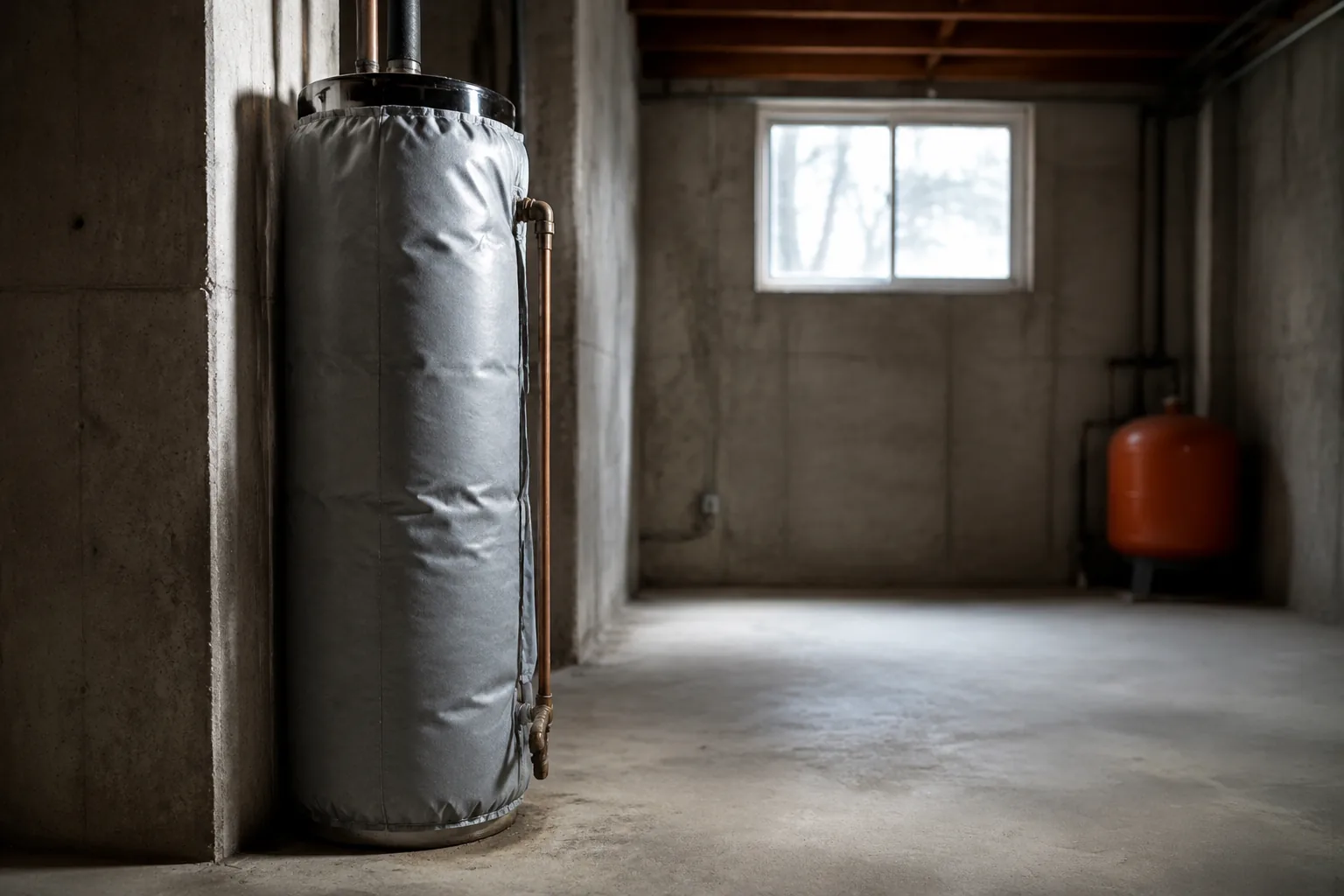
The blankets themselves are simple: a fiberglass or mineral-wool batt, usually faced with vinyl or foil, sold in a kit for $20 to $50 with tape included. They add somewhere between R-5 and R-12. On an old electric tank with thin factory insulation, that add-on can lift the total enough to cut standby loss by a quarter to nearly half. Over a year that is real money on the electric bill, and the kit pays for itself fast.
The flip side is just as important, because a blanket is one of those upgrades people install out of habit whether it helps or not. A tank rated R-16 or higher is already losing so little heat that the wrap has almost nothing left to save. Worse, some manufacturers void the warranty if you cover the unit, and a few local codes and utility rules restrict blankets on gas models outright. So the honest answer is narrow: old electric tank in a cold room, yes; new tank anywhere, skip it; gas tank, only with real care and only on the sides.
One more overlooked win: insulating the first few feet of the hot-water pipe leaving the tank. Foam pipe sleeves cost a few dollars and stop heat from wicking out of the plumbing, which lets hot water arrive at the tap a touch faster and drops the standby drain further. If you are wrapping the tank anyway, sleeve the exposed hot line while you have the tools out.
How to wrap it without covering something that matters
On an electric tank the job is forgiving. Kill the breaker first out of habit, stand the blanket around the tank with the foil or vinyl facing out, mark where the two thermostat access panels sit, and cut those openings so you can still service them. Tape the seams closed. You can run the insulation nearly to the top, since an electric heater has no flue or combustion air to worry about. The only things you leave clear are the two access panels and the temperature-and-pressure relief valve with its discharge pipe.
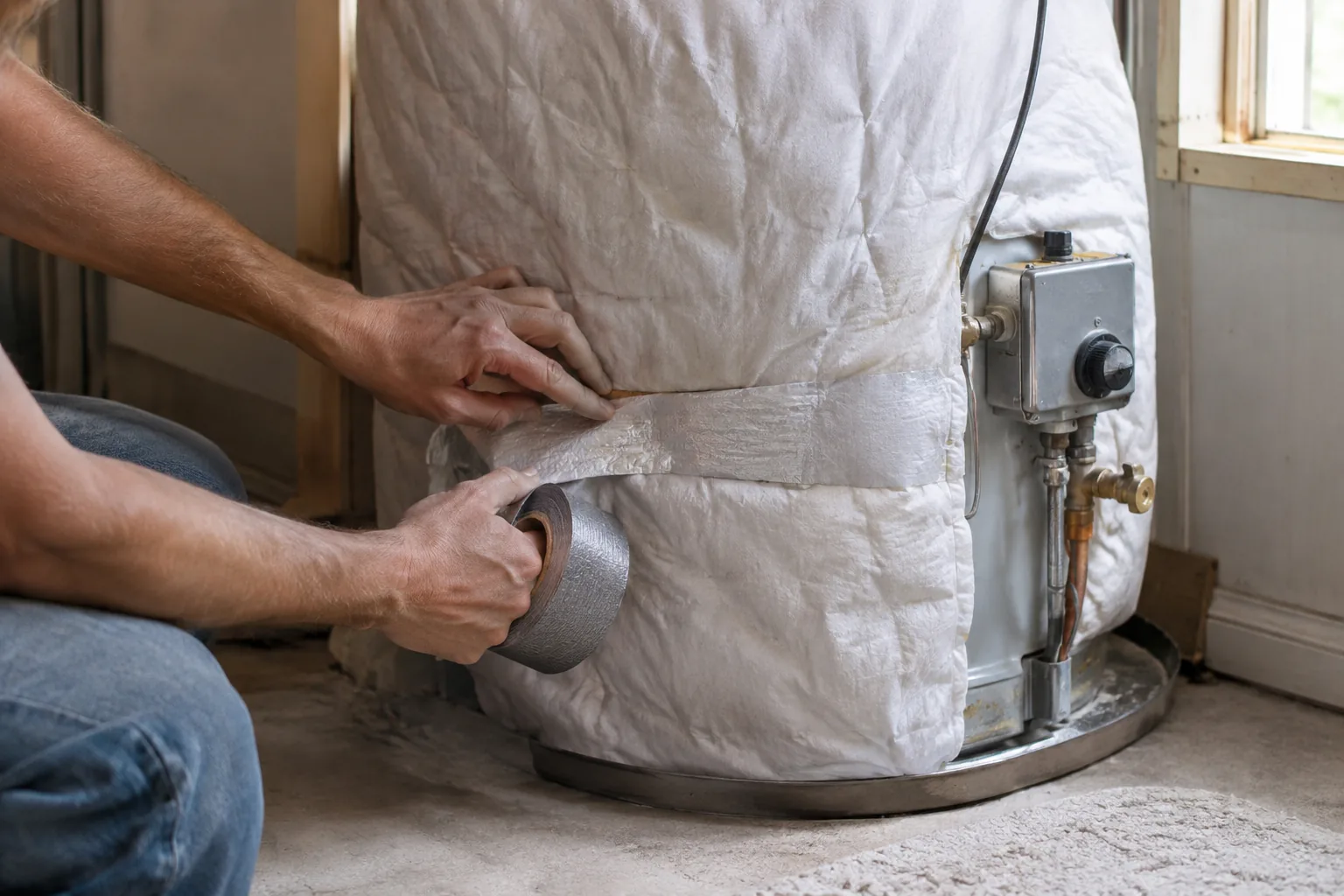
The T&P valve deserves its own line no matter the fuel. That valve is the tank's last defense against bursting from overpressure, and its discharge pipe has to stay open and its manual lever reachable. Insulation and tape must never block the discharge opening or hide the lever. Cut a clean window around the whole assembly. The same goes for the drain valve at the bottom if you ever want to flush the tank without peeling the blanket back.
Gas heaters need a hard rule. Never cover the top of a gas water heater, the draft hood, the flue, the burner access panel at the base, the thermostat and gas control valve, or the pressure-relief valve. The top and draft hood carry combustion gases out; covering them can trap carbon monoxide or start a fire. Insulate the sides only, keep the blanket several inches clear of the flue and the burner air intake at the bottom, and if your gas tank is a newer sealed-combustion or FVIR model, check the manual before wrapping anything.
Gas versus electric: the cautions are different
An electric tank has no flame, no flue, and no combustion air, so wrapping it is low-risk: cover everything but the panels and the safety valve. A gas tank is the opposite. It burns fuel at the bottom, pulls combustion air in around the base, and vents hot exhaust up through the draft hood on top. A blanket that creeps over any of that starves the burner or blocks the exhaust, and blocked exhaust on a gas appliance is how carbon monoxide backs up into a house. That is why the guidance splits so sharply by fuel.
There is also a fair argument that gas tanks gain less from a blanket in the first place. A meaningful share of a gas heater's standby loss goes straight up the flue in the center of the tank, and no side wrap touches that path. Add the extra risk and the warranty questions, and many people conclude a gas tank is not worth wrapping at all. If you do it, stay on the sides, keep well clear of the top and the burner, and treat the manual as the final word.
The short version
Feel the tank. If it is warm and it lives somewhere cold and it is more than about ten years old, a $30 electric-tank blanket is one of the cheapest energy wins in the house, paying itself back inside a year. If the tank is new, barely warm, or gas, the math and the safety rules both argue for leaving it alone or wrapping only the sides with real care. The valve and the vents come first; the savings come second.
Frequently asked
Is a water heater insulation blanket actually worth it?
On an older, under-insulated electric tank in an unheated space, yes. A blanket cuts standby heat loss by roughly 25 to 45 percent and 7 to 16 percent off water-heating cost, usually $20 to $50 a year, which is about what the kit costs, so it pays for itself inside a year. On a modern tank already rated R-16 or higher, or one that stays cool to the touch, the savings are too small to bother with.
How much money does a water heater blanket save?
The U.S. Department of Energy puts the saving at 7 to 16 percent of water-heating cost, which for most homes is about $20 to $50 a year. The exact number depends on how much heat your tank leaks now, how cold the space around it is, and your energy rate. Old tanks in cold garages sit at the high end; new tanks in heated rooms save almost nothing.
What R-value should a water heater blanket be?
Blanket kits typically add R-5 to R-12. What matters more is your tank's existing insulation. If the label or the manufacturer lists R-16 or higher, adding a blanket rarely pays off. Under about R-24, or if the tank feels warm to the touch, a wrap is worth considering. Aim for a blanket around R-8 or better if you buy one for an old, under-insulated tank.
Can you put an insulation blanket on a gas water heater?
Only with care, and only on the sides. Never cover the top, the draft hood, the flue, the burner access panel at the bottom, the thermostat and gas control, or the T&P relief valve. The top and draft hood vent combustion gases; blocking them can trap carbon monoxide or cause a fire. Keep the blanket several inches from the flue and the burner air intake, and check your manual first, since many newer sealed-combustion gas tanks should not be wrapped at all.
What parts of the water heater should never be covered?
On any tank, keep the temperature-and-pressure (T&P) relief valve, its discharge pipe, and its manual lever fully clear, and leave the drain valve accessible. On an electric tank also leave the two thermostat access panels open. On a gas tank add the top of the unit, the draft hood, the flue, the burner access at the base, and the thermostat and gas control valve. When in doubt, if a part vents, drains, or gets serviced, do not cover it.
Will a blanket void my water heater warranty?
It can. Some manufacturers state that adding an external blanket voids the warranty, especially on gas and newer high-efficiency models, and a few local codes or utility rules restrict blankets on gas tanks. Check the label and the manual before you wrap. If the tank is new enough to still be under warranty, it is probably also well enough insulated that a blanket would not save much anyway.