Quick answer
On an electric water heater, a steady hum is almost always a heating element vibrating as water flows past it — the element resonates and the tank shell amplifies it. The quick fix is tightening the element or, for a persistent hum, fitting an element stabilizer or a low-watt-density element. Other hums trace to sediment, a failing recirculation pump, a loose expansion tank, or pipe vibration from high water pressure. A hum is a vibration, not the popping and rumbling that means sediment — those are two different sounds with two different fixes.
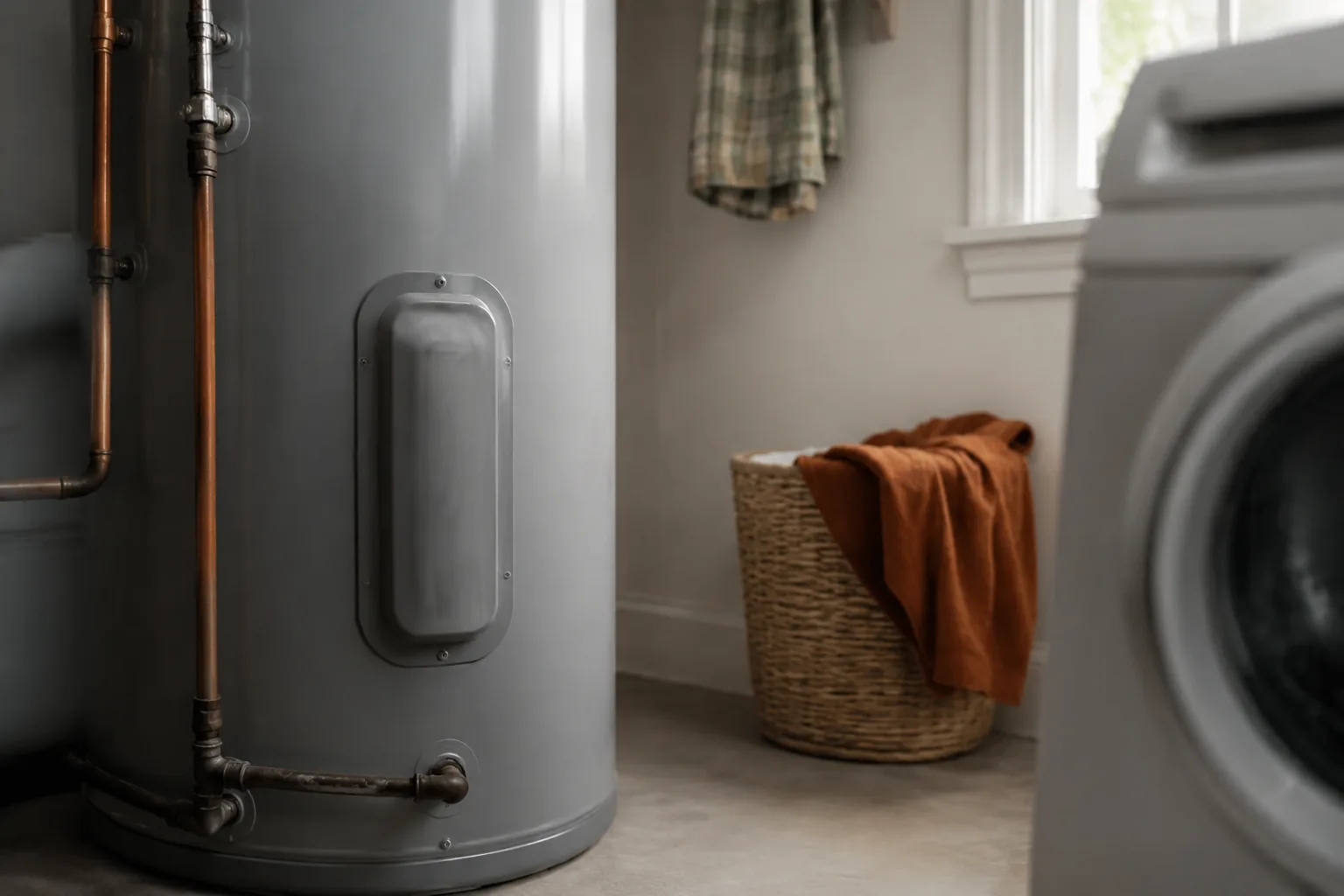
Stand next to the tank and the hum holds one steady note, like a distant transformer. That single detail already rules a lot out. A constant electrical hum is a part vibrating at line frequency, not water superheating under a crust of sediment. Get the character of the sound right and the cause usually falls out of it.
Why a steady hum is almost always the element
Alternating current in the United States runs at 60 cycles per second, and anything it energizes can vibrate at that rate. Inside an electric water heater the heating elements sit in the water, either threaded in horizontally or dropped in vertically. When current flows and water moves past a vertically mounted element, a slightly loose one acts like a tuning fork: it vibrates at 60 Hz, and the steel tank around it works as a sounding board that turns a tiny buzz into a hum you hear across the room. That is why the same appliance can be silent for years, then start humming once an element loosens with thermal cycling or scale builds up around it.
The tell is consistency. An element hum is steady and even, and on many units it rises and falls with the heating cycle: it starts when the thermostat calls for heat and fades when the tank is back up to temperature. If you draw a long hot shower and the hum tracks the element energizing, you have found your suspect. Vertical elements are the noisier design here, because more of their length sits directly in the path of water rising as it heats, so they have more surface to catch that flow and flex.
Scale plays into it too. As minerals crust onto the element, the metal heats unevenly and the buildup changes how the element sits in the water, which can start a hum on a unit that ran quiet for years. So the same appliance can go from silent to humming without anyone touching it, purely from age, thermal cycling, and hard water working the mounting loose or coating the element.
Match the sound to the cause
Not every hum is the element, and the character of the noise plus where it is loudest points straight at the source. Tap the description that fits what you actually hear.
Sound matcher
Pick the option that sounds most like your heater. You get the likely source and the fix.
Tightening the element, and the better long-term fix
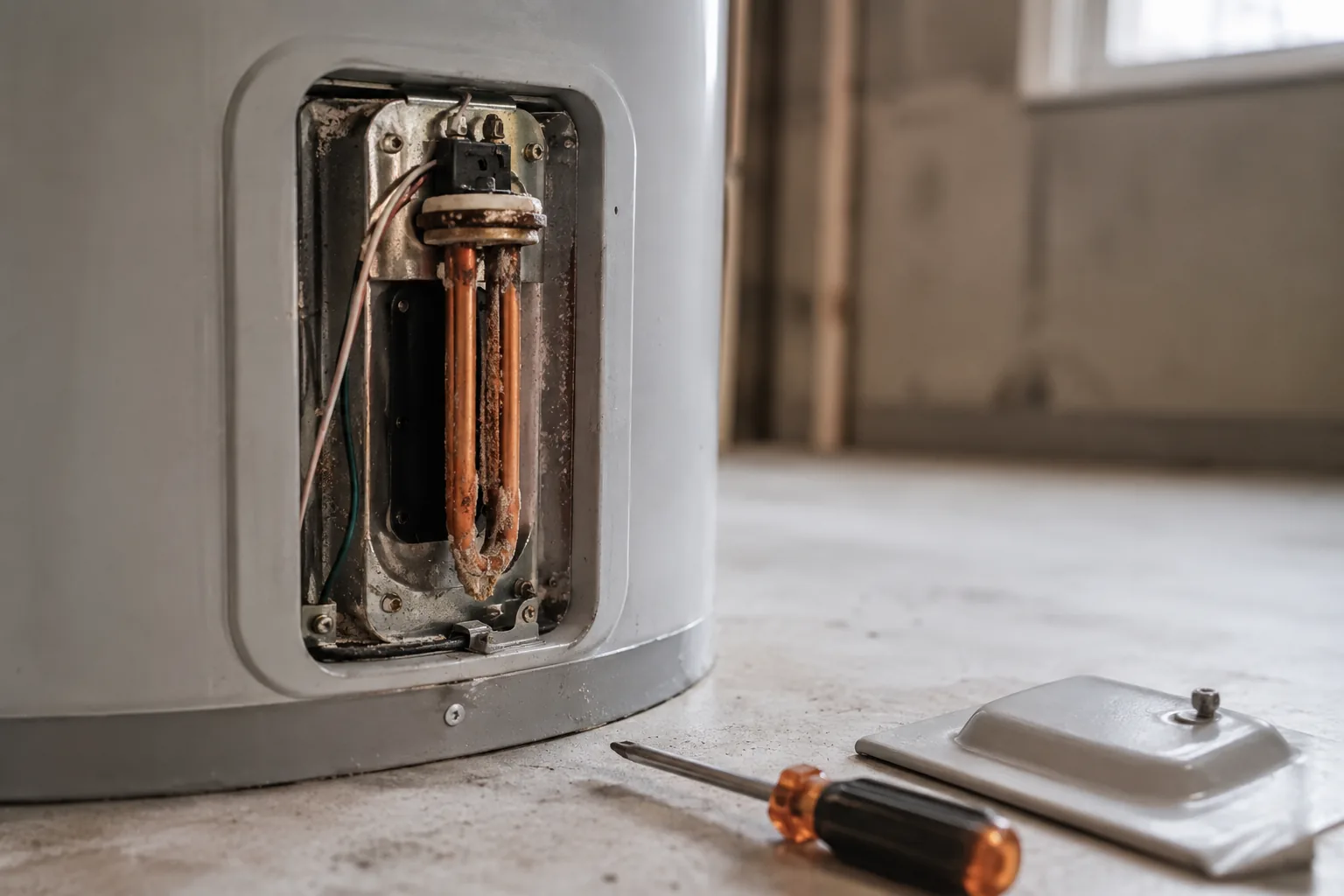
If the matcher lands on the element, the first move is simple and free. Turn off power to the heater at the breaker, not just the thermostat, and confirm it is dead. Pop the access panel, fold back the insulation, and snug the element about an eighth to a quarter turn with the right element wrench. Often that alone stops the hum, because the loose mounting was what let it resonate.
When tightening does not hold, or the hum comes back, two upgrades address the vibration at its root. An element stabilizer or turbulator is a sleeve that damps the element so it cannot vibrate freely. A low-watt-density element uses more surface area for the same wattage, so it runs cooler per square inch, scales more slowly, and vibrates less to begin with. Either is a cheap part and the same job as any element swap: drain the tank, power off, unthread the old one, thread in the new.
Humming is not popping: two different problems
This is the mistake that sends people down the wrong path. A hum is a steady vibration. Popping, crackling, and a deep rumble are something else entirely: sediment. Minerals settle into a layer at the bottom of the tank, water gets trapped underneath, and when the element or burner fires, that trapped water superheats and bursts up through the crust with a pop or a rolling rumble. The fix there is flushing the tank, not tightening a part.
They can overlap, which is why the confusion sticks. A heavy sediment layer at the bottom can amplify an element that is already humming, so you hear a hum with popping mixed in low on the tank. But if the dominant sound is percussive and irregular, popping and banging rather than a steady note, treat it as a sediment problem and flush before you go chasing the element.
The other hums: pump, expansion tank, and pressure
A high-pitched whine that rides on the plumbing usually comes from a recirculation pump whose bearings are wearing out, and that vibration travels down the pipes. A low rattle you can feel is mechanical: something resting against the tank, or an expansion tank that has loosened on its bracket and buzzes. And a hum that lives at the pipes and worsens with fast-moving water is water-hammer adjacent, high household pressure driving a valve or a thin pipe run to vibrate.
Household water pressure above roughly 80 psi stresses every fitting and makes pipe hum more likely; a pressure-reducing valve brings it back into range. A loose expansion tank gets re-secured on its bracket. A worn recirculation pump gets replaced. None of these is the element, which is exactly why identifying the sound first saves you from opening the tank for nothing.
A quick way to separate these: run a fixture and listen for whether the hum changes with water flow or with the heating cycle. A hum that only appears when a tap is open and water is moving is plumbing or a pump, not the element. A hum that appears when the tank is heating and quits when it is satisfied, with no water running, is electrical, and points back at the element or its connections. That single test splits the plumbing causes from the electrical ones before you touch a wrench.
When to stop and call a pro
Tightening an element, pulling clutter away from the tank, re-securing an expansion tank, and checking your water pressure are all reasonable to do yourself with the power off. Once the trail leads to a failing recirculation pump, a chattering contactor or relay, or wiring that buzzes under load, bring in a plumber or electrician. Anything involving the electrical connections beyond snugging an element, or a pump replacement, is worth the call, both for safety and because a misread sound wastes a part.
Frequently asked
Why is my electric water heater humming?
On an electric tank the usual cause is a heating element vibrating. The element sits in the water, and when current runs through it at 60 cycles per second while water flows past, a slightly loose element resonates like a tuning fork and the steel tank amplifies it into a hum. Tightening the element about an eighth to a quarter turn, with the power off, usually stops it.
Is a humming water heater dangerous?
A steady hum from a vibrating element is usually a nuisance, not a hazard, and it is often fixed by tightening the element. It becomes worth a closer look if it comes with buzzing electrical connections, scorch marks, tripping breakers, or a burning smell, which point at a wiring or contactor problem. When the hum is a failing pump or high water pressure, address that before it stresses other parts.
What is the difference between humming and popping in a water heater?
Humming is a steady vibration, almost always a heating element or another energized part resonating. Popping and rumbling are percussive and irregular, caused by sediment: minerals settle at the bottom, trap water underneath, and that water bursts through the crust when the heater fires. Humming is fixed by tightening or replacing the element; popping is fixed by flushing the tank to clear the sediment.
How do I stop my water heater from humming?
Turn off power at the breaker and confirm it is dead, then tighten the heating element about an eighth to a quarter turn with an element wrench. If the hum returns, fit an element stabilizer, also called a turbulator sleeve, or replace the element with a low-watt-density one that vibrates less. If the sound is at the pipes instead, check for high water pressure and secure loose pipe runs.
Can sediment cause a water heater to hum?
Sediment mostly causes popping and rumbling rather than a hum, but a heavy layer at the bottom can amplify an element that is already humming, so you hear a hum with popping mixed in low on the tank. If the sound is loudest at the bottom and has that popping character, flush the tank first. If it is a steady even note at an element panel, treat it as an element issue.
Does a low-watt-density heating element reduce noise?
Yes. A low-watt-density element spreads the same wattage over more surface area, so it runs cooler per square inch, builds scale more slowly, and vibrates less than a standard high-density element. Combined with an element stabilizer that damps the element in the water, it is the durable fix for a hum that keeps coming back after you tighten the original element.