You run the dishwasher, someone showers, and an hour later the water heater starts to sizzle like bacon in a pan. It is unnerving the first time. But that particular sound, on a gas heater, right after heavy hot-water use or on a cold morning, is almost always the most harmless thing a water heater does: condensation dripping onto the burner. It fades on its own as the tank reheats. The trick is knowing when a hiss is that, and when it is a leak sizzling on hot metal or a safety valve venting steam, because those two do not fade and you do not wait them out.
A hissing T&P valve means check it now
A temperature and pressure relief valve that hisses or weeps is not a nuisance noise. The T&P valve opens around 150 PSI or 210 degrees Fahrenheit, so if it is venting steam or dribbling water from its discharge tube, the tank may be over pressure or over temperature right now. Feel the discharge pipe. If it is hot, you have an overheating tank, likely a stuck thermostat or a failed control. Turn a gas control to Off or flip the electric breaker, close the cold water inlet, and stay clear of the discharge, which can spray scalding water or steam. Never cap, plug, or gag the valve to silence it. That is the one device standing between a pressurized tank and a rupture.
Sort the hiss by how often it turns out to be each cause
Chasing the rare cause first wastes an afternoon. Most hissing heaters, especially gas ones, are doing something normal. Work the list in the order you are actually likely to hit it, and rule out the harmless, common cause before you reach for a wrench.
Quick answer
A hiss or sizzle is water meeting a hot surface. Sort it by whether it fades and whether water is present. Condensation on a gas burner is the common one: it sizzles after heavy use or in cold weather, and it quits within an hour or two as the tank heats past its dew point. Sediment hisses as trapped water flashes to steam under the crust on the tank floor, usually with popping. A leak sizzles because water is dripping onto the hot burner or jacket, and it does not stop, with a wet fitting or puddle to find. A weeping T&P valve hisses because the tank is at or near 150 PSI or 210°F, which is a safety issue. Dry the floor, run a full cycle, and see which one you still have.

Read the hiss like a symptom
The sound alone will not tell you the cause, but two things around it will: when the hiss shows up, and whether there is water on the floor. Match what you have to the rows below.
A sizzle or frying sound after heavy use or on a cold morning, no water on the floor
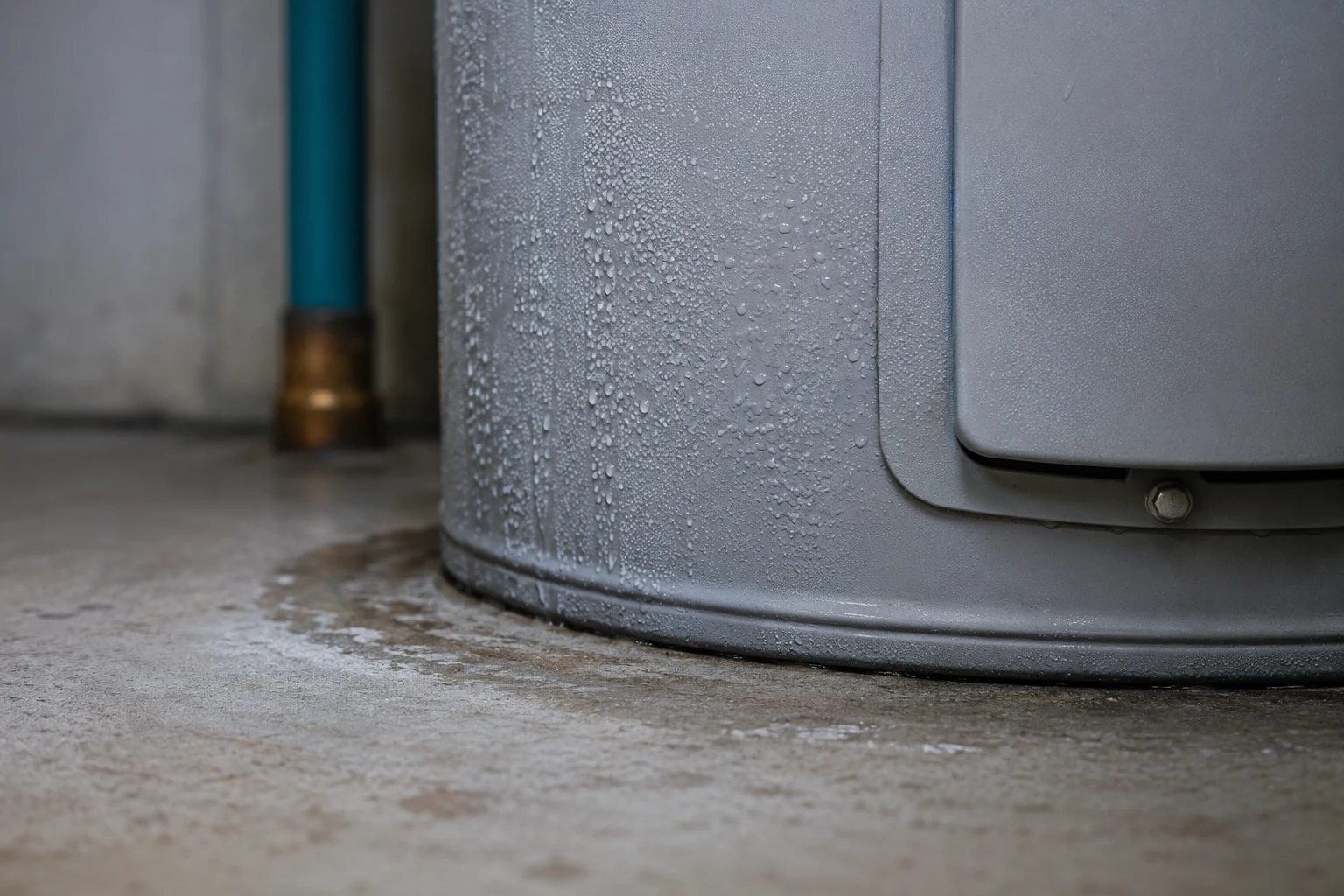
Condensation on a gas burner, the common and harmless case. A big hot-water draw pulls in cold water; the burner fires against it; combustion moisture condenses on the cool tank and drips onto the hot burner, where it sizzles. Worst on a new tank and in winter. Wait one to two hours for the tank to reheat and it stops. Do not call it a leak until you have dried the floor and reheated the tank.
A steady hiss or crackle low on the tank, paired with popping and a gravel-in-a-pan rumble
Sediment. A crust of lime and calcium on the tank floor traps water; the burner or element superheats it and it flashes to steam, which forces up through the crust as a hiss. Flush the tank through the drain valve. In hard water, flush once a year to keep it from coming back.
A hiss that does not fade after the tank reheats, with a wet fitting or a puddle to find
A leak sizzling on hot metal. Water dripping from an inlet or outlet nipple, a fitting, or the tank jacket lands on the hot burner or the hot shell and flashes off with a hiss. Dry everything, run a cycle, and trace which spot rewets. Water near a gas burner or 240-volt elements is a safety issue, not just a noise.
A hiss or steam from the T&P valve, discharge tube warm or dripping
A safety event. The relief valve is venting because the tank is at or past 150 PSI or 210 F. If the discharge line is hot, that is overtemp, usually a stuck thermostat or failed control. Shut the gas or breaker, close the cold inlet, and get a pro. If it only weeps, suspect thermal expansion and a missing expansion tank.
A faint hiss from an electric heater with no gas burner in the picture
Water reaching a superheated lower element through a sediment bed, flashing to steam. Same fix as sediment: flush the tank. If there is standing water, kill the breaker first, because a leak around 240-volt elements is a shock and short risk you do not troubleshoot with the power on.
Match the fix to the heater in front of you
The same hiss means different things on a gas tank, an electric tank, and at the relief valve. Find which situation you are in, then act.
A Rheem, A.O. Smith, or Bradford White gas tank that sizzles
Start by assuming condensation, because on a gas heater it usually is. If the sizzle shows up after heavy hot-water use or on a cold morning and there is no water on the floor, dry around the base, run a full heating cycle, and check again in an hour or two. Gone and dry means burner condensation, and you do nothing. If it persists or you find standing water, look for a leak sizzling on the burner or a crackle from sediment, and flush the tank if it has gone years without one.
An electric tank that hisses or crackles low down
An electric heater has no burner for condensation to drip onto, so a hiss points at sediment or a leak. Sediment around the lower element traps water that flashes to steam through the crust; the fix is a flush. If you see or suspect water near the elements, shut off the breaker before you touch anything, because those elements run on 240 volts and water plus a live element is a short and shock hazard. Then trace whether the water is a fitting, the drain valve, or the tank itself.
A hiss coming from the T&P valve itself
This is the one you stop for. Feel the discharge tube. Hot means the tank is overheating, so shut it down at the gas control or breaker, close the cold inlet, and call a licensed pro before relighting. A valve that only weeps intermittently, with water that is not scalding, usually points at thermal expansion in a closed system, and the real fix is a properly sized expansion tank, not a new valve. Whatever you do, do not cap or plug the valve to quiet it.
Why water on hot metal makes that sound
Every version of this is the same physics wearing a different hat. Liquid water touches a surface hotter than its boiling point, flashes to vapor almost instantly, and that sudden expansion sheds energy as a hiss. It happens on a skillet and it happens on a burner. What differs is where the water comes from: harmless condensate, steam forced up through a sediment crust, a leak dripping onto the shell, or the relief valve venting because the tank itself has climbed too high. That is why you localize the sound and look for water before you decide anything. The hiss tells you water met heat; it does not tell you which water.
Condensation sizzle
The harmless hiss a gas water heater makes when moisture from combustion condenses on the cooler tank surfaces and drips onto the hot burner. It is heaviest when the temperature gap between the cold tank and the hot combustion is largest: a brand-new tank still full of cold water, a big hot-water draw that pulls in cold refill, or a cold basement in winter. As the burner heats the stored water, the surfaces warm past the dew point and the condensation stops, usually within one to two hours. Because it is temporary and leaves no standing water, it is the first thing to rule in or out before you treat a hiss as a fault.
What you can handle and what you cannot
Two of these are yours to fix. Waiting out a condensation sizzle costs nothing, and flushing a tank for sediment is a hose-and-an-afternoon job if you are comfortable draining it. Tracing a leaking fitting is reasonable DIY too, though a corroded nipple or a leaking tank body is a plumber's call or a replacement. The one line you do not cross alone is an overheating tank. If the T&P valve is hissing because the water is over temperature, the underlying fault is a safety repair. Kill the energy, close the water, and call a licensed plumber before you relight.
Chase it in order and most hisses sort themselves out fast. Rule out burner condensation first, listen for the sediment rumble second, and look for water third. But keep one exception in your head: if the sound is coming from the relief valve, the tool you reach for is the shutoff, not the wrench.
Frequently asked
Is a hissing water heater dangerous?
Usually not, but it depends on which hiss you have. The most common one, a sizzle or frying sound on a gas heater right after a big hot-water draw or on a cold morning, is condensation dripping onto the burner, and that is harmless. It fades within an hour or two as the tank heats up. The hiss you do not ignore is a steady one paired with water: a puddle at the base, a wet fitting, or a temperature and pressure relief valve that is hissing and dribbling. Water near a gas burner or 240-volt electric elements is a safety issue, not a noise issue. And a T&P valve venting steam means the tank may be running past its safe pressure or temperature. Localize the sound and look for standing water before you decide whether to relax or shut it down.
Why does my gas water heater sizzle after someone takes a long shower?
That is the textbook condensation sizzle, and it is normal. A long shower pulls a slug of cold water into the tank. When the burner fires against that cold water, moisture from combustion condenses on the cool tank surfaces and drips onto the hot burner, where it sizzles like water on a skillet. It is worst on a new tank, in winter when the incoming water is coldest, and right after heavy use, which is exactly your situation. Give it one to two hours. Once the water in the tank climbs back up to temperature, the surfaces warm past the dew point and the sizzling stops on its own. Do not assume the heater is leaking until you have waited for the tank to fully reheat and then checked the floor. Rheem, A.O. Smith, and Bradford White all describe this startup condensation as expected behavior.
How do I tell condensation sizzle from an actual leak?
Timing and water. Condensation is temporary: it shows up when the tank is full of cold water and the burner is working, and it quits within an hour or two once the water is hot. Dry the floor, run a full heating cycle, and check again. If it is gone and the floor is dry, it was condensation. A leak is the opposite. It does not fade as the tank heats, and it leaves water you can find: a wet fitting up top, a damp T&P discharge tube, a drip at the drain valve, or a puddle welling up from the base. The sizzle from a leak is that dripping water landing on the hot burner or the hot tank jacket and flashing off. If drying and reheating does not silence it, and there is water present, treat it as a leak and trace the source.
What does sediment have to do with a hissing sound?
On a tank that has never been flushed, calcium and lime settle into a crust on the floor of the tank, right over the burner on a gas unit or around the lower element on an electric one. Water gets trapped underneath that crust. When the burner or element heats it, the trapped water superheats and flashes to steam, and the steam forces its way up through the sediment, which you hear as hissing, crackling, or popping. It usually comes with a rumble like gravel rolling in a pan. A new valve will not fix it. Drain and flush the tank through the drain valve to clear the sediment bed. In hard-water areas plan on flushing once a year; Rheem and A.O. Smith both call out annual flushing in their manuals.
My water heater's relief valve is hissing. What should I do?
Treat a hissing temperature and pressure relief valve as a pressure or temperature problem until you prove otherwise. That valve is a safety device rated to open at roughly 150 PSI or 210 degrees Fahrenheit, so if it is hissing or weeping steam and water from the discharge tube, the tank may be running past a safe limit. First, feel the discharge pipe. If it is hot, you likely have an overheating tank from a stuck thermostat or a failed control, and that is a shut-it-down-and-call-a-pro situation: turn a gas control to Off or flip the electric breaker, close the cold inlet, and keep away from the discharge. If the valve only weeps now and then and the water is not overheated, the usual culprit is thermal expansion in a closed plumbing system, and the fix is a properly sized expansion tank. Never cap, plug, or gag a T&P valve to quiet it. That defeats the one device standing between a pressurized tank and a rupture.
Is it normal for a new water heater to hiss or sizzle?
Yes, a brand-new tank is one of the most common places to hear it. A new heater sits full of cold water, so the gap between the cold tank surfaces and the hot combustion inside is at its widest, which drives the heaviest condensation. During the first several heating cycles you may hear a sizzle as that condensate drips onto the burner. It tapers off over the first day or two of normal use as the tank settles into a warm baseline. What is not normal on a new tank is standing water on the floor or a hissing relief valve. If you see either of those, it points at an install problem, a loose fitting, a missing expansion tank, or a mis-set thermostat, rather than the harmless startup sizzle.
Will flushing my water heater stop the hissing for good?
It stops the hiss if sediment was the cause, and on a tank that has gone years without a flush, that is a good bet. Draining and flushing clears the crust that traps water and flashes it to steam. It does nothing, though, for a condensation sizzle, a leaking fitting, or a weeping T&P valve, so figure out which hiss you have before you drag out the hose. And flushing is maintenance, not a one-time cure. Sediment rebuilds, especially in hard water, so an annual flush keeps the tank quiet and keeps the burner or element from working through an insulating blanket of scale. Skip it for a few years and a quiet heater slowly turns into a hissing, popping one.