A gurgle is not the same complaint as a hum, a whistle, or a bang, and the difference matters because each one points somewhere specific. Gurgling is the sound of gas moving through liquid: steam bubbling up through water, air percolating through a pipe, or condensate sloshing through a trap. So before you flush anything, the useful question is not what to fix but where the sound comes from. Nail the origin and the repair is short. On a gas tank the answer is almost always sediment, and on a high-efficiency unit it is almost always the condensate path, but the two fixes have nothing in common.
Start by placing the sound
Three parts of a water-heater system can gurgle, and they call for three different responses. Read these before you grab a wrench, because flushing a tank that has trapped air in the lines wastes an afternoon and does not touch the noise. Match your symptom to one of these first.
Sediment in the tank body
A low glugging gurgle that swells when the burner fires and fades when it satisfies, coming from low on the tank near the burner. It got worse gradually over months. This is steam flashing under a scale crust and bubbling up through the grit. The fix is a tank flush, and a deeper descale or a hard look at the tank's life if it has hardened.
Condensate in the trap or vent
A wet, trickling gurgle on a high-efficiency Rheem, A.O. Smith, or Bradford White condensing model, near the vent or base. The unit makes condensate on purpose, so a little trickle is normal. Steady bubbling with a puddle or a condensate code means the trap or drain line has clogged. Clear the trap and line.
Trapped air in the lines
A gurgle that appeared right after a drain-down, a valve swap, or a water-main repair. It travels to faucets and walls, not just the tank, and sputters when you open a hot tap. This is air, not steam or sediment. Bleed it out at the highest hot fixture and it clears for good.
A failing check valve on the recirc
A rhythmic gurgle that starts and stops with the recirculation pump. A worn or stuck check valve lets water reverse and pull air through the loop. Switch the pump off; if the gurgle stops, the loop is the source. Bleed the loop, then replace the check valve.
Bleed the air, then flush the sediment
Two of the four causes have hands-on fixes you can do yourself: bleeding trapped air and flushing sediment. Do them in that order if you are not sure which you have, since bleeding air is quick and free and rules the easy cause out. Kill the power at the breaker on an electric heater, or set a gas unit's control to Pilot, before you drain anything.
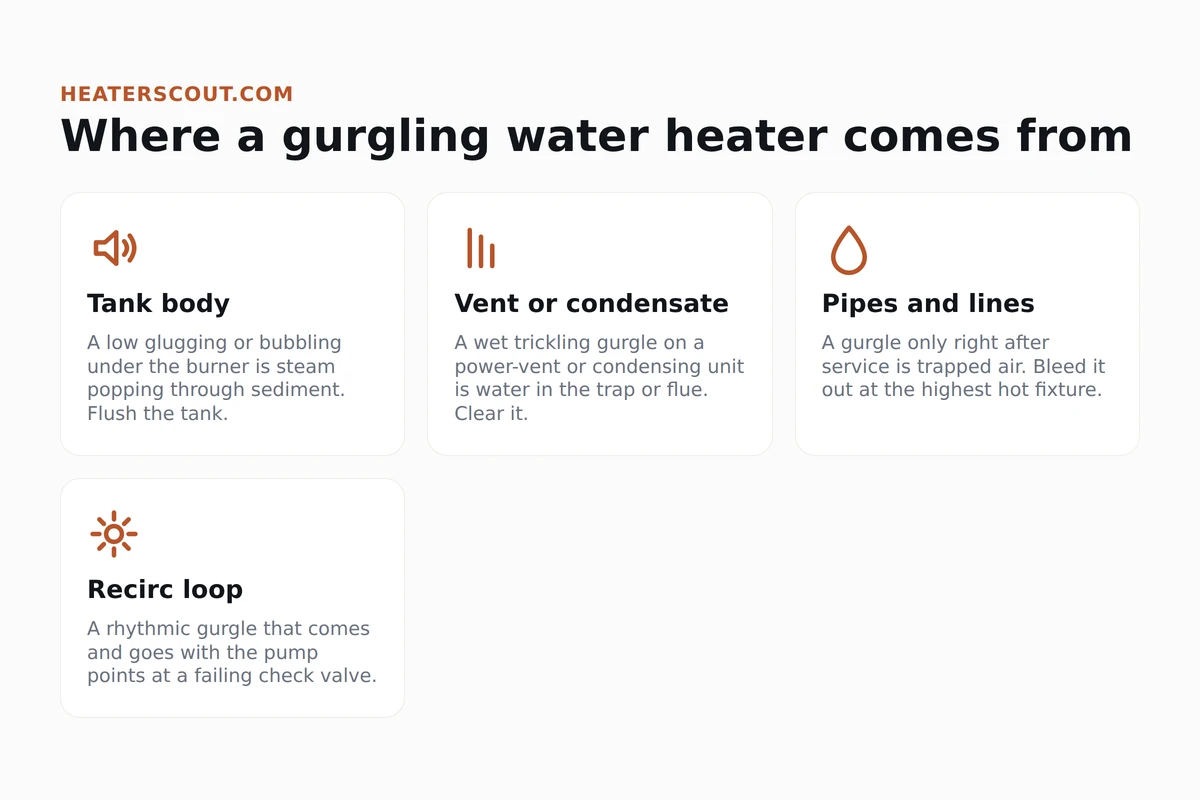
Cause and fix at a glance
Once you have placed the sound, the repair follows from the cause. This is the whole decision path in one table: what you hear, where it originates, why it gurgles, and what actually stops it. Sediment and air cover most calls; the condensate and recirc cases show up on newer and more complex installs.
| Symptom | Where it starts | Cause | Fix |
|---|---|---|---|
| Glugging that swells with the burner, worse over months | Tank body, low, near the burner or element | Sediment scale trapping steam that bubbles up through the grit | Flush the tank; descale or replace if the scale has hardened |
| Sputtering at faucets right after service | The plumbing lines, travels through the house | Air trapped during a drain-down, valve swap, or main repair | Bleed each hot fixture from highest to lowest until flow runs smooth |
| Wet trickling that turns to steady bubbling, maybe a puddle | Condensate trap and line on a condensing or power-vent unit | A clogged condensate trap backing water up | Pull, rinse, and refill the trap; clear the line per the manual |
| Rhythmic gurgle that starts and stops with the pump | The recirculation loop | A worn or stuck check valve letting water reverse and pull air | Bleed the loop; replace the check valve if it persists |
| Gurgle from the flue with humid air spilling at the draft hood | The vent or flue on a gas unit | A backdrafting flue, blocked or undersized, spilling exhaust | Stop the heater and get the venting checked; can carry carbon monoxide |
| Gurgle plus the T&P valve weeping or discharging | The T&P relief path | Pressure or temperature building with no clear relief | Stop using the heater; have the T&P checked by a pro |
Locate the source before you reach for a tool
Run this list at the heater with your ear and a flashlight before you decide the fix. Half of getting a gurgle right is not chasing the wrong cause. Each item narrows it toward the tank body, the vent and condensate path, the lines, or the recirc loop.
- Does the gurgle rise and fall with the burner or element cycling? That points at sediment in the tank body.
- Did the noise begin right after a drain-down, a valve change, or a water-main repair? That points at trapped air.
- Do you hear sputtering at the faucets and in the walls, not just at the tank? Air, again, not sediment.
- Is this a condensing or power-vent unit, with a wet trickling near the vent or base? Suspect the condensate trap.
- Does the gurgle start and stop in step with a recirculation pump? Suspect the loop's check valve.
- Do you smell exhaust or feel humid air spilling from the draft hood on a gas unit? Check the flue for backdrafting.
- Is the T&P relief valve weeping along with the gurgle? Treat it as a pressure fault and stop using the heater.
- How old is the tank, and when was it last flushed? A gurgle on a neglected older tank is almost always scale.
Symptom to source, line by line
The same clues, framed as a quick diagnostic you can read off in order. If the first row fits, you likely have your answer and can skip the rest.
Gurgle tracks the burn cycle and got worse gradually
Sediment in the tank body. Steam is flashing under a scale crust on the tank floor and bubbling up through the grit, loudest during and just after a burn. The most common gurgle on a gas Rheem, A.O. Smith, or Bradford White tank. Flush it, and weigh a deeper descale against the tank's age if that does not quiet it.
Gurgle appeared the same week as service or a plumbing job
Trapped air in the lines. Draining a tank, swapping a valve, or a main repair lets air into the system, and it travels to faucets and high points. Bleed it out at the highest hot fixture and work down; it clears for good once the last of the air is gone.
Wet trickling or sloshing on a high-efficiency unit, maybe a puddle
Condensate backing up in the trap or drain line. A condensing or power-vent unit drains its condensate through a trap; a little trickle is normal, steady bubbling with a puddle is a clog. Pull, rinse, and refill the trap and clear the line per the manual.
Rhythmic gurgle that comes and goes with the recirculation pump
The recirc loop, most likely a failing check valve letting water reverse and pull air through the loop. Switch the pump off to confirm the loop is the source, then bleed the loop and replace the check valve at the pump if the noise stays.
Gurgle from the flue with exhaust smell or humid air at the draft hood
A backdrafting flue on a gas unit. The vent may be blocked or undersized, and combustion gas is spilling into the room instead of drafting out. This is the one gurgle to stop for. Shut the heater down and have the venting inspected, because it can carry carbon monoxide.
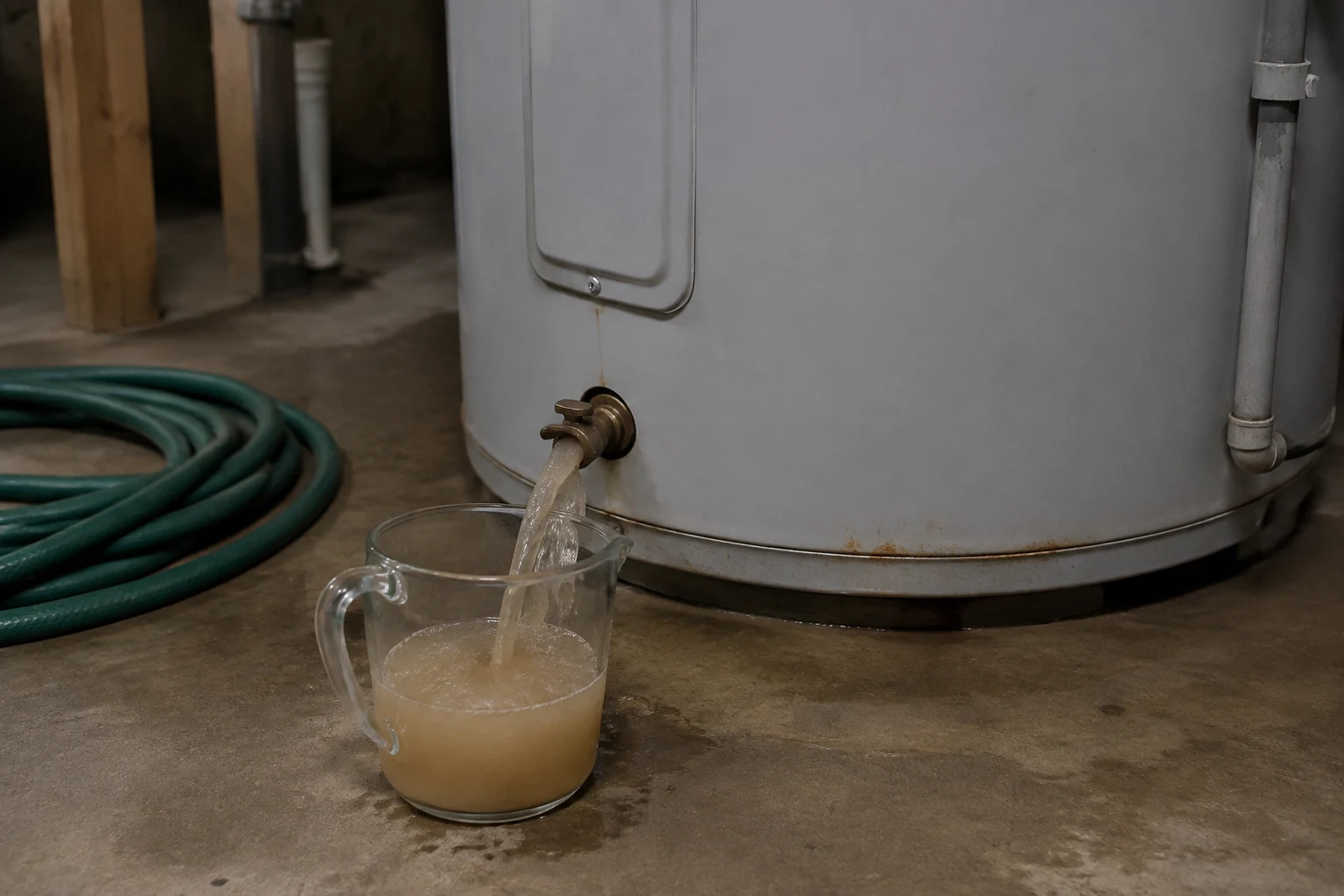
One habit prevents most sediment gurgle from ever starting: flush the tank once a year, twice if your water is hard. It keeps the scale from baking into the hard shelf that a plain flush can no longer lift. On a condensing or power-vent unit, add the condensate trap to that yearly check. And any gurgle that comes with an exhaust smell or a weeping relief valve is not a maintenance item, it is a reason to shut the heater off and make a call.
Frequently asked
Why does my water heater make a gurgling or bubbling noise?
In most cases it is sediment on the tank floor. Hard water leaves a layer of calcium and scale at the bottom of the tank, right over the burner on a gas unit or around the lower element on an electric one. When the heater fires, water trapped under that crust flashes to steam and the bubbles claw their way up through the grit. That is the glugging sound, loudest during and just after a burn cycle. The other common source is air, not steam: if the gurgle showed up right after someone drained the tank, changed a valve, or worked on the plumbing, you have air trapped in the lines. A wet trickling gurgle on a high-efficiency unit is usually condensate moving through a trap, which is normal in small doses and a problem when the trap clogs.
Is a gurgling water heater dangerous?
Sediment gurgle by itself is not an emergency, but it is a warning that scale is building and the tank is running hotter at the bottom than it should, which shortens its life. Two kinds of gurgle do deserve fast attention. First, if the sound comes from the flue on a gas heater and you smell exhaust or feel warm, humid air spilling out of the draft hood, the flue may be backdrafting and putting combustion gases into the room. Shut the heater down and get it checked, because that path carries carbon monoxide. Second, if a gurgle is paired with the T&P relief valve weeping or discharging, treat it as a pressure or temperature problem and stop using the heater until a pro looks at it.
How do I know if the gurgle is sediment or trapped air?
Timing and location tell you. Sediment gurgle is tied to the burn cycle: it swells when the heater fires and fades after it satisfies, it comes from the tank body low near the burner, and it gets worse month over month as scale accumulates. Trapped air is tied to an event: it started right after a drain-down, a filter change, or a water-main repair. Air gurgle travels, so you hear it at faucets and in the walls, not just at the tank, and it clears for good once you bleed the lines. If the noise began the week you had the heater serviced, suspect air. If it crept in over a year or two on an older tank, suspect sediment.
Will flushing the tank stop the gurgling?
Usually, if sediment is the cause and the scale has not hardened into a solid cake. A standard flush drains the tank through the drain valve and rinses loose grit out with the incoming cold water. On a lightly fouled tank that clears the gurgle. On a tank that has gone years without service, the sediment can bake into a hard shelf a plain flush will not lift, and you may need to break it up by filling and draining in short bursts to stir it. If a full flush does not quiet the tank, the scale is entrenched and you are weighing a deeper cleaning against the age of the unit. A tank near the end of its life is often not worth heroic descaling.
My high-efficiency (condensing) water heater gurgles. Is that normal?
A condensing or power-vent unit makes water on purpose. It pulls so much heat out of the exhaust that the flue gas cools below its dew point and condenses into liquid, which drains through a condensate line and trap. A faint trickling as that water moves through the trap is normal. It becomes a fault when the trap or drain line clogs with the acidic condensate sludge. Then water backs up, the gurgle turns into steady bubbling, and you may see a puddle under the unit or a condensate code on the board. The fix is to clear the trap and line, which on many Rheem and A.O. Smith condensing models is a serviceable part you can pull, rinse, and refill with clean water per the manual.
Why does my water heater gurgle only when the recirculation pump runs?
That points at the recirculation loop rather than the tank. A recirc system pushes water in a loop back to the heater so hot water is instant at the tap, and it relies on a check valve to keep flow going one direction. When that check valve wears out or sticks partway open, water can surge and reverse, pulling air pockets through the loop, and you get a rhythmic gurgle that starts and stops with the pump. Confirm it by switching the pump off: if the gurgle stops, the loop is the source. Bleed the loop at its highest point and, if the noise persists, replace the check valve at the pump.
Can trapped air in the lines cause gurgling at the faucets too?
Yes, and that is one of the clearest tells you are chasing air and not sediment. Air that got in during a drain-down or a plumbing repair does not stay put at the tank. It migrates to high points in the piping and to fixtures, so you hear spitting at the faucets, sputtering when you first open a hot tap, and knocking in the walls as slugs of air move. To clear it, open the highest hot fixture in the house and let it run until the water comes out smooth with no coughing, then work down to lower fixtures. On a two-story home, start at the upstairs bathroom farthest from the heater. Once the last of the air is out, it stays quiet.