A clicking water heater sends people down a rabbit hole, because a click is one of the few sounds a healthy heater makes on purpose and also one a failing heater makes. The trick is not identifying the click. It is matching the pattern of the click to what the heater is doing. A single tick every time you draw hot water is plumbing. One snap as the burner lights or the element switches is the control doing its job. A stutter of clicks with no flame, or a chatter that never settles, is the part that has gone wrong. Six common sources split cleanly across gas, electric, and plumbing, and most need nothing at all.
A click that tracks your hot water use is plumbing. A click that repeats with no flame or no heat is the part that failed. Same sound, opposite meaning.
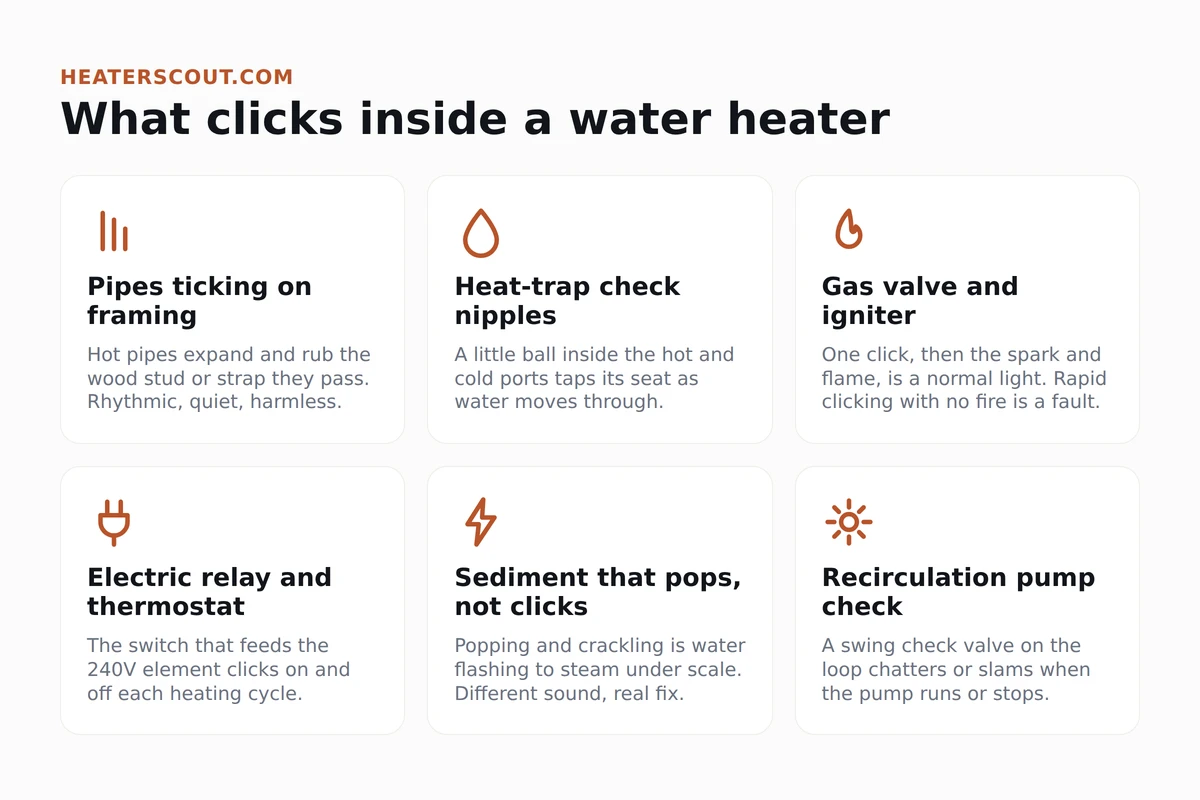
The first question: does the click follow the water or the heat?
Before you open a single panel, listen for timing, because timing sorts the whole list. Stand near the heater and near a hot tap and run some hot water. If the clicking starts when water moves, fades after you shut it off, and travels along the pipe runs rather than sitting at the tank, it is plumbing: thermal expansion or a heat trap. If it happens when the heater fires or switches, once as it starts and once as it stops on its own schedule with no tap open, it is the control: a gas valve lighting or an electric relay switching. If the sound is less a clean click and more a percolating pop that builds as the tank heats, it is sediment, and you are hearing steam, not a moving part. Those three timings cover almost every call.
Heat trap
A short nipple, usually plastic-lined, that threads into the hot and cold ports on top of a modern water heater. Inside is a small ball or a hinged flap that acts as a one-way check, stopping hot water from convecting up the pipes and wasting standby heat when no one is drawing. It is a code and efficiency feature on newer tanks. The catch is that the ball taps its seat as water passes or when house pressure shifts, and that tap is the tick you hear in rhythm with the heater. Normal, not a fault. It can be swapped for a plain dielectric nipple if the noise bothers you, at the cost of a little efficiency.
Plumbing clicks: pipe expansion and heat traps
The single most common clicking complaint is not the heater at all, it is the pipes leaving it. Hot water warms the copper or CPVC supply lines, they expand a small amount, and anywhere a pipe passes through a wood stud, rests on a joist, or is pinned by a mounting strap, it slides against that surface and ticks. The sound is rhythmic, quiet, and it tracks your hot water use: it wakes up when you open a tap and trails off as the pipe cools, and you can often hear it move away from the tank along the run. It does no harm. Where it is loud, the fix is a foam pipe sleeve at the crossing point or backing off a strap clamped too tight.
The other plumbing click lives right on top of the tank. Heat-trap nipples put a check ball in the hot and cold ports, and that ball taps as water flows through and when pressure swings around it. People mistake this steady tick for the tank failing; it is not. To confirm it, notice the tick lines up with draws and pressure changes, not with the burner or the elements. Living with it costs nothing, and silencing it means a plumber swaps the heat-trap nipples for non-heat-trap ones, trading the click for a little standby heat loss.
Gas clicks: the light cycle versus a failed ignition
A gas water heater is supposed to click, once, every time it lights. The thermostat calls for heat, the gas control valve clicks open, the spark or hot-surface igniter fires, and the burner catches with a soft whoosh. One click, then flame, then quiet running. Rheem itself calls the soft ignition sounds on a gas unit normal. What is not normal is clicking or sparking that repeats with no flame ever catching, or a burner that lights, drops out, and starts clicking again. That pattern means the ignition sequence is failing partway through.
The usual culprits, in rough order: a dirty or worn spark electrode or igniter that will not throw a strong spark, a clogged pilot tube starving the pilot flame, a bad thermocouple or flame sensor that never confirms the flame so the valve closes the gas again, air still trapped in the line after service, or a failing gas valve or board. A brand-new install that clicks and will not light usually just needs the air purged or the supply valve opened fully. On an older heater, the igniter and flame sensor are the first suspects. This is the one clicking problem where guessing is genuinely unsafe, because a sparking igniter next to gas that is not burning is exactly the situation the controls exist to prevent.
Gas safety comes first
If you smell gas near the heater, do not troubleshoot the click. Leave the area, do not flip switches or light anything, and call your gas utility from outside. A gas unit that clicks and sparks over and over without lighting should be shut off at the gas control and handed to a licensed tech, not triggered again and again to see if it catches.
Electric clicks: the relay is doing its job, until it chatters
An electric tank has no burner, so its clicks come from switching. A heating element pulls a heavy 240-volt load, and a load that size is switched by a relay or contactor that snaps closed with a click and snaps open with another. When the thermostat calls for heat, you get a click and the element energizes; when the water is up to temperature, another click and it drops out. A few of these an hour, one on and one off each cycle, is the normal heartbeat of an electric water heater.
The version that means something is chatter: a rapid stutter of clicks instead of one clean snap. A relay chatters when its coil is not getting enough voltage to pull in solidly, when a connection is loose or corroded, when the contacts are worn and arcing, or when the controlling thermostat is short-cycling. It rarely travels alone, showing up with lukewarm water, a tripping breaker, or a burnt smell at the wiring. Looking inside means turning off the 240-volt breaker first, every time, then pulling the access panels. A visibly loose wire you can reseat with the power off. Anything past that, at that voltage, is work for a pro.
| Tick that follows a pipe across framing | Thermal expansion of the hot line rubbing a stud, joist, or strap. Benign. Foam-sleeve or loosen the strap at the rub point if loud. |
| Steady tick on top of the tank, in rhythm with draws | Heat-trap nipple check ball tapping its seat. Normal. Swap for non-heat-trap nipples only if the noise bothers you. |
| One click, then a whoosh and flame (gas) | Normal ignition sequence. Nothing to fix. |
| Repeated clicking or sparking, no flame (gas) | Failed ignition: dirty igniter, clogged pilot, bad flame sensor, air in the line, or failing gas valve. Shut the gas control, call a pro. Smell for gas first. |
| Rapid relay chatter (electric) | Low coil voltage, loose or corroded connection, worn contacts, or a short-cycling thermostat. Breaker off to inspect; diagnose if it persists. One click on and one off per cycle is normal. |
| Percolating pop, rumble, or crackle that builds with heat | Sediment on the tank floor or scale on an electric element. Drain and flush; descale or replace the element. |
| Clatter or hammer tied to a recirculation pump | Swing check valve slamming, or air in the loop. Fit a spring check after the pump and bleed the air. |
| Any click with a gas smell, burnt smell, tripping breaker, or leak | Not a normal cycle sound. Stop, make it safe (gas off or breaker off), and call a licensed tech. |
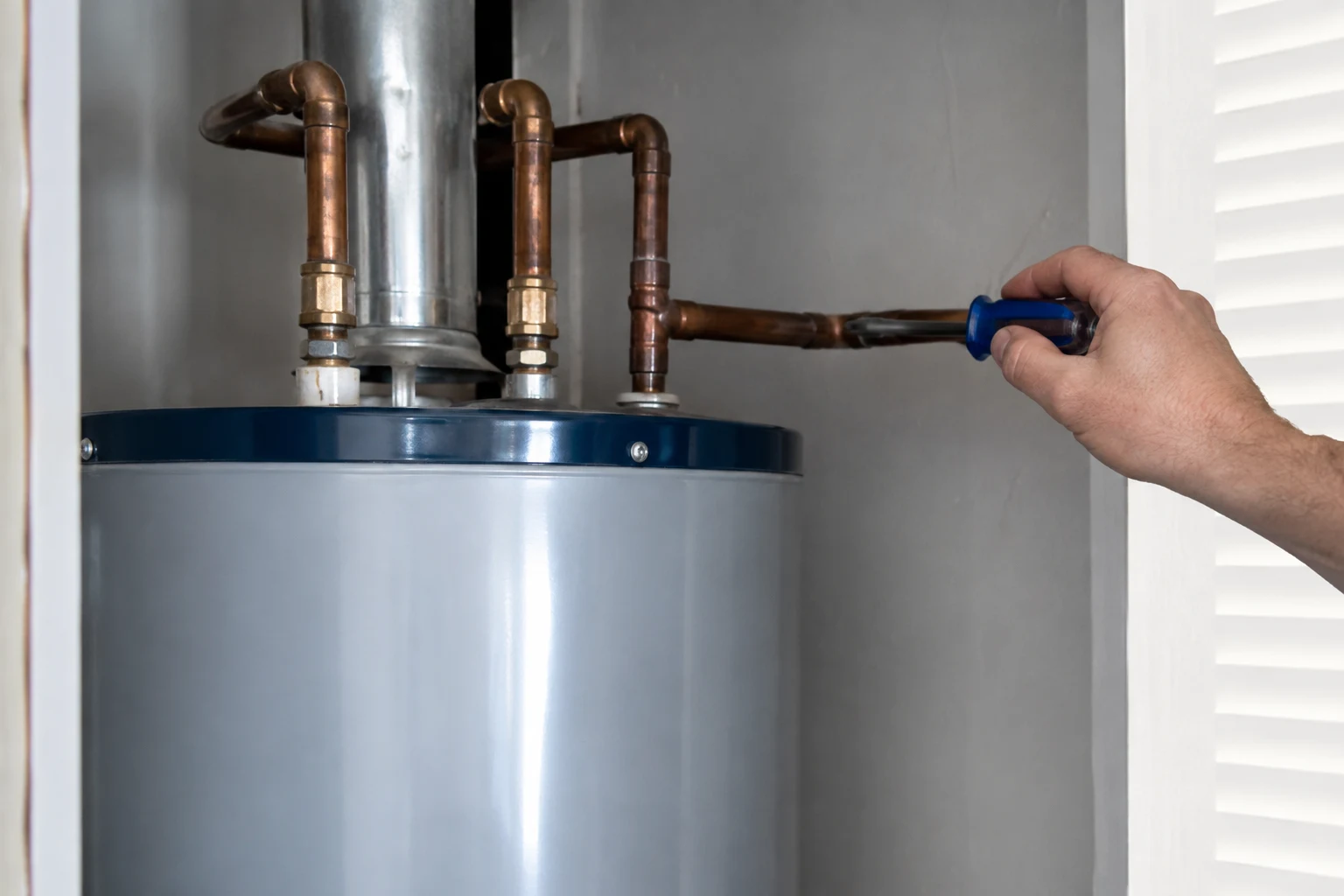
Sediment: the pop that gets called a click
A large share of clicking calls turn out to be popping, and the distinction matters because popping is the one common tank noise that points at a problem you can fix. Sediment settles out of your water and piles up on the floor of a gas tank or cakes onto the elements of an electric one. Water gets trapped under that layer, and when the burner or element heats it, that water flashes to steam and forces its way up through the buildup with a pop, a rumble, or a crackle. It is wetter than a clean click and it swells as the tank heats, getting louder year over year on an old tank. The fix is to drain and flush the tank; on an electric heater, heavy scale on an element may need descaling or replacement. It is worth doing beyond the noise, because sediment insulates the burner, wastes fuel, and drives the tank floor hotter, shortening the unit's life.
Recirculation pumps: a click on the loop, not the tank
Homes with a hot-water recirculation system add one more clicking source, and it is easy to blame the tank for it. These loops use a small pump and a check valve to keep hot water waiting at every fixture. When the pump runs, or when it shuts off and the water in the return line reverses, a swing-type check valve can slam closed and produce a loud chatter or a water-hammer knock that carries back to the heater. Air trapped in the loop clatters the same way, and a pump with worn bearings whines before it seizes. The common cure for check-valve chatter is to fit a spring-loaded check valve after the pump, which closes gently instead of slamming. Bleeding air out of the loop stops the clatter that follows an outage or a repair, and throttling the pump's shutoff valve down a little can quiet a loud system. A pump that has begun to whine or grind needs replacing before it locks up.
The short version
Match the pattern, not the word. A click that follows your hot water is plumbing, pipes expanding on framing or a heat-trap ball, and both are harmless. A single click as a gas burner lights or an electric relay switches is the heater running normally. The clicks that ask for action are the gas igniter clicking with no flame, a relay chattering instead of snapping, and popping that is really sediment. Gas faults and any gas smell go to a pro immediately, electrical chatter gets the breaker off first, and sediment gets a flush.
Frequently asked
Why does my water heater click when the hot water runs?
Because water is moving, and two things click when water moves. The first is thermal expansion in the pipes. Hot water heats the copper or CPVC lines, the metal or plastic grows a little, and where a pipe passes a wood stud, a joist, or a mounting strap it slides and ticks against it. You hear it start when you open a hot tap and fade after you close it, and it tracks the plumbing runs, not the tank. The second is the heat-trap nipples in the hot and cold ports on top of the tank. Each holds a small ball or flapper that checks the flow to stop standby heat loss, and that ball taps its seat as water passes. Both are normal. If pipe tick is loud where a line crosses framing, a foam sleeve or a loosened strap at that spot usually quiets it.
What is a heat trap and why does it tick?
A heat trap is a short nipple, usually plastic-lined, that screws into the hot and cold connections on top of a modern water heater. Inside sits a small ball or hinged flap that works as a one-way check, stopping hot water from convecting up the pipes and bleeding heat into the house when no one is drawing water. It is a code and efficiency feature on newer tanks. The tradeoff is noise: every time water flows or pressure shifts, the ball taps its seat and reads as a tick in rhythm with the heater. It is not a fault. If it genuinely bothers you, a plumber can swap the heat-trap nipples for plain dielectric ones, at the cost of a little efficiency. Most people leave them alone once they know what the sound is.
My gas water heater clicks but won't light. What's wrong?
One click followed by a whoosh and a flame is the normal ignition sequence: the thermostat calls, the gas valve clicks open, the igniter fires, and the burner catches. When you get the clicking but no flame, the sequence is breaking somewhere. Common causes are a dirty or failed spark electrode or igniter, a clogged pilot tube, a bad thermocouple or flame sensor that never confirms the flame so the valve shuts the gas again, air in the line after service, or a failing gas valve or board. A brand-new install that will not light often just needs the air purged. On an older unit, suspect the igniter and flame sensor first. Because a sparking igniter next to unburned gas is what the controls exist to prevent, this is a stop-and-diagnose problem, not one to keep triggering.
Why does my electric water heater keep clicking?
An electric tank clicks because a relay or contactor switches the heating element on and off, and a heavy 240-volt load is always switched by a relay that clicks when it pulls in and again when it drops out. One click on, one click off, a few times an hour as the thermostat cycles, is exactly right. The problem version is rapid chatter, a stutter of clicks instead of one clean snap. That points at low voltage on the relay coil, a loose or corroded connection, worn arcing contacts, or a thermostat short-cycling, and it usually shows up with lukewarm water, a tripping breaker, or a burnt smell. To look inside, kill the 240-volt breaker first, then pull the access panels; anything past a visibly loose wire is a job for a pro. Occasional clicking with normal hot water is just the heater running.
What's the difference between clicking and popping in a water heater?
They sound alike to a lot of people, but they come from different places and only one needs a fix. Clicking is sharp and clean, a tick or a snap, and it comes from moving parts and moving water: pipes on framing, a heat-trap ball, a gas valve, an electric relay. Popping is duller and wetter, more of a percolator rumble or a crackle, and it comes from sediment. Minerals settle on the tank floor, or scale cakes onto an electric element, and water trapped under the layer flashes to steam and forces its way up with a pop. So a rhythmic click that tracks your hot water use is almost always benign. Popping or crackling that gets worse as the tank ages is sediment, and the fix is to flush the tank or descale the element. Chronic popping also shortens an old tank's life, so it is worth clearing.
When should I call a plumber about a clicking water heater?
Call when the click stops matching the normal pattern or comes with a second symptom. On a gas unit, repeated clicking or sparking with no flame, any gas smell, or a burner that will not stay lit is a call-a-pro problem, and a gas smell means leave the house and call the utility first. On an electric unit, rapid relay chatter, clicking with a tripping breaker, a burnt smell, or lukewarm water means shut the breaker and get it looked at. Popping or rumbling that keeps getting louder is sediment to flush, and a recirculation pump that clatters needs its check valve or trapped air sorted. The quiet stuff you can handle yourself: identifying pipe tick, recognizing heat-trap and relay clicks as normal, and flushing sediment. A click with heat loss, a breaker, a smell, or water is where it becomes a service call.