A condensing tankless heater makes about a gallon of water for every few hours it runs, and that water is not clean. It is mildly acidic, roughly pH 3 to 5, because the unit wrings the last heat out of its own exhaust and the flue vapor condenses out as a weak acid. The heater has to drain that water and, in most jurisdictions and most units, neutralize it first. When the trap clogs, the line freezes, a pump quits, or the neutralizer media is used up, the control board stops the unit and throws a condensate or neutralizer code. The exact number depends on the brand.
Condensate and neutralizer codes
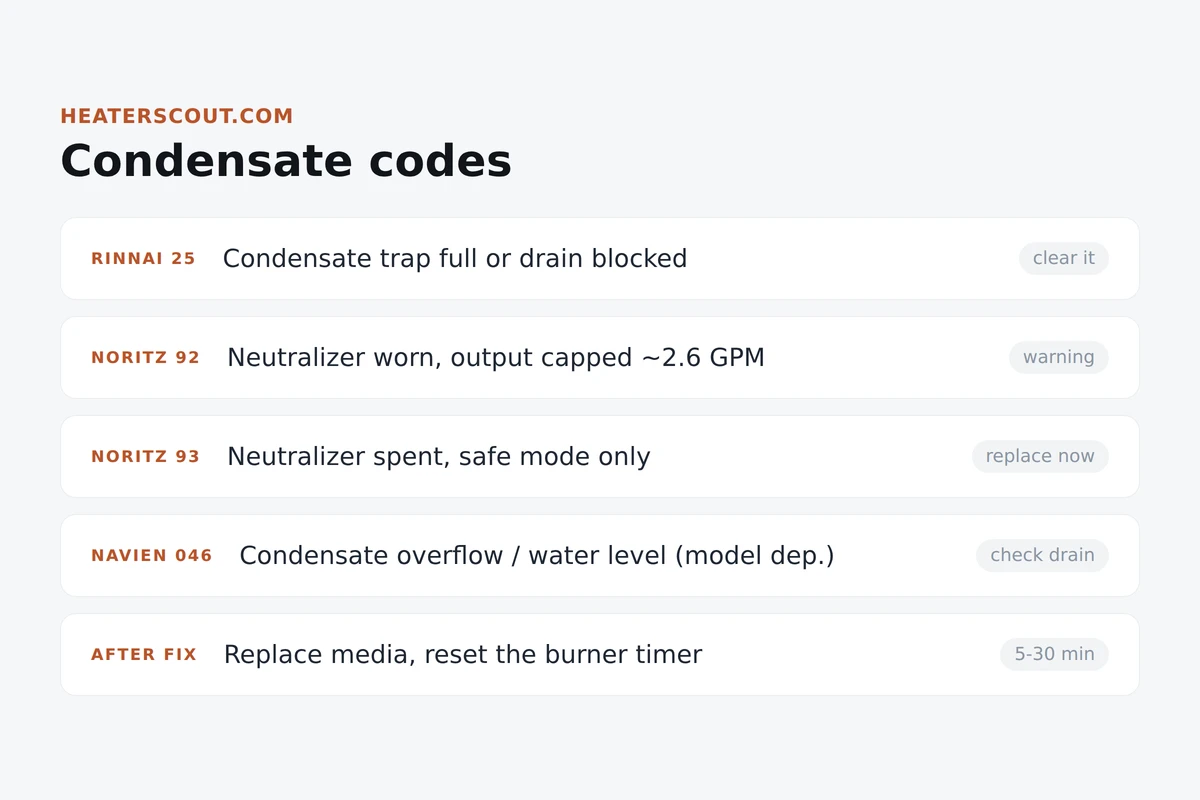
A family of faults on condensing (high-efficiency) gas tankless heaters. Condensate codes fire when the acidic water the unit produces cannot drain: a full or clogged trap, a blocked or frozen drain line, or a failed condensate pump. Neutralizer codes fire when the calcium-carbonate media that raises the condensate pH back toward neutral has reached the end of its rated life. Rinnai Code 25 is the drain fault; Noritz 92 and 93 are the neutralizer-life warnings; Navien 046 covers condensate overflow and water-level on many models. Non-condensing tankless units do not make condensate and do not throw these codes.
The short version
Condensate codes split two ways. Drain faults (Rinnai Code 25, Navien 046 on many models) mean the acidic water is not getting out: clear the trap, flush the line, thaw any ice, confirm the pump lifts. Neutralizer-life codes (Noritz 92 then 93) mean the media that treats that water is worn out: replace the calcium-carbonate media and reset the burner timer. Do not confuse Rinnai LC, a lime and calcium scale warning, with a condensate code. Most of this is DIY-friendly with power and gas off; a real base-pan leak is not.
Why a condensing unit makes acid in the first place
The efficiency that sells these heaters is exactly what creates the problem. A non-condensing unit sends its exhaust out hot and wastes that heat. A condensing unit runs the exhaust through a second heat exchanger and pulls that heat back into the water, hitting efficiencies in the mid to high 90s. Cooling the flue gas below its dew point, though, condenses its water vapor back to liquid, and combustion products dissolve in to make a weak acid, commonly around pH 3 to 5 and sometimes as low as 2 to 4 at the drip. That is acidic enough to corrode cast iron, galvanized pipe, and pumps over time. So the unit has to get the water out, and code in many areas says treat it first.
The drain path and where it fails
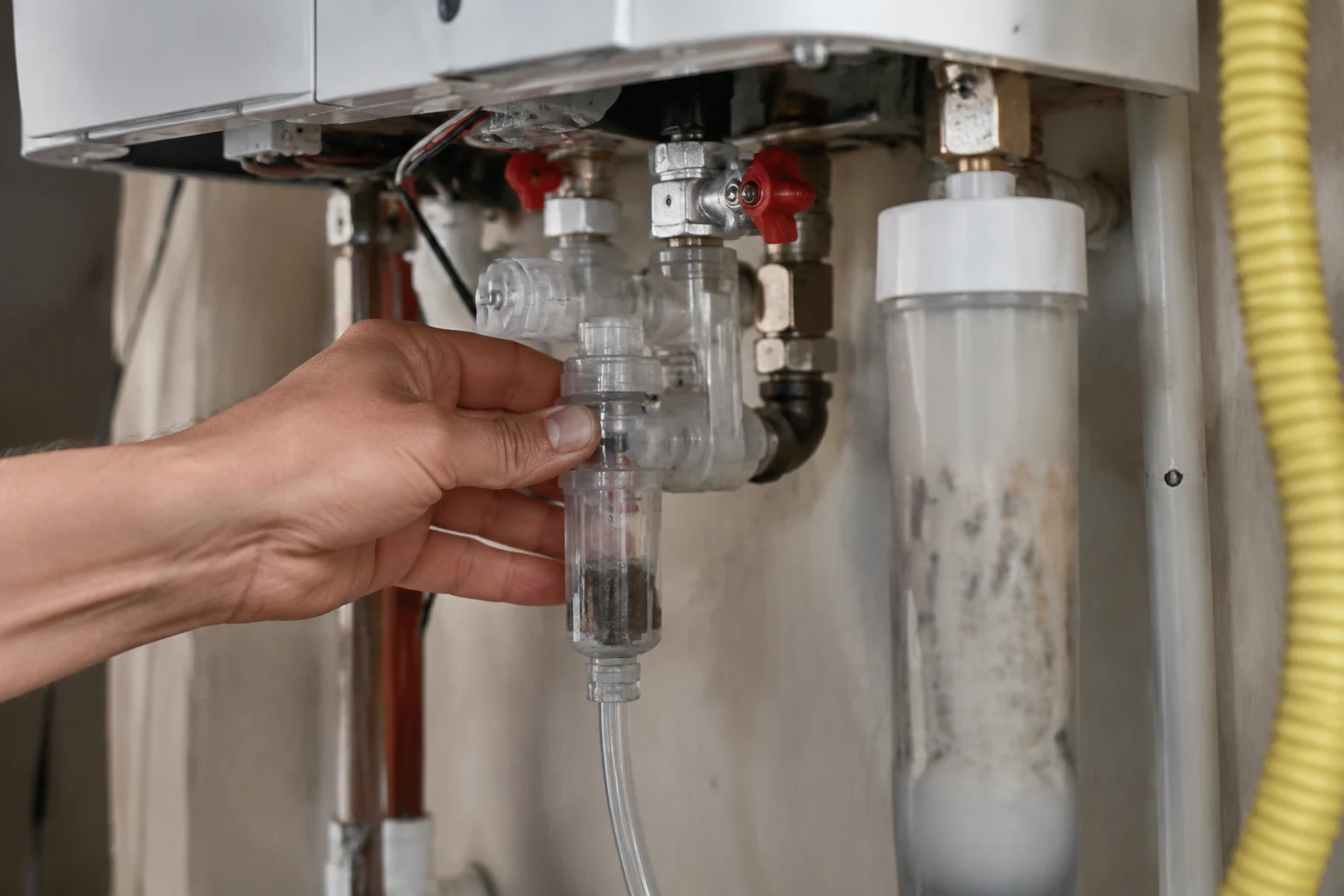
Follow the water. It leaves the secondary heat exchanger, collects in an internal trap, often passes through a neutralizer cartridge packed with calcium-carbonate chips, and exits a drain line to a floor drain, a condensate pump, or a plumbing tie-in. Every one of those is a failure point. The trap fills with sludge and biofilm that thrive in acidic water. The line sags and holds water, kinks, or freezes solid on a cold night. The pump, if there is one, weakens and stops lifting. The media dissolves as it works and eventually runs out. When water backs up or a media timer expires, the board reports it.
Rinnai Code 25 versus Rinnai LC
These get confused constantly, so pin them down. Code 25 is the condensate fault. Rinnai's own troubleshooting literature describes it as the condensate trap being full or the drain being blocked, and the common causes are a clogged line, a full reservoir, a failed pump, or a blocked neutralizer. That is the code you chase when acidic water cannot get out. LC, and LC0 through LC9, stands for Lime and Calcium: a scale warning telling you to descale the heat exchanger. Descaling fixes LC and does nothing for Code 25. If you have both, you have two separate maintenance jobs.
Noritz 92 and 93: the neutralizer clock
Noritz handles neutralizer wear with a run-hour timer, and it warns you in two stages. Code 92 is the early flag: the neutralizer counter reaches about 1214 hours, the controller shows 92, and the unit caps its maximum flow to roughly 2.6 GPM so you feel it before you ignore it. Code 93 is end of life: the counter hits about 1314 hours and the unit runs in safe mode only. The service manual treats this as a condensing-model-only procedure. The fix is to replace the neutralizer media, then reset the burner timer so the counter starts fresh. Skip that reset and the controller still thinks the media is spent, so 92 or 93 comes straight back even with brand-new chips in the housing.
Navien 046: read it carefully
Navien uses 046, shown as E046 or 046-00, for condensate and water-level trouble on many NPE units, and the first move is the same as any drain fault: check the condensate line for a clog and clear it. The catch is that 046 is one of the numbers whose meaning drifts by model and firmware. On some units the same code reads as a leak-sensor trip in the base pan or a heat-exchanger thermistor fault, and a base-pan leak is a real water-side repair, not a drain you can flush. Before you order a part, look at the base pan for standing water, decide whether it is backed-up condensate or a leak, and confirm 046 against the code table for your exact model.
Key takeaways
- Condensate is acidic (about pH 3 to 5, sometimes 2 to 4 raw); the neutralizer raises it back near neutral.
- Rinnai Code 25 = condensate trap full or drain blocked. Rinnai LC = lime/calcium scale, a different job.
- Noritz 92 = neutralizer worn (output capped ~2.6 GPM); Noritz 93 = spent (safe mode only).
- Navien 046 usually means condensate overflow / water level, but can mean a leak or thermistor by model.
- Replace neutralizer media once a year or when pH drops below about 6; use calcium-carbonate chips.
- After neutralizer service, RESET the burner/neutralizer timer or the code returns with fresh media.
- A code that keeps coming back means sludge deeper in the line, a frozen sag, a weak pump, or a real leak.
Clearing a blocked trap, step by order
Power and gas off first. Locate the clear tube and the internal trap at the base of the unit. Standing water in the tube or trap confirms the blockage. Pull the trap per your manual, empty it, and flush it with warm water until it runs clean. Run a shot vac on the drain line to draw out the sludge and biofilm that collect in acidic water, and check the full run for a low spot that holds water, a kink, or a plug of ice in an unheated space. Refill the trap with clean water before reconnecting so no flue gas leaks past a dry trap. If a condensate pump is in the path, confirm it actually turns on and lifts water. Restore power, run hot water, and watch it drain before you call it fixed.
Replacing neutralizer media
The media is calcium carbonate, limestone or marble chips or purpose-sold neutralizer pellets, and it dissolves as it neutralizes the acid, so it is a consumable. Replace it once a year, or sooner if a pH check on the outlet condensate reads below about 6. To swap it, isolate the cartridge, dump the spent chips, rinse the housing, refill with fresh media, and reseat it. Fresh media should carry the water up to roughly pH 5 to 7, about as mild as rainwater and safe for your drain. Where the maker sells a matched cartridge, use it if warranty terms require. And on a Noritz, do not forget the timer reset, because the code is driven by hours, not by what is actually in the housing.
Leak or drain? Check before you flush
Standing water in the base pan is not always condensate. If the pan is wet from a real leak at a fitting or the heat exchanger rather than a backed-up drain, clearing the trap will not fix it and the unit can keep faulting. On a Navien 046 especially, decide leak versus drain before you order parts. A confirmed heat-exchanger leak is a warranty and licensed-tech repair, not a DIY flush.
Where the DIY line sits
Flushing a trap, clearing a drain line, thawing a frozen run, and swapping neutralizer media are all reasonable for a careful homeowner with the power and gas off. None of it touches the gas train. The place to stop is a real leak. If the base pan is wet from a fitting or a heat-exchanger crack rather than a backed-up drain, or a Navien 046 turns out to be a leak sensor rather than an overflow, that is a licensed-tech and often a warranty repair.
Keeping these codes from firing
Condensate faults are almost entirely preventable on a schedule. Once a year, pull and flush the trap, vac the drain line, and check the neutralizer media, replacing it and resetting the timer if it is due or the pH has drifted below 6. Before winter, insulate or reroute any condensate line running through an unheated space, since a frozen line is the classic cold-morning no-hot-water call. Test the pump if there is one. A unit that gets a yearly look-over rarely surprises you with a 25, a 92, or an 046 on the coldest day of the year.
Frequently asked
What does a condensate error code mean on a tankless water heater?
It means a high-efficiency condensing unit cannot get rid of the acidic water it makes, or the device that treats that water is worn out. A condensing tankless heater pulls extra heat out of the exhaust, and that cooling turns flue vapor back into liquid, roughly pH 3 to 5. The unit routes it through a trap, often a neutralizer cartridge, and out a drain. When the trap clogs, the line freezes, a pump quits, or the media runs out, the board throws a code. Rinnai calls the drain fault Code 25, Noritz splits neutralizer wear into 92 and 93, and Navien uses 046 for condensate and water-level faults on many models.
Is Rinnai LC code the same as a condensate code?
No, and this trips people up. LC and LC0 through LC9 on a Rinnai stand for Lime and Calcium, a scale warning that the heat exchanger needs descaling. It is a maintenance nag, not a drain fault, and the unit usually keeps running while it beeps. The condensate and drain problem on a Rinnai condensing unit is Code 25, which the service literature describes as the condensate trap being full or the drain being blocked. They are different problems with different fixes: descale for LC, clear the trap and drain for 25.
How do I clear a blocked condensate trap on a tankless heater?
Cut power and gas first, then find the clear tube and the trap at the bottom of the unit. Standing water in the tube or trap means a blockage. Disconnect the trap per your manual, dump it, and flush it with warm water until it runs clear. A shot vac on the drain line pulls out the sludge and biofilm that build up in acidic water. Refill the trap with clean water before reconnecting, since a dry trap can let flue gas leak past. Check the whole run for a sag, a kink, or a plug of ice. Reconnect, restore power, and run hot water to confirm it drains. If there is a condensate pump, test that it actually lifts water.
When do I replace the neutralizer cartridge, and with what?
Two triggers: time and pH. Most makers say replace the media once a year, and a Noritz will force the issue with a 92 or 93 code when its run-hour timer expires. The honest test is pH: catch some outlet condensate, and if it reads below about 6 the media is done. Fresh media should push the water up near neutral, a 5 to 7 range that will not eat your drain. Refill media is calcium carbonate: limestone or marble chips, or purpose-sold neutralizer pellets. Rinse the housing, dump the spent chips, refill, and reseat it. After any neutralizer service on a Noritz you must reset the burner timer, or the code comes right back.
What does Noritz code 92 or 93 mean?
Both are neutralizer-life codes on condensing Noritz units. Code 92 is the early warning: the run-hour counter has hit about 1214 hours, the controller shows 92, and the unit caps its flow to roughly 2.6 GPM so you notice. Code 93 is end of life: the counter has reached about 1314 hours and the unit drops into safe mode only. The fix for both is to replace the neutralizer, but 93 means you are past due. After you swap the media you must reset the burner timer, otherwise the controller still thinks the neutralizer is spent and re-throws the code.
What is Navien error code 046?
On many Navien NPE condensing units, 046 or E046 points at condensate and water level, so the first move is to check the condensate drain line for a clog and clear it. Be careful, though, because 046 is one of the codes whose meaning shifts by model and firmware. On some units the same number maps to a leak-sensor trip in the base pan or a heat-exchanger thermistor fault instead. Look at the base pan for standing water before you assume it is only a drain clog. A real leak is a different and more serious repair. Confirm 046 against the code table for your exact model before you order any part.
Can acidic condensate damage my drain or the heater?
Yes, which is the whole reason neutralizers exist. Raw condensate off a condensing burner runs acidic, commonly pH 3 to 5 and sometimes lower. Dumped straight into cast iron or old galvanized drain, year after year, it corrodes the pipe and can eat pumps and fittings downstream. Neutralizing it up toward pH 5 to 7 stops that damage and keeps you code-compliant where local plumbing code requires treatment. Inside the heater the bigger risk is a trap or drain that backs up and locks the unit out. Keeping the trap clean and the media fresh protects both the appliance and the plumbing it drains into.
Why does my condensate code keep coming back after I cleared it?
A cleared code that returns means the real cause is still live. The usual repeats: the trap looked clear but the sludge is further down the drain line, so it fills again in days. Or the line has a low spot that holds water and freezes on cold mornings. Or you replaced the neutralizer but never reset the timer, so a Noritz keeps flashing 92 or 93 no matter how fresh the media is. Or a condensate pump is weak and only fails under load. On a Navien 046, look hard at whether it is really condensate or a base-pan leak the board is reading before you keep resetting the same code.