The cold water sandwich is the short burst of cold that hits between two stretches of hot on a tankless heater. It shows up because leftover hot water in the pipe reaches you first, then a slug of water that cooled during a brief tap shutoff slides through before the burner can relight and ramp the fresh hot water back up.
Tap temperature over the first 30 seconds
2 to 5 sec: leftover hot reaches you first, then a cooled slug slides through while the burner refires, then hot returns. That grey dip is the whole sandwich.
Before any pipe or pump enters the story, it helps to see the sandwich as a clock. It is three stages that fire in order, each lasting a beat or two, and the cold burst you feel is only the middle stage. Read the timeline once and the rest of this guide becomes a map of where to intervene.
-
STAGE 1 · 0 to ~2 sec · feels hot
Leftover water reaches you first
You open the tap. What comes out is whatever was already sitting in the pipe between the heater and the faucet. If you drew hot water a minute ago, that water is still warm, so the stream starts hot and everything feels fine.
-
STAGE 2 · ~2 to 5 sec · the cold layer
The cooled slug arrives before the burner catches up
During your last brief shutoff, flow dropped below the roughly half a gallon per minute the burner needs, so it went out. The water it left behind in the heat exchanger and pipe cooled off. Now that cooled slug, followed by fresh cold water from the main, reaches the tap. This is the cold burst.
-
STAGE 3 · ~5 sec on · hot again
The burner relights, ramps, and hot returns
The flow sensor finally reads demand, the burner sparks, and the exchanger heats back to setpoint. A couple of seconds later the water snaps hot again. Hot, cold, hot. That is the whole sandwich.
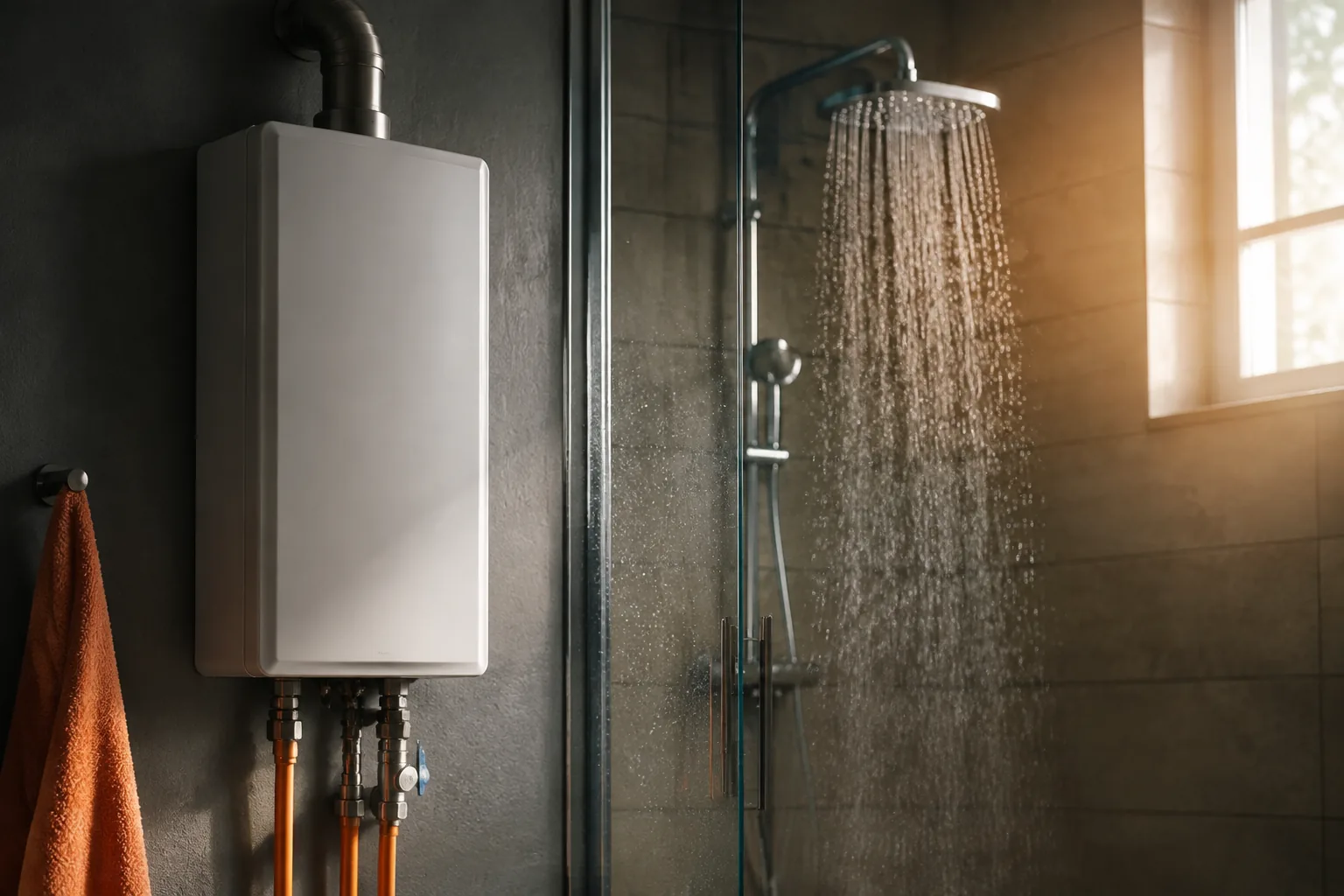
You reach past the shower stream to grab the shampoo, the water pressure drops for a second, and by the time you step back under it the spray has gone ice cold for three seconds before snapping hot again. That jolt is the middle stage of the timeline above. Plumbers call it the cold water sandwich, and it is one of the most common complaints from people who switch to a tankless heater expecting endless, instant hot water. The endless part is true. The instant part is where the sandwich lives.
Here is the thing worth saying up front: the sandwich is not a defect. A tankless unit that produces it is working exactly as designed. The cold burst is a side effect of how on-demand heating fires, cuts off, and refires. Knowing that changes the goal. You are not chasing a broken part; you are managing an inherent behavior, and there is a real difference between the piece you can engineer away and the piece you cannot.
The cold layer in stage two has two ingredients, and it helps to keep them separate. One is the leftover cooled water in the pipe and exchanger, a plumbing-volume problem. The other is the burner relight-and-ramp delay, a combustion-timing problem. Different fixes attack different ingredients, which is why a single tweak rarely erases the whole thing.
Why the burner has to shut off at all
The reason the middle stage exists comes down to a number: the activation flow. Every tankless heater has a minimum flow rate the internal sensor must read before the burner will fire, and for residential units it sits somewhere between 0.4 and 0.75 gallons per minute. That threshold is not arbitrary. It is written into ANSI Z21.10.3, the American National Standard for gas water heaters, and it exists because the low end of the burner's modulating range cannot safely heat a trickle. Below the threshold, the unit either refuses to ignite or stutters on and off.
So when your flow dips, even for a moment, the burner is obligated to cut out. It only fires while enough water is moving through it. That pause is where the water in the exchanger and pipe cools, and it is the seed of the cold slug. Understanding the activation flow matters because two of the cheapest fixes, steadier habits and adequate fixture flow, work purely by keeping you above that number so the burner never has to shut off in the first place.
Who gets it worst
Not everyone notices the sandwich, and the ones who suffer most tend to share habits. If you pulse the tap, meaning you turn the water off and then quickly back on, you are handing the unit a fresh cold slug every time. Shaving in the shower with the water off between strokes, rinsing dishes in bursts, or the classic soap-up-then-rinse routine all trigger it repeatedly.
Sequential faucet use is another trap. You finish at the kitchen sink, walk to the bathroom, and open that tap thirty seconds later. The burner shut off when you closed the kitchen faucet, the water in the line cooled, and now the bathroom gets the sandwich. The longer the pipe run between the heater and the fixture, the bigger the cold slug, because there is more cooled water to flush before the fresh hot arrives.
Long distances make everything worse. A heater in a garage feeding a second-floor bathroom holds a lot of water in that pipe. Even without a shutoff, that whole column has to move before hot arrives, which is the ordinary wait; add a brief tap pause and the cold slug stacks on top of an already long lag. Homes with the heater tucked far from the bathrooms feel the sandwich hardest.
The part you can fix, and the part you cannot
Be honest about the ceiling here. There is an inherent lag between the burner sensing flow and delivering hot water. It is short, a couple of seconds on a modern unit, but it is real and it is physics; combustion takes a beat to fire and heat metal. No plumbing trick deletes that couple of seconds entirely. Anyone promising a tankless system with zero lag is overselling.
What you can fix is almost everything else. The volume of cooled water in the pipe, the temperature it drops to during a shutoff, and whether that cold slug ever reaches you at full cold instead of blended warm are all controllable. The strategy is not to speed up the burner; it is to make sure hot or at least warm water is already waiting at the tap so the cold slug never has room to form. That is the whole game, and the tools below all play it in slightly different ways.
The fixes that work
Here is a live way to think about it. Check the mitigations you could realistically add in your home and watch the expected relief climb. Stacking a couple of these is what takes the sandwich from a daily annoyance to something you rarely notice.
Cold-water-sandwich fix checklist
Tick the fixes you can actually apply. The bar shows how much of the cold burst each combination is likely to remove.
Expected relief: Nothing checked yet. Pick the fixes you can actually do and watch the meter move.
Recirculation loop: the heavy hitter
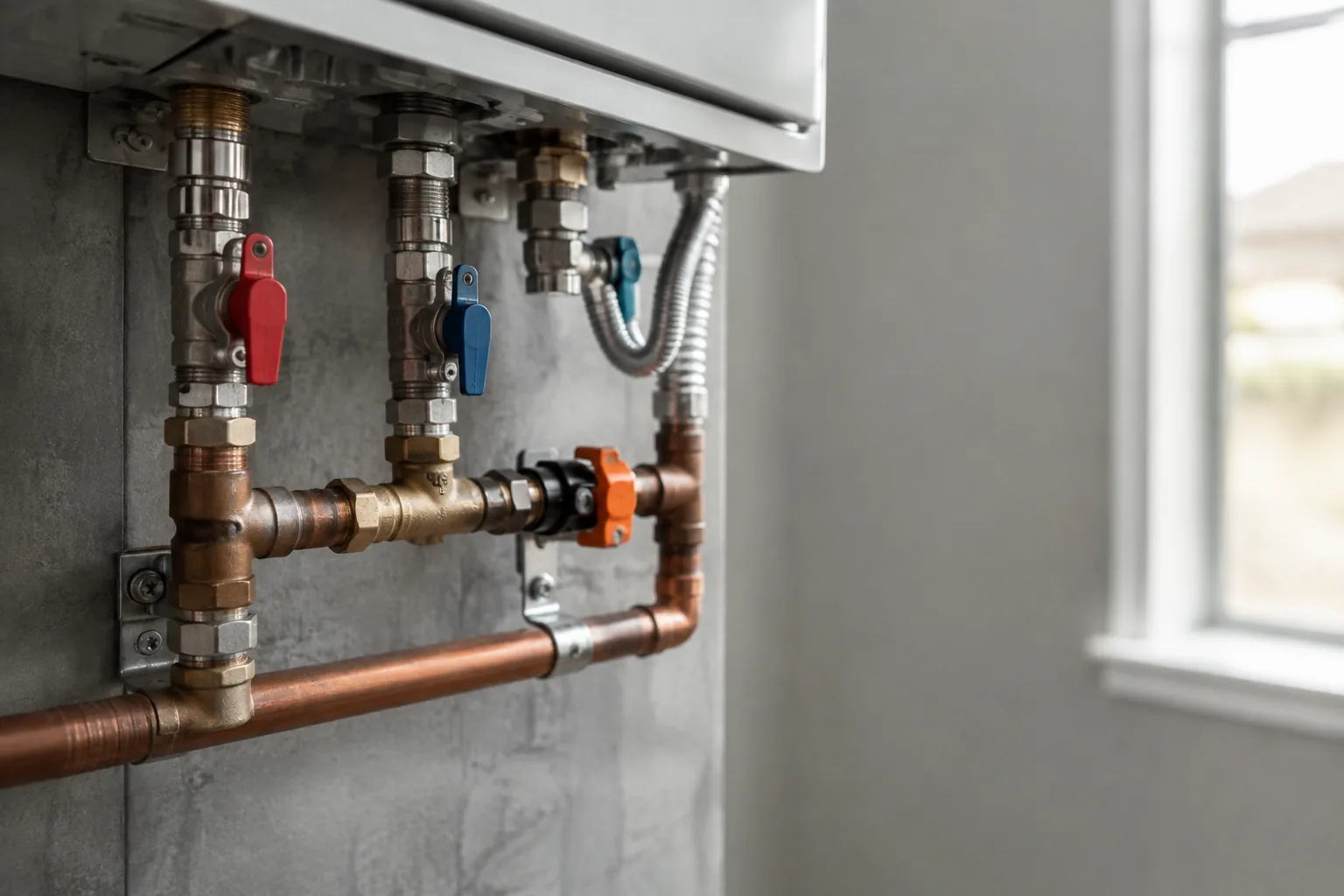
A recirculation system keeps hot water moving in a loop that runs near your fixtures, so the pipe leading to each tap holds hot water instead of a cooled column waiting to become the cold layer of a sandwich. When you open the tap, hot is already there. This is the most effective single fix because it attacks the biggest ingredient, the volume of cooled pipe water, and it does it before you even turn on the faucet.
There are two flavors. A dedicated return line is the gold standard: a separate pipe carries water back to the heater in a continuous loop, and it can run on a timer or on demand via a button or motion sensor. Retrofitting a dedicated line into a finished house is the pricier route. The alternative uses a crossover valve under the far fixture to send cooled water back through the existing cold line, which is cheaper to install but slightly muddies your cold tap for a moment. Either way, pair it with a unit that supports recirculation, and if the pump runs constantly, expect a bump in energy use for the convenience.
Buffer tank or built-in mini-tank
A buffer tank is a small reservoir, often just a few gallons, plumbed on the hot outlet. Its job is to have hot water ready during the exact window when the burner is relighting and ramping. When the cold slug would otherwise arrive, the buffer feeds stored hot into the stream and bridges the gap, so what reaches you stays hot while the main heat exchanger catches up. It directly targets the relight-and-ramp ingredient that recirculation alone does not fully cover.
Some tankless models come with a built-in mini-tank that does this internally, no extra plumbing required. If you are shopping for a new unit and the sandwich is your main gripe, this feature is worth paying for; it is the cleanest version of the fix because the manufacturer sized and integrated it for you. For an existing installation, an external buffer tank achieves the same result with a bit more hardware in the utility room.
Raise minimum flow and steady your habits
Two cheap moves help more than people expect. First, avoid pulsing the tap. Every time you shut the water fully off and reopen it, you force the burner to cycle and you serve yourself a fresh cold slug. Keeping a steady flow, even a modest one, keeps the burner lit and the hot water coming. In the shower, a valve that stays open beats one you flick off between rinses.
Second, mind the activation flow. A tankless unit needs roughly half a gallon per minute to keep firing. Ultra-low-flow fixtures, half-closed valves, or a clogged aerator can dance right around that threshold, dropping the unit into an off-on stutter that produces sandwich after sandwich. Making sure your draw comfortably clears the minimum, and cleaning aerators that choke the flow, keeps the burner steadily on instead of hunting.
Thermostatic mixing valve
A thermostatic mixing valve does not stop the cold slug from forming; it softens the blow. The valve blends hot and cold to hold the output near a target temperature, so when a brief cool patch does slip through, it comes out lukewarm rather than a cold shock. It is a supporting player, not a cure, but stacked with a buffer or recirc loop it smooths the edges of anything that still gets past them. It also adds a scald-protection benefit as a bonus.
What to try first
Start with the free changes: stop pulsing the tap and confirm your fixtures clear the minimum flow. Those cost nothing and tell you how much of the sandwich was your usage pattern versus your plumbing. If the burst still bothers you, a recirculation setup is the highest-impact upgrade for a house where the heater sits far from the bathrooms. If your complaint is specifically the shutoff-and-refire gap during a single shower, a buffer tank or a mini-tank model targets that window directly. Layering a recirc loop with a small buffer is what gets people to the point where they forget the sandwich existed, while a mixing valve tidies up whatever remains. The couple of seconds of pure combustion lag stays, but by then it never reaches the tap as cold.
Frequently asked
What is the cold water sandwich on a tankless water heater?
It is a short burst of cold water that arrives between two stretches of hot. It happens because leftover warm water in the pipe reaches you first, then a slug of water that cooled during a brief tap shutoff slides through before the burner relights and ramps the fresh hot water back up. The result is hot, then cold, then hot again, usually lasting two to five seconds.
Is the cold water sandwich a sign my tankless heater is broken?
No. A unit that produces the sandwich is working as designed. The cold burst is a normal side effect of how a tankless heater fires only while water flows, shuts off when flow stops, and needs a few seconds to relight and heat back to setpoint. It is a behavior to manage, not a fault to repair.
How do I get rid of the cold water sandwich?
Attack it in layers. A recirculation loop keeps hot water near your fixtures so the pipe is never full of cooled water. A small buffer tank or a model with a built-in mini-tank covers the burner relight gap. Steadier tap habits and adequate flow keep the burner lit, and a thermostatic mixing valve softens any cold patch that still slips through. Stacking a recirc loop with a buffer tank removes most of it.
Can the cold water sandwich be completely eliminated?
Not entirely. There is an inherent lag of a couple of seconds while the burner fires and heats the exchanger, and no plumbing trick deletes that physics. What you can eliminate is the cold slug reaching you: with a recirculation loop plus a buffer or mini-tank, hot or at least warm water waits at the tap, so the burst never arrives cold even though the combustion lag technically remains.
Why is the cold water sandwich worse in some homes?
The longer the pipe run between the heater and the fixture, the more cooled water has to flush before hot arrives, so a heater in the garage feeding an upstairs bathroom produces a bigger cold slug. Habits matter too. People who pulse the tap on and off, shave in the shower, or use faucets in quick sequence trigger the burner to cycle repeatedly, which serves up the sandwich again and again.
Does a recirculation pump fix the cold water sandwich?
It is the single most effective fix because it keeps hot water circulating near your fixtures, so the pipe is not holding a column of cooled water waiting to become the cold layer. A dedicated return line is the strongest version; a crossover-valve setup is cheaper but slightly warms your cold tap. Pairing recirculation with a small buffer tank covers both the pipe volume and the burner relight gap.