A Rinnai that quits mid-shower is not being mysterious. It is almost always showing a two-digit number on the little wall controller, and that number is the unit telling you exactly what tripped it. The trick with any Rinnai fault is not memorizing every code. It is learning to read the code, sort it into a family, check the handful of things a homeowner can safely check, and recognize the few faults where the right move is to stop and call a licensed gas tech. Specific numbers each have their own detail page. This is the map that gets you there.
Read the code off the controller
The temperature controller on the wall shows a two-digit diagnostic code, not the heater itself. Write down the exact number before you touch anything. If the display alternates a code with your set temperature and the unit still runs, that is usually the LC maintenance signal, not a shutdown.
Sort it into a family
You do not need every code memorized. Combustion, exhaust, and ignition codes cluster in the low teens. Sensor and thermistor codes read the water temperature. Fan and gas-solenoid codes are the combustion hardware. LC is scale. Knowing the family tells you whether it is housekeeping or a gas-side fault.
Check the free stuff first
Confirm the gas is on and other gas appliances work, power is on, both water isolation valves are open, and the cold-inlet filter and faucet aerators are clean. A surprising share of no-hot-water calls are a closed valve, a tripped breaker, or flow below the burner's activation point, not a broken heater.
Clear the cause, then reset
Fix whatever the code pointed at, then reset through the controller: power button off and on, or the breaker off for 30 seconds. A reset is not a repair. If the same code returns within minutes, the cause is still there.
Decide DIY or pro
Flushing scale, cleaning filters, clearing a snow-covered vent, and resetting are homeowner work. A repeating combustion, ignition, fan, gas-valve, or venting code, or any gas or exhaust smell, is a hard stop. Call a licensed tech.
| What that family is telling you | First move | |
|---|---|---|
| Combustion / air / exhaust (low teens, e.g. code 10) | The unit cannot get a clean air-fuel mix or its flue is restricted. Blocked intake screen, snow over an outdoor vent, restricted exhaust, or exhaust recirculating into the intake. | Clear any obvious vent obstruction outside. If none, stop. A blocked flue is a CO risk and a pro call. |
| Ignition / no light (e.g. code 11) | The burner tried to light and could not. Gas turned off or low, a closed valve, a gas-line or igniter problem. | Confirm gas is on and other gas appliances work. If gas is fine and it still will not light, call a pro. |
| Flame failure / flame loss (e.g. code 12) | It lit but lost the flame, or the flame sensor cannot see it. Often a dirty or failing flame sensor or unstable gas supply. | Verify steady gas. Sensor and gas-train work is a pro job, not a DIY clean. |
| Over-temperature cutoff (e.g. code 16) | Water passed the safety limit, around 203 F. Usually restricted flow, a clogged inlet filter, scale, or a blocked exhaust. | Clean the inlet filter and descale. If it recurs on clean, healthy flow, call a pro. |
| Sensor / thermistor (e.g. code 25 wording varies) | A temperature sensor is reading the incoming or outgoing water wrong, or on a condensing unit, a condensate drainage fault. | Look up your exact code. Condensate and sensor faults are typically a pro repair. |
| Fan / gas solenoid (e.g. code 61, 71) | The combustion fan or the gas-valve control circuit has failed. This is combustion hardware. | Professional-only. Do not attempt gas-valve or fan work yourself. |
| LC / maintenance | Scale in the heat exchanger has hit the flush threshold. The unit keeps running and beeps. | Descale the unit. Homeowner-doable in about an hour. |
| Power (e.g. code 03) | A power interruption hit the unit while it was running. | Reset through the controller. If it repeats, check the circuit and outlet. |
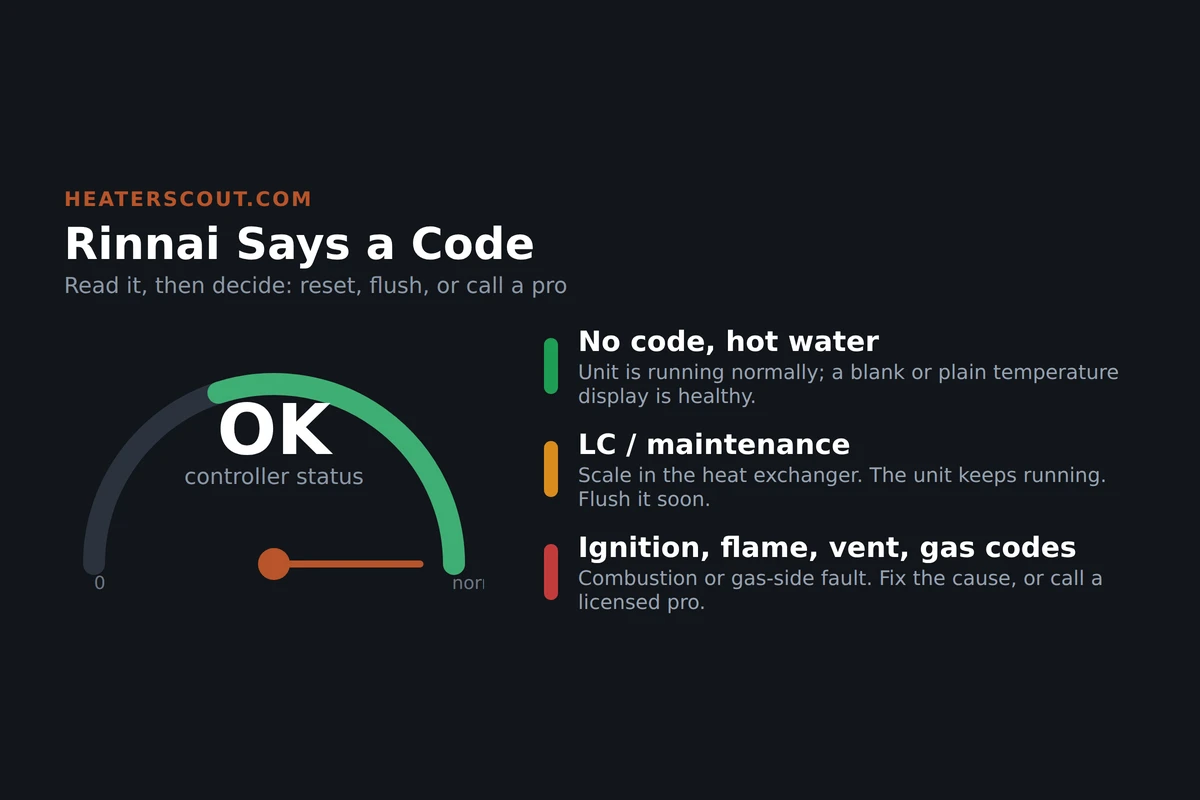
The code lives on the controller, not the heater
First thing to get straight: the number you are chasing is on the temperature controller, the small panel usually mounted on a wall or the unit's cover, not stamped on the heater body. When a Rinnai faults, it displays a two-digit diagnostic code there. Read it and write it down before you start unplugging things, because the code is the whole shortcut. Without it you are guessing; with it you know within seconds whether you are looking at a flush you can do yourself or a combustion fault that needs a tech.
The reason this page does not march through every number is that the numbers are not universal in their detail. A code in the twenties can mean an inlet thermistor on one series and a condensate drainage problem on a condensing model. What is consistent is the family behavior. Learn the families and you can approach a code you have never seen before, then confirm the exact meaning on that code's own page.
No code, no hot water: check flow before you blame the box
Not every no-hot-water complaint throws a code. When the display is blank of errors but the water runs cold, the culprit is often flow. A gas tankless has to sense a minimum amount of water moving through it before it will fire the burner, and on most Rinnai units that is around 0.4 gallons per minute. A weak trickle, a nearly closed valve, an aerator packed with grit, or a thermostatic mixing valve barely open can all sit under that line. The unit is not broken; it simply never gets the signal to light. Open the fixture wider, clean the aerators and the cold-inlet filter, and see if hot water returns.
Quick answer
A Rinnai shows an error code when its safety logic detects a problem and puts a two-digit number on the wall controller. No hot water usually comes down to one of a few things: a combustion or ignition code because it cannot light or lost the flame, a blocked vent, the gas or a water valve turned off, water flow below the roughly 0.4 GPM the burner needs to fire, or scale showing as an LC maintenance code. Read the code, fix the cause it points to, then reset through the controller. If the code returns right after the reset, or it is a gas, fan, or venting fault, call a licensed technician.
Minimum activation flow rate
The smallest amount of water flow a gas tankless heater needs before it will ignite the burner. On most Rinnai models that is about 0.4 gallons per minute, and some units fall in the 0.4 to 0.6 GPM range by generation. Once lit, the unit can hold the flame down to roughly 0.26 GPM. Below the activation point the heater will not fire at all, which is why a slow trickle at the tap comes out cold even on a perfectly healthy unit.
Descaling: the maintenance that prevents half these codes
Scale is the quiet driver behind a lot of Rinnai faults. Minerals plate out on the heat exchanger, narrow the water path, and make the unit work harder and run hotter, which is how a neglected heater starts throwing over-temperature and LC codes years before it should. The fix is a periodic flush, and it is one of the few tankless jobs squarely in homeowner territory if the installer put isolation valves on the unit.
The stop-and-call-a-pro line
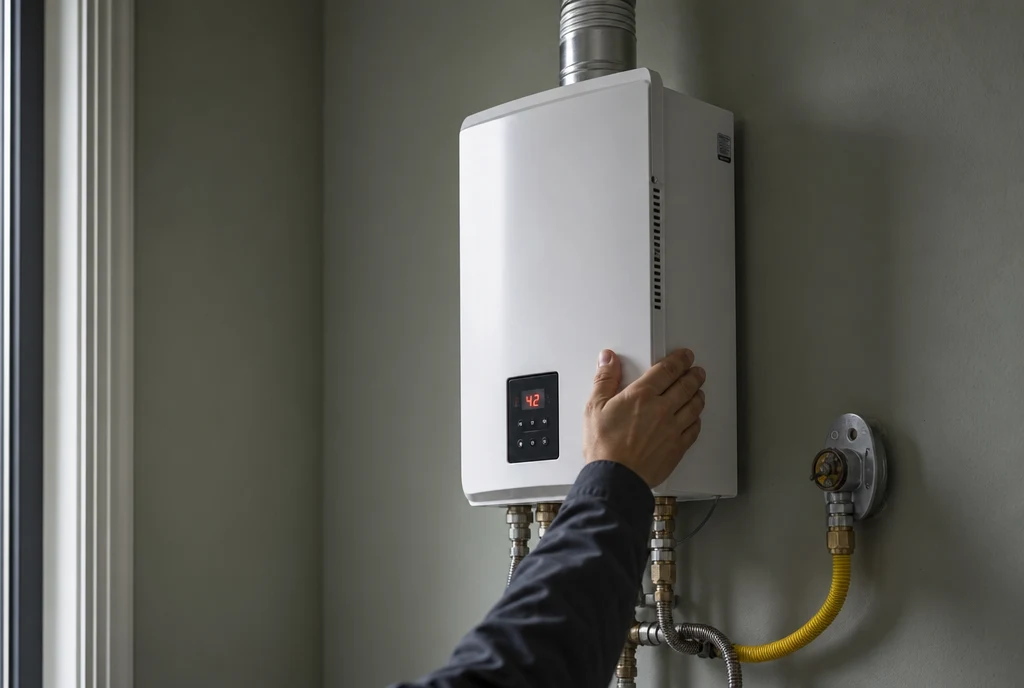
Plenty of this is a careful homeowner's afternoon: confirming the gas and valves are open, cleaning filters and aerators, clearing a snow-blocked vent termination, running a descaling flush, and resetting the controller once the cause is handled. The line to respect is combustion and the gas train. A repeating ignition or flame-failure code after you have confirmed the gas is on and venting is clear, a fan or gas-solenoid code, a condensate fault on a condensing unit, and any exhaust or air-supply blockage you cannot trace to something obvious are all pro work. A blocked or damaged vent is a carbon monoxide hazard, not a wait-and-see item, and any smell of gas means leave and call the gas utility before you flip a single switch.
- Any smell of gas or exhaust near the unit: leave, then call the gas utility, do not flip switches.
- A combustion, ignition, or flame-failure code that returns right after a reset with gas and venting confirmed good.
- An air-supply or exhaust-blockage code you cannot trace to an obvious, clearable obstruction.
- A fan-motor or gas-solenoid code, or any fault inside the sealed combustion chamber.
- Condensate drainage faults on a condensing model, or acidic water pooling under the unit.
- Over-temperature codes that keep returning after a proper descale and a clean inlet filter.
- Any gas-line, gas-valve, or venting work beyond clearing debris off an outdoor termination.
Everything above that line is dial, flush, and reset territory with the manual open and the breaker off. Everything below it is where a licensed plumber or gas tech earns the call, because the failure mode is a combustion problem or a carbon monoxide risk, not an inconvenience. The families here tell you which way to lean; the exact number, on its own page, tells you the rest.
Frequently asked
Why does my Rinnai tankless show an error code or give no hot water?
A Rinnai puts a two-digit diagnostic code on the temperature controller when its safety logic sees something it does not like, and no hot water is the symptom you feel. The code is the fast path to the cause. Combustion and exhaust codes in the low teens are the unit refusing to fire because it cannot get a clean air-fuel mix, cannot light, or lost the flame. A blocked intake or exhaust, a closed or low gas supply, or a dirty flame sensor all land here. Sensor codes point at a thermistor reading the water temperature wrong. The LC or maintenance signal is scale, and it usually lets the unit keep running. If there is no code at all and still no hot water, check the obvious first: gas turned on, power to the unit, the water isolation valves open, and the inlet water filter clean. Whatever the code, look up your exact number on its own page, because two units can show a similar-looking code that means different things across model generations.
How do I reset a Rinnai tankless water heater?
There is no red reset button like a tank unit has. You reset through the temperature controller. For a soft reset, press the On/Off power button to turn the unit off, wait a few seconds, and turn it back on. That clears a code once the fault behind it is gone. If a code will not clear, do a hard reset by switching the unit off at the circuit breaker for about 30 seconds, then restoring power. The part people get wrong is expecting the reset to be the fix. It is not. The code came up because of a real condition, a blocked vent, a closed gas valve, low flow, scale, so a reset that immediately throws the same code again is telling you the cause is still there. Fix the cause, then reset. A code that clears and then returns within minutes is a call-a-pro signal, not a button-mashing problem.
What is the minimum flow rate to make a Rinnai turn on?
A gas tankless heater only fires when enough water is moving through it, and on most Rinnai models that activation point is roughly 0.4 gallons per minute, with some units in the 0.4 to 0.6 GPM range depending on the generation. Once it is lit it can hold the burner down to around 0.26 GPM. This matters because a trickle at the tap, a half-open faucet, a low-flow aerator clogged with debris, or a mix valve barely cracked can sit below that threshold, and the unit will not light no matter how healthy it is. If you get no hot water at a slow trickle but plenty when you open the tap fully, you are not looking at a fault, you are below the activation flow. Cleaning aerators and inline filters and opening the fixture wider usually solves it.
What does the LC or maintenance code mean on a Rinnai?
LC is the scale, or maintenance, warning. It means mineral buildup inside the heat exchanger has reached the point where the unit wants a descaling flush. It is deliberately not a hard shutdown. The heater keeps making hot water, the display alternates the LC code with your temperature setting, and many units add a steady beep so you do not ignore it. Think of it as the tankless version of a low-oil light. The fix is a vinegar or descaler flush through the isolation valves, which most homeowners can do in about an hour with a bucket and a small pump. If you are on hard water and have never flushed the unit, expect LC to come back faster after the first cleaning until you get on a regular schedule. Ignoring LC long enough lets scale restrict flow and drive up other faults like over-temperature trips.
What is the cold-water sandwich on a tankless water heater?
It is the slug of cool water you feel a few seconds into a shower right after someone else just used hot water. When a tankless unit stops and restarts within a short window, the water already sitting in the pipe and the exchanger comes out first while the burner relights and gets back up to temperature, so you get hot, then a brief cold, then hot again. It is normal on-demand behavior, not a defect and not an error code. It is more noticeable with short back-to-back draws and long pipe runs. A recirculation setup or a small buffer tank smooths it out, and simply waiting a couple of seconds after turning on the tap before stepping in avoids the worst of it. If instead the temperature swings wildly the whole time you shower, that is a different problem, often low or fluctuating flow, scale, or a sensor issue worth chasing down.
Which Rinnai problems are safe to fix myself and which need a pro?
Draw the line at the gas and the flue. Homeowner-safe work is the input side and the housekeeping: checking that the gas is on and the water isolation valves are open, cleaning the cold-water inlet filter and the faucet aerators, clearing snow or leaves off an outdoor vent termination, doing a descaling flush when LC shows, and doing a soft or hard reset after you have addressed the cause. The stop-and-call-a-pro side is anything touching combustion or the gas train. A repeating ignition or flame-failure code after you have confirmed gas and venting, any exhaust or air-supply blockage code you cannot trace to an obvious obstruction, a fan or gas-solenoid code, condensate faults on a condensing unit, and above all any smell of gas or exhaust. A blocked or damaged vent is a carbon monoxide risk, so it is not a wait-and-see item. When a code keeps returning right after a reset, that is the equipment telling you it needs a technician.
How often should I flush and descale a Rinnai tankless water heater?
At least once a year is the baseline, and your water hardness moves it from there. On hard water, roughly above 180 mg/L, every six months is more realistic. With a water softener, soft water, or a small household, every two to three years can be enough. The unit will also tell you: when the LC maintenance code appears, flush it regardless of when you last did, because that code fires off the flow sensors seeing a scale restriction. A flush is a vinegar or commercial descaler circulated through the two isolation valves for 45 to 60 minutes, followed by a rinse and a cleaning of the cold-inlet filter screen. Skipping it is the single most common reason a healthy Rinnai starts throwing over-temperature and maintenance codes years before it should.