Rinnai code 90 means the burner is not getting the right mix of gas and air, so the flame will not light clean or hold steady. The control board sees combustion outside of spec and shuts the unit down rather than let it run dirty. Most of the time the cause is dull and fixable: a lint-packed intake filter, a vent terminal choked with debris, or years of scale and soot inside a heater that has never been serviced. The first five minutes of work clear the code more often than any parts do.
Start here: the reset and the two-reset rule
Before you open anything, cycle the unit. A single combustion hiccup can latch a 90 that a clean reset will drop. These steps apply to both the SENSEI and the older Non-SENSEI Rinnai lines, and the reset method is the same whether the code turns out to be a filter or a fan.
Combustion abnormality (code 90)
The ratio of fuel to air reaching the burner is off from what the unit is designed to burn, so the flame is incomplete or unstable. Too little combustion air, too much air leaking in, low or wrong gas pressure, or a fouled burner all push the mixture out of spec, and the board stops the unit. Note the model-line disagreement: 90 is the native combustion-abnormality code on Noritz, while Rinnai's official diagnostic list flags combustion and venting with codes 10, 11, 12, and 16. Either way, it points at the same thing, a burner that cannot make a clean flame.
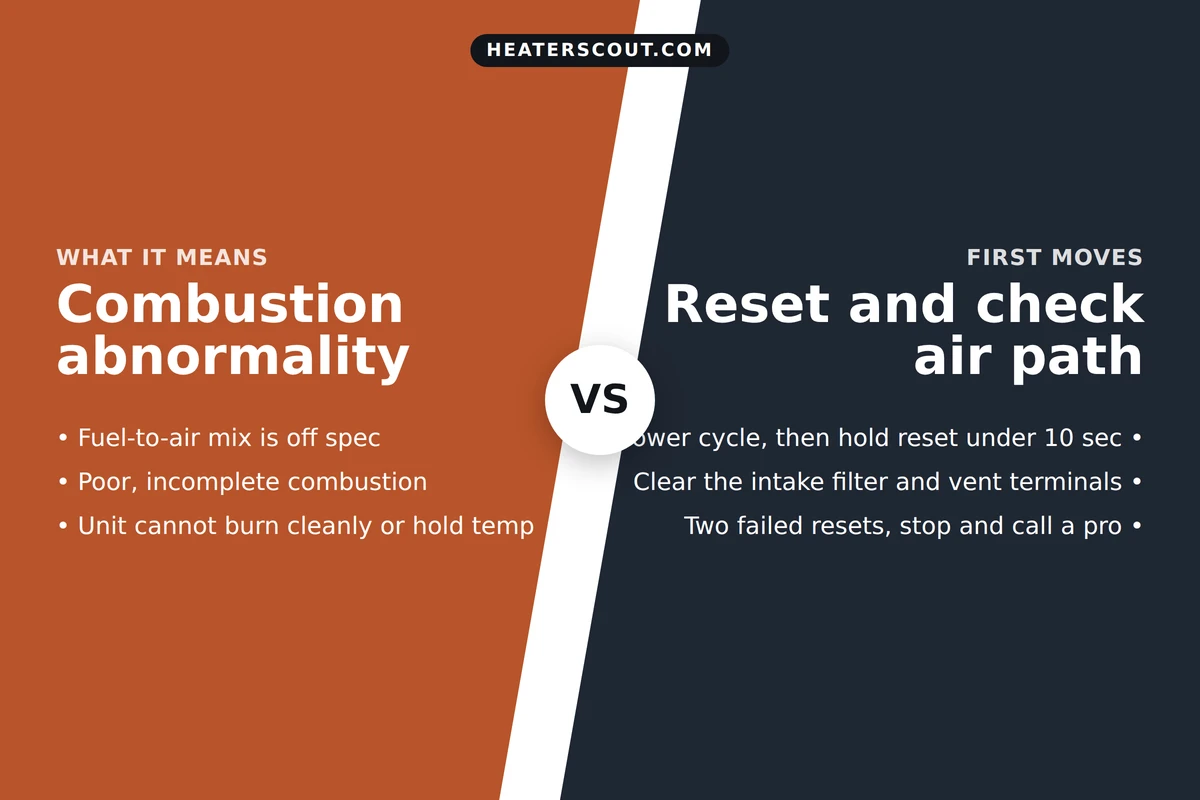
Do not stack resets on a combustion fault
With any combustion, ignition, or flame code, never attempt more than two resets. If 90 keeps returning, the burner is not making a clean flame, and forcing it back on runs the unit in a state that can produce carbon monoxide. If you smell exhaust indoors, see a yellow or sooty flame through the view window, or a CO alarm sounds, shut the heater off and do not reset it again until the cause is found. The internal gas valve is factory-set and must not be adjusted in the field.
Which cause is yours
Code 90 has a short list of usual causes that sort into what you can safely reach and what belongs to a technician. Work them by likelihood. The air path clears the most 90s, so start there, then gas, then the buried hardware. These four cards frame the situations you are most likely in.
Clogged intake filter or blocked vent
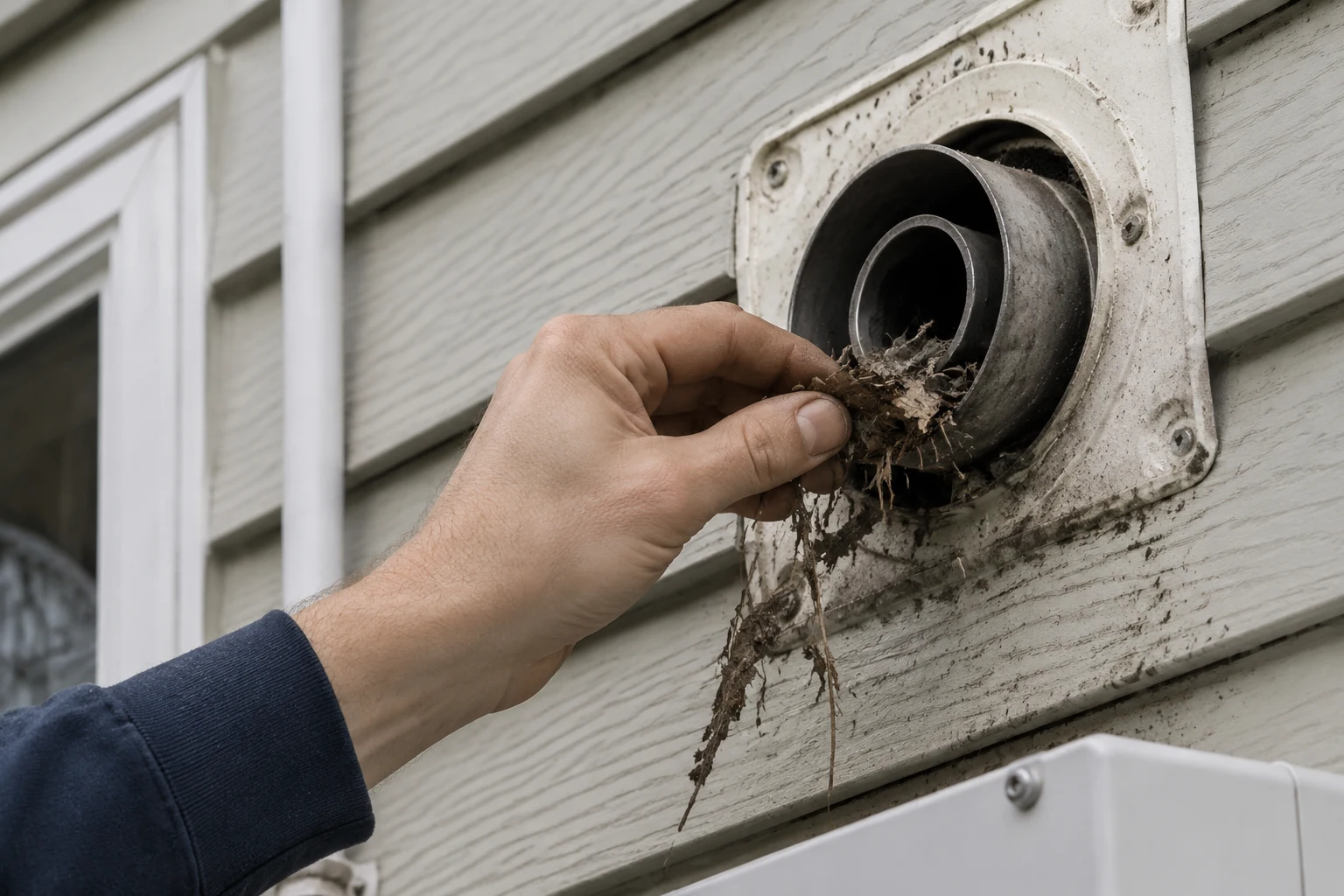
The heater breathes through a filter screen behind the front cover and vents through a wall or roof terminal. Lint packs the filter; nests, leaves, or snow choke the terminal. Either one starves the burner for air and throws 90. This is the free fix, and where a large share of these codes end. Clean the filter, clear both terminals.
Wrong DIP switches or undersized gas
If the code showed up right after installation, the setup is suspect. DIP switches for altitude, vent length, or gas type set wrong push the mixture off from the first firing. An undersized gas line, meter, or regulator starves the burner whenever another appliance fires. Both need a qualified installer, not a homeowner reset.
Scale and soot inside
Years of hard water leave scale in the heat exchanger, and years of running leave soot on the burner. Enough buildup blocks airflow around the fins and fouls the flame. A descale helps the water side. Cleaning the burner and combustion chamber is a tech job behind the panel.
Failed fan, gas valve, or board
When the air path is clear, gas is confirmed, and it still codes, the fault is in the combustion hardware. A failing combustion fan cannot move the right air volume. A sticking gas valve or bad PC board sends the wrong fuel signal. These are diagnosed with meters and replaced by a licensed technician.
The homeowner-safe checks, in order
Everything here stays outside the sealed combustion path, the part you can work without a gas license, and it covers a real chunk of 90 faults. Run them cheapest to most involved. Each one either clears the code or rules a cause out.
Start with the intake air filter, a screen behind the front cover near the air intake on most Rinnai units. Pull the cover per your manual, lift the filter out, and clear the lint. If the unit sits in a garage or laundry area, this filter loads up fast, and a packed screen alone can starve the burner enough to trip 90. Rinse or vacuum it, let it dry, and reseat it before the cover goes back on. The unit is not designed to run with the front cover off, so do not test it open.
Next, walk outside to the vent terminations, either a concentric terminal where intake and exhaust share one fitting or two separate pipes. Look for a bird or wasp nest, a debris-packed web, drifted snow, or leaves against the screen, and clear whatever is blocking the intake or exhaust. Check the clearances too. A terminal tucked too close to a wall, overhang, or corner can recirculate its own exhaust back into the intake, which throws the mixture off and reads as a combustion fault. If the terminal was recently moved closer to something, that is a live suspect.
On a condensing model, a clogged or frozen condensate line can back up and interfere with combustion airflow, so confirm it drains freely. Then, if your water is hard and the unit has not been flushed in a year or more, run a descale through the service ports to pull scale out of the heat exchanger passages. That will not fix a fan or a gas problem, but it removes one buildup cause on a neglected unit. After each of these, power cycle, reset, and test. If the code clears and stays clear, you are done.
Where the gas supply comes in
A burner starved for gas fails to make a clean flame just as surely as one starved for air. If the reset and the air path did not clear 90, the gas side is next. Confirm the gas is on at the unit shutoff and at the meter, and that no other large appliance firing at the same time drops your pressure. On propane, confirm the tank is not low, because a nearly empty tank sags under load and leaves the burner short. The measurement side belongs to a licensed technician, who puts a manometer on the test port and reads manifold and inlet pressure against the rating plate. A large pressure drop with everything firing means the line, meter, or regulator is undersized or restricted. If the install added appliances over the years without upsizing the gas line, the tankless loses whenever the furnace or range fires. That is a real cause of a recurring 90 that no filter cleaning will fix, because the flame is fine until the pressure sags.
When to hand it to a pro
The line is simple. Anything past the front cover intake filter, the vent terminals, the condensate drain, and a descale is a licensed job. If your safe checks did not clear the code, the remaining causes live inside the sealed combustion path. A combustion fan that has lost speed cannot move the right air volume, one of the more common deeper causes here. A sticking gas valve or a PC board sending an intermittent signal both put the wrong fuel-to-air ratio at the burner. Diagnosing those means live tests on energized components, resistance readings on the fan and valve coils, and often a several-hundred-dollar part. Give the technician a head start: the exact model number, new install or old unit, what you already cleaned, and how many times it has come back.
Keeping code 90 from coming back
The same short list that causes 90 is the list you maintain against. Clean or replace the intake air filter on a schedule, more often in a dusty spot. Once or twice a year, and after any storm that could drift snow or blow leaves against them, look at the vent terminals for nests, webs, and debris, and keep the clearances open. Descale on the interval your water hardness calls for, yearly for hard water, so scale never builds far enough to choke airflow or foul the flame. And on any gas work, make sure the line is sized for everything it feeds, because an undersized line is the cause that hides until another appliance fires and pulls the mixture out from under the burner.
Frequently asked
What does Rinnai error code 90 mean?
Code 90 reports a combustion abnormality. The control board is saying the mixture of gas and air feeding the burner is off from specification, so the flame burns poorly or incompletely. That can be too little air, too much air, low or wrong gas pressure, or a burner and heat exchanger dirty enough to choke clean combustion. Worth knowing: 90 is the standard combustion-abnormality code on Noritz units, and some Rinnai-branded and third-party pages carry it over to Rinnai. Rinnai's own published diagnostic code list does not include a 90; it flags combustion and venting faults with codes 10, 11, 12, and 16 instead. If your display shows 90, match the exact model number off the rating plate to that unit's manual. The meaning is combustion trouble either way, and the fixes are the same family of checks.
Can I reset Rinnai code 90 myself?
Yes, and it is the right first step. Turn the unit off, cut power at the outlet or breaker for a minute, then restore it. On the controller, press the on/off button to clear the code, or hold the reset button for less than ten seconds. If the heater fires normally and stays running, the fault was a one-time hiccup. The rule the manufacturers repeat: with any combustion, ignition, or flame code, do not attempt more than two resets. If 90 comes right back, the combustion problem is still there, and stacking resets on a burner that will not burn clean turns a service call into a parts replacement. Stop and diagnose the air path and the gas supply.
Is Rinnai code 90 dangerous?
Treat it as a stop-and-check. A combustion abnormality means the burner is not making a clean, complete flame, and incomplete combustion is what produces carbon monoxide. In practice the unit shuts itself down rather than run dirty, which is the safety system doing its job. The danger is forcing it back on. If you smell exhaust indoors, see soot or a yellow flame through the view window, or your CO alarm sounds, shut the heater off and get it looked at before anything else. A unit that repeatedly throws a combustion code is not a nuisance to reset around.
Why does Rinnai code 90 keep coming back?
A code that returns after every reset is pointing at a real, physical restriction, not a glitch. The usual repeat offenders are an intake air filter clogged with lint, a vent terminal partly blocked by a nest, snow, or debris, or a heat exchanger and burner loaded with scale and soot. Gas supply matters too. If the line, meter, or regulator is undersized, the burner starves whenever another appliance fires, and the code trips again. On a newer install that never ran right, the DIP switches for altitude, vent length, or gas type may be set wrong. Clear the air path first, confirm gas, then look at settings and internal buildup.
Will descaling clear Rinnai code 90?
Sometimes, and it is worth doing, but a flush alone is rarely the whole answer. Descaling attacks scale inside the heat exchanger water passages. If that scale has built up enough to block airflow around the fins or create hot spots, cleaning it out can restore normal combustion and clear the code. But 90 is fundamentally an air-and-gas problem, and most of what starves the flame lives on the combustion side: the intake filter, the vent path, the burner surface, the gas pressure. Descale on your water-hardness schedule, then still check the intake filter and vent terminals. If the code returns after a flush and a clean air path, the fault is deeper and needs a technician.
How much does it cost to fix Rinnai code 90?
It ranges from free to a few hundred dollars. Clearing a clogged intake filter or a blocked vent terminal costs nothing but time. A descale kit runs about $30 to $60 yourself, or a professional flush roughly $150 to $250. Where it climbs is the combustion side. A gas pressure check is usually a one to two hour service call, often $150 to $350. A failed combustion fan motor is a common deeper cause, part plus labor around $250 to $500. A gas valve or control board is the top of the range, several hundred dollars in parts before labor. Most 90 faults are solved on the cheap end, at the filter and the vent.
Do I need a licensed technician for Rinnai code 90?
For part of it, yes. The homeowner-safe work is everything outside the sealed combustion path: power cycling and resetting, cleaning the intake air filter, clearing the intake and exhaust terminals, and descaling. That covers a large share of 90 faults. What needs a licensed gas technician is anything past the front panel or the gas union: measuring and adjusting manifold gas pressure, opening the burner chamber, testing or replacing the combustion fan, gas valve, or PC board, and correcting DIP switch settings. Rinnai is explicit that the internal gas valve is not field-adjustable, and touching it voids the warranty.