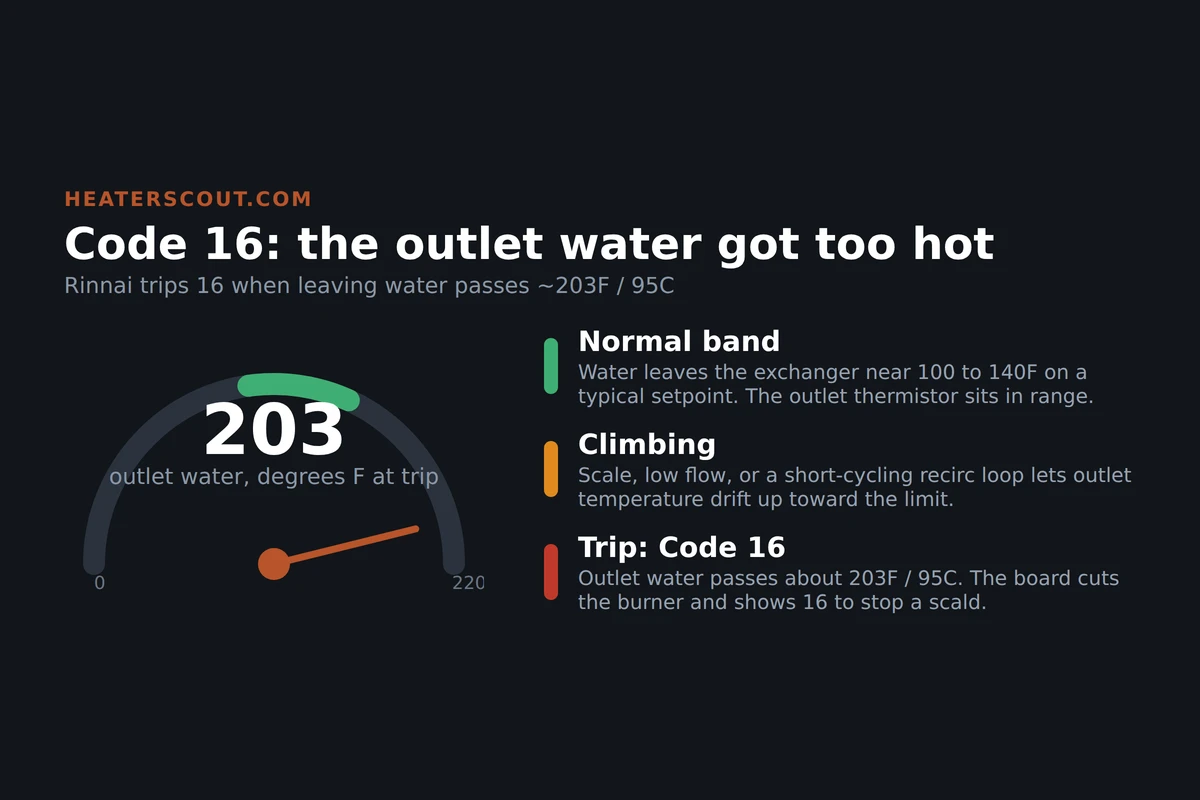
Rinnai code 16 shows up when the water leaving the unit gets hotter than it should, past roughly 203F or 95C. The control board watches the outlet thermistor, and when that reading crosses the limit it cuts the burner and posts 16. This is a safety cutout, not a startup glitch, so pressing the power button clears the number but does nothing about the heat that tripped it. Water that hot scalds in under a second, which is exactly what the cutout exists to prevent.
Code 16 at a glance
The short version, so you know whether this is a flush-and-done job or a call to a plumber before you go any further.
| What it means | High outgoing water temperature. The water leaving the heat exchanger passed the board's over-temperature limit, about 203F or 95C, and the burner shut down. |
| What triggers it | The outlet water thermistor reads past the limit. Heat is piling up on the exchanger faster than water carries it off, or already-hot water is being re-fired. |
| Clears on a reset? | The display clears if you cycle main power or press on/off. The cause does not. If 16 returns on the next hot-water draw, the problem is real. |
| Most likely cause | Scale in the heat exchanger from skipped descaling, which insulates the metal and chokes the flow so outlet temperature climbs. |
| Other causes | Low or restricted water flow, a short-cycling recirculation loop or bleed-over across crossed plumbing, a blocked vent or combustion chamber, high inlet water temperature, a failing outlet thermistor or gas valve. |
| DIY-safe steps | Descale, clean the cold-inlet filter, open all valves fully, clear the vent terminal, and check a recirc loop's schedule and aquastat. |
| Call-a-pro steps | Isolating for bleed-over, testing the outlet thermistor, inspecting the combustion chamber, and replacing the gas valve assembly. |
| Prevention | Descale yearly, more on hard water. Keep the inlet screen clean, keep the vent clear, and do not set a recirc aquastat too warm. |
Rule out the easy things first
Most of a code 16 diagnosis is checking the cheap, reachable stuff before you open the cabinet or blame a sensor. Half of these trips trace to scale or a flow restriction you can handle with a flush kit and a screwdriver. Run this list top to bottom. It sorts the descale-and-done cases from the ones that need a tech.
- How long since the last descale? Over a year, or never, on hard water: descale before anything else.
- Is the cold-inlet water filter screen clean? A clogged screen starves flow and lets outlet water overheat.
- Is every valve in the water path fully open, isolation valves included? A half-closed valve reads like low flow.
- Do you have a recirculation pump? Note whether 16 trips mainly while the pump is running.
- If you have a recirc loop, is its aquastat or schedule set too warm, so the unit keeps firing on hot water?
- Is the outside vent terminal clear of nests, snow, lint, and screen debris? A blocked vent traps heat.
- Is the incoming water unusually warm, from solar preheat or a long hot summer supply line? High inlet temperature narrows the margin to the limit.
- Was any plumbing recently changed? Crossed hot and cold lines can bleed hot water back into the unit and read as an overheat.
Where the heat comes from
Code 16 is always the same symptom, overheated outlet water, but it arrives by a few different roads. Scale and flow problems let heat build on the exchanger. Recirculation and plumbing problems feed the unit water that is already hot. Venting problems trap combustion heat. The table sorts the common causes by how likely they are and what each one takes to fix, so you spend your time on the right one.
| Cause | How it overheats the water | Who fixes it |
|---|---|---|
| Scale in the heat exchanger | Mineral layer insulates the metal and narrows the passages, so the outlet runs hot on less flow. | DIY descale or a pro flush |
| Low or restricted flow | A clogged inlet screen or a partly closed valve means less water to carry the same heat away. | DIY, clean screen and open valves |
| Recirculation short-cycling | The pump keeps re-firing water that is already hot, or an aquastat is set too warm. | DIY or plumber, adjust loop and aquastat |
| Bleed-over or crossed plumbing | Hot water crosses back into the unit through a reversed line or a leaking mixing valve. | Plumber, isolate and trace |
| Blocked vent or combustion chamber | Trapped exhaust heat or debris raises the exchanger temperature even at normal flow. | DIY clear the terminal, pro for the chamber |
| Failing thermistor or gas valve | A bad outlet sensor reads high, or a gas valve overfires; Rinnai lists the valve as a last resort. | Licensed tech only |
Heat piling up vs. hot water fed in
The two families of code 16 look identical on the display but call for different fixes. One is the exchanger running too hot for the water moving through it. The other is water arriving at the unit already hot, usually from a recirculation loop or crossed plumbing. Reading which one you have keeps you from descaling a unit whose real issue is a pump schedule, or the reverse.
Heat piling up on the exchanger
- Scale insulates and clogs, or low flow starves the exchanger, so the same heat goes into less water.
- Tends to worsen gradually and shows up on long draws, like a shower that runs hot then trips.
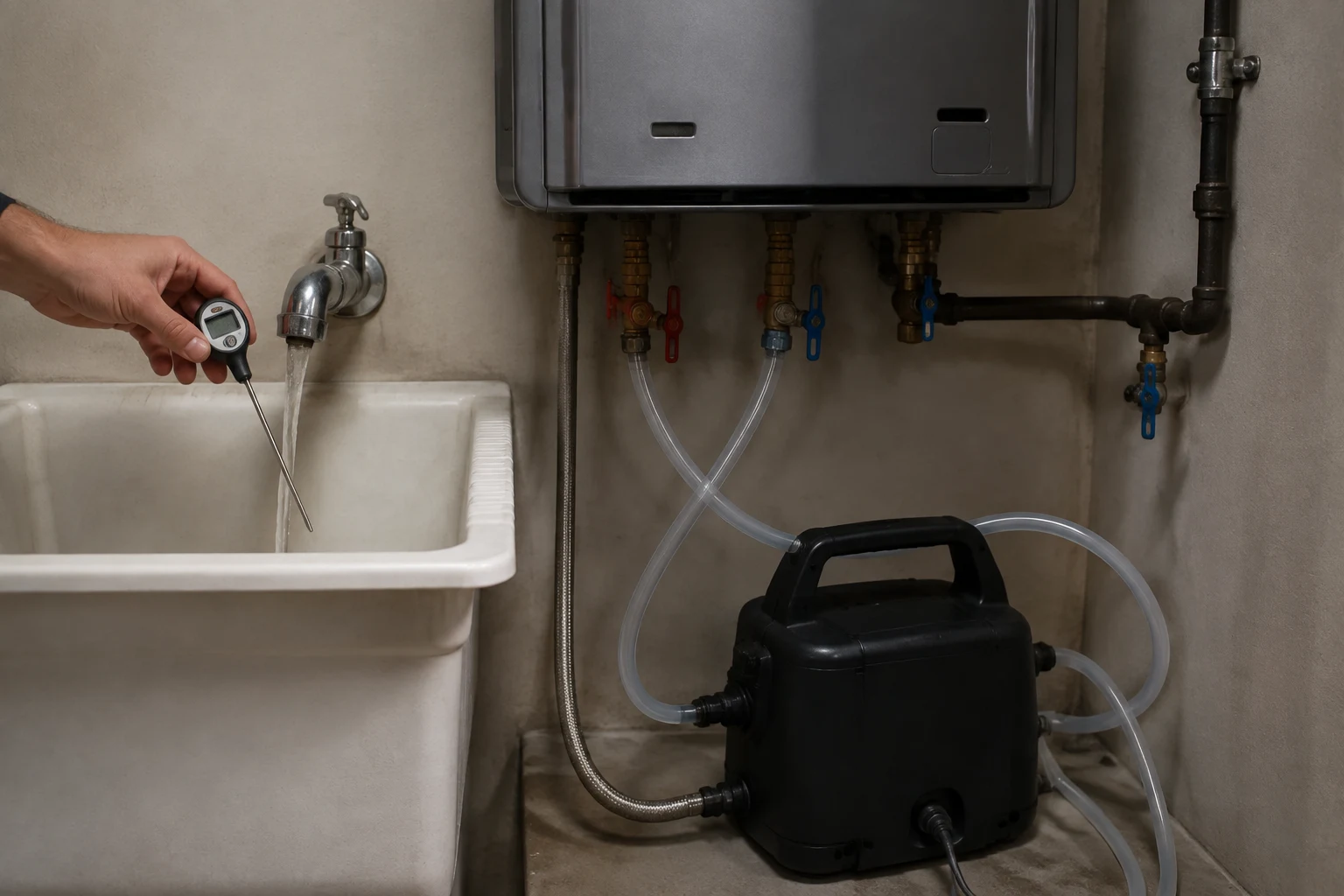
- A descale flush that runs gray and gritty is the proof scale was the cause.
- Fix: descale, clean the inlet screen, open every valve, and clear any vent restriction.
Hot water fed into the unit
- A recirculation loop short-cycles or an aquastat set too warm keeps re-firing already-hot water.
- Often started after a recirc pump went in, and trips mostly while the pump is running.
- Crossed hot and cold lines or a leaking mixing valve can bleed hot water back through the heater.
- Fix: adjust the loop schedule and aquastat, or have a plumber isolate the system to find bleed-over.
Clearing the code and confirming the fix
Once you have addressed the cause, clear the displayed code by cutting main power to the unit for about a minute and restoring it, or by cycling the controller's on/off button. Then run a real draw, a full shower or a couple of fixtures at once, and watch. If 16 stays gone through a normal hot-water session, the fix held. If it trips again, the cause you picked was not the one, so move down the list. Do not settle for a code that clears on a reset and comes right back; that pattern is the unit telling you the overheat is still happening. When the trail leads into the combustion chamber, the outlet thermistor, or the gas valve, hand it to a licensed tech rather than guessing at parts.
Frequently asked
Can I reset Rinnai code 16 myself?
You can clear the number off the display by cutting main power to the unit for a minute and restoring it, or by pressing the on/off button on the controller. That resets the code, not the problem. Code 16 is a high-temperature safety cutout, so the board only shows it after the water leaving the unit actually crossed its limit, roughly 203F or 95C. If you reset and the unit runs fine at a normal draw, the trip may have been a one-off from a brief flow drop. If 16 comes back the next time you run hot water, something is still driving the outlet temperature up, and clearing the code again will not fix it. At that point you are diagnosing, not resetting.
What does code 16 mean on a Rinnai tankless?
It means the outgoing water temperature climbed too high. Rinnai's control board reads the outlet thermistor, and when the water leaving the heat exchanger passes about 203F or 95C, the board treats it as an over-temperature condition and shuts the burner down. That is well above any normal setpoint, which tops out around 140F for most homes, so the unit is not simply running a little warm. Heat is piling up on the exchanger faster than the water can carry it away, or the water sitting in the unit got cooked during a short cycle. The code is the safety doing its job. Older Rinnai units label the same code an over-temperature warning, but the trigger is the same overheated outlet water.
Will descaling fix Rinnai code 16?
Often, because scale is the most common reason the outlet water overheats. Mineral buildup inside the heat exchanger insulates the water from the flame, so the metal runs hotter, and it narrows the passages, so less water moves through to carry that heat off. Both push outlet temperature toward the trip point. Circulating white vinegar or a Rinnai-approved descaler through the isolation valves for about 45 minutes, then flushing with clean water, removes that layer and usually drops the outlet temperature back into range. If your unit has hard water and has never been flushed, descale first. If 16 keeps returning after a proper descale, the cause is somewhere else: flow, a short-cycling recirc loop, blocked venting, or a failing part.
Is Rinnai code 16 dangerous?
The code itself is the safe result. It means the over-temperature protection caught water heading past 203F and shut the burner off before it reached a tap. Water that hot causes third-degree scald burns in under a second, so this cutout is protecting people in the house. The danger is in defeating it. Do not tape over the display, jumper the thermistor, or keep power-cycling to force the unit past the code. If the outlet water is genuinely overheating, running past the safety risks a scald at the fixtures and heat damage to the exchanger. On a recirculation system the overheat can also point at crossed or leaking plumbing letting hot water bleed where it should not. Treat 16 as a stop, find the cause, and let the safety keep guarding.
Why does my Rinnai code 16 keep coming back?
Because the underlying cause is still there and the reset only cleared the display. Run down the list in order. Scale in the exchanger is the usual repeat offender, so if you have not descaled, do that first. If you have a recirculation pump, a loop that short-cycles or an aquastat set too warm keeps re-heating water that is already hot, and 16 returns every time the pump kicks on. Crossed hot and cold lines or a leaking mixing valve can bleed hot water back into the unit, which reads as an overheat. A partly blocked vent or a foreign object in the combustion chamber traps heat. Work scale, then flow and the recirc loop, then venting, and if it still recurs get a tech to check the outlet thermistor and gas valve.
How much does it cost to fix Rinnai code 16?
It depends entirely on what is driving the overheat. A do-it-yourself descale costs the price of vinegar and an hour of time. A professional descale runs roughly $150 to $300. If the fix is a recirculation adjustment, resetting an aquastat or reprogramming the pump schedule, a plumber visit is commonly $150 to $250. A blocked vent cleared during that same visit adds little. The parts jobs cost more: a failing outlet thermistor is usually an inexpensive sensor but the diagnosis and access push a pro repair to about $200 to $400, and a gas valve assembly, which Rinnai lists as a last resort for code 16, can run $400 to $700 installed. A heat exchanger scaled to the point of damage on an older unit starts to approach the cost of replacement.
Can a recirculation pump cause Rinnai code 16?
Yes, and it is a cause people miss. A recirculation loop keeps hot water moving through the unit so it is ready at the tap. If the loop short-cycles, the pump runs too often, or an aquastat on the return is set too warm, the unit keeps firing on water that is already hot and the outlet temperature climbs past the limit. Rinnai's own diagnostic steps for 16 include checking a circulating system for low flow and short-cycling, and checking for bleed-over by isolating the loop and the building plumbing to see whether hot water is crossing back through a reversed connection or a leaking valve. If your 16 started after a recirc pump went in, or it trips mostly when the pump is running, look at the loop before you tear into the heater.
Should I call a plumber for Rinnai code 16?
You can safely handle the early steps yourself: a descale through the isolation valves, cleaning the cold-inlet filter screen, confirming every valve in the water path is fully open, and checking the outside vent terminal for nests, snow, or lint. Those clear a large share of code 16s. Call a licensed plumber or gas tech when the code survives those steps, when you have a recirculation system that needs its flow or aquastat checked, or when the fix moves into the combustion chamber, the outlet thermistor, or the gas valve. Anything involving the gas train or the sealed combustion side needs someone with the tools and the license, and a combustion analyzer if the venting is suspect.