A Rinnai tankless unit that flashes 10 is not broken in the way a homeowner usually fears. The board has read its own fan and air pressure sensor, decided the burner is not getting a clean path for combustion air in and exhaust out, and shut the burner off on purpose. Nine times out of ten the cause is something you can walk outside and see: snow over the vent, a nest in the exhaust, or a screen packed with lint. The unit is refusing to run until that path is clear, and that refusal is the safety system working, not failing.
What the board is actually measuring
Code 10 lives entirely on the combustion side, which is why it has nothing to do with your water. A Rinnai tankless heater pulls in combustion air, burns gas, and pushes the exhaust back outside through a sealed vent. A fan drives that airflow, and an air pressure sensor confirms it is happening. When the fan cannot move enough air, or the sensor reads a restriction, the board concludes the burner would be firing into a choked path and locks it out. That single number covers both ends of the airflow path, so the first useful move is figuring out which end is the problem.
Air supply (intake) side
- Intake screen or filter caked with lint, dust, or pet hair, usually at the bottom of the unit.
- Outdoor intake terminal blocked by leaves, snow drift, or an insect nest.
- Negative pressure in a tight mechanical room, where a dryer or bath fan steals the burner's air.
- Landscaping, lattice, or a stored object crowding the intake within a foot of the terminal.
Exhaust side
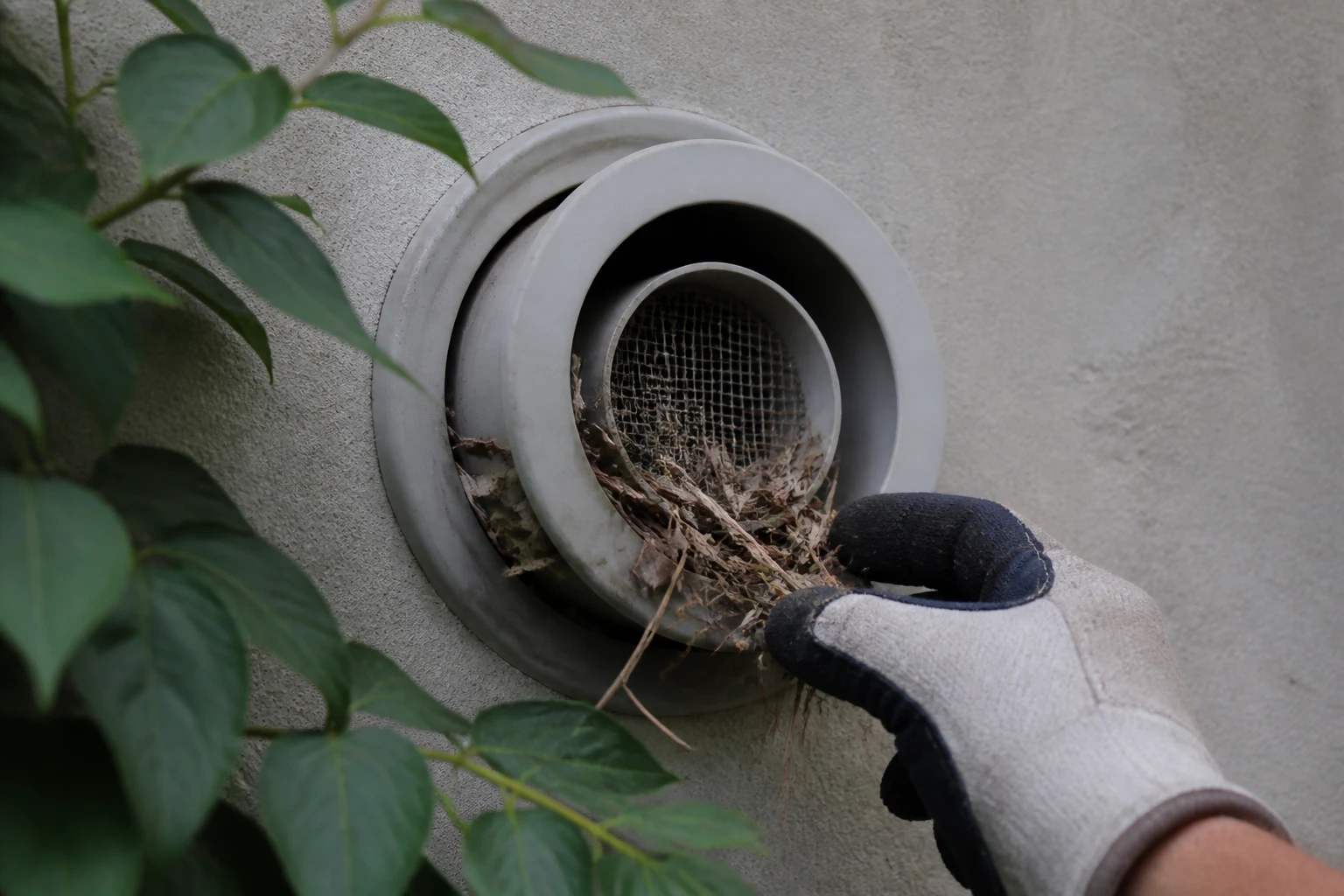
- Bird or wasp nest built inside the warm exhaust terminal, most common in spring.
- Snow, ice, or frost sealing over the exhaust outlet during a cold snap.
- Vent run too long or with too many elbows for the model, so the fan cannot clear it.
- A crushed, sagged, or disconnected vent section, or a frozen condensate trap backing water up.
Most of the intake and exhaust causes are things a homeowner can find and clear. The ones that need a tech, vent that is too long, a crushed pipe, a failing fan, a drifting sensor, tend to survive a good cleaning. That split is the whole diagnostic logic: clean the obvious stuff, and if 10 comes back anyway, the cause is one of the deeper ones.
Which situation are you in
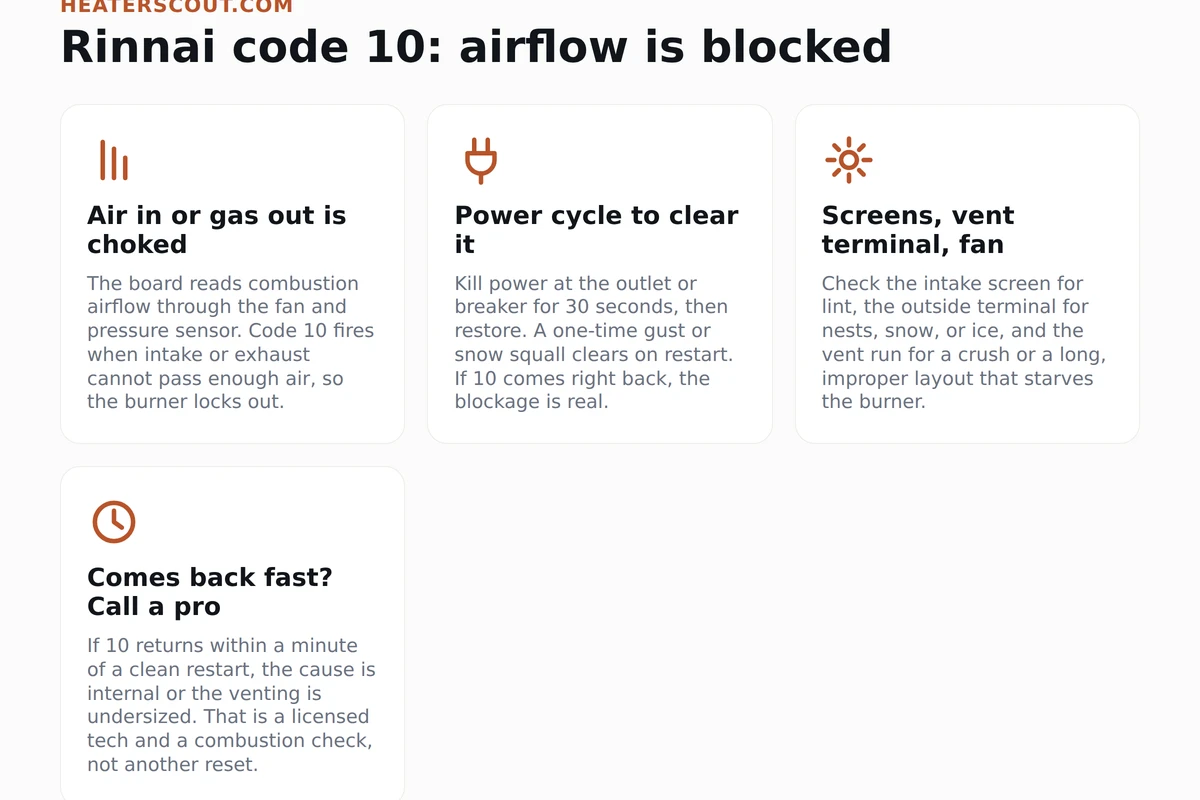
The right next step depends on what you find outside. Three patterns cover most code 10 calls, and each points at a different fix. Match your symptom to one of these before you start pulling the unit apart.
Frozen or snow-covered terminal
The unit ran fine, then locked out during a cold snap or after a storm. Snow drifted over the terminal or condensate iced up and sealed the exhaust. Clear the snow and ice by hand or with a soft brush, never a metal poker, and check that the terminal sits high enough above the snow line. A recurring winter freeze usually means the terminal is too low or the condensate is not draining, which is a venting fix.
Debris or a nest in the vent
Warm air out of an exhaust pipe is a magnet for birds and wasps, and a nest can choke the outlet in a day. Leaves and cottonwood fluff pack the intake screen just as fast. This is the most satisfying fix: pull the nest, clear the screen, restart, and the burner lights. If nesting keeps happening, a proper terminal guard or screen sized for the model stops it without restricting flow.
Vent too long or laid out wrong
If code 10 shows up on a fresh install, after a vent got extended, or after a room got tightened up, suspect the venting itself. Too many feet, too many elbows, a terminal that dumps exhaust back into the intake, or a sealed room with no makeup air all starve the burner. Cleaning does nothing here. This is a job for a manometer and a licensed tech.
Work the fault in order
Do this in sequence, not all at once. Each step either clears the code or rules out a cause and points you at the next one. Kill power at the outlet or breaker before you touch the intake screen, and keep a carbon monoxide alarm working near the unit the whole time.
1. Power-cycle the unit once
Turn the heater off at the wall outlet or its dedicated breaker, wait 30 seconds, and turn it back on. Some models want you to hold the on/off button on the controller instead. A one-time gust, a squall, or a stray leaf that got sucked against the intake will clear on restart. Run a hot tap and watch for the burner to light. If 10 comes right back within a minute, do not keep resetting, move to the next step.
2. Inspect both outdoor vent terminations
Go outside to the terminal. On a concentric vent it is one fitting with an inner exhaust and outer intake; on a two-pipe setup it is two outlets. Clear snow, ice, leaves, and nest material with a soft brush or a gloved hand. Do not push a metal rod into the pipe. Look for a bird nest in the exhaust and wasp nests in the intake. Trim any shrub, grass, or lattice back to at least 12 inches from the terminal.
3. Clean the intake air screen or filter
With power off, find the intake screen, usually a mesh filter at the bottom of the unit or on the intake fitting. Pull it and check for a mat of lint, dust, or pet hair. Rinse it under running water until it flows clean, shake it out, and let it dry fully before you reinstall it. A soaked screen back in the unit is its own restriction. This one part is behind a large share of code 10 calls, so do not skip it.
4. Look at the vent run and condensate
Trace the vent from the unit to the wall. Check for a crushed section, a joint that pulled apart, a sag that could hold water, or a run that is obviously long with many elbows. Check the condensate line and trap: a plug or a winter freeze can back water into the exhaust path. If the vent looks under-built or you find standing condensate, that is a tech's diagnosis, not a homeowner fix.
5. Judge whether it is internal
If the terminals are clear, the screen is clean, and the vent looks sound but code 10 returns fast, the cause is inside: a dust-caked fan wheel, a fan motor that cannot reach commanded speed, or a drifting pressure sensor. These need a technician with the model's combustion spec and a manometer. Stop resetting and make the call.
Before you call, have this ready
A tech works faster when the easy causes are already ruled out and you can describe the pattern. Run through this list first. It is the same list that decides whether you even need the call.
- You power-cycled the unit once and noted whether code 10 came back immediately or stayed clear.
- You cleared both outdoor vent terminations of snow, ice, leaves, and any bird or insect nest.
- You pulled the intake screen or filter, rinsed it clean, dried it fully, and reinstalled it.
- You trimmed landscaping and moved stored objects back at least 12 inches from the vent terminal.
- You checked the visible vent run for a crush, a sag, or a disconnected joint, and looked at the condensate line.
- You noted the model number and whether the code started after a new install, a vent change, or a room being tightened up.
- You have a working carbon monoxide alarm near the unit and know to leave if you smell exhaust.
- You know roughly how long the vent run is and how many elbows it has, for the tech to check against the model's tables.
Quick facts on code 10
The short version, for when you just want the shape of the problem before you head to the utility closet. These are the numbers and rules of thumb that hold across most Rinnai tankless models.
| What it means | Air supply or exhaust blockage, sometimes shown as a combustion airflow abnormality. |
| Which side | Both. Intake (combustion air in) or exhaust (flue gas out) can trigger it. |
| Most common cause | Blocked vent terminal or a lint-packed intake screen. Both are homeowner fixes. |
| Is it safe to ignore | No. It is a protective lockout against carbon monoxide and flame rollout. |
| First move | Power-cycle once. If 10 returns within a minute, the blockage is real. |
| Pro-level causes | Vent too long or crushed, exhaust recirculation, failed fan, bad sensor, frozen condensate. |
| Typical repair cost | $0 if it is debris. Roughly $100 to $200 diagnostic; $300 to $600 for a fan; vent rework varies. |
| Does descaling help | No. Code 10 is combustion-side, not water-side. Descaling clears different codes. |
The pattern worth remembering is the split between what clears with a brush and what needs a manometer. A nest, a snow cap, a lint screen: those are yours, and they cover most calls. A vent that was always too long, a fan losing its bearings, a sensor drifting out of range: those show up as a code 10 that will not stay gone no matter how clean the terminal is. When you have cleaned everything you can reach and the number keeps returning, the recurrence is the answer.
Frequently asked
What does error code 10 mean on a Rinnai tankless water heater?
Code 10 is an air supply or exhaust blockage fault, sometimes labeled a combustion abnormality on the display. The control board watches the fan speed and an air pressure sensor to confirm the burner is getting clean combustion air and pushing exhaust out cleanly. When those readings say airflow is choked, the board refuses to fire and shows 10. The usual culprit is something you can see from outside: snow over the vent terminal, a bird or wasp nest in the exhaust, leaves against the intake, or a lint-caked intake screen. It can also come from a vent run that is too long or laid out wrong, negative pressure in a tight room, a failing fan, a bad pressure sensor, or a frozen condensate line. It is a safety lockout, not a nuisance beep, protecting you from carbon monoxide and flame rollout until the airflow path is clear.
Can I reset code 10 myself?
Yes, and you should try once. Turn the unit off at the wall outlet or the dedicated breaker, wait about 30 seconds, then power it back on. If a one-time gust, a snow squall, or a stray leaf triggered the fault, the reset clears it and hot water comes back. Some models want you to hold the on/off button or cycle the remote controller instead; the power-cycle at the outlet does the same job. What the reset does not do is remove a blockage. If code 10 comes right back after a clean restart, stop resetting it. Repeated resets on a real airflow fault just cycle the burner against a wall. Walk outside, look at both vent terminations, and check the intake screen before you try again.
How do I clear a blocked Rinnai vent for code 10?
Start outside at the vent terminations. Most Rinnai installs use a concentric terminal or a pair of pipes, one drawing intake air and one pushing exhaust. Clear away snow, ice, leaves, and nest material with a soft brush or a gloved hand. Do not jam a metal rod into the pipe; you can crack the terminal or bend the screen. Look for a bird nest in the exhaust, common in spring, and insect nests in the intake. Trim any shrub, tall grass, or lattice within about 12 inches of the terminal. Then go to the unit, pull the intake filter or screen, rinse it to flush out lint and pet hair, dry it fully, and reinstall it. Restore power and run a hot tap. If the flame lights and holds, the blockage was the problem.
Is Rinnai code 10 dangerous?
The code itself is the safety system doing its job. The danger is what it guards against. A tankless unit burns gas and has to vent the exhaust, which contains carbon monoxide, all the way outside. If the exhaust is blocked or the intake cannot supply enough combustion air, the burner can produce carbon monoxide that spills back indoors, or the flame can roll out of the burner box. The board reads the choked airflow and locks the unit out before either happens. Do not defeat the fault or bypass the fan or pressure sensor to make the beeping stop. If you smell exhaust, feel dizzy near the unit, or your CO alarm sounds, leave the space, get fresh air, and call your gas utility or a pro. Keep a working carbon monoxide alarm near any gas appliance regardless.
Why does code 10 keep coming back after I cleared the vent?
If you cleared the terminal and screen and 10 still returns, the cause is deeper than surface debris. Common hidden reasons are a vent run too long or with too many elbows for the model, so the fan cannot move enough air; a section that got crushed, disconnected, or sagged and holds condensate; exhaust getting drawn straight back into the intake because the two are too close; and negative pressure in a tight room where a dryer or bath fan pulls the air the burner needs. Internal causes include a fan wheel caked with dust, a fan motor that cannot hit commanded speed, a drifting pressure sensor, or a frozen condensate trap backing water into the exhaust path. Those need a technician with a manometer and the model's combustion spec. Recurring 10 that survives a good cleaning is a venting or component problem, not a cleaning problem.
How much does it cost to fix Rinnai code 10?
If the fix is clearing a nest, snow, or a lint-packed screen, it costs nothing but a few minutes. When a tech is needed, a diagnostic and combustion check runs roughly $100 to $200 in most of the country. An air pressure sensor is a modest part, often $30 to $90, with an hour or so of labor. A fan or blower motor assembly is the bigger ticket, commonly $150 to $400 for the part plus labor, so figure $300 to $600 installed. Vent rework is the wild card: correcting an over-long vent, moving a terminal away from an intake, or replacing a crushed section can run from a couple hundred dollars to over a thousand if pipe has to be rerouted through finished walls. Get the airflow path verified before you buy any part, because a $60 sensor swap does nothing if the real problem is 15 extra feet of vent.
Will descaling clear code 10?
No. Descaling flushes hard-water scale out of the heat exchanger and the water side of the unit. It fixes flow and temperature complaints and codes tied to the water passages. Code 10 is an air and exhaust fault on the combustion side, a separate path. A perfectly descaled unit will still throw 10 if a bird nested in the exhaust or the intake screen is packed with lint. Do keep up your annual descale and clean the intake filter, because a clean screen is part of what prevents code 10 in the first place. But if 10 is on the display right now, put the vinegar away and go check the venting.