The status light on the front of a Rheem gas water heater is a diagnostic readout, and seven flashes of the red light is the one code with no cheap workaround. One slow flash is the heartbeat that means the heater is fine and waiting. Seven flashes is the gas control valve, the brain that meters gas to the burner, reporting that it has failed an internal self-check. Rheem's answer to a genuine seven-flash code is short: replace the valve. Before you accept that, two things are worth confirming, because the same flash count can mean two different faults depending on the color of the light, and a loose connector can fake a dead valve.
Quick answer
Seven flashes of the red status light on a Rheem or Ruud gas water heater means the gas control valve has failed and needs to be replaced. It is not a maintenance issue and there is no external part to clean. Try one reset first (gas knob to OFF, wait about five minutes, relight per the door instructions); a real valve fault comes right back. The valve runs about $150 to $400 for the part, and on most Rheem heaters it is a warranty-covered part for several years, so check your model and serial before buying. Note the color: a blue seven-flash code is a flammable-vapor-sensor lockout, a different problem caused by fumes near the heater.
Read the color before you read the count
This is the step people skip, and it sends them after the wrong part. Rheem has shipped these heaters with two different status-light schemes over the years. On the common red-light heaters, the flash count maps to a fault table, and seven red flashes is the gas control valve. On newer models the light is blue, and a seven-blink pattern there is the flammable-vapor-sensor lockout, which trips when the heater detects combustible fumes like gasoline, paint thinner, or solvent vapor near the burner. Same number, completely different fault. So before you order a valve, note whether the light is red or blue, then match the count to the diagnostic chart inside the burner door for your model. If it is blue, the valve advice here does not apply; clear the air, remove the fume source, ventilate, and relight.
How to count the flashes so you trust the code
Miscounting is the easiest way to end up buying the wrong thing. The light sits low on the front of the gas control valve near the burner door. It repeats a pattern: a burst of quick flashes, a long pause, then the same burst again. Count the flashes in one burst, not the running total over a minute. Watch three or four full cycles in a room dim enough to see each flash cleanly, because in bright light a fast seven can blur into a five. When you are sure it is seven and the light is red, you are looking at the gas control valve.
The reset attempt, and why it usually fails
Do the reset once. It tells you whether the fault is real, and it is the only free thing that might fix it. Here is the sequence.
A real seven-flash valve fault survives this reset. The code is the control reporting its own internal failure, and cycling power clears the display, not the cause. If it comes back, stop resetting. Repeating the cycle over and over does not repair a valve, it just delays the fix and leaves you without hot water longer.
Red 7 vs blue 7 are not the same fault
Note the light color first. Seven flashes of the RED status light is a failed gas control valve. Seven flashes of a BLUE status light on newer models is a flammable-vapor-sensor lockout, triggered by fumes near the heater. They are different faults with different fixes, so confirm the color and the count against the chart inside the burner door before ordering any part.
What actually causes a red seven-flash code
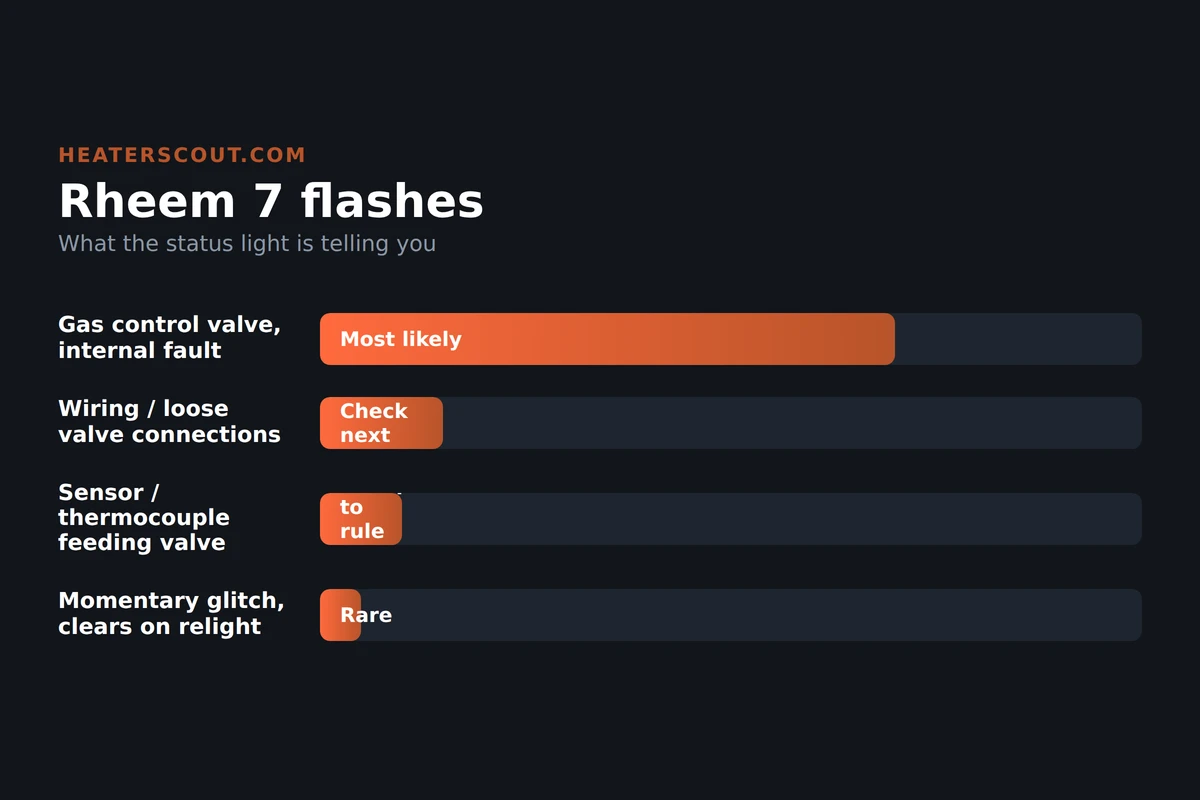
Ordered from most to least likely, here is what is behind the code once you have confirmed the color is red and the count is really seven. First and most common is the valve's own internal electronics or control circuit failing a self-check. That is the sealed part of the valve, and it is not field-repairable. Second is the wiring and connectors between the valve and its sensor or power source: a loose, corroded, or pinched connection can look like an internal fault, so pull each connector, check for corrosion, and reseat it firmly before condemning the valve. Third is the sensor or thermocouple that feeds the valve, a cheap part to rule out that can drop the pilot and make the control misbehave. Last and least common is a genuine momentary glitch that clears on a relight and never returns.
The order matters because it points you at the cheap checks before the expensive part. Reseat the connectors, confirm the pilot burns a strong blue flame that wraps the sensor tip, and only when those are clean and the light still shows a solid red seven do you have a valve that genuinely needs replacing.
The 7-flash verdict
Seven flashes of the red status light on a Rheem gas heater means the gas control valve has failed and needs replacing. Try one reset (knob OFF, wait five minutes, relight); a real fault returns. Before you buy, reseat the valve's connectors and inspect the wiring, since a loose connection can fake an internal fault. The valve runs about $150 to $400 for the part and is usually a warranty item for several years, so check your model and serial. A blue seven-flash code is a different fault, a flammable-vapor-sensor lockout, so read the color first.
Key takeaways
- Red status light, 7 flashes = failed gas control valve. Replace it, do not try to repair it.
- Blue status light, 7 flashes = flammable-vapor-sensor lockout. Clear the fumes, ventilate, relight.
- Reset once: gas knob OFF, wait ~5 minutes, relight per the door label. A real valve fault comes back.
- Reseat the valve's wiring connectors before condemning the valve; a loose connection can mimic the fault.
- The valve part runs about $150 to $400; a plumber visit is commonly $250 to $450 total.
- The gas valve is usually a warranty part for several years. Check model and serial before buying.
- Replacing a gas valve is a gas job. Most homeowners should hand it to a licensed plumber or HVAC tech.
Replacing the valve: what it involves
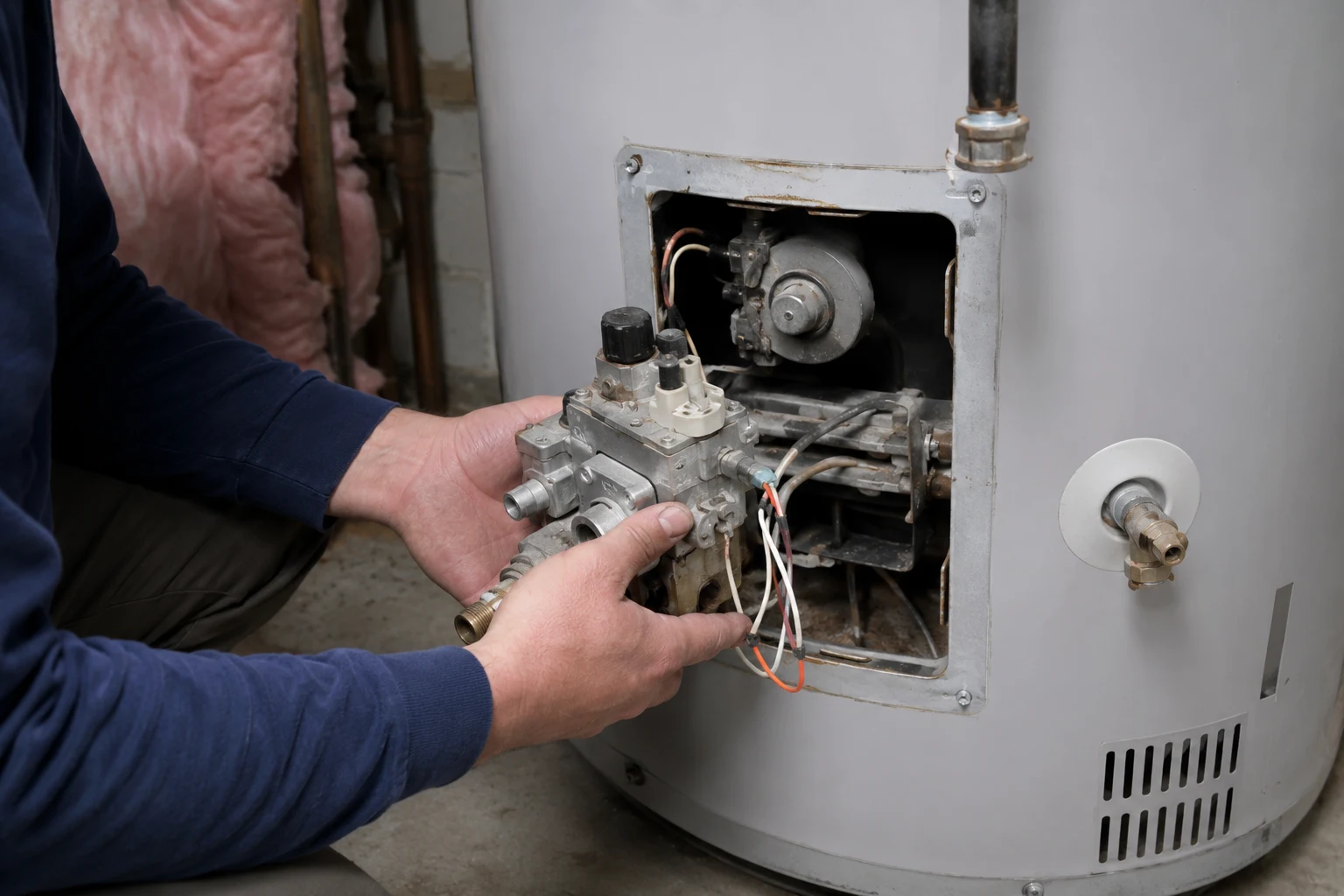
If the connectors are clean, the sensor checks out, and the red light still shows a solid seven, the fix is a new gas control valve. This is a gas job, and it is why most owners call a pro. The tech shuts the gas off at the control knob and the supply line, kills any nearby ignition source, and drains the tank below the valve so water does not pour out. The valve threads into a fitting on the tank, so the old one backs out and the exact replacement threads in with fresh pipe dope for a clean seal. Then the sensor, pilot tube, and igniter reconnect, the tank refills, air purges from the hot side, and every gas joint gets leak-tested with soap solution before the pilot is relit. The wrenching is straightforward. The leak test is the part that matters, and a weeping gas joint is the one mistake you cannot afford. That is why the valve, unlike a simple thermocouple, is a fair place to draw the DIY line, especially when the part is under warranty and you want the coverage kept intact.
Why this is not a maintenance fix
It is worth being blunt about what will not clear a red seven-flash code. Draining and flushing the tank does nothing, because the fault is electronic, not scale or sediment. Cleaning the burner or the flame arrestor does nothing, because the valve is not complaining about combustion. A perfect thermocouple reading will not clear seven flashes if the valve's own control has failed. The valve is a sealed assembly, and once its self-check fails, the only cure is a new one. So confirm the light is red and the count is really seven, do the one reset, reseat the wiring to rule out a loose connection, and check your warranty before you buy.
Keeping the next valve alive
Gas control valves are not maintenance items, but a few habits stretch their life. Keep the area around the heater clear of gasoline, paint, solvents, and other flammable liquids, which protects both the valve and the vapor sensor from contamination. Keep the burner and air intake clean so the flame burns properly and the sensor sees a strong, steady pilot. And if you have the valve replaced under warranty, note the install date and keep the paperwork, because the replacement carries its own coverage.
Frequently asked
What does 7 flashes mean on a Rheem water heater?
On a Rheem or Ruud gas storage heater, seven flashes of the RED status light means the gas control valve has failed. The small light sits on the front of the gas valve near the burner door and reports faults by how many times it blinks in each burst: one flash every few seconds is normal standby, and seven flashes is the valve, or its internal control circuit, flagging a fault it cannot clear on its own. Rheem's guidance for a genuine seven-flash code is to replace the valve rather than try to repair it. One catch worth knowing: on some newer models the status light is BLUE, and a seven-blink blue code is a flammable-vapor-sensor lockout, which is a completely different problem caused by fumes near the heater. Read the light color and match the count to the chart inside the burner door before you spend a dollar.
Can I reset the 7-flash code?
You can try once, and it is worth doing so you know whether the fault is real. Turn the gas control knob to OFF, leave it there about five minutes so any accumulated gas dissipates, then relight the pilot following the lighting instructions on the burner door. That clears a momentary glitch. But a real seven-flash valve fault is not a glitch. It is the control reporting its own failure, and it comes right back after a proper reset. If the code clears and stays gone, you got lucky. If it returns, stop cycling power and plan on a new gas control valve, because repeated resets do not repair a failed valve.
How much is a Rheem gas valve?
The electronic gas control valve Rheem uses commonly runs about $150 to $400 for the part alone, depending on the model and where you buy it. A plumber or HVAC tech to diagnose and swap it typically lands somewhere around $250 to $450 total once you count the trip, labor, and part, and more in high-cost metros. Here is the money-saver: on most Rheem and Ruud heaters the gas control valve is covered under warranty for a period that varies by model, often several years. If your heater is still inside that window, the valve is free and you pay only labor. Pull the model and serial number off the rating label and check the warranty before you order anything.
Is 7 flashes covered under warranty?
Often, yes. On most Rheem residential gas heaters the gas control valve is a warranty-covered part, typically for several years from the install date, and some lines cover it longer. The exact term is in your warranty paperwork, tied to the model and serial on the rating label. Warranty usually covers the part only, not the labor, so budget for a plumber's time even if the valve comes free. Call Rheem or the dealer with your model and serial before buying retail; if it is covered you can get the correct replacement shipped at no cost and only pay for the swap.
Is a 7-flash fault dangerous?
The red seven-flash code itself is the safety system doing its job, not a live hazard. The gas control valve reports seven flashes and stops firing rather than keep running a control it cannot trust, so a cold heater is the valve failing safe. What you should not do is bypass or jumper a valve that is throwing a fault. The blue seven-flash code is different: it is a flammable-vapor-sensor lockout, meaning the heater detected combustible fumes, so clear the air, remove any solvents, gasoline, or paint from the area, and ventilate before relighting. If you ever smell gas, hear hissing, or see scorching near the valve, shut the gas off at the supply and get a licensed pro out first.
Why does 7 flashes keep coming back?
Because a failed valve does not un-fail. A red seven-flash code is an internal fault inside a sealed control, so relighting or power-cycling clears the display but not the underlying problem. If it returns every time after a proper OFF-and-relight, that confirms the valve is done, and the only cure is a new valve. Two things to rule out first: make sure you are counting seven and not miscounting a lower code in a dim room, and check the wiring and connector to the valve, since a loose or corroded connection can mimic an internal fault. If the color is blue, chase the vapor source instead, because a blue seven keeps returning as long as fumes reach the sensor.
Do I need a plumber, or can I replace the valve myself?
Swapping a gas control valve is a gas job, so most homeowners should hand it to a licensed plumber or HVAC tech. The wrenching is not the hard part; the risk is a gas leak or a bad seal on the tank thread. The job means shutting off the gas, draining the tank below the valve, unthreading the old valve, threading in the exact replacement with fresh pipe dope, refilling, purging air, and leak-testing every gas joint with soap solution before relighting. If you are not confident leak-testing a gas connection, this is a pro call, and it usually should be anyway since the valve is a warranty part best installed by someone who keeps the coverage intact.