A Rheem gas water heater flashing its status light four times is not throwing a random error. The high-limit device on the gas control valve, the ECO, watched the water climb past its safety ceiling and cut the burner on purpose. The tank got too hot, and the valve stopped it. That single fact reframes the whole repair: you are not chasing a glitch to clear, you are answering one question, why did the water overheat. The good news is that the answer is usually the cheap one, a dial turned too high or a floor full of sediment, and only rarely the expensive one. The bad news is that four flashes is the code people are most tempted to reset over and over, which is exactly the wrong instinct.
Quick answer
Four flashes on a Rheem or Ruud gas water heater status light means a high-temperature shutdown: the ECO high-limit tripped because the water got too hot, and the valve cut the burner. Reset it once by turning the gas knob to OFF, waiting three to five minutes, and relighting. If it comes back, do not keep resetting. Work the causes cheapest first: drop the setpoint to about 120 degrees, then flush the tank of sediment. If four flashes still returns on a clean tank at a sane temperature, the temperature sensor is drifting high or the gas valve is failing to shut off, and on a modern gas Rheem both mean replacing the gas control valve, a job for a licensed plumber.
Key takeaways
- Four flashes = high-temperature shutdown. The ECO tripped because the water actually got too hot, not because the valve is confused.
- Reset ONCE to test for a fluke. Turn the gas knob OFF, wait 3 to 5 minutes, relight. Never keep resetting a safety trip to force the burner on.
- Causes stack cheapest first: setpoint too high (free), sediment trapping heat (flush the tank), sensor drifting high, valve stuck open.
- Set the dial to about 120 F (the 'A' mark on lettered Rheem valves). Safer, and it stops the tank overshooting into the ECO.
- On a gas Rheem the temperature sensor is built into the gas control valve, so a sensor or valve fault is the same ~$280-$450 part. Check the warranty first.
What the ECO is and why it cuts the burner
Every gas storage water heater has a high-limit safety, the energy cut-off or ECO, watching the water temperature. Its whole job is to shut the burner down if the water ever climbs past a fixed ceiling, well above any normal setpoint, up in the range where a closed tank starts building dangerous pressure. On a modern Rheem gas heater the ECO and the temperature sensor live inside the gas control valve, and when the ECO opens, the valve reports it as four flashes on the status light. It is a hard shutdown, not a soft warning. The burner stays off until you reset, and the tank goes cold. So a four-flash code and no hot water go together, and the light is telling you the shutdown was deliberate.
The reason this matters is that the ECO does not trip on a whim. It trips on temperature. If it fired, the water near that sensor genuinely reached the ceiling, so the fault is real even if the cause turns out to be trivial. That is why the right first move is to read the situation, not to reach for a reset. Reset blindly and you clear the evidence and learn nothing.
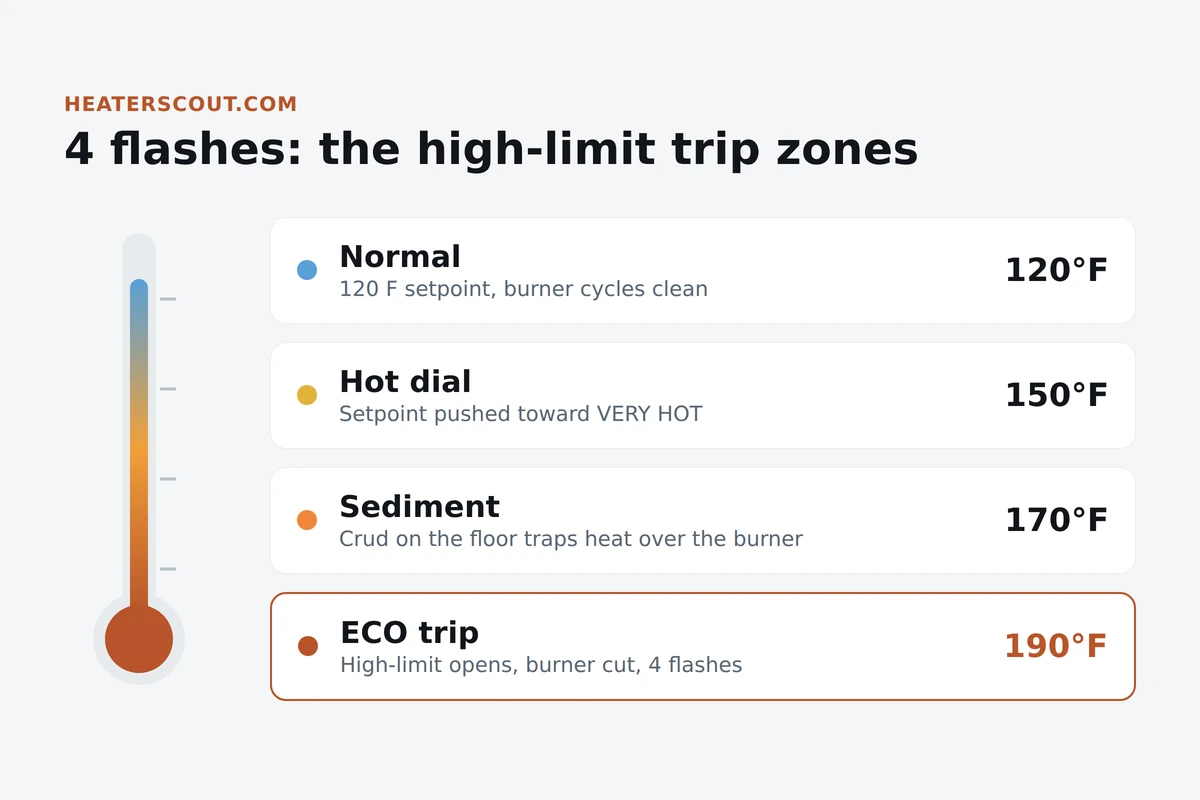
The four causes, cheapest first
The trick with a four-flash code is to resist jumping to the worst-case part. The causes really do stack from free to expensive, and the two cheap ones account for most repeat trips. Work down the list in order and only escalate when you have genuinely ruled out the step above.
Setpoint dialed too high
If the temperature knob got pushed toward VERY HOT, the tank can overshoot the ECO ceiling on a long burner run, especially with low hot-water use letting the water sit and climb. Back the dial to about 120 degrees, the A mark on lettered Rheem valves, then reset once and watch for a week. This costs nothing and clears a surprising share of four-flash cases.
Sediment trapping heat
Years of scale on the tank floor sit between the burner flame and the water like a blanket. The steel and the sensor near it read scorching while the bulk water is only warm, so the ECO trips on a false-feeling high. Flush the tank through the drain valve until the water runs clear. On a never-flushed tank this is the single highest-value thing to try.
Temperature sensor drifting high
A sensor that has drifted tells the valve the water is hotter than it is, and the ECO trips on a reading that is simply wrong. On a modern gas Rheem the sensor is integral to the gas control valve, so you cannot swap it alone. A genuine sensor fault ends in a valve replacement, which is where the bill and the warranty question both come in.
Gas valve failing to shut off
The least common and most serious: the valve is not closing its burner when it should, so the water climbs until the ECO catches it. This is a stuck or failing gas control valve, and running the heater on repeated resets while it does this is exactly what the ECO is protecting you from. Shut the gas off and get a licensed plumber.
How to reset it, once
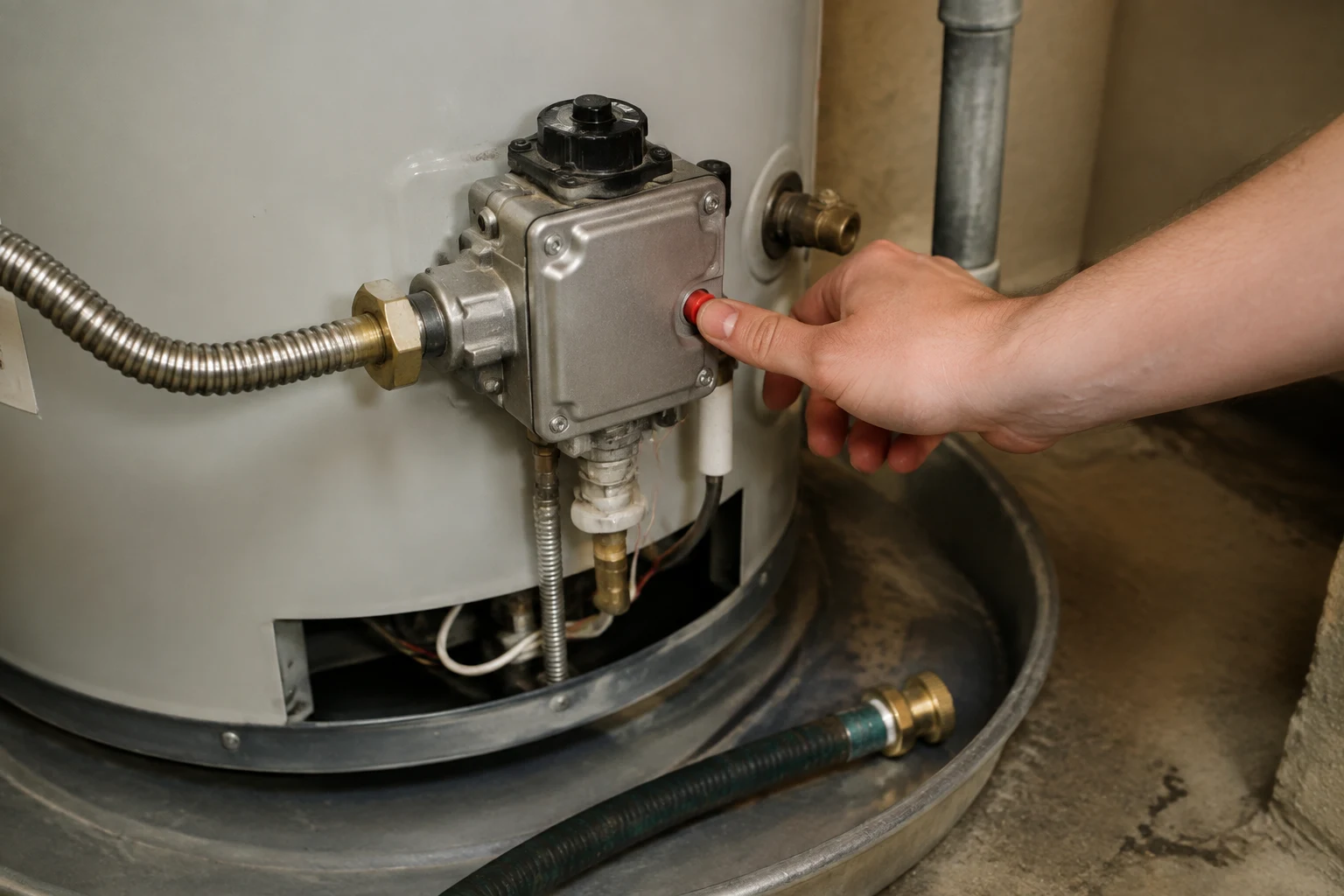
People go hunting for a red ECO reset button on a gas Rheem and get frustrated when there is not one. That red button lives on electric models, behind the upper access panel. On a gas heater the reset is the gas control knob itself. Turn it to OFF, wait three to five minutes for the valve and the water right at the sensor to cool below the ECO threshold, then relight the pilot following the lighting steps printed on the burner door and turn the knob back to your setting. On a power-vent model you can also drop power at the switch or breaker for the same few minutes. If the light comes up as the normal one-flash heartbeat and stays there, the trip may have been a one-off. That is the only reset you get to treat as a fix.
Here is the discipline that matters. Reset once to test for a fluke. If four flashes returns, the water is overheating for a real reason, and the answer is diagnosis, not another reset. Every extra reset on a genuine over-temp condition is you overriding the safety that is trying to protect the tank. That is the line between troubleshooting and creating a hazard.
Four flashes is a shutdown, not a glitch. Reset it once to test for a fluke. If it comes back, the water is genuinely overheating, and the fix is finding out why, not resetting harder.Rheem gas control high-limit (ECO) behavior
Lower the setpoint, then flush the tank
These are the two DIY moves that clear most four-flash codes, and they cost little more than time. Start with the dial because it is free. About 120 degrees is the target: hot enough to keep bacteria in check and feel properly hot at the tap, cool enough that the tank does not overshoot into the ECO and cool enough to cut scald risk. On lettered Rheem valves that is roughly the A setting. Turn it down, reset once, and give it a week before deciding it did not work.
Flushing is the next step and the one that fixes sediment-driven trips. Shut the gas to PILOT or OFF and close the cold inlet. Run a garden hose from the drain valve to a floor drain or outside. Open a hot tap upstairs to break the vacuum, open the drain valve, and let the tank empty. Then pulse the cold inlet open and closed to stir and rinse the loose scale off the floor, and keep going until the water out the hose runs clear. Close it up, refill with the hot tap open until water runs steady, relight, and set the dial to 120. Rheem calls for an annual flush, and on a tank that has never had one, this is the fix more often than not.
Reset once, never bypass the ECO
Do not keep resetting a 4-flash high-temperature shutdown to force the burner back on, and never jumper or bypass the ECO high-limit. This is a real over-temp safety trip. Reset once to test for a one-time event. If it returns, stop, find why the water is overheating, and if the relief valve is weeping or the water is scalding, shut the gas off at the knob and call a licensed plumber.
When it becomes a valve or sensor job
Say you flushed the tank and set the dial to 120, and four flashes came back anyway on a clean tank at a sane temperature. Now the cheap causes are genuinely ruled out, and what remains is the sensor reading high or the valve not shutting its burner off. On a modern gas Rheem both point at the same part, because the temperature sensor and the ECO are integral to the gas control valve. You do not replace a sensor on these, you replace the valve. A gas control valve typically runs about 280 to 450 dollars installed, part plus labor, and replacing it means draining the tank and breaking the gas connection, which is why this is the step most homeowners hand to a plumber.
Before anyone buys a valve, read the rating label. Pull the model and serial number and check the warranty, because the gas control valve is a covered part on most Rheem gas heaters for several years. If yours is in the window, the part is free and you are paying labor only, which changes the math on repair versus replace. And if the tank is old, well past ten years, and now needs a valve, that is the moment to weigh a new heater against pouring 400 dollars into an aging one.
Prevention: keep the water from getting there
Four flashes is a temperature problem, so prevention is about keeping the water from ever reaching the ceiling. Flush the tank once a year to keep sediment from blanketing the burner floor, the cause that sneaks up on older tanks. Leave the setpoint near 120 rather than creeping it up toward VERY HOT for a little more hot water, because that headroom is also your margin against the ECO. Keep an eye on the relief valve; if it starts weeping, that is early warning that the tank is running hotter than it should, and it pairs with a four-flash history to point straight at a temperature or valve fault. Do those few things and the high-limit stays a part you never think about, which is exactly where it belongs.
Frequently asked
What does 4 flashes mean on my Rheem water heater?
Four flashes on the status light down at the gas control valve is a high-temperature shutdown. The high-limit device, the ECO, sensed the water climbing past its safety ceiling and cut the burner to keep the tank from overheating. It is the gas equivalent of an electric heater's ECO button popping. The key word is shutdown: the valve is not confused, it acted on a real reading. So the question is never how do I make the light stop, it is why did the water get that hot. Four causes stack from free to expensive: the temperature dial set too high, sediment on the tank floor trapping heat over the burner, a temperature sensor drifting and reading hotter than the water really is, or the gas valve failing to shut the burner off. Work them in that order and most people never get to the expensive end.
Can I reset a 4-flash code myself?
You can reset it once, and you should reset it exactly once, to see whether it was a one-time event. On a gas Rheem the reset is not a red button, it is the gas control knob: turn it to OFF, wait three to five minutes for the valve and water to cool, then relight the pilot per the burner-door instructions and turn the knob back to your setting. If the light comes up normal and stays normal, it may have been a fluke from a one-off hot draw or a stuck valve that reseated. What you must not do is keep cycling that knob to force the burner back on every time it trips. Four flashes is a safety condition. If it returns after a clean reset, the water is genuinely overheating for a reason and the fix is finding that reason, not resetting harder.
Why does the 4-flash code keep coming back?
A repeat trip means the ECO is doing its job and the water really is overheating. Walk the causes in order. First, look at the temperature dial. If someone cranked it toward VERY HOT, the tank can overshoot the ECO ceiling on a long burner run, so back it to about 120 degrees and watch for a week. Second, sediment. Years of scale on the tank floor acts like a blanket between the burner flame and the water, so the steel and the sensor near it read scorching while the bulk water is merely warm, and the ECO trips. Flush the tank. Third, a temperature sensor drifting high, telling the valve the water is hotter than it is. On a modern gas Rheem that sensor is built into the gas control valve, so that one usually ends in a valve replacement. Fourth, a valve that will not close its burner, the least common but most serious.
How do I flush my Rheem gas water heater?
Turn the gas control knob to PILOT or OFF and shut the cold-water inlet valve. Hook a garden hose to the drain valve at the base of the tank and run it to a floor drain or outside where hot, rusty water will not hurt anything. Open a hot tap upstairs to break the vacuum, then open the drain valve and let the tank empty. Once it is drained, crack the cold inlet back open in bursts to stir up and rinse out the loose sediment on the floor, and keep flushing until the water running out the hose is clear. Close the drain valve, close the hot tap once the tank refills and water runs steady, then relight the pilot and set the dial. Rheem recommends doing this once a year. On a tank that has never been flushed and now throws four flashes, this is the single highest-value thing you can try.
Is a 4-flash high-temperature shutdown dangerous?
The shutdown itself is the safety system protecting you, so the trip is a good thing, not a hazard. The danger is in defeating it. When water in a closed tank overheats past its limit, pressure climbs, and the layers of protection are the ECO cutting the burner and, past that, the temperature-and-pressure relief valve dumping water. If you keep resetting a 4-flash code to force the burner on, or worse, if someone jumpers the high-limit to bypass it, you are removing the layer that stops a tank from overheating. That is the scenario nobody wants. So treat a repeating 4-flash trip with respect: stop resetting, find why the water is overheating, and if you cannot get to the bottom of it, shut the gas off at the knob and call a licensed plumber rather than running the heater through the warning.
How much does it cost to fix a Rheem 4-flash code?
It depends entirely on which cause you land on, which is why you work them cheapest first. Turning the temperature dial down costs nothing. Flushing the tank costs the price of a garden hose and an hour of your time, or roughly 100 to 200 dollars if you have a plumber do it. If the fix is the temperature sensor or the gas control valve itself, the bill jumps, because on a modern gas Rheem the sensor is integral to the valve, so both point at the same part. A gas control valve typically runs about 280 to 450 dollars installed, part plus labor. Before you pay for a valve, pull the model and serial number off the rating label and check the warranty, because the gas control valve is a covered part on most Rheem gas heaters for several years, which can drop the job to labor only.
What temperature should I set my Rheem water heater to?
About 120 degrees Fahrenheit. That is the number Rheem and most safety guidance land on: hot enough to keep bacteria like Legionella in check and to feel properly hot at the tap, cool enough to avoid scald risk and to stop the tank overshooting into the ECO on a long burner cycle. On Rheem gas valves the dial is often marked with letters instead of numbers, and the A setting is roughly 120. If your heater has been throwing four flashes and the dial was up near VERY HOT, bringing it down to A or 120 is both the safest and the first thing to try. Every 10 degrees you knock off the setpoint also trims standby energy loss, so you save a little on the bill while you make the overheating less likely.
When should I stop DIY and call a plumber for 4 flashes?
Call a pro when the code returns on a tank you have already flushed with the dial set to about 120. At that point you have ruled out the two free-to-cheap causes, and what is left is a temperature sensor reading high or a gas valve not shutting its burner off, both of which mean replacing the gas control valve on a modern gas Rheem. That job involves draining the tank and disconnecting the gas line, which is where most homeowners hand it over. Also call a pro immediately, before any more resets, if the relief valve on the tank is weeping or discharging, if you smell gas, or if the water coming out of a hot tap is scalding. Those are signs the overheating is active, not a stale one-time trip, and they are not the time to keep experimenting.