A Rheem tankless throwing a 13 is still burning. That is what makes this code different from most of the others: the unit lit its burner, produced a flame, and then the control board looked at how that flame was burning and shut the unit down because the air-to-fuel ratio was wrong. Rheem calls it improper combustion, and it shows up on indoor models. A flame that cannot get enough clean air burns rich, wastes gas, and makes carbon monoxide, so the board pulls the plug rather than let it run. Nine times out of ten the cause is airflow, not a dead part, which is good news because the first fixes are free.
| What it means | Improper combustion. The burner lit but the air-to-fuel ratio is out of range, so the unit shut down. |
| Where it shows | Indoor Rheem tankless models, on the remote controller or the unit display. |
| Most common cause | Restricted airflow: a lint-packed intake screen or a blocked, back-drafting, or poorly placed vent. |
| Safety level | High. A starved flame makes carbon monoxide. Do not reset-and-forget this code. |
| NG inlet pressure spec | Roughly 4.0 to 10.5 inches of water column, checked with a manometer. |
| LP inlet pressure spec | Roughly 8.0 to 13.5 inches of water column for propane units. |
| DIY-safe fixes | Clean the intake screen, clear the vent terminals, descale the heat exchanger. |
| Call-a-pro fixes | Gas pressure, gas valve, wrong-fuel setup, blower motor, or flame-rod replacement. |
Why the flame is burning dirty
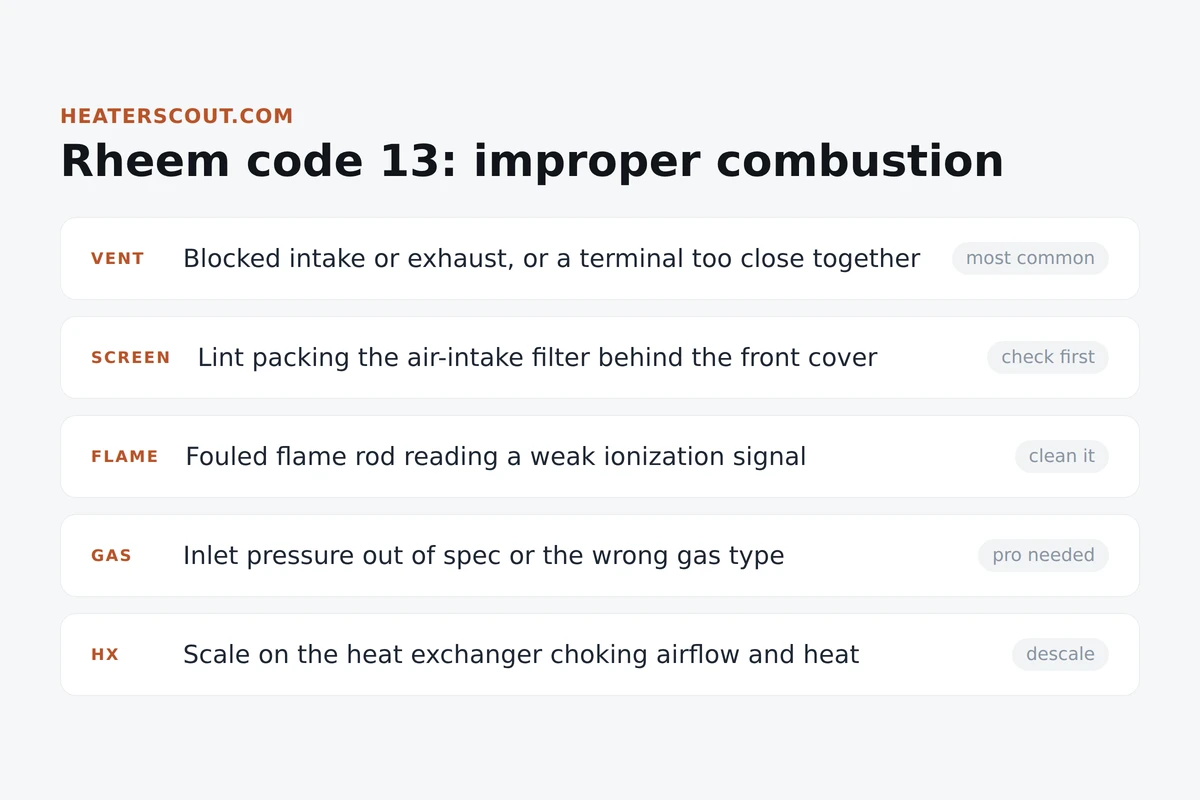
Combustion needs two things in the right proportion: gas and air. Code 13 fires when the flame gets one of them wrong, and the split matters for how you chase it. Almost every real-world 13 lands on the air side. The blower cannot pull enough combustion air, or the exhaust cannot leave, so the flame runs rich and the board sees an unstable, oxygen-starved burn. The gas side is the smaller share but the more serious one, because it usually means pressure or fuel-type problems that need a manometer and a license to touch. Sort your causes into these two buckets before you start turning anything.
Air-side causes (start here, mostly DIY)
- Intake screen packed with lint, dust, and pet hair behind the front cover. The single most common cause and the easiest to fix.
- Blocked exhaust vent: snow, leaves, a bird or wasp nest, or ice at the outdoor terminal.
- Intake and exhaust terminals mounted too close together, so the unit re-breathes its own flue gas.
- A weak or dust-clogged combustion blower that cannot move enough air.
- Scale on the heat exchanger fins choking airflow and heat transfer, which builds up slowly over years.
- A back-drafting vent or a run that is too long, kinked, or improperly pitched for the model.
Gas-side causes (call a pro)
- Inlet gas pressure below spec, so the flame is starved even with good airflow. Needs a manometer to confirm.
- The unit set up for the wrong fuel, natural gas orifices running on propane or the reverse.
- A partly clogged or sooted main burner spreading the flame unevenly.
- A fouled flame rod sending a weak ionization signal, so the board misreads the burn as improper.
- A failing gas valve or regulator that cannot hold a steady manifold pressure.
- A shared gas line starved when the furnace, range, or dryer fires at the same time.
This code makes carbon monoxide
Code 13 is a combustion fault, which means it is carbon monoxide territory. A flame that cannot get enough air burns rich and produces CO, and a blocked or back-drafting vent, one of the top causes of a 13, is exactly the condition that can send those gases back into the room. Never reset this code and walk away. Make sure you have a working CO alarm near the unit, and if that alarm is sounding, get everyone out of the house and call the gas utility before you troubleshoot anything. If the code returns after you have cleaned the intake and cleared the vent, stop resetting and bring in a licensed technician the same day. The shutdown is the safety system working, not a nuisance.
Work it in order
Do the free airflow checks first, in this sequence, because they cover the large majority of 13 codes and none of them touch gas. Only when the intake, the vent, and the heat exchanger are all clean and the code still returns do you hand it to a technician for the gas side. Turn off any open hot taps before you start, and cut power to the unit at the breaker whenever you have the front cover off.
Code 13 next to its neighbors
Rheem's flame and combustion codes get mixed up because they all involve the burner, but they report different stages of the same process. Knowing which one you have tells you where to look. Here is how 13 lines up against the codes owners most often confuse it with.
| Code | What the board is reporting | Where to look first |
|---|---|---|
| 13 | Improper combustion. The burner lit but burned dirty, air-fuel ratio out of range. | Airflow: intake screen, vent terminals, blower, heat exchanger scale, then gas pressure. |
| 11 | No ignition. The unit tried to light and never got a flame at all. | Gas supply on, gas valve open, igniter and flame rod, then a blocked air path. |
| 12 | Flame loss or flame failure during operation. It lit, then the flame dropped out. | Gas pressure and supply, a fouled flame rod, or an interrupted gas feed under load. |
| 76 | Communication fault between the remote controller and the unit. | The controller wiring and connector, not the burner. A different problem entirely. |
The pattern is worth holding onto. Codes 11, 12, and 13 are the same flame at three moments: 11 never lit, 12 lit and then died, and 13 lit and kept burning but burned wrong. A 76 is not about the flame at all, it is the remote losing contact with the unit.
Keeping it from coming back
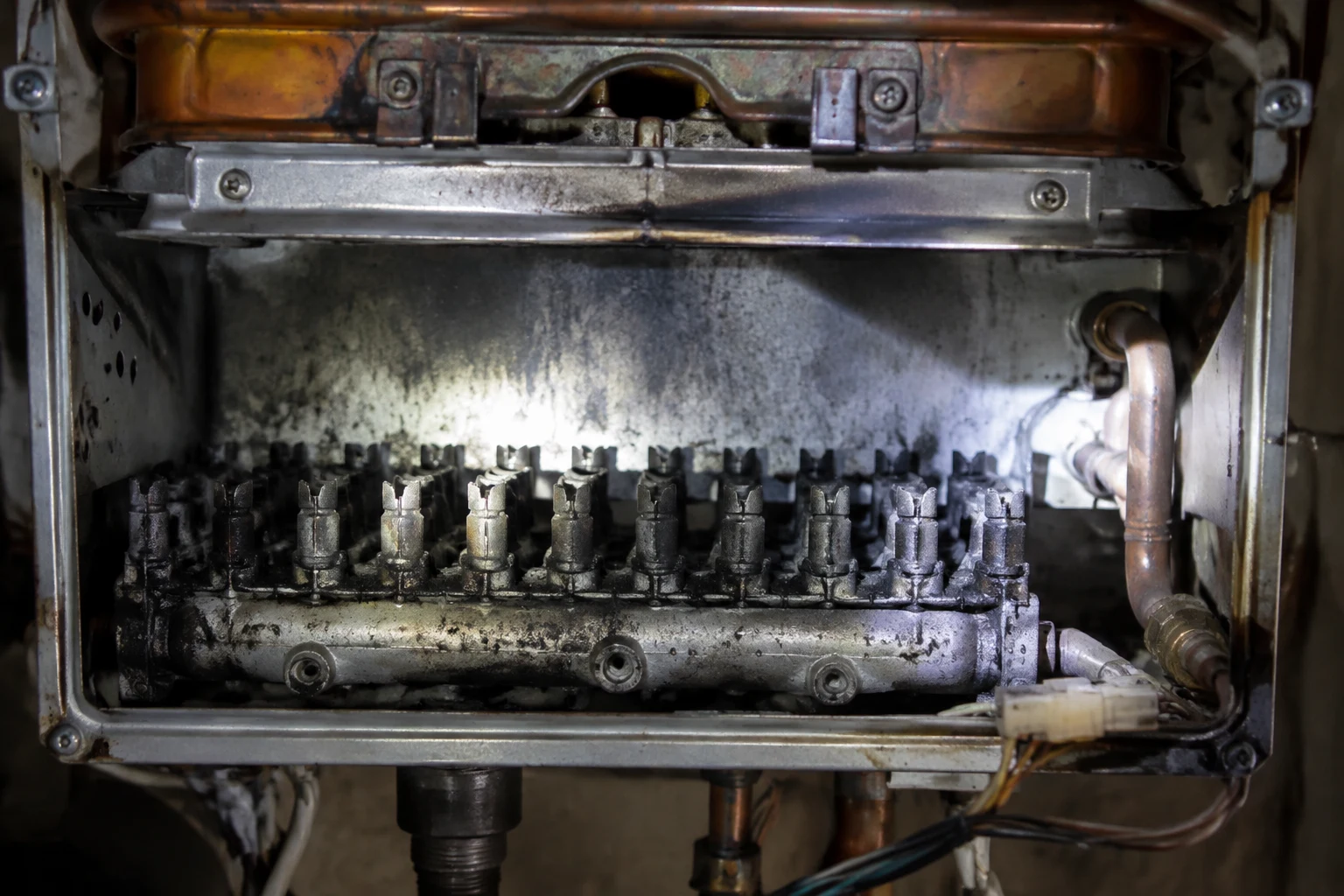
A 13 that keeps returning is almost always a maintenance gap. Flush the heat exchanger once a year, more often on hard water, so scale never chokes the airflow. Clean the intake screen on the same schedule, and keep the area around an indoor unit free of dust and lint sources like a nearby dryer. Outside, keep both vent terminals clear through the winter, because snow drift and ice are a seasonal cause of this exact code. If your intake and exhaust were installed too close together, that is a one-time fix a tech should correct rather than a thing you re-clear every few weeks.
Frequently asked
Can I reset Rheem tankless code 13 myself?
You can clear it, but clearing it is not fixing it. To reset, turn off any open hot taps, then cut power to the unit at the breaker or unplug it, wait 30 seconds, and power it back on. The controller drops the 13 and the unit will try to fire again. The problem with code 13 is that it is a combustion fault, so a plain reset just mutes the alarm. If you have not touched the air intake, the venting, or the flame rod, the unit is about to burn dirty a second time and throw 13 again, sometimes within one hot-water draw. Reset only after you have actually cleaned the intake screen and checked the vent, and if it comes right back, stop resetting and get a technician in.
Is Rheem code 13 dangerous?
Treat it as if it is. Code 13 means the burner is lighting but the air-to-fuel ratio is wrong, and a flame starved of air makes carbon monoxide. On an indoor Rheem the exhaust is supposed to leave through the vent, but a blocked or back-drafting vent is one of the top causes of a 13, and that is exactly the condition that can push combustion gases back into the room. This is the one code on the list you do not reset-and-forget. If you have a CO alarm, make sure it works. If it is sounding, leave the house and call the gas utility before you troubleshoot anything. The unit shutting itself down on a 13 is the safety system doing its job.
What is the difference between Rheem code 13 and code 11?
Code 11 means no ignition: the unit tried to light and never got a flame at all, so it shut down before any real burning happened. Code 13 means the opposite in a sense, the burner did light, but it burned badly, with the air-fuel ratio out of range. Think of 11 as a spark that never caught and 13 as a fire that caught but choked. They share some causes, like a fouled flame rod or a gas-pressure problem, but 13 leans much harder on airflow and venting because a lit flame that cannot breathe is what trips it. If you are seeing both codes at different times, that usually points at gas supply or the flame rod, the parts common to both.
Will cleaning the air intake screen clear code 13?
Often, yes, and it is the first thing to try because it is free. Rheem indoor units pull combustion air through a mesh intake screen behind the front cover, and that screen packs with lint, dust, and pet hair over a couple of years. Once it clogs, the blower cannot pull enough air, the flame runs rich, and the controller throws 13. Pull the front cover, find the screen, take it out, wash it in warm soapy water, let it dry fully, and reinstall it. If a packed screen was the whole problem, the code clears and stays gone. If the screen was already clean, the airflow restriction is somewhere else, the vent, the blower, or a scaled heat exchanger, and you move down the list.
How much does it cost to fix Rheem code 13?
It ranges from nothing to a few hundred dollars depending on where the airflow is choked. Cleaning the intake screen and clearing a bird nest or snow from the vent terminal costs nothing but your time. A descale kit to flush scale off the heat exchanger runs about 30 to 60 dollars if you do it yourself. A service call to diagnose the code is commonly 100 to 200 dollars, and if the tech finds a failing blower motor, a bad flame rod, or a gas valve or pressure problem, parts and labor push it to 250 to 500 dollars or more. The gas-side repairs are the expensive ones because they need a licensed tech with a manometer, and they are not a DIY job.
Why does Rheem code 13 keep coming back?
Because the airflow or gas problem behind it is still there and a reset never touched it. The usual repeat offender is venting. If the exhaust terminal is partly blocked, or the intake and exhaust terminations sit too close together so the unit re-breathes its own flue gas, the flame keeps running short of clean air no matter how many times you reset. Scale is the other slow-building cause: as the heat exchanger fouls, airflow and heat transfer both drop and 13 returns more and more often. A code that comes back within one or two hot-water draws is telling you the root cause is live. Chase the vent and the intake first, then have the gas pressure checked.
Do I need a plumber for code 13 or can I DIY it?
You can safely do the airflow half yourself: clean the intake screen, clear the vent terminals of debris, snow, or nests, and run a descale flush on the heat exchanger. Those cover a large share of code 13 cases and need no gas work. What you should not DIY is anything on the gas side. Checking inlet gas pressure needs a manometer and the training to read it against Rheem's spec, roughly 4.0 to 10.5 inches of water column for natural gas and 8.0 to 13.5 for propane, and adjusting a gas valve or confirming the unit is set up for the right fuel is licensed-tech work. If the code survives your cleaning, that is the signal to call a pro rather than keep opening the gas side yourself.