Picture a homeowner crouched in front of a Reliance water heater in the basement, watching a red light down near the base of the tank blink once, pause, blink once, pause. It looks like a warning, and the gut reaction is that the heater is failing. Here is the part almost nobody knows: that slow single blink every three seconds is the heater saying everything is fine. The pilot is lit and the gas valve is healthy. The blink itself is not the problem. Trouble only starts when that light throws bursts of two, four, five, or seven quick flashes with a pause between them, and each count is a specific message from the valve. This page tells the normal blink apart from a fault, shows how to count without getting fooled, walks the gas-knob reset, and routes every code to the part behind it.
Key takeaways
- One flash every three seconds is normal on a Reliance gas heater. It means the pilot is lit and the gas valve is healthy, not that something is broken.
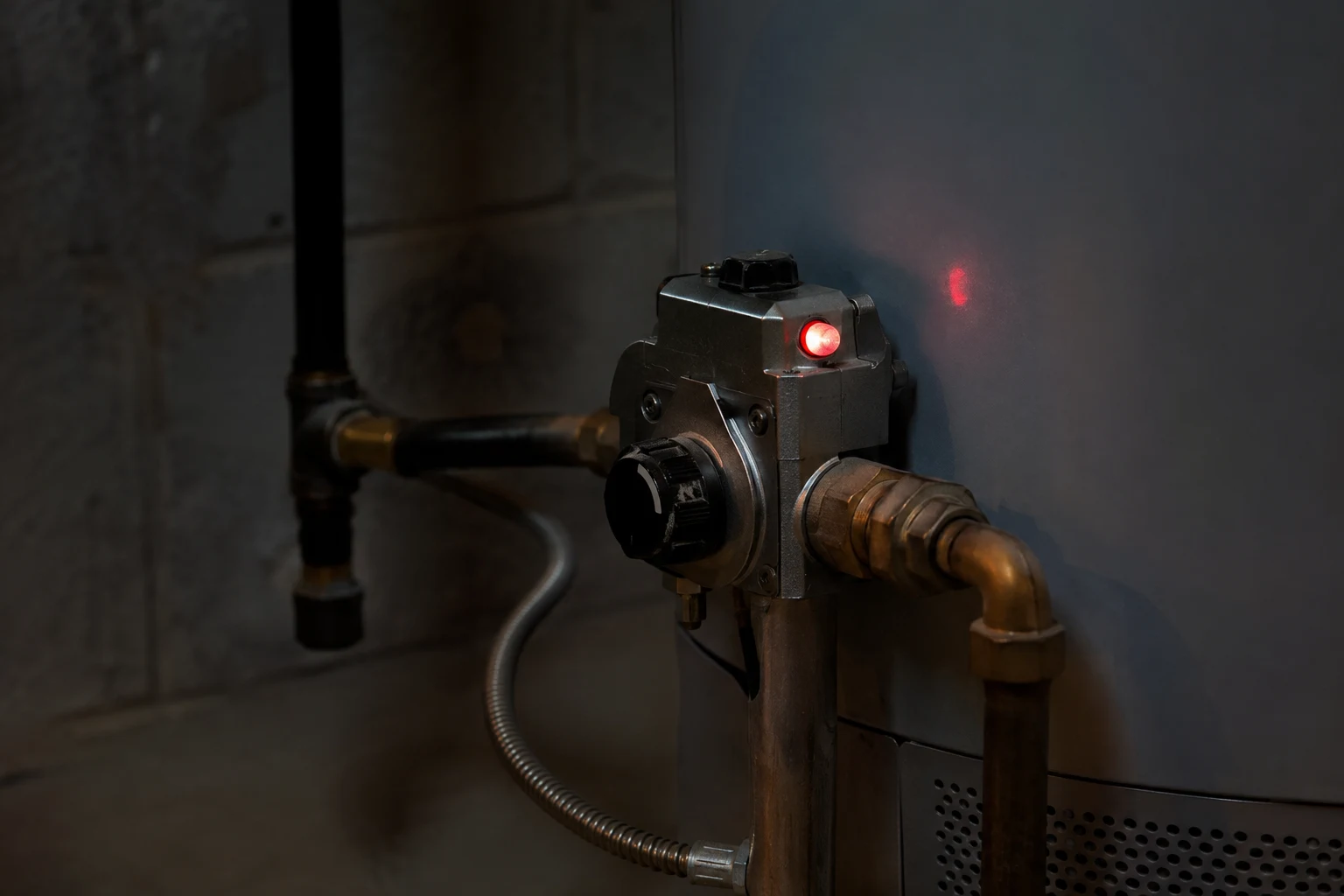
- Faults are bursts of two or more quick flashes: 2 = low thermopile voltage, 4 = over-temperature trip, 5 = temperature-sensor failure, 7 = gas control valve fault.
- Reliance is an A.O. Smith brand and uses the same Resideo/Honeywell valve as A.O. Smith, State, and American, so the flash chart is shared across all of them.
- Reset is the gas control knob, not a red button: OFF, wait five minutes, relight the pilot, back to your setting. Reset once, not repeatedly.
- Check the rating label and your Reliance warranty year before buying a valve. The gas valve is usually a covered part, so a valve code can be labor-only on a young heater.
Normal blink, solid light, no light: telling them apart
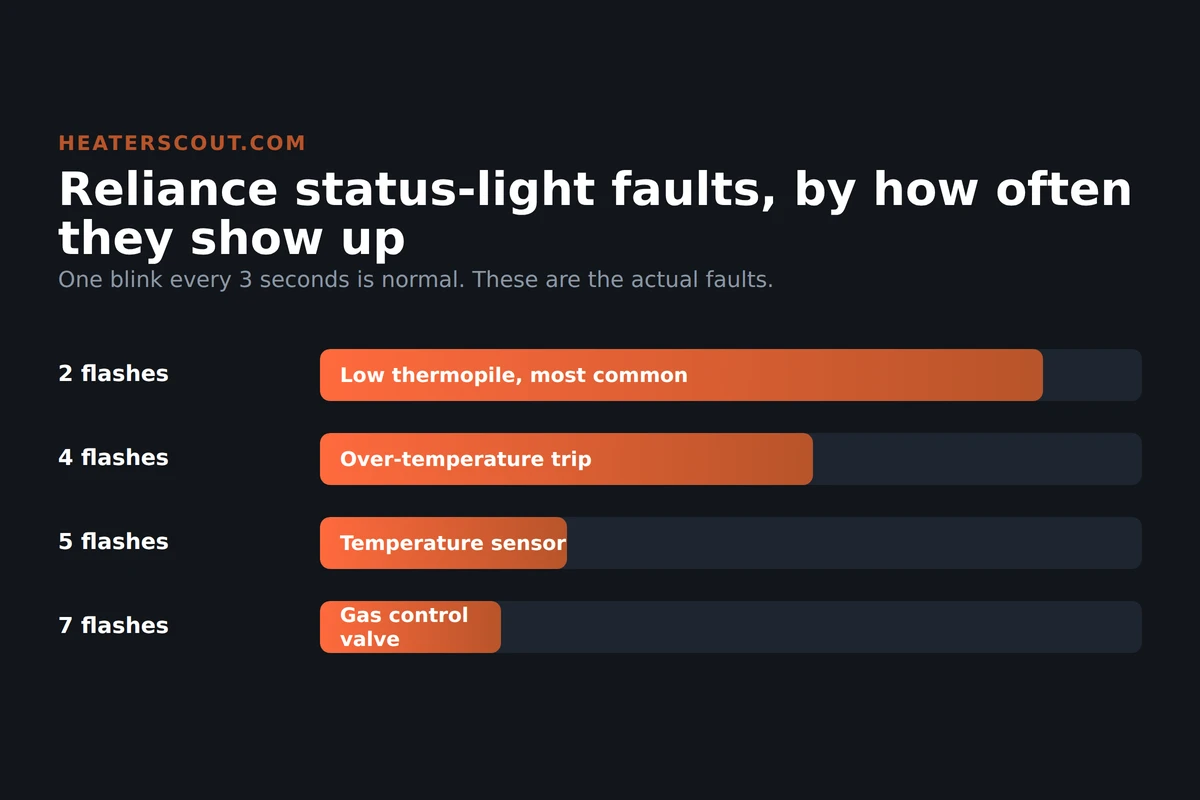
Three light states get confused, and mixing them up sends people after the wrong fix. A light that blinks once every three seconds is normal. It is the healthy heartbeat that says the pilot is lit and the valve is doing its job, and there is nothing to reset. A light that stays solid, on but not blinking, means the heater has gone into shutdown and is not running the burner. A light that is completely dark, no glow at all, means no power is reaching the valve, which usually points at an unlit pilot, a dead thermopile, or a loose connection. So before you count anything, notice which of those three you are looking at, because a steady single blink is the good one.
When you do see a burst of flashes, counting it correctly is the whole game. The flashes come fast and the pause between bursts runs about three seconds, so it is easy to count a pause as a flash or lose your place across cycles. Kneel or use a flashlight so you see the light itself and not a reflection, which can smear two fast flashes into what looks like one. Let one full burst-and-pause go by first without counting, just to feel the rhythm. Then count only the quick flashes inside a single burst, stopping at the long pause. Watch the next burst and make sure you get the same number, because real codes repeat identically. Write the number down before you reset, since cycling the knob wipes the readout you were reading.
What each fault count actually is, and the fix it points to
Two flashes is low thermopile voltage. The thermopile is the little bundle the pilot flame heats to generate the small DC voltage that powers the gas valve. When the pilot burns weak, sooty, or off-center so it does not wrap the thermopile tip, or when the thermopile itself is worn or its lead is loose, the voltage sags below the valve's holding threshold and the burner will not light. It is the friendliest code on the list. Confirm the pilot burns a strong steady blue and envelops the tip, clean and reseat the leads at the valve, and if a meter reads low under load, swap the thermopile. The part runs under fifty dollars and it is squarely homeowner work.
Four flashes is an over-temperature trip. The valve sensed the water climbing past its high limit and cut the burner. Start free: turn the dial down to about 120 degrees and let the tank cool, because a high setpoint alone can trip it. Sediment on the tank bottom is the other common cause, acting like an insulating blanket that overheats the water above the burner, so a flush is the next step. If four flashes comes back on a clean tank at a sane setting, the trouble is a temperature sensor reading high or a valve not shutting the burner off cleanly, and that is where you stop guessing and call a plumber.
Five flashes is a temperature-sensor failure: the valve no longer trusts its own reading of the water. On these heaters the sensor is built into the gas control valve, so a genuine five-flash usually ends in a valve replacement rather than a separate sensor swap. Seven flashes is the valve itself reporting an internal fault, and it almost always means replacing the gas control valve assembly. Both are the codes where the warranty matters most. Before you buy a valve, read the complete model and serial off the rating label and check your coverage, because on a young Reliance the valve is very likely a covered part and the job comes down to labor only. And keep the reset to a single try: turn the knob OFF, wait five minutes, relight the pilot per the burner-door legend, and return the knob to your setting, once, not on a loop.
| Reliance 6-Year | 6-yr tank, 6-yr parts, 1-yr labor. Gas valve covered as a part through year 6, so a 5- or 7-flash valve job is labor-only inside the window. |
| Reliance 9-Year | 9-yr tank, 9-yr parts, 1-yr labor. Longer parts coverage means the valve is a covered part further out; past year 1 you pay labor, the valve itself is on warranty. |
| Reliance 12-Year | 12-yr tank, 12-yr parts, 1-yr labor. The best window: the gas control valve stays a covered part for over a decade, so a valve code late in life still means labor only. |
| What you need to claim it | Complete model number and complete serial number off the rating label, plus the install date. The serial encodes the build date that decides if you are inside the window. |
| Burner-door legend | The flash legend printed on your own burner door is the authority for your exact model. If a generic chart and the door label disagree, the label on the heater in front of you wins. |
Frequently asked
Why is my Reliance water heater light blinking?
The small status light low on the gas control valve is a diagnostic readout, and the number of quick flashes in a burst is the code. If it blinks once every three seconds, that is not a fault at all: it is the heater telling you the pilot is lit and the valve is healthy. Owners see that steady single blink and assume something is wrong, when it is the opposite. A real fault is a burst of two or more flashes with a pause between bursts. Two flashes is low thermopile voltage, four is an over-temperature trip, five is a temperature-sensor failure, and seven is a gas control valve fault. Count the flashes in one burst, wait for the pause, confirm the same count on the next burst, then match it to the legend on your burner door.
Is a blinking red light normal on a Reliance water heater?
Usually, yes. A red or green light that blinks once every three seconds is the normal status heartbeat. It means the pilot is burning and the gas control valve is running the way it should, and there is nothing to fix or reset. This is the single most common Reliance question and the answer surprises people. The blink only means trouble when the count changes: two, four, five, or seven quick flashes in a burst is a fault code. A light that stays solid instead of blinking means the heater is in shutdown, and a light that is completely dark means no power is reaching the valve. So a slow, steady single blink is the one pattern you want to see.
Who makes Reliance water heaters?
Reliance is a brand of A.O. Smith. The heaters are built by A.O. Smith and sold through retail and hardware channels like Ace Hardware, True Value, and independent dealers rather than the big plumbing wholesalers. Because they come off the same lines as A.O. Smith, State, and American units, a Reliance gas heater uses the same Resideo/Honeywell gas control valve as those brands. That is why the status-light flash chart is identical across all of them. When you look up a code or order a part, an A.O. Smith or State chart for the same valve applies to your Reliance, and the flash legend printed on your burner door is the final word for your exact model.
What does 2 flashes mean on a Reliance water heater?
Two flashes is low thermopile voltage, and it is the friendliest code on the chart. The thermopile is the sensor the pilot flame heats to make the small voltage that powers the gas valve. When the pilot burns weak or dirty, when it does not wrap the thermopile tip, or when the thermopile is worn or its lead is loose, the voltage sags below what the valve needs and the burner will not fire. Check that the pilot burns a strong steady blue and envelops the tip, clean and reseat the leads at the valve, and if a meter reads low the thermopile is a cheap swap. The part is usually under fifty dollars, and it is homeowner work with a screwdriver and a wrench.
How do I reset a Reliance water heater?
On a gas Reliance the reset is the gas control knob, not a red button. Turn the knob to OFF, wait about five minutes so the valve and water settle, then relight the pilot following the lighting instructions printed on the burner door and turn the knob back to your temperature setting. Do that once. The reset clears a one-time fault; it does not fix a cause. If the same flash count comes right back after a clean reset, the fault is real and repeating, and you should chase the part it points to instead of resetting again. Repeatedly resetting a four-flash over-temperature code or a seven-flash valve code is the wrong move, because those are safety conditions, not glitches.
My Reliance has no light at all, what's wrong?
No light is a different problem from a blinking light. The status light runs on the tiny voltage the thermopile makes from the pilot flame, so a completely dark light usually means that power is not getting to the valve. The common causes are a pilot that is not lit, a dead or badly worn thermopile making no voltage, or a loose, corroded, or broken connection between the thermopile and the gas control valve. Start by confirming the pilot is actually burning. If it is out, relight it. If it lights but the light stays dark, check the thermopile lead at the valve for a snug clean connection, then test the thermopile output. A solid light that does not blink is a separate thing: that is the heater sitting in shutdown.
Is the gas valve under warranty on a Reliance?
Often, yes, and it is worth checking before you buy one. Reliance lines are named by warranty length, so a 6-Year, 9-Year, or 12-Year model carries that many years of tank and parts coverage, with labor typically covered for the first year. The gas control valve is a covered part within that window on most Reliance heaters. That matters for a five- or seven-flash code, because those usually end in a valve replacement. Pull the complete model and serial number off the rating label and check the date. If the heater is still young, the valve itself is likely covered and you may only be paying for labor to swap it, which turns a part-plus-labor bill into a much smaller one.