A Noritz tankless flashing 90 has shut itself down on purpose. The control board watches the fuel-to-air mixture while the burner fires, and when that mixture drifts out of spec, or the unit cannot reach the temperature you set, it calls combustion abnormal and locks out. That is the difference between a 90 and its softer cousin, code 10: a 10 keeps running, a 90 stops the heater cold. On a unit that has worked for years, a 90 is almost always a maintenance problem, not a dead heater. Nine times out of ten it comes down to air, condensate, or gas supply, and the first few checks cost nothing.
Noritz code 90 (airflow / combustion abnormality)
The board monitors combustion and outlet temperature while the burner fires. When the fuel-air mixture is off spec, or the unit repeatedly cannot hit target temperature, it declares a combustion abnormality and shuts down as a hard lockout. Noritz uses the same 90 meaning across residential and Pro Series premix models. On a new install the usual cause is gas pressure, venting, or dipswitch settings; on an older unit it is a dirty air path, a clogged condensate drain, or a fouled burner and fan. A power cycle clears it, but does not fix the cause.
First, sort out what kind of 90 you have
Before you touch anything, answer one question: is this a brand-new install, or a unit that has run fine for a while and just started throwing 90? The answer splits the causes cleanly. A never-worked-right install points at gas pressure, vent size, and the elevation and pipe dipswitch settings. A unit that worked for years and now faults points at maintenance: a fouled air path, a clogged condensate drain, or a burner and fan that have never been cleaned. The checklist below covers the homeowner-safe items to run through before calling anyone.
- Go outside and clear the exhaust and intake terminals of leaves, snow, debris, bird or wasp nests, and spider webs. This is the single most common cause.
- Locate and clean the internal air filter screen at the intake; on many models it packs with lint and chokes combustion air.
- Check the intake elbow on top of the unit and the front-cover air path for anything blocking airflow.
- Find the condensate drain line and confirm it is not clogged or kinked; a backed-up line is a classic older-unit cause of code 90.
- Note whether the unit is newly installed. If it never ran right, suspect gas pressure, vent size, and dipswitch settings rather than dirt.
- Confirm the gas is on and other gas appliances work, and that no valve was shut during recent work.
- Power cycle once: off for thirty seconds to a minute, then back on. If 90 returns fast, stop and diagnose.
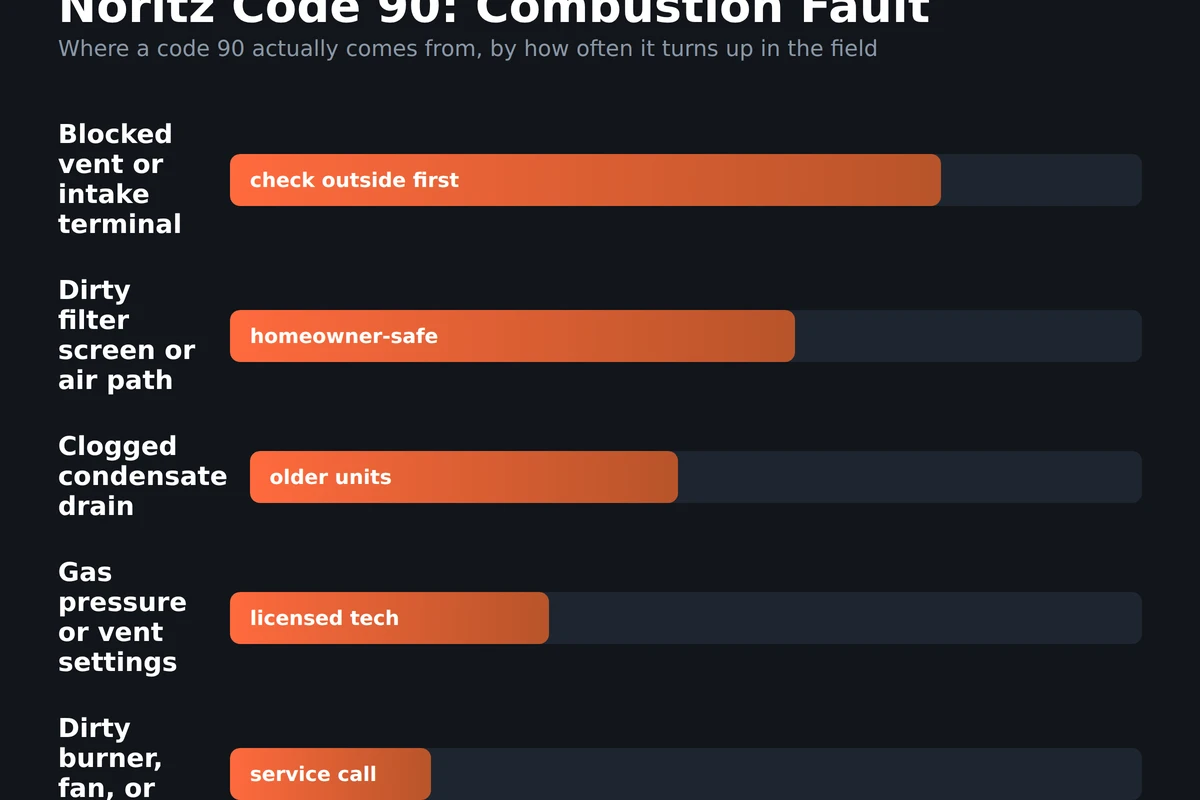
Working a code 90 in order
Go top to bottom. The early steps are safe for a homeowner and clear a large share of code 90 calls without a service visit. The later steps need a manometer, a combustion analyzer, or the inside of a live gas appliance. Do not guess at parts before the free checks are done, because most older-unit 90s are dirt, not hardware.
1. Clear the outdoor terminals
Walk to where the Noritz vents through the wall or roof and look at both the exhaust and the intake caps. Pull away leaves, snow, trash, and any bird or wasp nest, and clear spider webs and screening debris. In a cold snap, check for ice at the termination. Even a partial blockage starves combustion air or traps exhaust, and this is the number-one cause of a 90.
2. Clean the intake air filter screen
Most Noritz models have an internal air filter screen at the intake that catches lint and dust. When it packs up, the burner cannot draw enough combustion air and the mixture goes off spec. Find the screen per your model's manual, rinse or vacuum it clean, and reseat it, and check the intake elbow on top of the unit while you are in there. A house near a dryer vent or in a dusty space loads this screen faster, so it becomes a recurring maintenance item.
3. Check the condensate drain
On a condensing Noritz, combustion produces water that has to drain away. When the condensate line clogs or kinks, it backs up and the unit faults, a classic cause of a 90 on a heater that has run for a few years. Trace the drain, look for a trap full of gunk or a line pinched behind the unit, and clear it. If it keeps clogging, the slope or trap needs a technician.
4. Power cycle once and watch
With the terminals clear, the screen clean, and the condensate draining, cut power to the unit for thirty seconds to a minute, then restore it and run hot water. Watch the controller as the burner ramps. If 90 stays gone, you found it in the air path or the drain. If it returns within minutes or on the first big draw, stop. Repeatedly resetting a combustion fault is not fixing it.
5. Verify gas pressure and settings (technician)
If the air path is proven clear, the fault points at fuel or configuration. A licensed tech puts a manometer on the gas inlet and confirms the unit gets rated pressure under all firing conditions, including when other gas appliances run at once. On a newer install the tech also checks vent length and size against the model limits and confirms the dipswitches. Low pressure, an undersized line or meter, or wrong settings all throw combustion out of range.
6. Inspect the burner, fan, and flame rod (technician)
Last, a tech pulls the front and inspects the fan wheel, burner, and flame sensor rod. A fouled fan or dirty burner unbalances the air-fuel mix, and a dirty flame rod stops the board from reading a clean flame. The rod cleans with light abrasion, not sandpaper, and a fouled fan or burner clears with compressed air. On Pro Series premix units the tech can read MM31 for outlet temperature and MM49 for fan speed to see where combustion is drifting.
Which path fits your unit
Code 90 does not have one story. The right first move depends on how old the install is and what changed just before the fault showed up. These three cases cover most of what people hit.
Treat it as maintenance
A unit that ran fine and now throws 90 is almost always dirty. Start outside at the vent terminals, clean the intake filter screen, and check the condensate drain. These three cover most older-unit 90s and are all homeowner-safe. Only after they are ruled out is it worth paying for a burner and fan cleaning.
Suspect gas and settings
If the heater never ran right, dirt is not the cause. The likely culprits are inadequate gas pressure, a vent run too long or the wrong size for the model, or dipswitches set wrong for elevation and pipe. That is the installer's job to verify, so call them back rather than cleaning a clean unit.
Stop cycling, start measuring
A 90 that clears on a power cycle and returns on the next hard firing is a physical problem the reset cannot touch, and it is the pattern owners report most. Run the free checks once, and if it keeps returning, book a licensed tech for gas pressure and a burner, fan, and flame-rod inspection.
The reset, done right
The reset itself is simple, but the sequence around it matters. A power cycle is a diagnostic step, not a repair. Use it once to confirm the fault clears, then judge by how fast it comes back.
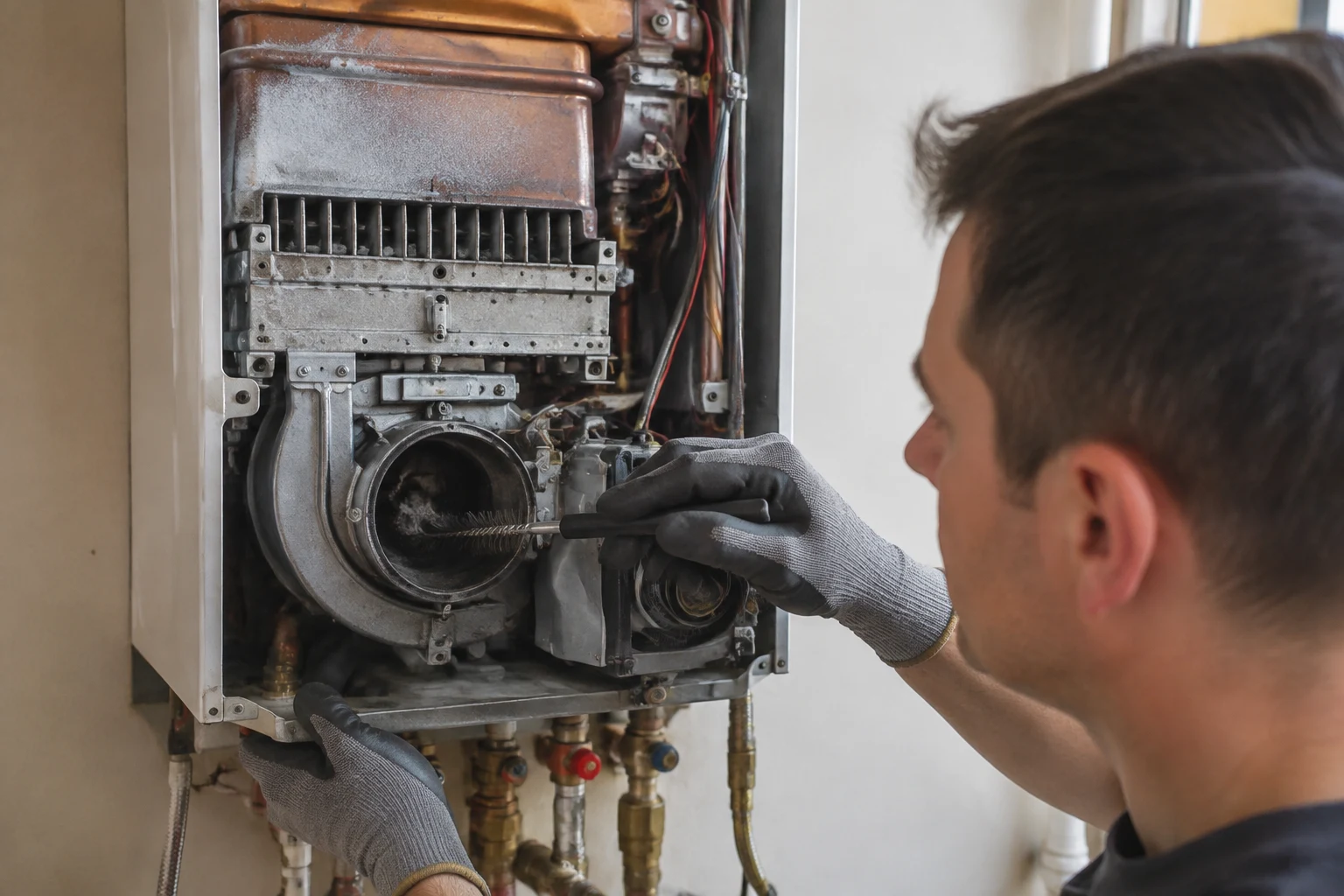
Keeping code 90 from coming back
Prevention lives in the same places the fault does: the air path, the condensate drain, and the burner. Keep the outdoor exhaust and intake terminals clear of snow, leaves, and nesting birds and wasps, and hold the vent clearances the install manual calls for. Put the intake air filter screen on your maintenance list and clean it once or twice a year, more often near a dryer vent or in a dusty space. Check the condensate drain so it never backs up. Then have the unit serviced annually so a technician can clean the burner and fan before they foul, clean the flame rod, and confirm gas pressure stays in range under load. On a new install, make the installer prove the vent size and dipswitch settings match the model and elevation, because a 90 in the first week is a setup error you should not have to pay to chase.
Frequently asked
What does error code 90 mean on a Noritz tankless water heater?
Code 90 is an airflow or combustion abnormality. The control board watches the fuel-to-air mixture while the burner fires, and when that mixture drifts out of spec, or the unit cannot reach the temperature you set, the board decides combustion has gone bad and shuts the heater down. In plain terms the unit is either struggling to move air in or out, or it is burning gas poorly. Noritz uses the same 90 meaning across its residential lines and the Pro Series premix models. Because it is a hard lockout, the heater stops making hot water until you clear it, which is different from code 10, the softer warning that lets the unit keep running. On a heater that has worked for years, a 90 is usually a maintenance problem, not a dead unit.
Can I reset Noritz code 90 myself?
Yes, the reset is a power cycle. Turn the unit off at its switch or unplug it, wait about thirty seconds to a minute, then power it back on and run hot water. If the fault was a one-time hiccup, the code clears and stays gone. What you should not do is treat the power cycle as the fix. Cycling power clears the fault memory but does nothing to the cause. Owners report that code 90 goes away right after a reset and comes back the next time the burner ramps up hard, which is the board telling you the combustion problem is still physically there. Reset once to confirm, then find the cause. Repeatedly power-cycling a gas appliance that keeps flagging bad combustion is hiding a problem, not fixing it.
Is Noritz error code 90 dangerous?
It is a combustion fault on a gas appliance, so take it seriously even though the unit shuts itself down when it trips. The code exists because incomplete combustion of natural gas or propane can produce carbon monoxide, and the board is designed to lock the unit out rather than keep burning badly. A sealed direct-vent Noritz with an intact vent pushes exhaust outdoors, and the lockout means it is not running while faulted, so a single 90 with a working vent is usually not an immediate hazard. That changes if the vent is disconnected, sagging, or leaking exhaust into the space. Keep a working carbon monoxide alarm near the unit, and if you smell exhaust indoors or see a vent pipe that has come apart, leave the unit off and call a licensed technician.
Why does Noritz code 90 keep coming back after I reset it?
Because the reset does not touch the cause. Code 90 is the board reporting that combustion is out of spec, and a power cycle only clears the stored fault. If the outdoor terminal is still half blocked, the intake filter screen is still packed, the condensate drain is still clogged, or the gas supply sags when the burner ramps up, the next hard firing produces the same 90. A code that returns within minutes, or always on the first big hot-water draw of the day, is a physical problem asking for measurement. On a unit several years old, the usual repeat offenders are a dirty air path, a clogged condensate line, or a burner and fan that have never been cleaned.
How much does it cost to fix Noritz code 90?
It swings widely because code 90 has both free causes and expensive ones. Clearing a blocked vent terminal, rinsing the intake filter screen, or flushing a clogged condensate drain costs nothing but your time. A licensed technician diagnostic visit with a manometer and combustion analyzer runs roughly $120 to $250 in most US markets. Cleaning a fouled burner and fan or a dirty flame rod usually falls in the $150 to $400 range including labor. Correcting a vent or the dipswitch settings is labor plus some pipe, commonly a few hundred dollars. The priciest path is a gas-supply problem: a larger gas line or a meter upgrade can reach four figures. Many older-unit 90s end at cleaning, the cheap end.
Will descaling clear Noritz code 90?
No. Descaling flushes mineral scale out of the water side of the heat exchanger and cures flow-related and lukewarm-water complaints. Code 90 is about air and fuel on the combustion side, not water. A vinegar or descaler flush will not clear a blocked vent, a packed air filter screen, a clogged condensate drain, or a weak gas supply, so it will not clear a 90. Annual descaling is still worth doing for the health of the unit, but for a code 90 you want the air path, the condensate drain, the burner and fan, and the gas supply. Combustion faults and water-side scale are two separate maintenance jobs on the same heater.
Does code 90 mean my Noritz needs to be replaced?
Rarely. Code 90 is almost never a dead heat exchanger or a failed board. On a unit that has run for years it is a maintenance code: a blocked air path, a clogged condensate drain, or a burner and fan that have gone years without cleaning. On a new install it is a setup code: gas pressure, vent size, or dipswitch settings. Both are fixable without replacing the unit. Replacement only comes up if a tech has cleared the air path, confirmed gas pressure and settings, cleaned the burner and flame rod, and the fault still persists, which points at a failed part like the fan motor. Even then you replace the part, not the heater.