A cold shower at 6 a.m. is a rough way to learn how your water heater works. One question decides everything that follows: is the unit electric, gas, or tankless, because the three fail in different ways and want different first moves.
Check first
No flame. Power and safety cutoffs are where most no-heat calls live.
-
Tripped 240V breakerDouble-pole switch may sit half-on. Flip fully off, then firmly on.
-
ECO reset buttonRed high-limit button trips near 150–170°F. Press to reset.
-
Failed upper elementPower on, ECO holds, still cold: test the element for continuity.
Check first
It is about the flame. Is it lighting, and does the thermocouple prove it?
-
Pilot light outLook through the sight glass for a steady blue flame; relight by the label.
-
Gas valve and supplyHandle should sit parallel to the pipe. Test another gas appliance.
-
Weak thermocoupleHealthy output is 25–30 mV. Below that, the valve shuts off.
Quick answer
No hot water almost always traces to one of three fuel systems, and each has a different first move. Electric: check the double-pole 240V breaker, then the red ECO reset button on the upper thermostat. Gas: check whether the pilot or ignitor is lighting, which points at the thermocouple or gas supply. Tankless: read the error code on the display and confirm water is flowing above the roughly 0.5 gpm the unit needs to fire. Pick your fuel type in the router below and start there.
Route yourself first: pick your fuel
Before any photo or long read, sort yourself into the right lane. Look at the unit itself. A fat cable into the top with no flue or gas line means electric. A gas line and a metal flue out the top means a gas tank. A flat wall box the size of a small suitcase with no storage tank is tankless. Tap your type below and run the first three checks in order, top to bottom, stopping the moment hot water returns.
No hot water triage router
Tap your fuel type. Each panel gives the first three checks that matter most for that system.
Electric tank — first three checks
No flame, no combustion. Power and safety cutoffs are where 90% of no-heat calls live.
- The double-pole 240V breakerAn electric tank runs on a 240V double-pole breaker, which looks like two switches joined together. A tripped breaker can look half-on or centered. Flip it fully off, then firmly back on. If it trips again right away, stop and get a pro; that usually means a grounded element leaking current.
- The red ECO reset buttonPop the upper access panel, fold back the insulation, and find the small red button on the high-limit (ECO) switch. If it clicks when pressed, it had tripped, usually after water climbed into the 150 to 170°F range. Reset it. If it keeps popping, a thermostat is stuck on and needs replacing.
- The upper element and thermostatIf power is on and the ECO holds but there is still no hot water at all, the upper element or its thermostat is the suspect; the upper pair drives the top of the tank. Testing an element for continuity takes a multimeter with the power off. Swapping one is a moderate DIY job only if you are comfortable around 240V wiring.
Gas tank — first three checks
It is about getting a flame. Is the pilot or ignitor lighting, and does the thermocouple prove it?
- Is it lighting at all: pilot or ignitorOlder tanks use a standing pilot, a small steady blue flame you can see through the sight glass. Newer ones use electronic ignition; you hear a click when they try to fire. If a standing pilot is out, relight it by the label instructions. Never try to hand-light an electronic ignition system.
- The thermocoupleIf the pilot lights but dies the moment you release the knob, the thermocouple is the classic culprit. This sensor must feel the pilot flame to keep the gas valve open, putting out about 25 to 30 mV when healthy. A loose, dirty, or bent thermocouple reads “no flame” and shuts the gas off. Check it sits in the flame and its connection at the valve is snug.
- Gas supplyConfirm the shutoff valve on the gas line is open; the handle should run parallel to the pipe. Test another gas appliance like a stove. If nothing gas-powered works, the problem is upstream at the utility or meter, not your heater.
Tankless — first three checks
On-demand units talk to you. Read the display first, then confirm flow and combustion.
- Read the error codeA tankless unit shows a fault code on its panel or remote. Write it down before you touch anything; it names the fault, from ignition failure to a flow-sensor fault to a vent problem. Cross-reference it against the manual before assuming a part is dead.
- Confirm gas and water flowThe unit needs a minimum flow, about 0.5 gpm, to fire the burner at all. A weak trickle, a clogged aerator, or a stuck flow sensor keeps it from starting. Open a hot tap fully. Then confirm gas is on and other gas appliances work.
- Clean the inlet filter and check the ventScale and sediment clog the cold-water inlet screen and drop flow below the fire threshold. Clean it before condemning a sensor. Then check the outside vent termination for ice, nests, or debris, since a blocked vent stalls combustion.
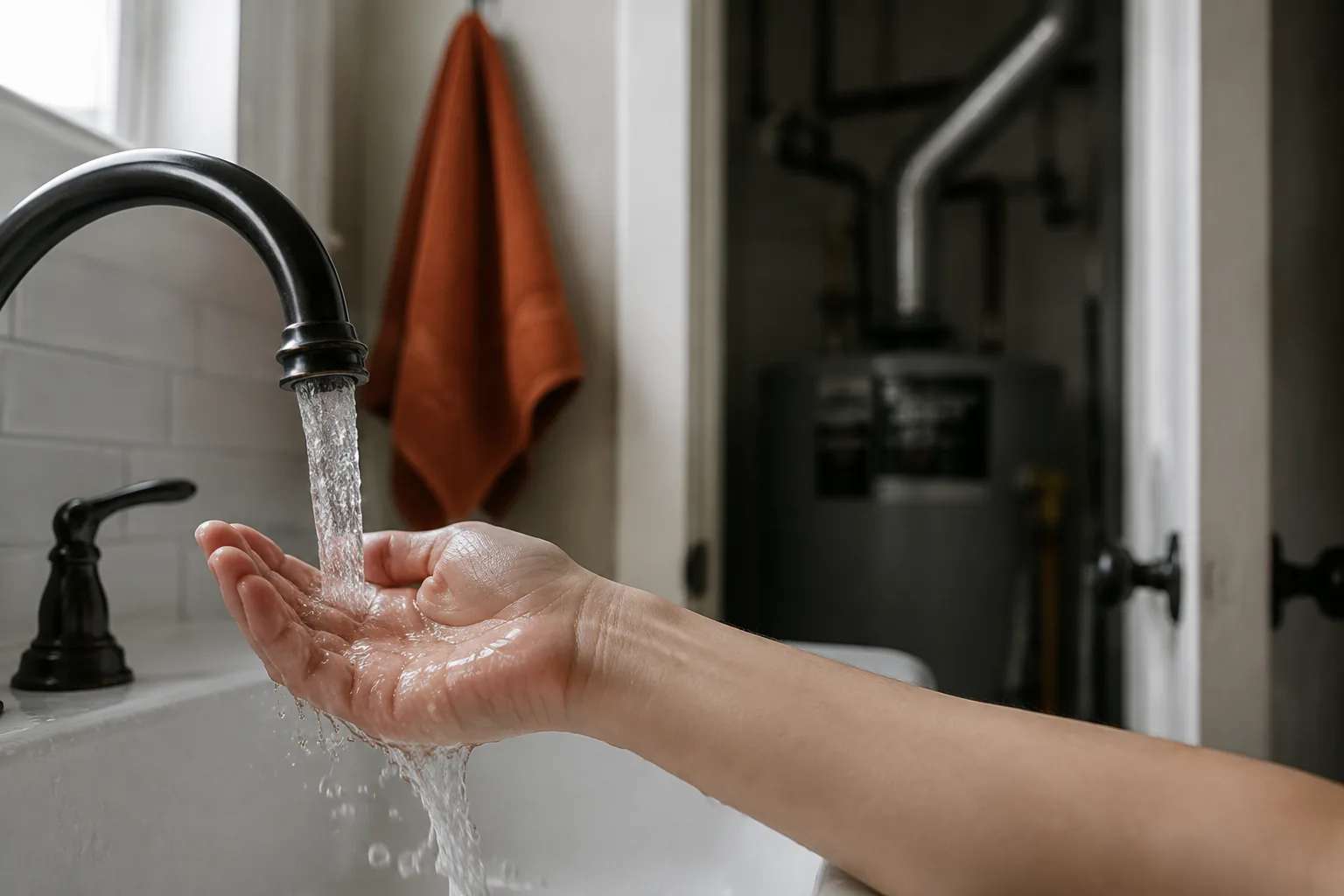
One check cuts across all three systems: is it only the hot water that is gone, or is the whole house dead? If lights and outlets are out too, that is a home electrical problem, not the heater. And if you have hot water but it runs out fast or comes lukewarm, that is a different diagnosis than none at all, usually a failed lower element on electric or a cracked dip tube on any tank. With the fuel type named and that broad check done, here is the deeper walk for each path.
Electric: power, the ECO, then the elements
An electric tank has no flame, so a no-heat problem is almost always electrical. Start at the panel. That 240V double-pole breaker is two switches ganged together, and when it trips it can sit in a deceptive middle position that looks live. Push it hard all the way off, then all the way on. If it trips again the instant you reset it, do not keep forcing it; a breaker that trips immediately is usually reacting to a heating element whose coil has shorted to its metal sheath and is dumping current into the tank. That is a replace-the-element job, not a reset job.
If the breaker holds but you still get nothing, the high-limit safety, the ECO, is next. It lives behind the upper access panel under a layer of insulation, and it carries a small red reset button. Its whole purpose is to cut all power if the water ever climbs into the 150 to 170°F range, so a tripped ECO means something let the tank overheat once. Pressing the button back in restores power. The catch: if it trips again a day later, the ECO is doing its job and the real fault is a thermostat stuck in the on position, cooking the water until the safety intervenes. Chronic ECO trips mean a thermostat or element replacement, not a lifetime of pressing the button.
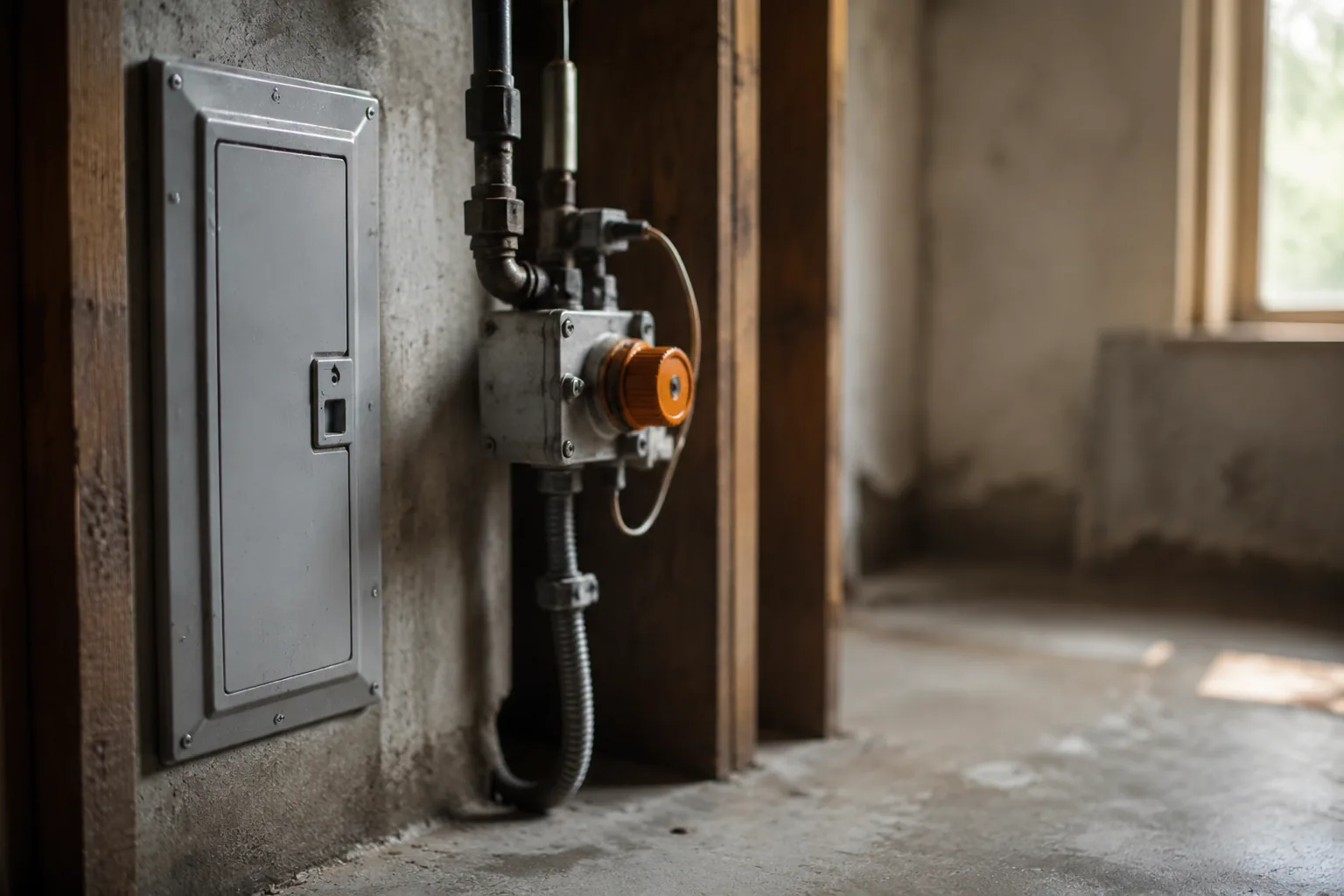
With power confirmed and the ECO holding, no hot water at all points at the upper element or its thermostat, since that top pair heats the water you draw first. A failed lower element behaves differently: you get some hot water that runs cold fast, because only the top of the tank is heating. Testing an element means killing the power, pulling the wires, and reading continuity with a multimeter. Replacing one is squarely a DIY task if 240V wiring does not scare you and you drain the tank first, but if any of that reads as unfamiliar, it is a short, cheap service call.
Gas: chasing the flame
A gas tank fails at one point: it cannot establish or prove a flame. The first fork is whether the burner is even trying to light. On an older standing-pilot unit, look through the sight glass for a small steady blue flame. If it is out, relight it following the label on the tank, exactly as printed. On a newer electronic-ignition model, you will hear a series of clicks as it attempts to spark; do not ever try to light one of these by hand.
The single most common gas failure is the classic pilot-lights-then-dies. You hold the knob, the pilot burns, you let go, and it goes out. That is the thermocouple almost every time. The thermocouple is a thin metal probe that sits in the pilot flame and generates a tiny voltage; a healthy one puts out roughly 25 to 30 millivolts, and the gas valve reads that signal as proof the pilot is lit and stays open. If the probe is bent out of the flame, crusted with rust, or loose at the valve, the reading sags below what the valve needs, so it safely snaps the gas shut. You can confirm a suspect one with a multimeter on the millivolt scale while the pilot burns. Reseating it in the flame or cleaning it clears many cases; a dead one is an inexpensive part.
Before you condemn any part, confirm the gas is actually arriving. The shutoff on the gas line should sit parallel to the pipe when open. Light a burner on your stove: if no gas appliance in the house works, the fault is upstream at the meter or the utility, and nothing you do at the heater will help. When the pilot lights and holds, the thermocouple tests fine, and gas is confirmed but the main burner still refuses, the gas control valve itself has likely failed, and that is a licensed-tech replacement.
Tankless: read the code, then confirm flow
On-demand units are the easiest to misread because they have no tank to point at. They do, however, tell you what is wrong. The display or wired remote shows a fault code, and that code is your starting point every time. Write it down before you power-cycle anything, because a reset wipes it. The code separates an ignition failure from a flow-sensor fault from a vent blockage, and each sends you down a different road.
The trap unique to tankless is flow. These units only fire the burner when water moves through them above a minimum rate, roughly 0.5 gpm. A low-flow faucet, a clogged aerator, or a sediment-choked inlet screen can drop the flow below that threshold, and the unit simply never starts, or it cycles hot-cold as it flickers around the trigger point. Open a hot tap all the way to test. Then confirm gas is on and other gas appliances run, since a gas tankless needs full supply to light.
When flow and gas both check out, the usual next step is cleaning the cold-water inlet filter, a small screen that catches sediment and slowly starves the flow sensor. Clean it before assuming the sensor died. Hard-water homes clog it faster and should flush the heat exchanger regularly to clear scale. Finally, look at the outside vent termination for ice, leaves, or an insect nest, because a blocked vent stalls combustion and posts a code of its own. If the code persists after all of that, match it to the manual and call for the specific fault it names.
When to stop and call a pro
Resetting a breaker or a red ECO button is safe homeowner territory, and so is relighting a standing pilot, reseating a thermocouple, or cleaning a tankless inlet screen. The line to hand it off is clear. A breaker that trips the instant you reset it, an ECO that keeps popping, a gas valve that will not open with everything else confirmed, or a tankless code that returns after the basic checks all point past DIY. Those involve grounded elements, gas valves, or combustion diagnostics that need instruments and, for gas, certification. Pressing a reset over and over does not fix a root cause; it just delays the call.
Frequently asked
Why do I suddenly have no hot water?
The cause depends on the fuel type. On an electric tank, the most common culprits are a tripped 240V double-pole breaker or a tripped red ECO reset button on the upper thermostat. On a gas tank, it is usually a pilot or ignitor that failed to light, often from a bad thermocouple or a closed gas valve. On a tankless unit, read the error code and confirm water is flowing above the roughly 0.5 gpm it needs to fire.
How do I know if my water heater is electric, gas, or tankless?
Look at the unit. A thick cable into the top with no gas line or flue means electric. A gas line and a metal flue venting out the top means a gas tank. A flat wall-mounted box with no storage tank is tankless. Naming the fuel type first is the fastest way to reach the right fix, because the three fail and get repaired in different ways.
What is the red button on my electric water heater?
That is the ECO, or high-limit reset. It sits on the upper thermostat behind the access panel and cuts all power if the water climbs into the 150 to 170°F range. Pressing it back in restores power. If it trips again soon after, the safety is doing its job because a thermostat is stuck on and overheating the tank, which means a thermostat or element replacement, not repeated resets.
Why does my gas water heater pilot light keep going out?
The classic reason is a failing thermocouple. This sensor sits in the pilot flame and tells the gas valve the pilot is lit. If it is bent out of the flame, coated in rust, or loose at the valve, it stops making enough signal, so the valve shuts the gas off for safety and the pilot dies. Reseating or cleaning it fixes many cases, and a replacement thermocouple is inexpensive.
Why is my tankless water heater not producing hot water?
First read the error code on the display, since it names the fault. The most common physical cause is flow: the unit needs a minimum of about 0.5 gpm moving through it to fire the burner, so a low-flow faucet, a clogged aerator, or a sediment-choked inlet screen can stop it from starting. Confirm gas is on, clean the inlet filter, and check the outside vent for blockage.
When should I call a professional instead of troubleshooting myself?
Call a pro when a breaker trips the instant you reset it, when the ECO keeps popping, when a gas valve will not open after the pilot, thermocouple, and gas supply all check out, or when a tankless code returns after the basic checks. Those point at grounded elements, gas valves, or combustion faults that need instruments and, for gas work, certification. Repeated resets do not cure a root cause.