Fill a glass at the kitchen hot tap and it tastes like you licked a penny. Fill it at the cold tap and it is clean. That split is the whole diagnosis in one sip. A metallic, iron-in-the-mouth taste that shows up only on the hot side is not the city water and not your main lines. It is coming from the one appliance the hot water passes through that the cold never touches: the water heater, its steel tank, and the sacrificial anode rod hanging inside it. This page sorts a corroding tank from an anode reaction from the pipes, and it starts with the taps because which taps taste wrong tells you where to look.
The one-sip test
Taste both taps back to back. If only the hot is metallic, it is the water heater: a spent anode rod, a magnesium rod reacting with your water (worse if you have a softener), or a tank that is starting to rust. If both hot and cold taste of metal, the heater is innocent and the problem is your supply or house plumbing. Iron reads as a rust or blood taste with a brown tint; copper corroding shows up as metallic plus blue-green staining.
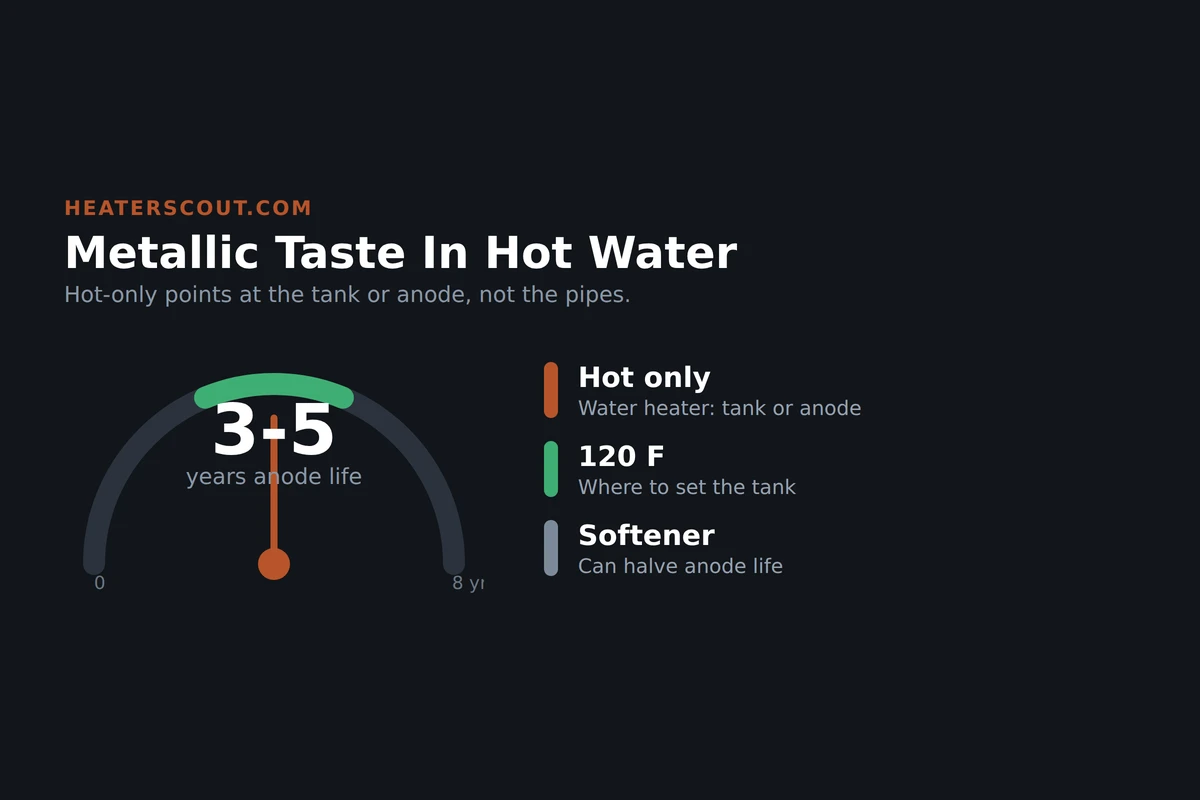
Hot-only means the water heater, and here is why
Cold water runs from the meter through your house lines straight to the tap. Hot water takes a detour: it fills the water heater, sits in a glass-lined steel tank next to a corroding anode rod, gets heated, and then leaves through a hot nipple at the top. That detour is the only difference between the two taps. So when the taste is on the hot side and only the hot side, you have logically isolated the fault to the heater without opening a single panel. The metallic flavor is almost always iron, with manganese a close second, picked up from bare corroding steel or from the rod itself as it does its job.
The tank is built as a steel shell with a thin glass (porcelain) lining fused to the inside so the water never touches bare metal. That lining always has tiny flaws, so the tank also carries a sacrificial anode rod: a magnesium or aluminum rod that is more reactive than steel, so the water corrodes the rod instead of the tank. When you taste iron on the hot side, one of two things is happening. Either the anode is doing its job a little too loudly and adding taste, or the anode is used up and now the bare steel is corroding. Both are fixable, and telling them apart is mostly a matter of pulling the rod and looking.
The anode rod, softeners, and the taste-and-smell trap
A magnesium anode is the most reactive of the common rods, which makes it a great tank protector and, in some water, a taste problem. As it corrodes it can throw off a metallic edge, and paired with sulfate-reducing bacteria it produces hydrogen sulfide, the rotten-egg smell that so often rides along with the metallic taste. Water softeners pour fuel on this fire. Softened water is more aggressive toward the rod, so it consumes the magnesium faster, and the faster it corrodes the more taste and odor it can generate. A home with a softener can burn through an anode in half the usual time.
Water heater (anode / tank)
- Metallic taste on the HOT tap only. Cold is clean.
- Often started after a softener install, or on a tank past its anode's life.
- May ride with a rotten-egg smell from a reacting magnesium rod.
- Tank age 8-12+ years with the anode never changed points at internal rust.
- Fix path: flush, inspect and replace the anode, test the water.
House plumbing (pipes / supply)
- Metallic taste on BOTH hot and cold. Heater is off the hook.
- Brown or rust tint and iron taste points at old galvanized steel pipe.
- Blue-green staining on fixtures and tubs points at copper pipe corroding.
- Bad copper corrosion can go past staining to pinhole leaks.
- Fix path: water test for iron, manganese, copper and pH, then plumber.
If magnesium is giving you taste, an aluminum-zinc rod usually calms it down and a powered anode ends it, because there is no metal left corroding to flavor the water.
Reading the stains: iron pipe versus copper pipe
If both taps taste metallic, the heater is innocent and the color of the trouble tells you which pipe. Iron, whether from a corroding tank or from old galvanized steel pipe, gives a brownish or rust-colored tint and stains sinks and laundry a yellow-brown. Galvanized pipe was the standard for decades and rusts from the inside out, so an older house with original steel supply lines is a classic source of an all-day iron taste. Copper corrosion is a different signature: the taste is still metallic but you get blue-green or turquoise staining where the water sits, on the tub floor, around the drain, on a white sink. In the worst cases corroding copper does not stop at taste and stains; it goes to pinhole leaks that show up as tiny weeping spots on the pipe.

The fix path, in order
Work it cheapest-first, because the early steps are free or nearly so and they often solve it. Do not jump to replacing the tank before you have looked at the rod.
Key takeaways
- Taste both taps back to back. Hot-only points at the water heater; both taps point at the supply or house plumbing, and the heater is innocent.
- The anode rod is a common and overlooked cause. A reactive magnesium rod can add a metallic taste and rotten-egg smell, especially in softened water.
- Softeners speed anode consumption and can halve rod life, so a taste that started after a softener install usually traces back to the rod.
- Switching from magnesium to an aluminum-zinc rod, or to a powered anode, is the standard fix for taste and odor; the powered rod suits softened homes.
- Brown tint and rust stains mean iron (galvanized pipe or a rusting tank); blue-green stains mean copper corroding, which can progress to pinhole leaks.
When the tank itself is the answer
There is a point where no rod saves you. The tank is glass-lined steel, and once that porcelain lining has broken down over enough area, bare steel is in contact with hot water across the whole shell. A fresh anode can only protect so much exposed metal; past a certain amount of failed lining, the rod is outmatched and the steel corrodes anyway. The tell is a heater that still bleeds an iron taste and shows rust in the drained water even with a new anode installed, usually on a unit in its second decade. On A.O. Smith, Rheem, and Bradford White tanks that age, the math tilts toward replacement, and a new heater with a fresh lining and rod and the setpoint at 120 F resets the clock. The taste you noticed at the kitchen sink was the early warning that let you plan the swap instead of mopping a flooded utility room.
Frequently asked
Why does only my hot water taste metallic and the cold is fine?
Because the two taps take different paths, and a taste that shows up only on the hot side has to come from something on the hot path. The one thing the hot water touches that the cold never does is the water heater: the glass-lined steel tank, the sacrificial anode rod hanging inside it, and the short hot nipple at the top. When any of those corrodes, it releases a little iron or manganese into the water, and iron in particular reads on the tongue as that blood or wet-penny metallic taste. If the cold tap is clean, you have already ruled out the city supply and the main house lines and pointed the finger squarely at the heater. Run the cold tap for thirty seconds, then run the hot, and taste them back to back to be sure the split is real.
Can a water heater anode rod make water taste or smell bad?
Yes, and it is one of the most common causes people never suspect. The anode rod is a length of metal, usually magnesium, that is designed to corrode so the steel tank does not. As it gives itself up it reacts with the water chemistry, and a magnesium rod is reactive enough that in some water it adds a metallic taste or a rotten-egg smell, especially once bacteria get involved. Softened water makes it worse because a softener speeds the rod's consumption. The usual fix is to swap the magnesium rod for an aluminum-zinc rod, which is gentler on taste and smell, or a powered (impressed-current) anode, which does not sacrifice metal at all and often clears both the taste and the odor for good.
Does a water softener cause metallic-tasting hot water?
It can, in a roundabout way. A softener does not add iron on its own, but softened water is more aggressive toward the sacrificial anode, so it eats through the rod faster. A heavily softened home can cut anode life roughly in half, from the usual three to five years down to two or less. Once the rod is spent, the bare tank starts corroding and that is when the iron taste climbs. On top of that, the more reactive magnesium rod plus soft water is the exact combination that breeds the metallic-and-eggy taste. If you installed a softener and the hot water went off not long after, check the anode first and consider switching to an aluminum-zinc or powered rod.
How do I tell if it is the tank rusting or just the pipes?
Start with which taps are affected. If only the hot side tastes metallic, the heater is the prime suspect. If both hot and cold taste of metal, the water heater is off the hook and you are looking at the supply or the house plumbing. From there the staining tells you which pipe: brownish or rust-colored water and stains mean iron, which points at old galvanized steel pipe or a corroding tank, while blue-green stains on fixtures and tubs point at copper pipe corroding. Age matters too. A tank past ten or twelve years with a metallic hot side and no anode ever changed is very likely rusting from the inside. When in doubt, get the water tested for iron, manganese, and pH so you are chasing a number, not a hunch.
Is metallic-tasting hot water safe to drink?
The taste itself, from small amounts of iron or manganese, is more of a nuisance than a poison, and iron in drinking water is treated as a secondary, aesthetic concern rather than a health hazard at typical levels. That said, do not lean on it. A metallic hot side is your heater telling you it is corroding, and left alone that ends in a rusted-through tank and a flooded floor. Manganese at higher levels does have health limits, and copper from corroding pipe can climb into ranges that matter, which is exactly why a water test is worth it. Treat the taste as a diagnostic signal: not an emergency to drink around for one night, but a problem to run down within days, not months.
Will flushing the water heater get rid of the metallic taste?
Sometimes, and it is the cheapest first move, so it is worth doing. Draining and flushing the tank clears out the loose sediment and rust flakes sitting on the bottom, and if the taste was coming from stirred-up debris rather than active corrosion, a flush can knock it right back. But a flush does not replace a spent anode rod and it does not fix a tank that is already rusting through its glass lining. So flush first, then pull and inspect the anode. If the rod is chewed down to the core wire, replace it, and if the tank itself is bleeding rust with a fresh rod in place, the flush bought you a little time but the heater is near the end.
How long should an anode rod last before it needs replacing?
Three to five years is the normal range for a magnesium or aluminum rod in average water. Soft or softened water shortens that a lot, sometimes to two years or less, because the rod corrodes faster in that chemistry. Hard water with a lot of dissolved minerals can shorten it differently through sediment. The honest answer is that you cannot know without pulling it, so the practical rule is to inspect the anode at around the three-year mark and every year or two after. If more than about six inches of the core wire is showing or the rod is passivated with hard scale, put a new one in. On A.O. Smith, Rheem, and Bradford White tanks the rod threads into the top and usually comes out with a 1-1/16 inch socket, though some Bradford White and commercial units need 1-5/16 inch.
Should I switch to an aluminum or powered anode rod?
If magnesium is giving you taste or smell trouble, yes, changing the rod is the standard fix. Aluminum-zinc rods are less reactive than magnesium, so they tend to cut the metallic taste and the rotten-egg odor while still protecting the tank, and the zinc specifically helps with the smell. A powered, or impressed-current, anode goes a step further: it uses a small plug-in current instead of sacrificing metal, so there is nothing corroding to add taste, it lasts the life of the tank, and it is the go-to when a home with a softener keeps burning through sacrificial rods. The trade-off is a higher upfront cost and needing an outlet nearby. For a softened home fighting recurring taste, the powered rod usually pays off.