A water heater that pops like popcorn, ticks in the wall, or bangs when a faucet shuts off is not one problem, it is five or six different ones that happen to share a closet. The sound is the diagnosis. A popping rumble means sediment cooking on the tank floor. A dry crackle on an electric unit means scale on the elements. A knock that follows a shutting valve is water hammer in the pipes, not the heater at all. Match the noise to the cause first, then you know whether you reach for a garden hose or a $12 arrestor.
Match the sound to the cause
Stand next to the tank and listen for a minute before you touch anything. Most water-heater noise falls into six buckets, and each one points at a specific part. Find your sound, get your likely cause, then read the diagnosis rows below to confirm it before you spend money.
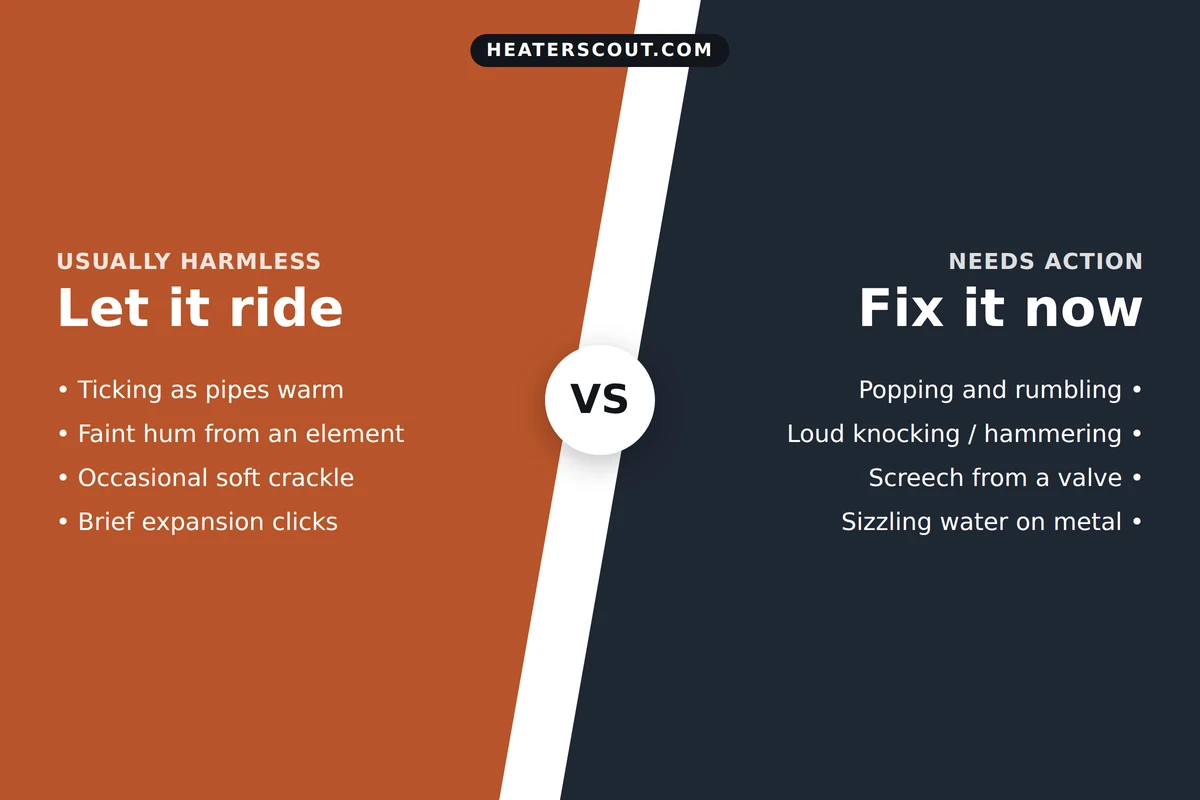
| Popping / rumbling / percolating | Sediment scale on the tank bottom trapping and boiling water. Flush the tank. |
| Crackling / hissing (electric) | Scale crusting the heating elements. Cut power, drain, clean or replace elements. |
| Sizzling like water on a hot pan | A leak dripping onto a hot element or burner. Kill power, find the leak. Not just noise. |
| Ticking / tapping | Heat-trap nipples clicking or pipes expanding in their straps. Usually harmless. |
| Humming / buzzing (electric) | A heating element vibrating against the flowing water. Tighten it or fit an anti-vibration element. |
| Knocking / banging / hammering | Water hammer in the supply pipes when a valve shuts fast. Fit an arrestor. |
| Screeching / whistling | A restricted or partly closed valve or a scaled inlet forcing water through a gap. Open or clean the valve. |
Confirm the diagnosis by symptom
The quick table gets you close, but a couple of these sounds overlap and one is a safety issue hiding as noise. Work down these rows and match not just the sound but when it happens and where it comes from. That timing tells you whether you have a cheap fix or a failing tank.
Popping or rumbling that builds during a heating cycle
Sediment. It is loudest right after a big hot-water draw refills the tank and the burner or lower element fires against a fresh load of cold water sitting on the scale bed. The sound comes from the very bottom of the tank, not the pipes, and on a gas unit is strongest a minute or two after the burner lights. This is the classic case for a flush, covered step by step below.
A dry crackle or hiss on an electric heater, no moisture
Scale on the elements. It tracks with the element cycling on, comes from the side of the tank where the access panels are, and there is no water anywhere. Cutting the breaker and pulling the element usually shows a heavy white or gray crust. Clean it or swap the element. Maintenance item, not an emergency.
A wet sizzle, like water dropped on a skillet, with any dampness
Stop and treat this as a leak, not a noise. Water reaching a live element or hot burner components sizzles, and it means the tank or a fitting is leaking onto something hot. That is a shock hazard on an electric unit and a sign of a failing tank on either type. Kill the breaker or turn the gas control to Off, then find the leak before you do anything else.
Ticking or tapping in time with hot water running
Pipes or heat-trap nipples, and it is almost always harmless. From the fittings at the top of the tank, it is the little check ball in the heat-trap nipples. Along a run of pipe through the framing, it is thermal expansion sliding the pipe in its strap. Nothing here threatens the tank.
A steady hum or buzz on an electric unit
An element vibrating. Water flowing past a heating element can set it humming like a plucked wire, especially if the element has loosened slightly in its flange. Cut power, drain enough to expose the element, and snug it, or replace it with a low-watt-density element. Annoying, not dangerous.
A bang or knock right when a faucet or appliance shuts off
Water hammer, and the heater is an innocent bystander. The bang is a pressure spike in the supply pipes when a fast-closing valve stops the water column short, and it shows up near the heater because the lines there are rigid and short. An arrestor absorbs the shock. A slower, deeper knock that follows the burner firing on a closed system points at thermal expansion and a waterlogged expansion tank instead.
Fix difficulty and cost by noise
Once you have named the sound, the question is whether you fix it in an afternoon or call someone. Most of these are genuinely DIY. The one that flips to a pro job is the wet sizzle, because a leak onto a hot or live part is not a noise problem, it is a tank or safety problem.
| Noise | The fix | Difficulty | Rough cost |
|---|---|---|---|
| Popping / rumbling | Drain and flush the tank | DIY, about 30 min | $0, just a hose |
| Crackling (electric) | Cut power, drain, clean or replace elements | DIY, 1 to 2 hr | $15 to $40 per element |
| Wet sizzle / leak on element | Find the leak, likely replace the tank | Call a pro | $150 diagnosis to full replacement |
| Ticking / tapping | Swap heat-trap nipples or cushion pipe straps | DIY, optional | $8 to $20 in parts |
| Humming (electric) | Tighten or fit an anti-vibration element | DIY, 1 hr | $20 to $45 |
| Knocking / hammering | Add a water-hammer arrestor, tighten straps | DIY, 30 min | $12 to $25 |
| Screeching / whistling | Fully open or clean the restricted valve | DIY, 15 min | $0 to $15 |
Almost every water-heater noise is either free to fix or costs less than a restaurant dinner. The sediment flush below solves the most common complaint, the popping and rumbling, so it is worth doing right the first time.
Flush the sediment out, step by step
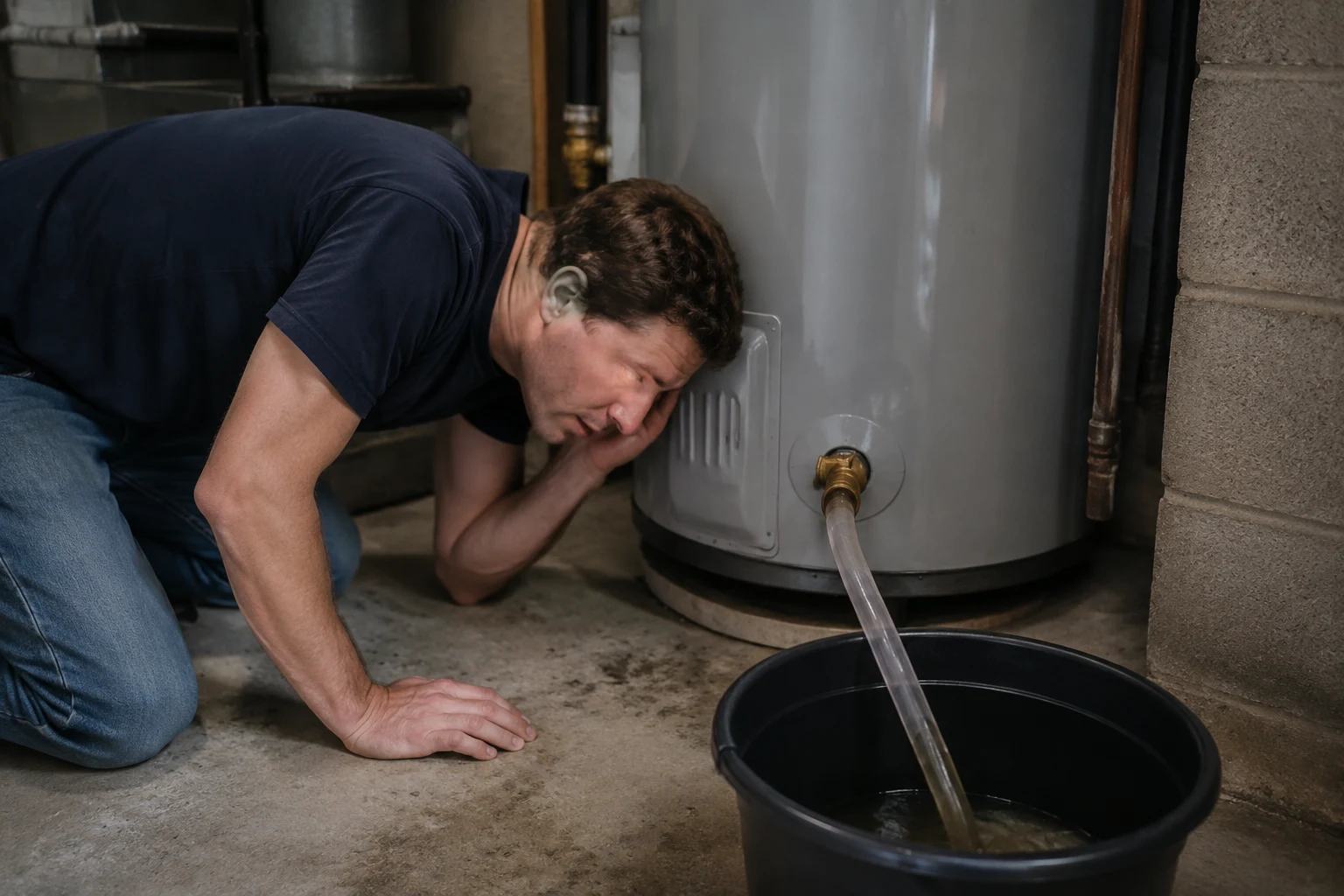
Flushing is the main repair for the popping and rumbling, and it doubles as the yearly maintenance that stops the noise from ever starting. It takes about half an hour and the only tool you truly need is a garden hose. The step people skip, breaking the vacuum, is the one that makes the tank actually drain.
If the tank is still popping after a thorough flush, the sediment has hardened into a shelf the drain valve cannot pass. On an electric unit you can cut power, drain fully, remove the lower element, and break the crust up with a shop vac and a descaling solution. On a gas unit there is no easy access to the tank floor, so a persistent rumble after flushing usually means the tank is near the end of its life.
The other noises, briefly
The non-sediment sounds each have a targeted fix. Water hammer, the sharp bang when a valve slams shut, takes a water-hammer arrestor screwed onto the supply line at the offending fixture, plus tighter pipe straps so nothing rattles against framing. A steady hum on an electric unit is an element vibrating; cut power, drain enough to expose it, and either snug it in its flange or swap in a low-watt-density element. A screech or whistle is water forced through a gap, so trace it to a valve that is only partly open or an inlet nipple crusted with scale, and open the valve fully or clean the restriction.
Ticking from the heat-trap nipples or expanding pipes is the one sound you can genuinely leave alone. The wet sizzle is the exception to all of this: it is not a noise to tune out, it is a leak to chase down before it becomes a flood or a shock.
Frequently asked
Why does my water heater make a popping or rumbling noise?
Sediment. Minerals in the water, mostly calcium and magnesium carbonate, settle out and pile up on the bottom of the tank, which on a gas unit is exactly where the burner heats the steel. Water gets trapped under that crusty layer, superheats, and forces its way up through the sediment as steam bubbles. Each bubble collapsing against the tank floor is one pop, and a thick bed of scale turns that into a steady rumble. The noise will not flood your basement, but it means the sediment is insulating the burner from the water, which wastes gas and shortens the life of the tank. The fix is to drain and flush the tank.
Is a popping water heater dangerous?
The popping sound on its own is not an emergency, but what causes it matters. On a gas heater, a heavy sediment layer overheats the steel floor of the tank and can bake the glass lining until it cracks, which starts the tank toward a leak. It also makes the burner run longer and hotter to push heat through the crust, which wastes fuel. As long as the temperature-and-pressure relief valve is working and the thermostat is set to a normal 120 degrees, a popping tank is telling you it needs a flush, not that it is about to fail. If the noise stays after a thorough flush, plan for a replacement.
What does a ticking noise from my water heater mean?
Ticking is almost always benign. The most common source is the heat-trap nipples, the fittings on the hot and cold ports at the top of the tank that have a small plastic ball or flap inside to stop heat from migrating up the pipes. That ball clicks as water moves and as the fitting expands. The second source is the pipes themselves: copper and CPVC expand when hot water runs through them and contract as they cool, and where a pipe passes through a tight hole in a joist or a strap, it ticks as it slides. Neither one hurts anything. If it bothers you, swap the heat-trap nipples for standard dielectric nipples, or add a felt or foam sleeve where the line passes through framing.
Why does my electric water heater sizzle or crackle?
Two different problems make that sound. The common one is scale: mineral deposits build up on the heating elements the same way they crust a kettle, and as the element heats, water boils in the pockets under that scale and crackles. Cutting power, draining, and cleaning or replacing the elements clears it. The one you cannot ignore is a sizzle that sounds like water hitting a hot pan, which can mean water is leaking onto a live element, both a failing tank and a shock hazard. If you see moisture around the element access panels or the base, kill the breaker and check for a leak first. A dry crackle is scale; a wet sizzle is a leak.
How do I stop the loud banging or knocking when the water heater runs?
That is usually water hammer, and it is not the heater itself. When a valve or an appliance shuts off fast, the moving column of water slams to a stop and the shock travels back through the pipes as a bang. It shows up near the water heater because the incoming cold line and the hot outlet are rigid and close to fixtures. The fix is a water-hammer arrestor, a small sealed cylinder with an air or piston cushion that screws onto the supply line at the offending fixture. Loose pipes make it worse, so add or tighten pipe straps. If the banging is a slow, deep knock that tracks with the burner firing, that is expansion, and a properly sized thermal expansion tank on a closed system solves it.
Will flushing the tank actually make the noise stop?
It depends on how far the sediment has gone. If you flush before the scale hardens into a solid shelf, a good flush pulls out the loose grit and the popping quiets down noticeably. On a tank that has gone years without a flush, the sediment often bakes into a hard crust that will not break loose through the drain valve, and flushing barely dents it. In that case you can try a descaling solution, or on an electric unit remove a lower element and break the crust up by hand, but at that point you are weighing the cost against a new tank. Flushing works well as prevention and as an early fix, and poorly as a rescue on a tank noisy for years.
How often should I flush my water heater to keep it quiet?
Once a year in most of the country, and every six months if you have hard water, meaning above about 7 grains per gallon. Hard water is the single biggest driver of sediment noise, so the harder your water, the more often you flush. A yearly flush takes about half an hour and stops the scale from ever building into the shelf that causes the loud rumble. If you have a whole-house water softener, you can stretch the interval, but do not skip it entirely, because even softened water leaves some deposits.