You installed a new water heater on Saturday, and by Sunday the hot shower smells like a shrink-wrap wrapper or a new shower curtain. The cold tap is fine. Nothing leaks, nothing looks wrong, and the unit runs. That plastic or chemical smell on the hot side of a fresh install, or right after a plumber ran new lines, is almost always off-gassing from new parts: the plastic dip tube inside the tank, the curing glass lining, and any new PEX supply tubing. Heat pulls the smell out, which is exactly why it rides the hot water and skips the cold. It is usually a break-in nuisance that clears in days to a couple of weeks, and there are a few things that make it go faster.
Could the plastic smell actually be the rotten-egg sulfur smell?
No, those are two different problems with two different fixes. A plastic or chemical smell is off-gassing from new plastic. A rotten-egg smell is hydrogen sulfide gas, usually from a reaction between the anode rod and bacteria in well or softened water, and it needs an anode and sanitizing fix, not the steps on this page. Match the smell to the right cause before you spend anything.
The verdict
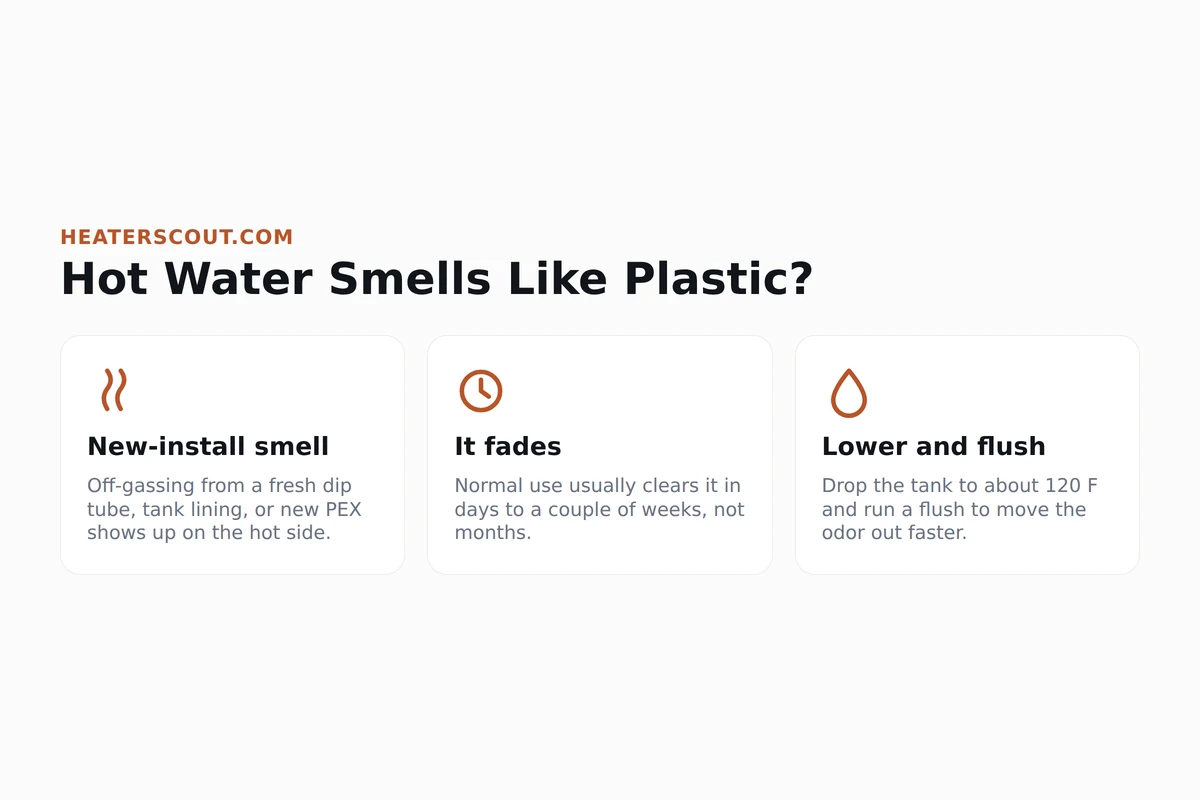
A plastic smell on the hot side of a brand-new or newly repaired heater is almost always harmless off-gassing from the fresh dip tube, curing tank lining, and new PEX. It clears in days to a couple of weeks of normal use, faster if you run the hot taps and flush once or twice.
Why the smell rides the hot water
The reason only the hot side stinks comes down to one word: heat. Cold water rushes past the new parts and barely picks anything up. Hot water sits inside the tank at 120 degrees or more, in contact with the new dip tube and the fresh glass lining, and warmth pulls volatile compounds out of plastic far faster than cold does. So the same PEX line and the same tank that give the cold tap clean water hand the hot tap a shrink-wrap smell. That split is your clue that this is normal break-in off-gassing rather than a whole-house water problem, which would usually show up on both taps.
Off-gassing
The release of volatile compounds from new plastic and coatings into the water. A new dip tube, a curing tank lining, and fresh PEX all off-gas small amounts of these compounds when they are new. The process speeds up as the water gets hotter, which is why the smell is strong on the hot side and why it fades as the material finishes releasing over days to weeks of use.
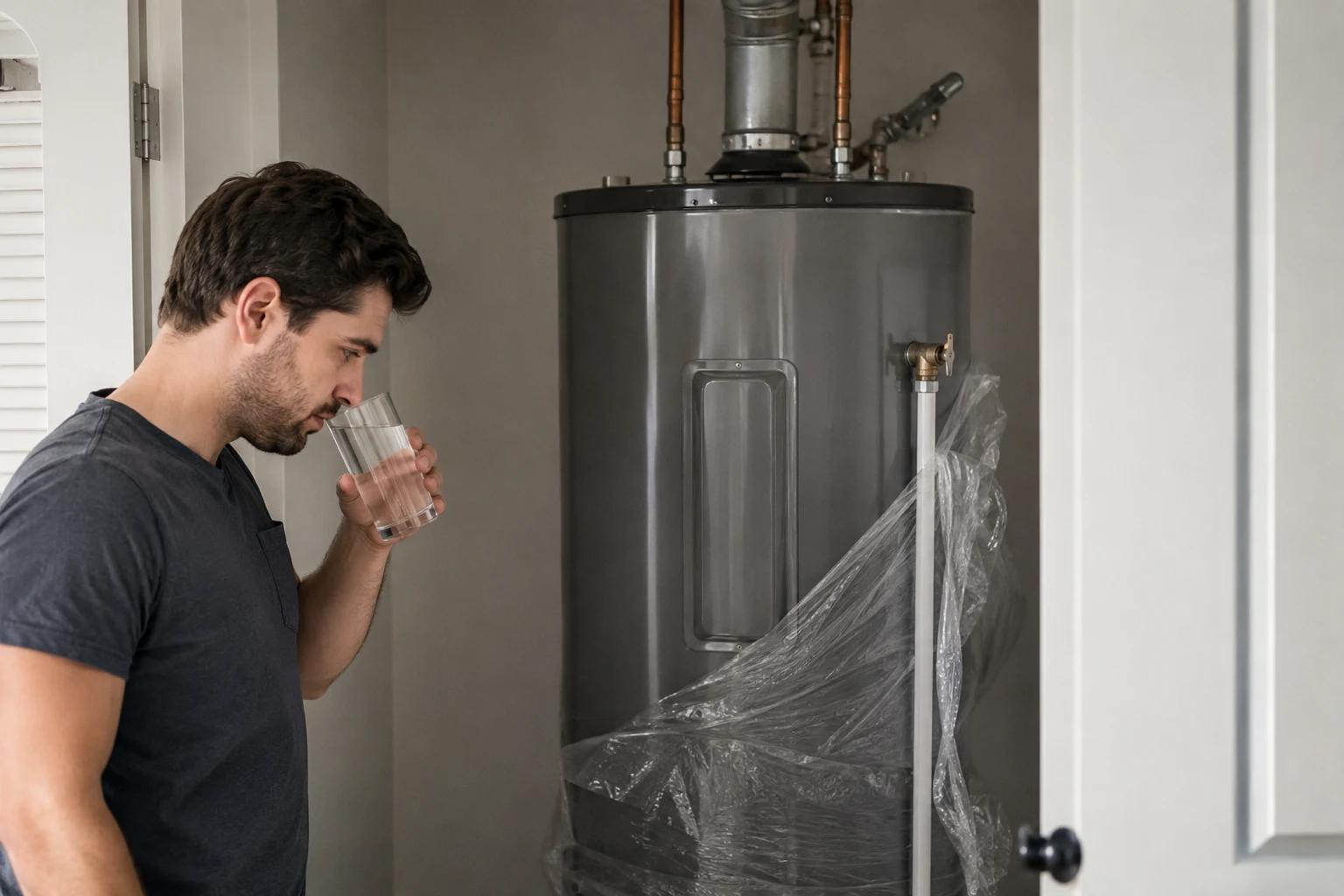
Heat is what pulls the smell out, so it shows up on the hot side first.
When a plastic smell is not just break-in
Most of the time this is harmless and temporary. But a couple of patterns tell you to stop waiting and start looking. First, timing: a smell that is still strong after several weeks of regular use is no longer the normal curing you get on a fresh install, and the dip tube is the part most likely to be at fault. Second, age: if the heater is years old and the plastic smell showed up suddenly, that is not break-in at all. On an older tank a degrading dip tube can shed and throw both odor and little plastic bits into the hot water, and a cross-connection in the plumbing can let off tasting water bleed across. Either one is worth a real inspection rather than a wait-and-see.
One safety note worth keeping in mind. The taste and odor that come off new PEX and new tank parts are generally transient and clear on their own, which is why the standard advice is to run water, flush, and wait a week or two. But if a strong chemical smell is not fading, treat that as a signal rather than a nuisance: switch to cold or bottled water for drinking and cooking, stop drinking the hot water, and have the water checked or call your installer. The benign version shrinks day by day. A version that holds steady and strong is telling you something the wait-and-see approach will not fix.
Key takeaways
- Run the hot taps for several minutes so a full tank of off-gassed water moves out and fresh water comes in.
- Flush the tank once or twice in the first week to dump the water that has been sitting hot against the new lining and dip tube.
- Temporarily lower the thermostat to about 120 F so the off-gassing is gentler while it clears.
- Give new PEX supply lines a week or two to finish settling before you judge the smell.
- If it is still strong past a few weeks, inspect or replace the dip tube, since that is the part most likely to keep the odor going.
Frequently asked
Why does my new water heater make the hot water smell like plastic?
Because almost everything in a new tank is fresh plastic and fresh coatings, and heat pulls the smell out of them. The dip tube, the long tube that carries cold water to the bottom of the tank, is new plastic. The inside of the tank is a cured glass or porcelain lining that is still settling. If your plumber ran new PEX supply lines to the heater, that tubing is off-gassing too. All three release small amounts of volatile compounds, and hot water carries those compounds far better than cold, which is why the cold tap smells fine and the hot tap smells like a shrink-wrap wrapper or a new shower curtain. It is the newness, not a defect, and it is the single most common reason a brand-new A.O. Smith, Rheem, or Bradford White heater smells that way for the first week or two.
Is a plastic smell from hot water dangerous to drink?
The transient smell off a new dip tube, a new tank lining, or fresh PEX is generally considered a nuisance rather than a hazard, and it fades on its own as the material finishes off-gassing. That said, smell is a poor way to measure safety, so use common sense. If the odor is mild and shrinking each day, running water through the system and giving it a week or two is the normal path. If the smell is strong, chemical, and not fading after a few weeks, stop drinking that water, switch to cold or bottled for drinking and cooking, and have the water tested or call the installer. A persistent strong chemical odor is no longer the benign break-in smell and deserves a real look.
How long does the plastic smell last in a new water heater?
Usually days to a couple of weeks with normal use. The more you actually run hot water, the faster it clears, because every draw pulls off-gassed water out and brings fresh water in to be heated and flushed again. A heater that sits mostly idle in a vacation house or a rarely used bathroom will hold the smell longer simply because the same water sits hot and stagnant. Running the hot taps, doing a load of laundry on hot, and flushing the tank once all speed it up. New PEX in particular can take a week or two to settle in. If you are past three or four weeks of regular use and it is still strong, that is the point where you stop waiting and start looking at the dip tube or the plumbing.
Why does only my hot water smell like plastic and the cold is fine?
Heat is the whole reason. Off-gassing, the release of volatile compounds from new plastic and coatings, speeds up sharply as temperature rises, so a dip tube or PEX line that gives off almost nothing at cold-supply temperature gives off noticeably more once the water sits in a 120-degree-plus tank. The hot water also spends time inside the tank in contact with the new lining and the new dip tube, while the cold water mostly rushes past. So the cold side tastes clean and the hot side carries the smell. That split is actually a good sign that you are dealing with normal break-in off-gassing and not a whole-house water problem, which would usually show up cold and hot alike.
My water heater is old but the hot water suddenly smells like plastic. What is that?
That is a different story from the new-install smell, and it is worth chasing. On an older heater the usual suspect is the dip tube. Older plastic dip tubes, especially certain 1990s-era ones, can degrade and shed, and a breaking-down tube can throw a plastic odor and even little bits into your hot water. The other possibility is a cross-connection somewhere in the plumbing, a mixing valve or fixture letting treated or off tasting water bleed across. Because a sudden plastic smell on an old tank is not the harmless curing you get on a new one, it is reasonable to inspect or replace the dip tube and have a plumber check for cross-connections rather than just waiting it out.
Is a plastic smell the same as the rotten-egg smell from a water heater?
No, and it matters which one you have because the fixes are unrelated. A plastic or chemical smell points at off-gassing from new plastic, the dip tube, the tank lining, or fresh PEX. A rotten-egg or sulfur smell points at hydrogen sulfide gas, which usually comes from a reaction between the tank's anode rod and bacteria in the water, most often in well water or softened water. If your hot water smells like eggs rather than like a new shower curtain, the plastic-smell steps here will not help; that is an anode and sanitizing problem. Match the smell to the right cause before you spend money.
Will flushing the tank get rid of the plastic smell faster?
It helps. Flushing dumps the batch of water that has been sitting hot against the new lining and dip tube, soaking up off-gassed compounds, and replaces it with fresh water. Doing it once or twice in the first week, together with temporarily lowering the thermostat to about 120 degrees so the off-gassing is gentler, is the fastest safe way to clear a new-install smell. It will not make brand-new PEX finish curing instantly, so give the plumbing its week or two regardless, but a flush plus a lower setpoint plus actually using the hot water is the combination that moves things along.