A heat-pump water heater breathes. Unlike a plain electric tank that just runs two elements, a hybrid pulls a steady stream of room air across an evaporator coil to harvest heat, and a washable filter sits over that intake catching dust before it reaches the coil. Check that filter monthly and clean it every one to six months, and the unit keeps its efficiency. Let it clog and the machine chokes: it runs longer, may frost the coil, and quietly drops onto the electric resistance backup that erases the whole reason you bought a heat pump. The good news is that the fix takes two minutes and no tools. This page covers how often to clean the filter, exactly how to do it, and the seasonal coil and condensate work that the filter alone does not cover.
The two-minute clean
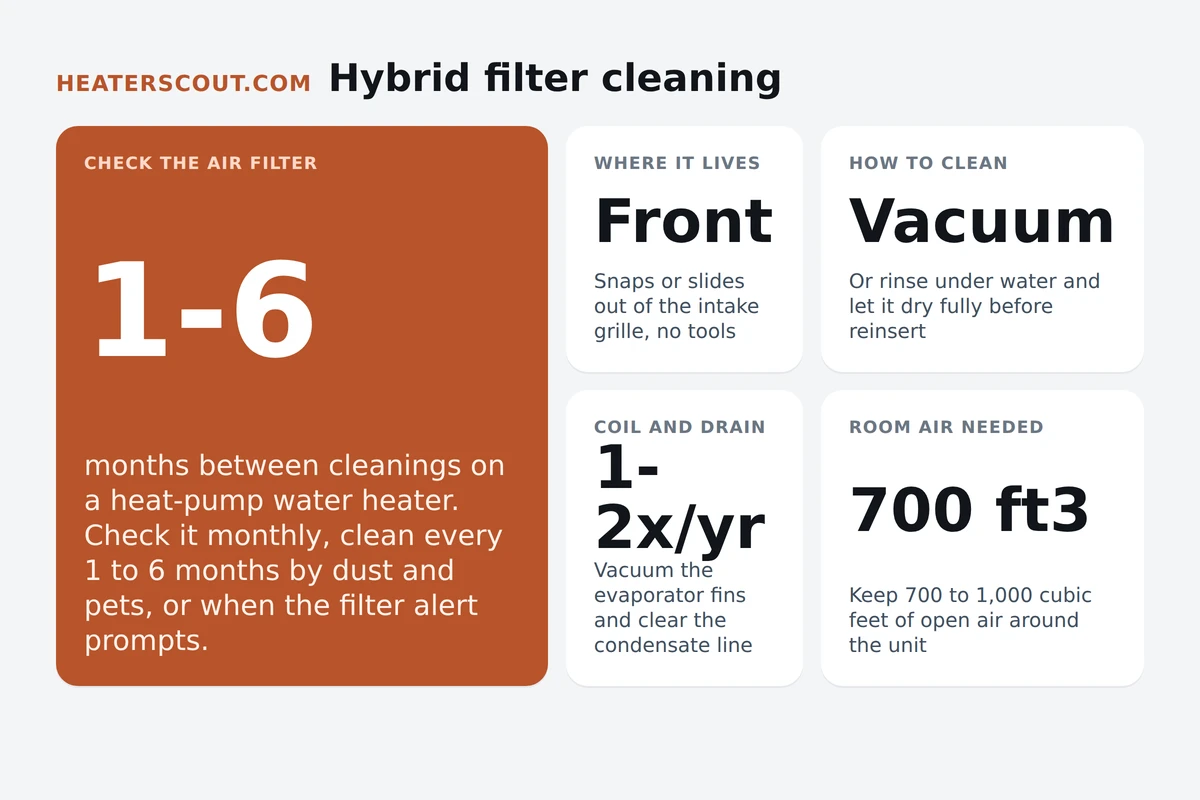
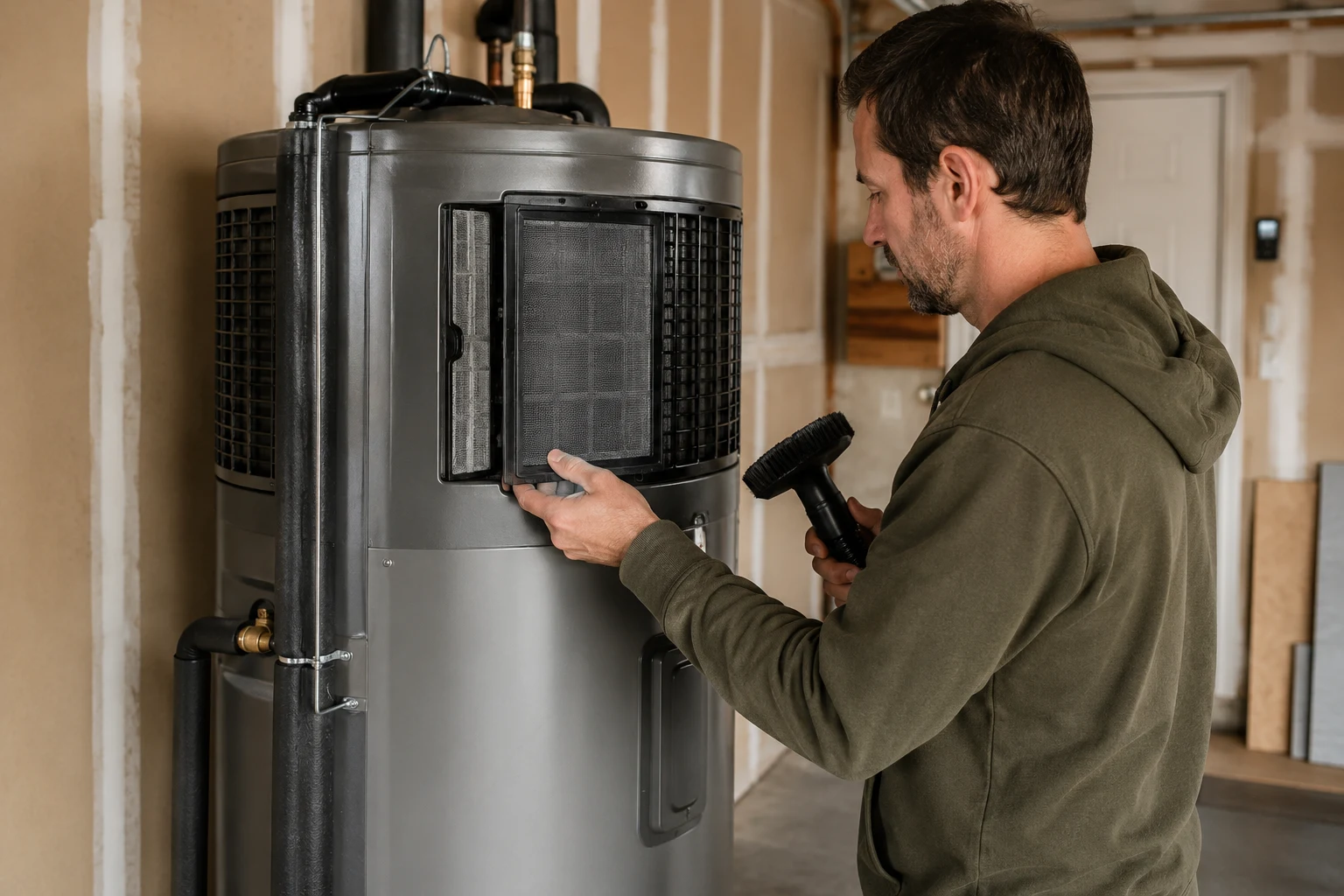
This is the whole routine, and on most Rheem, AO Smith, and Bradford White hybrids it needs no tools. The filter snaps or slides out of the front intake grille by hand. Check it monthly and clean it every one to six months, more often if the unit lives in a dusty garage, a laundry room, or a house with pets.
The verdict
Check the washable air filter on a heat-pump water heater monthly and clean it every one to six months, more often in dusty or pet homes, or when the filter alert prompts. Slide it out of the front intake grille, vacuum it or rinse and fully dry it, then reinsert. Never run the unit without the filter. Once or twice a year, power off and also vacuum the evaporator coil fins and clear the condensate drain line and pan. A clogged filter is the top reason a hybrid silently drops onto its electric backup and your bill climbs.
What the filter actually does
A heat-pump water heater is essentially an air conditioner running in reverse over your tank. A fan draws room air across an evaporator coil, the refrigerant pulls heat out of that air, and the heat goes into the water. The washable filter sits over the intake so the dust in the room air never reaches the coil fins. Keep the filter clean and airflow stays high, the coil harvests heat efficiently, and the compressor does the work cheaply. Let the filter clog and airflow collapses, and the whole chain downstream, the coil, the compressor, the efficiency, suffers for it.
What a clogged filter actually does to the unit
A dirty filter does not throw a dramatic error most of the time. It degrades things quietly, which is why people miss it. Airflow is the currency a heat pump runs on, and when the filter chokes it, four things start happening at once, and they compound.
First, efficiency drops. Less air across the coil means less heat harvested per minute of run time, so the unit gets less bang from the same electricity. Second, run time climbs. To make the same amount of hot water with a starved coil, the compressor simply runs longer, which you may hear as it cycling on more and staying on. Third, the coil can frost. A coil that cannot get enough warm room air runs colder than designed, and moisture on the fins can freeze into a layer of ice that blocks airflow even further, a runaway loop. Fourth, and this is the expensive one, the unit falls back to electric resistance backup. Sensing that the heat pump is not keeping up, the controller fires the resistance elements, the same power-hungry heaters a standard electric tank uses, and your energy savings vanish while the bill climbs.
Signs your filter is overdue
You rarely have to guess. The filter announces itself through the unit's behavior and often through the display. Run down this list before you assume anything is broken, because a clogged screen mimics a failing compressor closely enough to fool people into expensive service calls.
- Reduced hot water, or hot water that runs out sooner than it used to.
- A higher electric bill with no change in how much hot water you use.
- Ice or frost visible on the evaporator coil behind the intake.
- A clean-filter or maintenance alert flashing on the controller display.
- The compressor short-cycling, turning on and off more often than normal.
- Longer compressor run times, with the unit audibly running much of the day.
Location changes how often you clean
Where the heater lives decides your cleaning schedule more than any calendar. A hybrid needs a fair volume of air to work, roughly 700 to 1,000 cubic feet of open space around it, and the dust load in that space sets how fast the filter packs. Match your spot to one of these.
Dusty garage or workshop
Fine grit, sawdust, and car dust hang in garage air and pack the filter fast. Check every two weeks and clean whenever the mesh grays. This is the spot where units most often slip onto backup heat from a neglected filter.
Laundry room or pet home
Dryer lint and pet hair mat across the intake quickly. Plan on a clean every two to three weeks, and keep the area around the unit swept so you are not feeding the filter more than it can hold.
Clean interior utility closet
A tidy basement or utility room with normal household dust can stretch toward the six-month end of the range. Still glance at it monthly, and keep the clearances open so it gets its 700 to 1,000 cubic feet of air.
Beyond the filter: coil and condensate, once or twice a year
The filter is the recurring job. Twice a year, the unit needs a little more, and both tasks start the same way: kill the power at the breaker first. Behind the filter is the finned evaporator coil, and even a good filter lets a thin film of dust settle on the fins over months. Gently vacuum the coil with a brush attachment, or use a soft brush moving along the direction of the fins so you do not bend them. Bent or dust-caked fins choke airflow the same way a dirty filter does, and the coil is harder to reach, so keeping the filter honest is what keeps this job small.
The second seasonal task is condensate. A heat-pump water heater makes condensate exactly like an air conditioner, pulling moisture out of the room air and sending it to a drain line, sometimes through a pan under the unit. Check that the drain line runs clear, flush it if it drains slowly, and make sure the pan is not holding standing water. A clogged condensate line can back up, trip the unit, or spill water onto the floor, and it is an easy thing to forget because it works silently right up until it does not. Confirm the line has a downhill path to its drain and that nothing has kinked it.
Do not run it filterless
Never run a heat-pump water heater with the filter removed. Unfiltered room air packs dust straight onto the evaporator coil, where it is far harder to clean than a washable screen and where it does the real damage to efficiency. If you are drying a wet filter, either wait for it to dry before restoring power or keep a spare filter to drop in.
Frequently asked
How often should I clean the air filter on a heat pump water heater?
Check it monthly and clean it every one to six months, depending on your dust and pets, or whenever the unit's filter alert prompts you. That range is what manufacturers actually print; there is no single 30-day rule across brands. Two things push you toward the short end. The first is a dusty room: a garage, a workshop, a laundry room next to a lint-heavy dryer, or anywhere fine grit hangs in the air will pack the filter faster. The second is pets, because pet hair and dander mat across the intake screen quickly. In either case, check the filter every two weeks and clean it when you can see the mesh graying over. A clean, reasonably tidy utility room can stretch toward the six-month end, but a quick monthly glance costs nothing. Many hybrids also flash a filter reminder on the display, which is a prompt to look, not a hard deadline by itself.
What happens if I never clean the filter?
The unit slowly stops behaving like a heat pump. The compressor works by pulling a large volume of room air across an evaporator coil to harvest heat, and a clogged filter starves that airflow. Starved of air, the coil runs colder than it should and can frost over, the compressor runs far longer for the same hot water, and the efficiency that made you buy a hybrid quietly evaporates. Worse, most units respond to poor heat-pump performance by falling back to their electric resistance backup, the same energy-hungry elements a plain electric tank uses. At that point you are paying resistance-heat power bills while owning a heat pump. You will usually see it as reduced hot water, a higher electric bill, ice on the coil, or the compressor short-cycling on and off. None of that is a failure of the machine; it is a dirty screen doing exactly what a dirty screen does.
Can I wash the filter with water or should I vacuum it?
Either works, and the filter is washable and reusable by design. For a light monthly cleaning, running a vacuum hose across both faces of the screen pulls the dust off in under a minute and there is nothing to dry, so that is the easiest routine. When the filter is greasy or heavily matted, rinse it under running water, and use lukewarm water with a little mild soap if it is stubborn. The one rule that matters is drying: let the filter dry completely before it goes back in, because a damp filter reintroduces moisture right at the cold intake and collects dust faster. Do not run the water heater with the filter out while it dries. If you want zero downtime, keep a second filter on hand and swap them. Replace the filter only if it is torn or the frame is cracked, since normal cleaning does not wear it out.
Where is the air filter on a heat pump water heater?
It sits over the air intake, which on most hybrids is a grille on the front or the upper front of the cabinet, right where room air is drawn in toward the evaporator. On Rheem, AO Smith, and Bradford White hybrids the filter usually snaps or slides straight out of that intake grille by hand, with no tools and no panel to unscrew. Look for a removable frame or a tab at the grille; pull it toward you and the filter comes with it. Some models put the filter behind a hinged louver door. If you cannot find it, the owner's manual diagram labels the intake and the filter location for your exact model, and the controller's maintenance menu often names it too. Once you have pulled it the first time, reseating it is obvious, and it only goes in one way.
How do I reset the filter cleaning reminder?
On most hybrids the reminder is a menu item on the controller, not a physical button. After you clean and reinsert the filter, go into the settings or maintenance menu on the display and select the filter or clean-filter reset option, then confirm. That clears the alert and restarts the countdown to the next reminder. The exact wording varies by brand, but it is almost always one confirm step. If the reminder keeps coming back sooner than expected, the filter is genuinely clogging faster than the timer assumes, which points at a dusty location rather than a fault. The reminder is a timer, so resetting it without actually cleaning the filter just hides the prompt while airflow keeps dropping.
What else needs cleaning besides the filter?
Two things, once or twice a year, with the power off at the breaker. First, the evaporator coil. Behind the filter is a finned coil, and even with a filter in place a thin film of dust builds on the fins over months. Gently vacuum it with a brush attachment or use a soft brush along the direction of the fins so you do not bend them. Bent or dust-caked fins choke airflow the same way a dirty filter does. Second, the condensate system. A heat pump water heater makes condensate exactly like an air conditioner, and that water runs to a drain line and sometimes a pan. Check that the drain line is clear and draining, flush it if it is sluggish, and make sure the pan is not holding standing water. A clogged condensate line can back up and trip the unit or spill water on the floor. The filter is the recurring check; the coil and condensate are seasonal.
Does a dirty filter raise my electric bill?
Yes, and it is usually the first symptom people notice before they connect it to the filter. When airflow drops, the heat pump loses efficiency and the unit leans on its electric resistance backup to keep up with hot-water demand. Resistance heating uses roughly three times the electricity of the heat pump for the same amount of hot water, so a hybrid stuck in backup mode costs about what a standard electric tank costs to run, erasing the savings you paid extra for. A jump in the electric bill with no change in how much hot water you use, especially alongside longer compressor run times or a filter reminder on the display, is a classic sign the filter is overdue. Cleaning it is the cheapest efficiency fix you will ever do on the appliance.