Cut open a water heater that spent eight years on hard water and you find a crust on the bottom you can chip with a screwdriver. That crust is calcium and magnesium baked out of the water, and it is the reason a tank rated for a decade sometimes quits in six.
Quick answer
Hard water carries dissolved calcium and magnesium. Heat those minerals and they drop out as scale, coating the bottom of a gas tank and the elements of an electric one. Scale insulates against the heat it is supposed to pass through, so the heater burns more energy for the same hot water, elements overheat and fail early, and the tank can wear out years ahead of schedule. Find your hardness number below and the lookup tells you how fast scale builds and how often to flush.
First, know your number
Everything about hard water and heaters keys off one figure: grains per gallon, or gpg. One grain equals 17.1 parts per million of dissolved hardness minerals. Water utilities usually publish this in an annual report, a test strip from the hardware store reads it in minutes, and a lab test nails it exactly. Pick your band or type your gpg into the lookup and it returns the three things you actually want to know: how fast scale piles up, how often to flush, and what it does to the life of your elements and tank.
Water hardness lookup
Tap your hardness band, or type your grains-per-gallon and hit Look up. The panel shows scale rate, flush interval, and life impact for that water.
What scale actually does
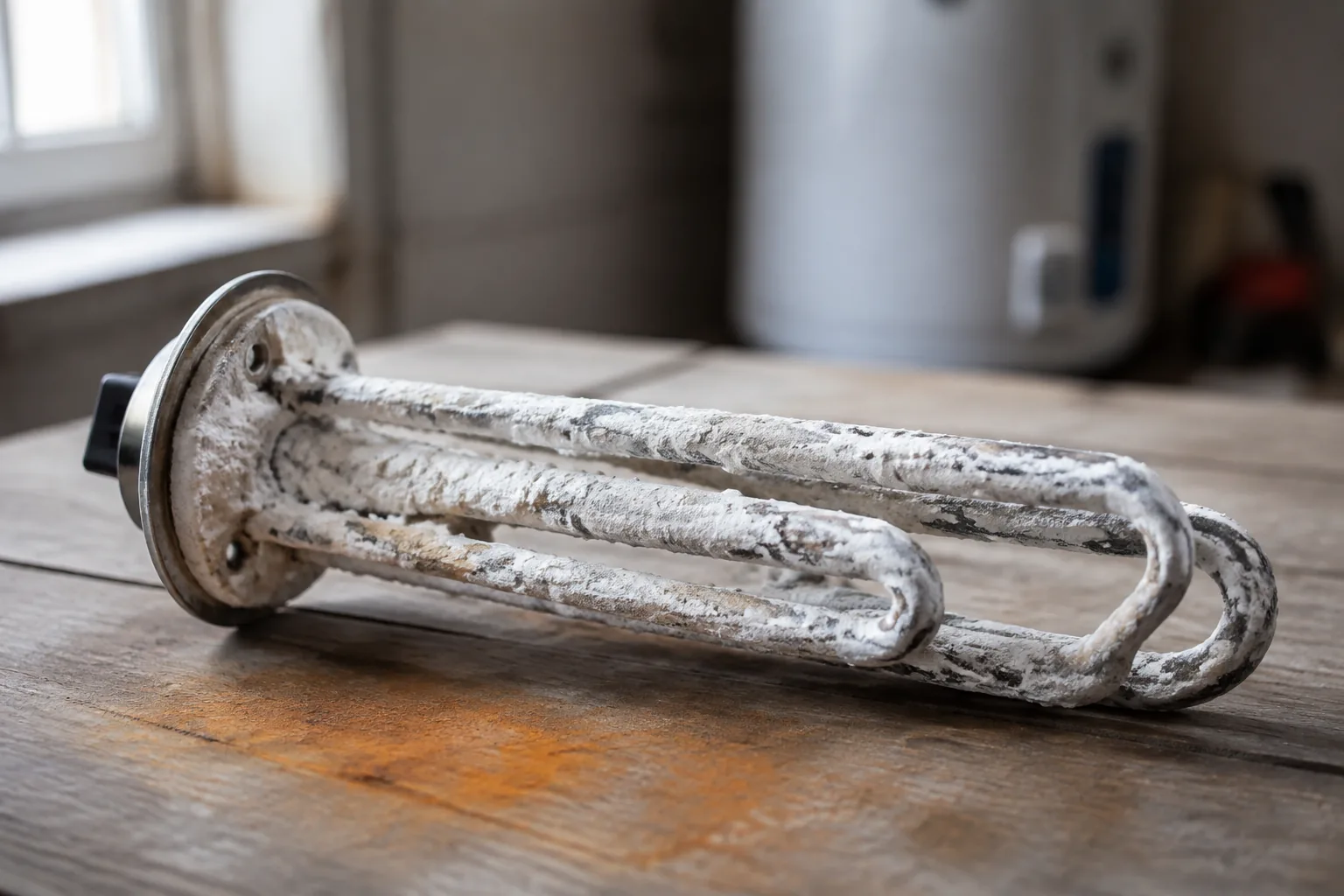
Cold water holds calcium and magnesium in solution just fine. Heat it and the chemistry flips: those minerals fall out and stick to the hottest surfaces they can find. In a gas tank that is the steel floor sitting right over the burner. In an electric tank it is the heating elements themselves, which run far hotter than the surrounding water. The mineral layer that forms is not decorative. It is a wall between the heat source and the water.
Here is the cruel part. Scale is a good insulator, and it insulates in exactly the wrong direction. Heat that should move straight into the water has to crawl through a mineral crust first. The burner or element runs longer and hotter to deliver the same shower. Industry testing on gas storage tanks found that every five grains of hardness knocks roughly four percent off efficiency for a typical household. On an electric element, a quarter inch of scale can cut heat transfer by close to half. You pay for that twice: once on the energy bill, and again when the overworked part dies early.
You can often hear scale before you see it. A tank that pops, rumbles, or crackles as it heats is boiling small pockets of water trapped under the sediment layer. The noise is steam fighting its way out from beneath the crust. It is harmless on its own, but it is the tank telling you the floor is caked.
The damage: elements and tanks
On an electric heater, scale is an element killer. A clean element sheds its heat straight into the water and stays within its design temperature. Wrap it in mineral scale and the heat has nowhere to go, so the metal sheath overheats, the coil inside cooks, and the element burns out. People in hard-water areas often replace elements again and again without understanding why. The water is the reason. A softener or regular descaling breaks the cycle; a new element on the same hard water just starts the clock over.
Gas tanks fail differently but just as surely. Sediment blankets the bottom of the tank right where the burner heat comes up. The steel gets hotter than it should because the water above cannot pull the heat away fast enough, and that overheating stresses the glass lining, encourages hot spots, and speeds corrosion. Combine that with the sacrificial anode rod, which hard water tends to eat faster, and the tank runs out of protection sooner.
The lifespan numbers are blunt. A storage tank is usually rated for 8 to 12 years. The Water Quality Association found that in hard-water homes, heaters can fail in as little as 6 years, less than half the expected run. Scale can trim useful tank life by as much as half. That is not a rounding error. That is a whole second heater you buy a decade early.
Three real defenses
You cannot un-harden the water coming out of the ground, but you have three practical moves, and they stack.
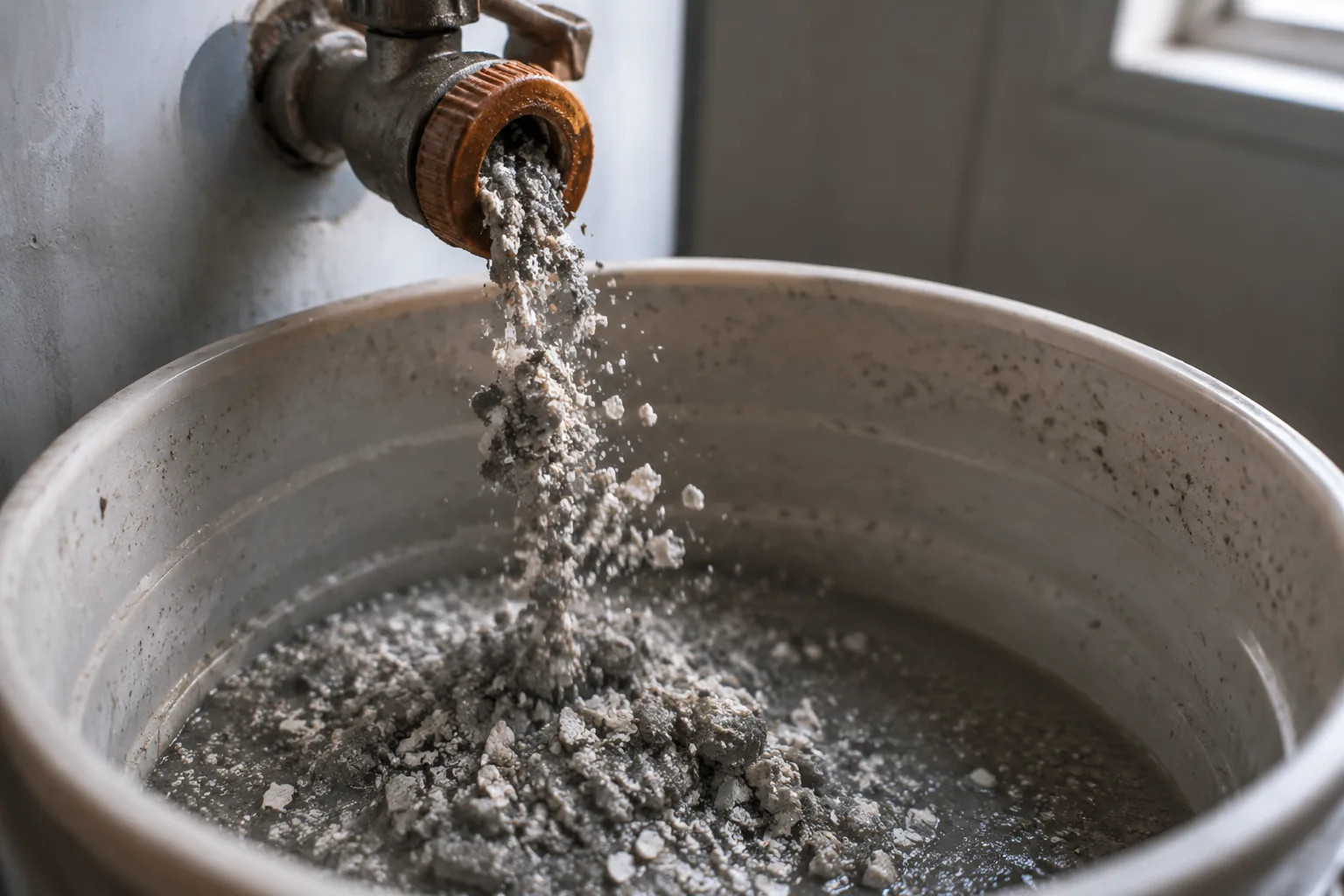
Flush the tank on a schedule. Draining a few gallons through the bottom drain valve carries loose sediment out before it bakes into a solid layer. Soft-water homes get away with once a year. Hard-water homes should double that to every six months, and very hard water calls for every three or four. The lookup above ties the interval to your actual gpg. Flushing is the cheapest defense and the one most people skip until the tank is already rumbling. Timing matters: loose sediment rinses out, but a crust that has set for years will not, which is why starting early beats starting after the noise begins.
Install a water softener. A softener swaps the calcium and magnesium for sodium through ion exchange, so the water reaching the heater no longer drops scale when it warms. This is the only fix that treats the cause instead of the symptom, and in very hard water it usually pays for itself in longer heater life and lower bills. It protects the rest of the house too, from faucets to the dishwasher. The tradeoff is upfront cost, salt refills, and the space for the unit.
Upgrade the anode rod, and consider a powered one. Every tank ships with a sacrificial anode that corrodes so the steel tank does not. Hard water chews through standard magnesium and aluminum rods faster, and once the rod is gone the tank is on its own. Checking the anode every couple of years and swapping it when it is spent is one of the highest-return maintenance moves there is. A powered anode goes further: it uses a small current instead of a dissolving metal rod, so it never wears out and does not care how hard the water is. On aggressive water it can outlast several standard rods.
Tankless and hard water
On-demand heaters deserve their own warning, because scale hits them harder and faster. A tankless unit fires a burner against a narrow heat exchanger with tight water passages, and it runs those surfaces hot every time you open a tap. Scale builds inside the exchanger, chokes flow, drops efficiency, and throws error codes long before a tank would show symptoms. Most tankless makers require regular descaling with a pump and a vinegar or descaler solution, and in hard-water areas they often want it yearly or even more. Skip it and you risk voiding the warranty along with wrecking the exchanger. If your water is hard and you run tankless, a softener moves from nice-to-have to close to mandatory.
Putting it together
Look up your gpg, then match the effort to the number. Soft water: a yearly flush and a normal anode check will carry the tank to full life. Moderate: same routine, watched a little closer. Hard, above 7 gpg: flush every six months, keep an eye on the anode, and price out a softener. Very hard, past 10.5 gpg: a softener is the smart buy, quarterly flushes are the floor, and a powered anode earns its keep. The mineral crust never stops forming while the water stays hard. What you control is how fast it wins.
Frequently asked
What counts as hard water for a water heater?
Water hardness is measured in grains per gallon (gpg), where one grain equals about 17.1 ppm. Under 3.5 gpg is soft, 3.5 to 7 gpg is moderate, 7 to 10.5 gpg is hard, and anything over 10.5 gpg is very hard. Water heaters start showing real scale trouble above 7 gpg, and the damage accelerates from there. You can find your number in your utility's annual report or with a hardware-store test strip.
How does hard water damage a water heater?
When hard water heats up, the calcium and magnesium in it fall out of solution and stick to hot surfaces as scale. In an electric tank that scale coats the elements; in a gas tank it blankets the floor over the burner. The crust insulates against heat, so the heater works harder and burns more energy, elements overheat and burn out early, and the tank corrodes faster. It can cut a tank's useful life roughly in half.
How much efficiency does scale cost me?
Quite a bit. On gas storage tanks, industry testing found that every five grains of hardness costs about four percent in efficiency for a typical household. On an electric element, a quarter inch of scale can cut heat transfer by close to half, since the element has to push its heat through a mineral wall before it reaches the water. That shows up on your energy bill and shortens the life of the parts doing the work.
How often should I flush a water heater in a hard-water area?
Soft-water homes can flush once a year. Hard water (7 to 10.5 gpg) calls for every six months, and very hard water (over 10.5 gpg) is better served every three to four months. Flushing drains loose sediment out the bottom drain valve before it hardens into a crust you cannot rinse away. The catch is that flushing only removes loose material, so starting the habit early beats waiting until the tank already rumbles.
Will a water softener make my heater last longer?
Yes, and it is the only fix that treats the cause. A softener swaps out the calcium and magnesium before the water reaches the heater, so no scale forms when it warms. In hard-water homes that means fewer element failures, better efficiency, and a tank that reaches its rated life instead of failing years early. In very hard water the longer heater life and lower bills usually cover the cost, and it protects fixtures and appliances throughout the house too.
Does a powered anode rod help with hard water?
It can. A standard sacrificial anode corrodes to protect the steel tank, and hard water eats those rods faster, leaving the tank unprotected sooner. A powered anode uses a small electric current instead of a dissolving metal rod, so it never wears out and works regardless of water hardness. On aggressive water it can outlast several standard rods and keep corrosion protection running for the full life of the tank.