You press the gas control knob in, click the red igniter again and again, and the pilot just will not catch. That is a supply-or-spark problem, and it is a different animal from a pilot that lights and then dies a few seconds later.
What usually keeps the pilot from lighting or staying lit
Quick answer
Run five checks in order and stop the moment the pilot holds. 1. Confirm gas is on by proving another gas appliance fires. 2. Purge air by holding the knob down and clicking for 30 to 60 seconds. 3. Check the spark at the electrode: clicks with no spark means a dirty or cracked electrode or a loose ground. 4. Clean the orifice if you get a good spark but no flame, because dust or a spider web starves the pilot. 5. Check for an FVIR lockout, a safety switch that sparks but refuses to light on purpose. The accordion below walks each rung with its test and its pass-or-fail branch.
Work the ladder in order
A pilot that never lights fails for one of two reasons: no gas is reaching it, or no spark is being thrown to light it. The trick is to test the cheap, common causes before the expensive, rare ones. Open each step below, run the test, then follow the pass or fail branch to the next move. Do not skip ahead. People who jump straight to cleaning the orifice waste an hour on a spotless part while the gas valve sits shut.
Test: Find the manual shutoff on the gas line feeding the heater and confirm the handle runs parallel to the pipe, which is the open position; a handle turned crosswise is shut. Then walk to another gas appliance, a stove burner or a furnace, and prove it fires. On propane, read the tank gauge and check the service valve at the tank.
Test: On a fresh tank, a refilled propane bottle, or a line a plumber just serviced, air is trapped in the small pilot tube and has to be pushed out before gas arrives. Hold the pilot knob fully pressed in and keep clicking the igniter for a steady 30 to 60 seconds. A stubborn line can want a full 90 seconds. Do not give up after five clicks.
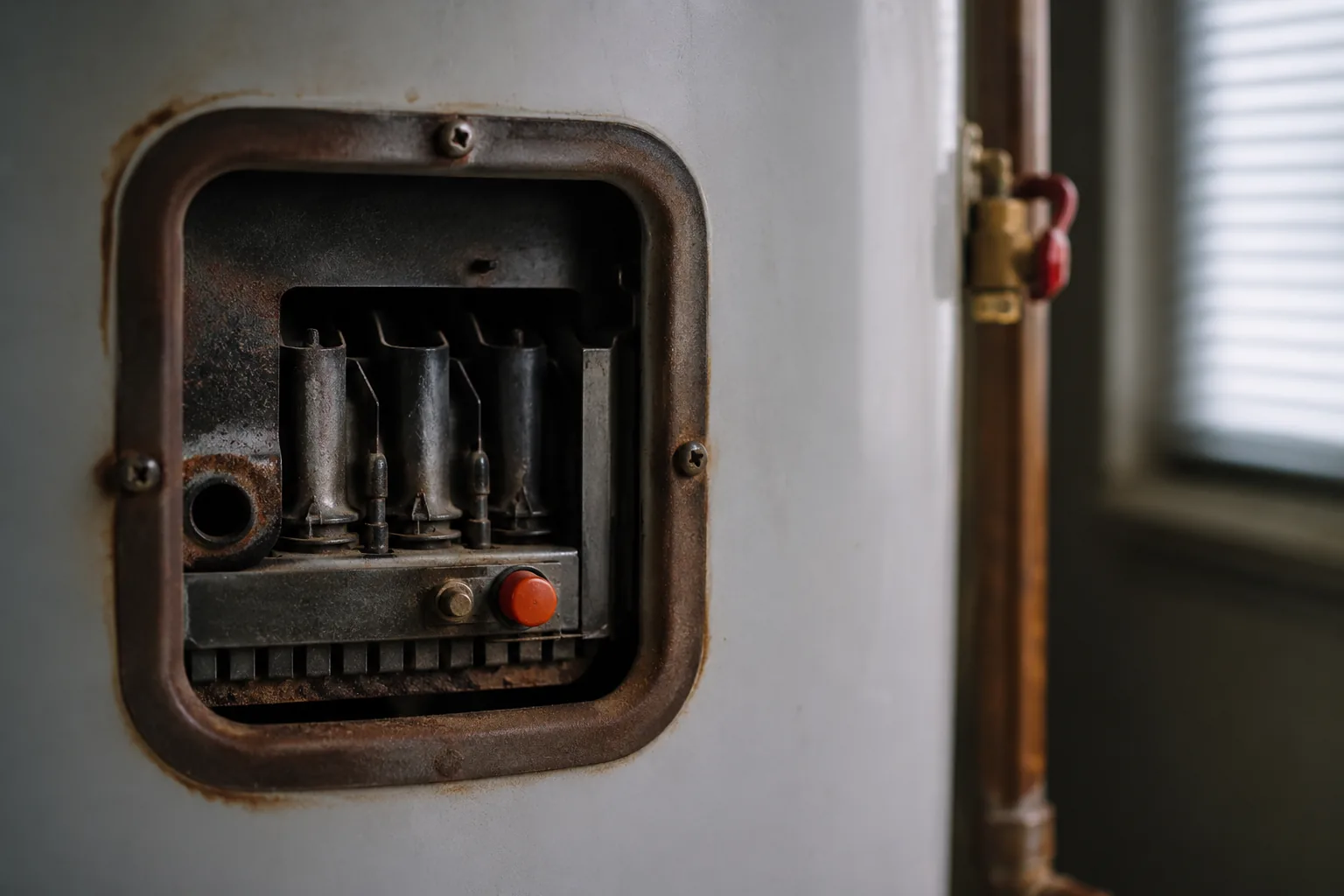
Test: Watch the electrode tip through the sight glass in a dim room and press the igniter. A healthy piezo throws a crisp blue-white spark that jumps about an eighth of an inch to a grounded surface. Look for a cracked white ceramic insulator, soot bridging the tip, a wrong gap, or a loose ground wire where it bolts to the burner.
Test: The pilot burns gas through a hole smaller than a pin. Household dust, a flake of rust, or a spider web spun over the summer partially blocks it, which lets you spark all day with no flame. This is a classic outcome after a tank sat with an empty propane bottle. Shut the gas, remove the pilot supply tube, and gently clear the opening with compressed air or a soft brush.
Test: Most tanks built in the last two decades carry a flammable-vapor sensor, a one-shot thermal switch at the burner base that permanently disables ignition if it senses a flash from gasoline, solvent, or paint-thinner fumes stored too close. A clogged air-inlet screen at the base can also starve the burner and trip it. Look for a blinking status light on the gas valve and read the manual code.
Before anything: is gas even reaching the heater?
No spark on earth lights a pilot with no gas behind it, which is why step 1 comes first. Confirm supply before you chase electrodes and orifices. Find the manual shutoff on the gas line feeding the heater and make sure the handle runs parallel to the pipe, the open position; a handle turned crosswise is shut. Then walk to another gas appliance in the house and prove it fires. If nothing gas-powered in the home works, the fault is upstream at the meter or the utility, and there is a real chance of a gas outage or an empty propane tank, not a broken heater.
Propane deserves its own line. A tank that reads empty, or a service valve someone bumped shut, gives you exactly the symptom of a heater that clicks and sparks but never lights. Check the tank gauge and the valve at the tank before you condemn a single part on the heater. On natural gas, if a plumber or the utility recently worked on the line, or the heater is brand new, air trapped in the pilot tube is the likely villain, and that gets its own step. One more supply note: if the regulator outside was disturbed during a propane refill, pressure can drop marginal, and the sensitive pilot will not catch even while stove burners still light.
Purging air: the step people quit too early
Air in the line is under-appreciated. Whenever the gas was interrupted, a new heater install, a propane bottle swap, a utility repair, the small pilot tube fills with air that has to be pushed out before gas arrives. The fix is patience: hold the pilot knob fully depressed and keep clicking the igniter for a solid 30 to 60 seconds, and on a truly stubborn line up to 90. You are purging the air column so gas can reach the pilot. People give up after five clicks and assume the worst; a fresh tank often just needs that steady minute of holding.
Once the pilot does catch, do not release the knob right away. Hold it down another 30 to 60 seconds so the thermocouple heats up and starts generating the small voltage that keeps the gas valve open on its own. Let go too soon and the flame dies, which sends people chasing an ignition problem they already solved. That hold-after-light habit is the single most common reason a freshly lit pilot goes out.
No spark: it is an electrical path, not a gas problem
When the igniter clicks but no spark jumps at the pilot, gas is not your issue at all. A piezo igniter works by mechanical impact: pressing the button snaps a spring-loaded hammer onto a crystal, which fires a high-voltage pulse down a wire to the electrode, and that pulse arcs across a small gap to a grounded surface. Anything that interrupts that path kills the spark. The three usual break points are the electrode itself, the gap, and the ground.
Start at the electrode, the slender rod that reaches into the pilot area with a white ceramic insulator around its base. That ceramic is fragile. A hairline crack in it lets the high-voltage pulse leak to the burner body instead of jumping the intended gap, so you get a click and nothing else. Soot or a film of grime does the same thing, providing an easy path to ground. Wipe the tip and the insulator with a dry cloth and look closely for cracks. A cracked insulator is not repairable; the electrode gets replaced.
If the electrode is clean and intact, look at the gap and the ground. The spark needs to arc roughly an eighth of an inch to bare metal. A gap knocked out of shape, or an electrode that has drifted so it nearly touches the ground, changes the arc and can stop it. Then trace the ground wire back to where it bolts to the burner assembly. A loose or corroded ground lug is one of the most common reasons a perfectly good piezo throws no spark. Snug it down. If all of that checks out and you still have no spark, the piezo striker has weakened, and a new one costs little and installs in minutes without ever opening the gas path.
Sparks but no flame: chase the gas, then the safety lockout
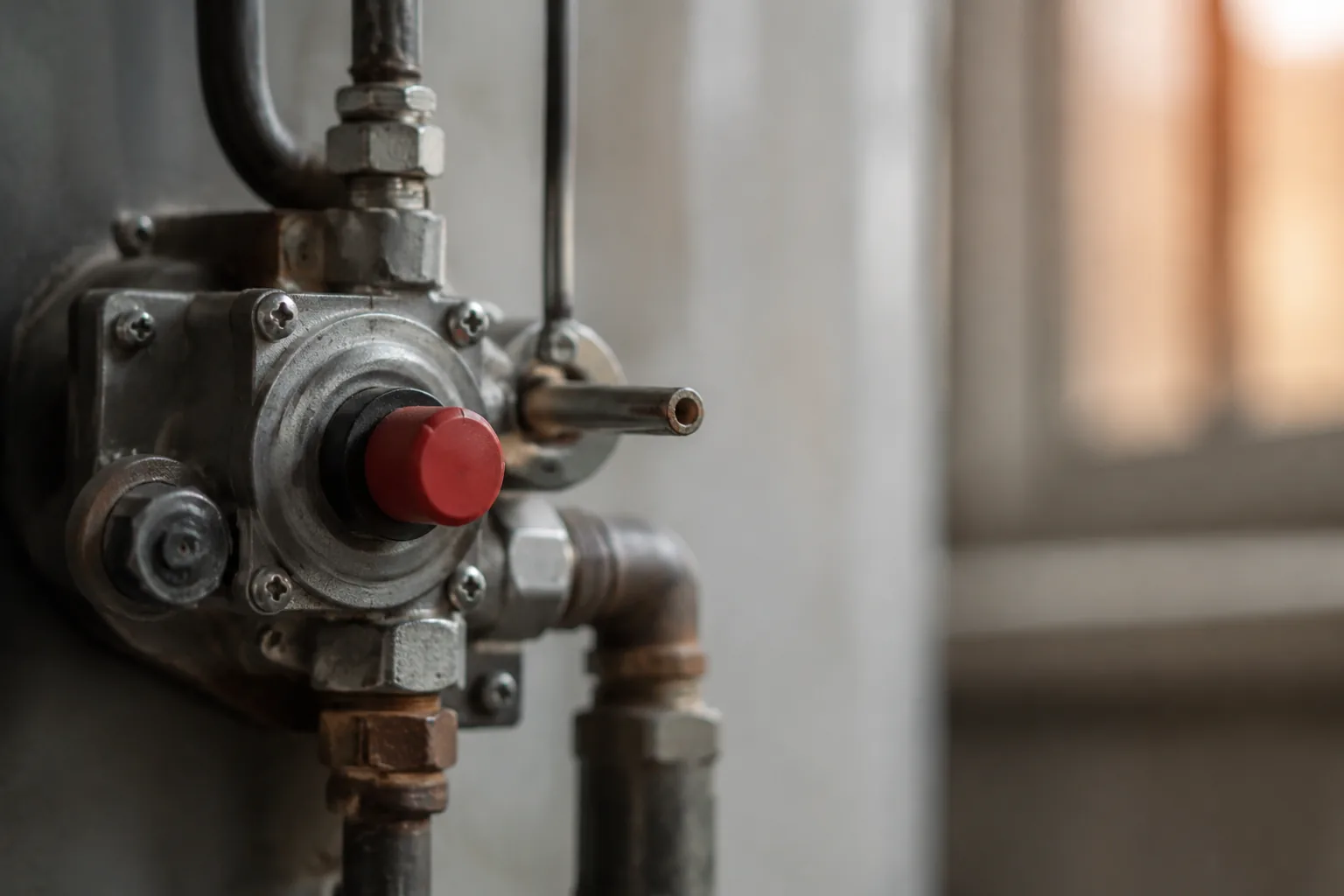
A crisp blue spark that never lights a flame is the most common version of this problem, and it always means gas is not getting to the spark at the right moment. Work it in order. First, re-confirm supply, because it is worth a second look: valve parallel to the pipe, another appliance firing, propane tank not empty. Then rule out trapped air with the patient hold-and-click from step 2. Only after both of those should you condemn the orifice.
If gas is confirmed and the air is purged and it still will not light, the pilot orifice is likely plugged. The pilot burns off a jet of gas through a hole smaller than a pin, and it does not take much to choke it: household dust, a spider web spun over the summer, a flake of rust or scale. This is the classic outcome when a tank has sat without gas pressure while a propane bottle ran dry. Clearing it means shutting off the gas, removing the pilot supply tube, and gently blowing the opening clear with compressed air, and on sealed FVIR combustion chambers that work is often best left to a tech who can reassemble it to spec.
The last item in this branch is the one people miss. Most tanks built in the last two decades carry a flammable-vapor ignition-resistant, or FVIR, design with a one-shot thermal cutoff switch at the burner base. Its job is to sense the flash of ignited vapors, from gasoline, paint thinner, or solvents stored too close, and permanently disable ignition so the heater cannot become an ignition source. A clogged air-inlet screen at the base, packed with lint, dust, or pet hair, can starve the burner and trip the same switch. Once tripped, the unit will spark all day and refuse to light, by design. A blinking status light on the gas valve usually flags it. Clearing it takes a manufacturer reset kit or a switch replacement, and it is a signal to vacuum that screen and move flammable liquids away from the heater.
Nothing at all: look at the control, not the pilot
When you press the igniter and hear no click whatsoever, the problem is almost never at the pilot. It is at the control. The simplest cause, and the one to rule out first, is the gas control dial. On a standing-pilot heater the igniter only functions with the dial turned to PILOT and the knob pressed down. Left on OFF or ON, pressing the striker does nothing, and a knob bumped to the wrong position after a repair or a stored box is a frequent culprit.
With the dial confirmed on PILOT, press the piezo button firmly several times. A working striker gives a distinct, crisp snap. If it feels soft, silent, or dead, the piezo has failed internally, and that is a cheap, bolt-in part that does not open the gas system, which makes it an easy DIY replacement. If the button snaps fine but no spark appears, follow the thin igniter wire from the button to the electrode and look for a loose connector, corrosion at a terminal, or physical damage. Reseat what you can. On electronic-ignition models rather than piezo, a total lack of response can point to a dead control module or a loss of power to it, which crosses into service-call territory.
When it is time to stop and call a pro
Plenty of this is safe homeowner work: confirming gas supply, purging air with a patient hold-and-click, cleaning an electrode tip, tightening a ground wire, swapping a piezo button, checking the dial position. The line to hand it off is fairly clear. A gas control valve that will not send gas to the pilot after supply, air, and orifice all check out is a replacement job. An FVIR thermal cutoff that has locked the unit out means a vapor event or a starved burner happened, and resetting it correctly, plus finding why it tripped, is worth a trained set of eyes. A plugged orifice buried in a sealed combustion chamber, an electronic-ignition module that shows no life, or the faint smell of gas at any point all mean stop and call. Gas work rewards caution, and no pilot is worth forcing.
Frequently asked
Why won't my gas water heater pilot light at all?
A pilot that never lights is a supply-or-spark problem, which is different from a pilot that lights then dies. First confirm gas is on: valve parallel to the pipe, another gas appliance firing, and propane not empty. Then check what happens when you click the igniter. A click with no spark points at a dirty or cracked electrode or a loose ground. A good spark with no flame points at trapped air in the line, a plugged pilot orifice, or an FVIR lockout.
What is the difference between a pilot that won't light and one that won't stay lit?
A pilot that will not light at all never establishes a flame, which means either no gas is reaching it or no spark is being thrown. A pilot that lights but will not stay lit does catch a flame and then goes out a few seconds after you release the knob, which is almost always a failing thermocouple that stops proving the flame to the gas valve. They are different repairs, so it is worth watching closely which one you have.
How long should I hold the pilot button to purge air from the line?
Hold the gas control knob fully pressed in while clicking the igniter for a steady 30 to 60 seconds, and up to 90 on a stubborn line. This clears trapped air after a new tank install, a propane bottle swap, or a utility repair. Air fills the small pilot tube and has to be pushed out before gas can reach the pilot, and people often quit after a few clicks. Once it lights, keep holding another 30 to 60 seconds so the thermocouple warms up.
What does a healthy igniter spark look like?
A healthy piezo igniter throws a crisp blue-white spark that jumps a gap of about an eighth of an inch at the electrode tip near the pilot. A weak orange spark, or a click with no visible spark at all, means the electrode is dirty or cracked, the gap is wrong, the ground wire is loose, or the piezo striker has weakened. Look through the sight glass in a dim room to see the spark clearly.
What is an FVIR lockout on a water heater?
FVIR stands for flammable-vapor ignition-resistant, a design on most tanks built in the last two decades. A one-shot thermal cutoff switch at the burner base senses the flash of ignited vapors from gasoline, solvents, or paint thinner stored too close, and permanently disables ignition so the heater cannot ignite fumes. A clogged air-inlet screen can also starve the burner and trip it. Once tripped, the unit sparks but refuses to light, and clearing it needs a reset kit or switch replacement plus vacuuming the screen and moving flammable liquids away.
When should I call a professional for a pilot that won't light?
Call a pro when the gas control valve will not send gas to the pilot after you have confirmed supply, purged air, and checked the orifice, when an FVIR thermal cutoff has locked the unit out, when the pilot orifice is buried in a sealed combustion chamber, when an electronic-ignition module shows no response, or any time you smell gas. Those involve gas valves, combustion safety, and vapor events that reward a trained technician. No pilot is worth forcing.