Carbon monoxide has no smell, and by the time flames are licking out the front of a gas water heater the room is already collecting it. Flame rollout is exactly that: the burner flame spilling out of the combustion chamber, around the access door, instead of drawing cleanly up the flue. You might notice soot streaking above the burner door, a scorched jacket, or the heater simply going dead because a safety switch tripped. Whatever tipped you off, this is not a wait-and-see fault. The first move is to shut it down and ventilate, and the diagnosis comes after.
Do this first, before you diagnose anything
Flame rollout is a safety event, so the order matters. You make the room safe first, then you figure out why it happened. If you can see flame outside the chamber right now, or you smell exhaust, or a CO alarm is sounding, work through this list before anything else. None of it requires tools.
- Shut the gas off. Turn the round gas control dial on the front of the heater to Off, and if you have a manual gas shutoff on the supply line to the heater, close that too. This stops the flame at the source.
- Get fresh air moving. Open a door and a window and let the space ventilate. You want combustion byproducts, including carbon monoxide, out of the room before you spend time near the heater.
- Clear the area around the heater. Move any boxes, laundry, paint, gasoline, or other combustibles well away from the front and base while there is any chance of open flame.
- Check your CO alarm. If a carbon monoxide alarm is sounding, treat it as real, get people and pets outside, and call your gas utility or fire department from outside the house.
- Do not relight the heater. A rollout will happen again the instant you restore gas, so leave it off until the cause is found and corrected. Cold water for a day beats a fire.
- Note what you saw. Soot above the door, a tripped switch, a lazy yellow flame, exhaust smell at the top of the tank. These details help the technician find the cause fast.
With the gas off and the room aired out, you can look at the heater without being in a hurry. Everything below assumes the burner is not running while you inspect it. If at any point you are unsure or the CO alarm is active, stop and get a professional out.
Working out why it rolled out
Flame rollout has one root behavior behind it: the exhaust cannot leave and the flame cannot get air, so combustion backs up and pushes out the front. Diagnosis is finding which link in the chain is broken. Work it in this order, from cheap and common to expensive and rare, with the gas off the whole time.
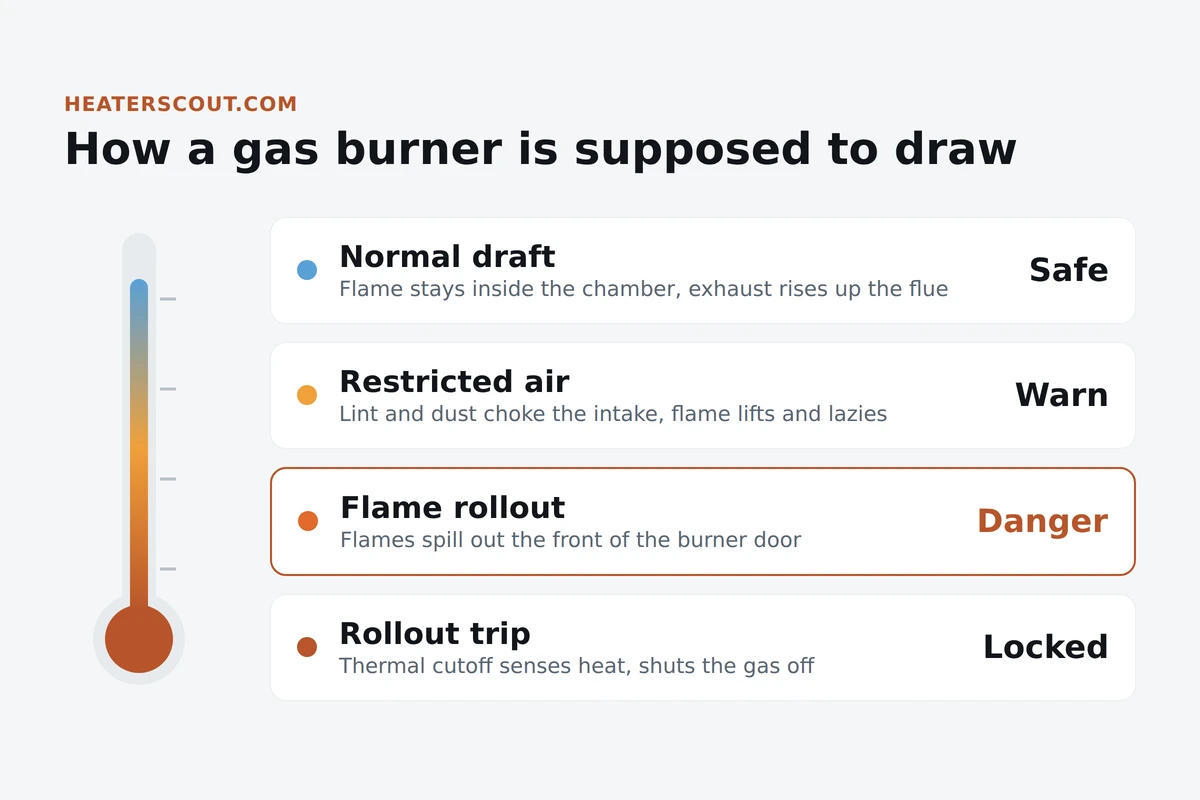
Never reset a rollout switch to keep it running
A tripped flame-rollout switch is the warning, not the fault. Do not just reset it and relight. Many modern heaters use a one-time-trip thermal cutoff, an ECO in this position, that opens for good and must be replaced rather than reset, on purpose, so nobody keeps bypassing the alarm. Even where the switch resets, the rollout that tripped it will happen again the instant you restore gas unless the blocked flue, clogged intake, backdraft, or cracked exchanger behind it is corrected first. Resetting or jumping a rollout switch to keep the heater running is how a fixable fault becomes a carbon monoxide poisoning. Find the cause, fix it, then replace the cutoff.
Three cases that look alike and are not
The symptom is the same in every rollout, flame out the front and a dead heater, but the cause and the fix are very different. Here is how the three most common trace out once someone opens the heater up.
Lint-clogged flame-arrestor screen
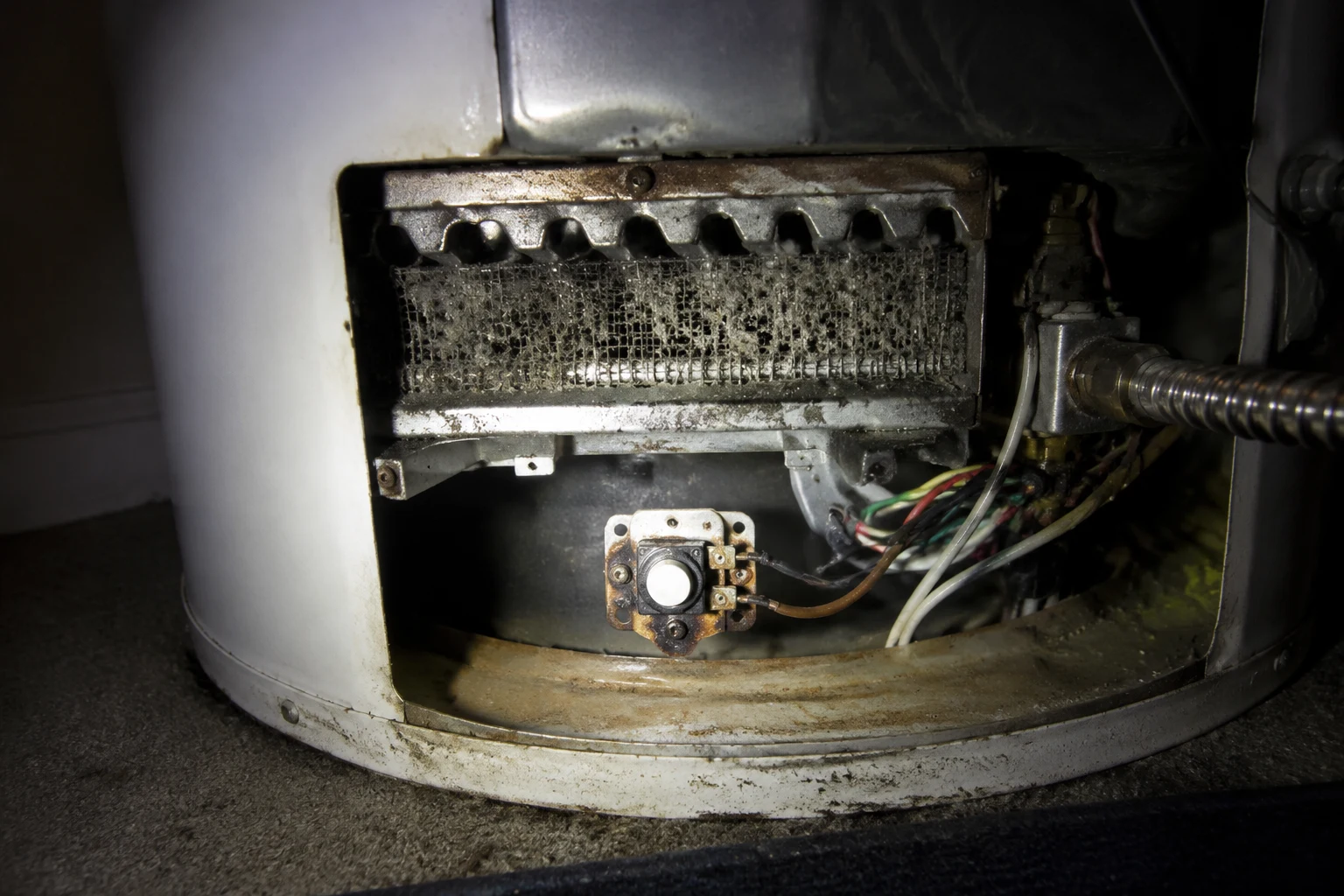
A three-year-old Rheem in a laundry room starts spilling flame and tripping. The base intake screen is a solid mat of dryer lint and dust. The flame was starving for air, burning lazy and yellow, and rolling forward to find some. Gas off, vacuum the screen and base clean, replace the one-time thermal cutoff, verify the draft, and it runs right. This is routine maintenance the manufacturers ask for, and it is the most common cause on FVIR tanks.
Blocked or backdrafting flue
An older A.O. Smith in a basement shows soot streaks running down from the draft hood. The vent connector had rusted through and partly collapsed, so exhaust could not rise and backed out the front. On another house the flue was clear but the new bath fan reversed the draft every time it ran. Both are venting problems, not heater problems, and both need the flue or the combustion-air path corrected before the unit is safe to relight.
Cracked heat exchanger on a power-vent
A power-vent Bradford White rolls out intermittently and the CO reading climbs when it fires. A pressure test finds a cracked heat exchanger leaking combustion into the wrong path. There is no patch for this, so the heater gets condemned and replaced. This is why a power-vent rollout always warrants a technician with a combustion analyzer.
Notice that only the first case is homeowner maintenance. The other two need instruments and training to confirm, which is the practical reason flame rollout sits in the call-a-pro category.
Keeping it from happening again
Most rollouts are preventable with two habits. Vacuum the flame-arrestor screen and the louvers at the bottom of the heater once or twice a year, more often in a dusty garage or a room with a dryer, and keep laundry and stored combustibles away from the base. Have the venting looked at when the heater is serviced, and watch for soot or rust streaking down from the draft hood. A working carbon monoxide alarm near the heater is the backstop for the day one of these fails anyway.
Frequently asked
What is flame rollout on a gas water heater?
Flame rollout is when the burner flame spills out the front of the combustion chamber, around the burner access door or the sight glass, instead of staying inside and drawing up the flue. A healthy burner pulls combustion air in at the base, burns clean and blue, and sends the hot exhaust straight up the vent by natural draft. When something blocks that path, the exhaust has nowhere to go, so it backs up and pushes the flame forward and out. You see it as licks of orange flame at the bottom front of the heater, often with soot streaks above the door and a scorched or discolored jacket. It is one of the few water heater faults that is an immediate safety problem, not just a comfort or efficiency problem, because it puts open flame and carbon monoxide into the room.
Is a water heater with flame rollout dangerous?
Yes, and this is the one to take seriously. Three things happen at once. Open flame outside the chamber can ignite anything nearby, which is why heaters sit off the floor and away from stored boxes, paint, and gasoline. The blocked or backdrafting flue means combustion byproducts, including carbon monoxide, spill into the room instead of going outdoors. And the heat that should be leaving up the vent instead bakes the sheet-metal jacket, the wiring, and the gas valve, which can fail in worse ways. Carbon monoxide is the part that kills people, because it has no smell and the early symptoms feel like the flu. If you have flame rollout, shut the gas off, ventilate the space, and do not relight until a technician has found and fixed the cause.
My flame-rollout switch tripped. Can I just reset it?
You can reset a resettable one, but resetting it without fixing the cause is a mistake and on many designs you cannot reset it at all. The flame-rollout switch is a thermal cutoff mounted near the burner door whose only job is to sense the heat of escaping flame and cut the gas. It tripping is not the problem, it is the alarm telling you the problem already happened. Many modern water heaters use a one-time-trip thermal cutoff, sometimes called an ECO in this position, that opens permanently and must be replaced, not reset, precisely so nobody keeps bypassing the warning. Whether yours resets or must be replaced, the flame rollout that tripped it will happen again the instant you restore gas unless the blocked flue, clogged intake, or cracked exchanger behind it is corrected first. Find the root cause.
What causes flame rollout on a gas water heater?
Almost every case comes down to the burner not getting enough air, the exhaust not being able to leave, or both. The most common on a modern sealed-combustion tank is a clogged flame-arrestor screen and air-intake at the base, packed with lint, pet hair, and dust, which starves the flame. Next is a blocked or restricted flue: a bird nest, a collapsed vent connector, a disconnected pipe, or a rusted baffle keeping the exhaust from rising. Backdrafting is a cousin of that, where a strong exhaust fan or a tight, depressurized house pulls the flue backward down into the room. A dirty burner can also skew the flame. On a power-vent model, a cracked heat exchanger or a failing draft inducer can push combustion where it should not go. The switch just reports the result.
How do I know if my flue is blocked?
The simplest field check on a natural-draft heater is the match or smoke test at the draft hood. With the burner running, hold a lit match, an incense stick, or a smoking wick just under the edge of the draft diverter, the bell-shaped hood where the vent pipe meets the top of the tank. If the flue is drawing correctly, the smoke gets pulled up and in toward the hood. If the smoke drifts out into the room or blows back at you, the heater is spilling and the flue is either blocked or backdrafting. Other tells are soot or scorch marks around the draft hood and the top of the tank, condensation and rust streaking down from the hood, and a vent pipe that is warm to the touch high up but the exhaust still is not clearing. Any of these means stop and get the venting inspected before you run the heater again.
Why does lint and dust cause flame rollout on newer heaters?
Water heaters built since 2003 use an FVIR design, which stands for flammable vapor ignition resistant. The burner sits in a sealed combustion chamber, and all its air comes in through a flame-arrestor screen at the base, a fine mesh sized to stop a flash of gasoline vapor from igniting the room. That screen is the only path for combustion air. Set the heater in a dusty garage or a laundry room and that mesh loads up with lint and drywall dust over a couple of years until the flame is starving. A starved flame burns lazy and yellow, lifts off the burner, and rolls forward looking for air. This is why Rheem, A.O. Smith, and Bradford White all tell you to vacuum the arrestor screen and keep the base clear as maintenance.
Can I fix flame rollout myself?
Some causes are homeowner maintenance and some are strictly for a licensed technician, and the trouble is you often cannot tell which you have until it is opened up. Vacuuming a lint-clogged intake screen and clearing an obvious obstruction from a vent cap are reasonable to do yourself, with the gas off. But diagnosing a backdrafting house, confirming a blocked flue, and judging whether a heat exchanger is cracked all take a combustion analyzer, a manometer, and training. Because the failure mode is CO and fire, the safe default here is call a pro. Do the easy cleaning if you are comfortable, and let a technician verify the draft and replace a tripped one-time thermal cutoff before the heater goes back in service.