A water heater swap looks like unplugging one box and plugging in another, so the permit feels like bureaucratic overhead. It is not. In nearly every US city and county, replacing a water heater requires a permit and an inspection, because the job remakes gas or electrical connections, cuts new venting joints, and sets up a fresh temperature and pressure relief discharge. Those are exactly the connections that, done wrong, backdraft carbon monoxide, scald someone, or flood a basement. This page lays out where a permit is required, what an inspector checks against code, what it costs, whether you can pull your own, and what actually happens if you skip it and try to sell or file a claim later.
The verdict
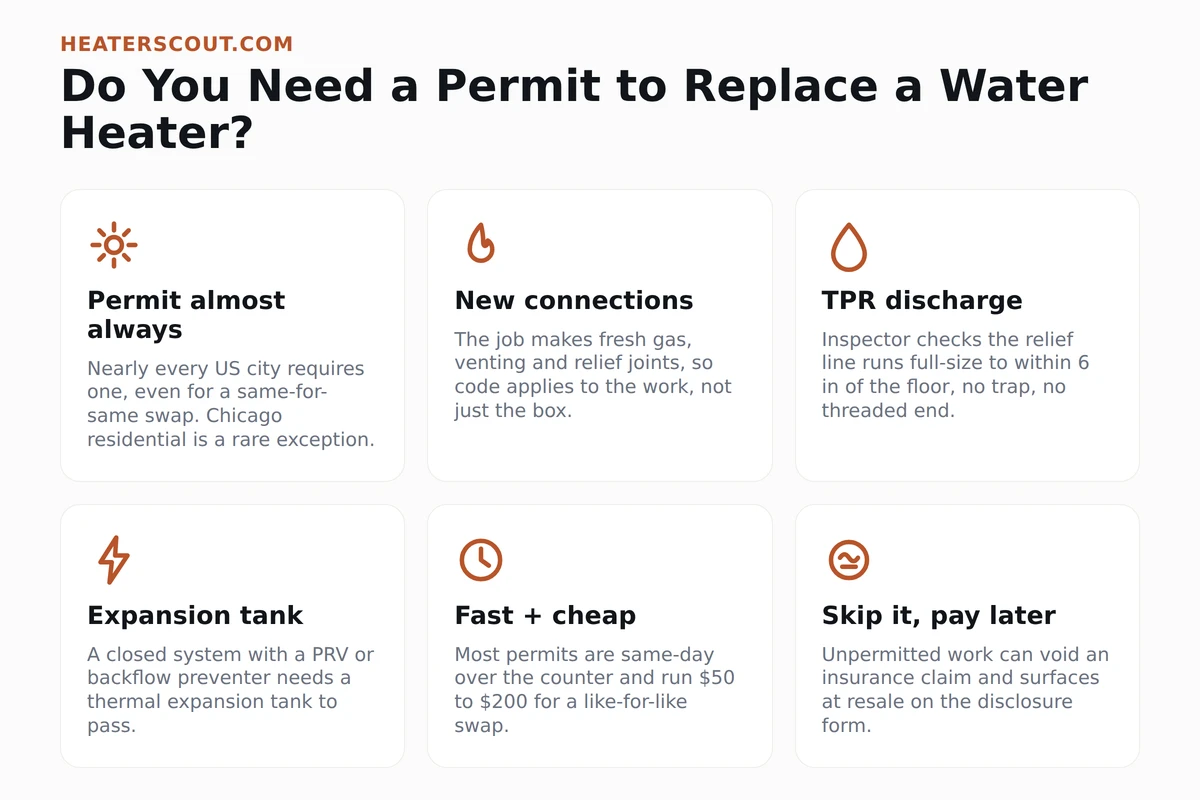
Yes, in nearly all US jurisdictions a water heater replacement needs a permit and an inspection, even for a same size and same fuel swap. The rare well-known exception is Chicago, which exempts same-for-same residential replacements in buildings up to four stories. The permit is cheap, commonly 50 to 200 dollars and often issued same day, and the inspection is the thing that catches an unsafe relief line, a missing expansion tank, or a backdrafting vent before it hurts someone. Skipping it risks a denied insurance claim and a disclosure problem at resale.
Why a like-for-like swap still needs a permit
The intuition that dropping in the same 40-gallon gas heater you took out should not require paperwork runs into how building departments actually think about the work. They do not permit the appliance. They permit the connections. Even a perfect same-for-same replacement remakes the gas or electric hookup, cuts and joins new venting where the old flue met the draft hood, and installs a new relief-valve discharge line. Every one of those is a point where a small error becomes a real hazard, which is why the job triggers a permit in most of the country regardless of whether the new unit matches the old one.
There is one carve-out that gets cited a lot: Chicago exempts same-for-same residential water heater replacements in buildings up to four stories from the permit requirement. That is the exception people remember precisely because it is unusual. Outside of specific local rules like that, the safe assumption for a US homeowner is that a permit is required, and the reliable way to know for your address is to call the local building department and ask. Rules vary between neighboring towns, so a forum answer about the next county over is not your answer.
| TPR discharge | Full-size pipe to within 6 in of the floor, no trap, no threaded end, not into the pan (IPC/IRC 504.6) |
| Expansion tank | Required on a closed system with a PRV, backflow preventer, or check valve (IPC 607.3, UPC 608.3, IRC P2903.4) |
| Venting & combustion air | Double-wall vent through assemblies, clearance to combustibles, adequate makeup air on gas units |
| Seismic strapping | In CA, two straps: upper third and lower third of the tank, into framing, not drywall anchors (CPC 507.2) |
| Drip pan | Corrosion-resistant, at least 1.5 in deep, with a 3/4 in drain to an approved location where a leak could cause damage |
| Gas / electric connection | Correct sediment trap, shutoff, bonding, or a proper 240 V connection sized to the unit |
What a permit and inspection actually cover
A permit is not a fee for the privilege of buying a heater. It is an application for an inspection, the step where a plumbing or building inspector confirms the install meets code before you close the wall on it, so to speak. The inspection concentrates on the handful of connections that cause the worst failures. The clearest example is the temperature and pressure relief valve, the last-line safety device that dumps pressure if the tank overheats. Code is specific about its discharge: the pipe must run full-size, without a trap and without a threaded end, and terminate no more than six inches above the floor or an approved receptor, discharging through an air gap and never routed into the water heater pan.
The other item that trips up unpermitted jobs is thermal expansion. When a home has a pressure-reducing valve, a backflow preventer, or a check valve on the incoming water, the plumbing becomes a closed system: heated water can no longer push back into the street main as it expands, so pressure spikes inside the tank and the piping. The plumbing codes address this the same way. Under the IPC, UPC, and IRC alike, a closed system requires a thermal expansion control device, in practice an expansion tank on the cold supply. Inspectors flag a missing expansion tank so often it is one of the most common single reasons a water heater inspection fails.
Does the type of water in my area change what the inspector wants?
Not directly, but hard water and high street pressure often mean a home already has a pressure-reducing valve or softener loop, which creates the closed system that makes an expansion tank mandatory. If your supply passes through any of those, plan on the expansion tank being checked.
How to pull a water heater permit
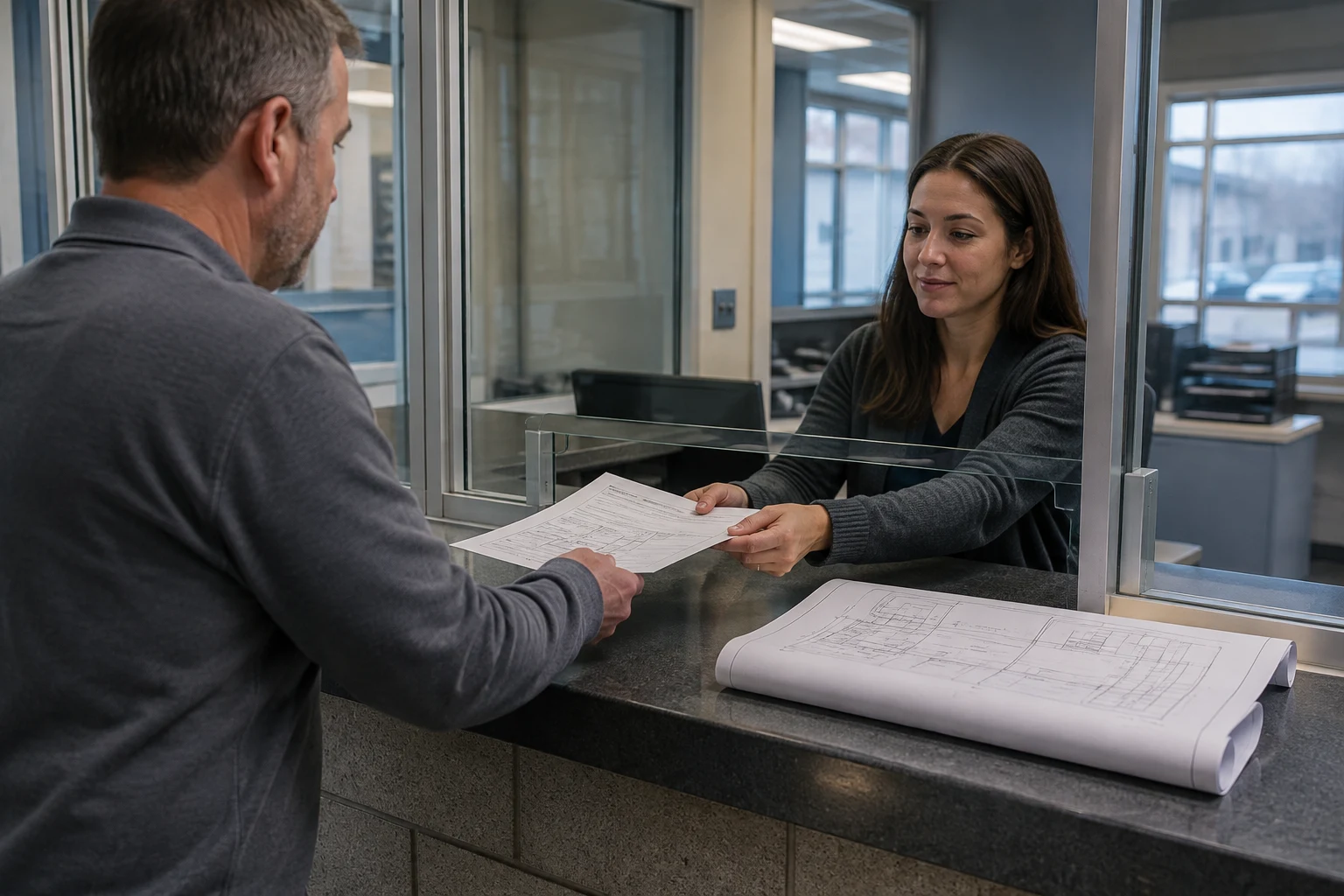
For a straightforward replacement, the process is far lighter than people fear. There is usually no plan review, because there is nothing to review on a like-for-like swap, and many building departments hand out the permit same day at the counter or through an online portal.
Leave the safety connections visible
Do not bury or conceal the relief discharge, expansion tank, or vent connections before the inspection. If the inspector cannot see the safety-critical joints, the job fails, and re-opening finished work to prove it costs more than doing it in the open the first time. Leave everything accessible until sign-off.
Closed plumbing system
A water supply where a pressure-reducing valve, backflow preventer, or check valve stops water from flowing back toward the municipal main. Because expanding hot water has nowhere to go, pressure climbs inside the tank and piping, which is why code requires a thermal expansion tank on a closed system. Most homes with a PRV or a backflow device on the meter are closed systems whether the owner realizes it or not.
DIY versus a licensed plumber
Whether you can legally do the work yourself splits the country roughly in half. In about half of US states a homeowner may install or replace a water heater in an owner-occupied primary residence and pull the permit for it; the other half require a licensed plumber to do the work and pull the permit. Even where homeowner permits are allowed, they do not extend to rentals or investment properties, and the work has to be yours personally. Pulling the permit under your own name also means you carry the responsibility: you are declaring you understand the code, and at inspection your install is judged by the same standard as a pro's.
That standard is the honest deciding factor. A confident DIYer who understands gas connections, venting and combustion air, the relief discharge, and thermal expansion can absolutely pass inspection on an electric or even a gas swap. If any of those are unfamiliar, the cost of a licensed plumber buys not just labor but someone who already knows what the inspector will check and installs to it by habit. The permit and inspection are the same either way; what changes is who is on the hook for getting the safety connections right.
What skipping the permit really costs
The reason to bother is not fear of a fine, though those exist. It is the two moments where unpermitted work reliably surfaces. The first is a claim. If an unpermitted heater fails and floods the house, the insurer can and does check whether the work was permitted, and policies are generally not obligated to cover damage from illegal or unpermitted work, so the whole claim can be denied. A denied water-damage claim dwarfs the 75-dollar permit you skipped.
The second is resale. Seller disclosure statements ask directly whether unpermitted or unlicensed work was performed, and answering falsely is fraud, not a white lie. A buyer's inspector will cross-reference county permit records against what is in the mechanical room, and an unpermitted water heater shows up as a gap. The remedy at that point is a retroactive permit, penalty fees stacked on the normal fee, and sometimes a licensed contractor to correct code violations before the sale can close. All of that to avoid a same-day counter permit that would have cost less than a service call.
Underneath the paperwork sits the real point. The water heater installed without a permit is the one nobody checked for a backdrafting vent, an unsafe relief line, or a missing expansion tank. Those are the failures that put carbon monoxide in a hallway or 150-degree water at a tap. The permit is cheap and fast; the inspection is the part that catches the mistake while it is still just a mistake. If you take one thing from this page, make it a call to your building department before the old tank comes out.
Frequently asked
Do I really need a permit to replace a water heater?
In almost every US city and county, yes. A water heater swap ties together plumbing, fuel gas or electrical, venting, and a temperature and pressure relief setup, and building departments treat that bundle of connections as permit work even when you are putting the same size and fuel type back in the same spot. The common belief that a like-for-like replacement is exempt is wrong in most places, because the installer still cuts and remakes the gas or electric connection, new venting joints, and a new relief-valve discharge. The one well-known carve-out is Chicago, which exempts same-for-same residential replacements in buildings up to four stories. Everywhere else, assume a permit is required and confirm with your local building department, since a two-minute phone call settles it for your address.
How much does a water heater permit cost?
For a straightforward like-for-like replacement, most US cities charge somewhere between 50 and 200 dollars. Pulled across a wide sample of about two dozen cities, the average permit fee lands near 90 dollars and the median near 75, with a low around 25 dollars in Boston and a high around 184 in Miami. High-cost metros run higher: across the San Francisco Bay Area, water heater permits commonly fall in the 150 to 400 dollar band, with San Francisco at the top end. A relocation, a fuel conversion, or added gas or electrical work pushes the fee up because it is no longer a simple swap. The permit fee is a small line next to the total install cost, and it buys you an inspection that catches the mistakes that cause leaks, backdrafting, and scalding.
Can a homeowner pull their own water heater permit?
In roughly half of US states you can, as long as it is your owner-occupied primary residence. The other half require the permit to be pulled by a licensed plumber. Where homeowner permits are allowed, you cannot use one on a rental, an investment property, or a home you do not live in, and the work has to be done by you personally, not a handyman working under your name. Pulling the permit yourself makes you legally responsible for the whole installation and declares that you understand the code, and at inspection your work is held to the exact same standard as a professional job. If you are not confident about venting, gas, or the relief and expansion setup, that responsibility is a real reason to hire a licensed plumber instead.
What does the inspector actually check?
The inspection confirms the safety-critical connections meet code. On the relief side, the temperature and pressure relief valve has to discharge through a full-size pipe that runs down to within six inches of the floor, with no trap, no threaded end, and not into the drip pan. If the home has a pressure-reducing valve, backflow preventer, or check valve on the supply, a thermal expansion tank is required because the system is closed. On gas units the inspector looks at venting, double-wall pipe through assemblies, clearances to combustibles, and combustion air. In seismic states like California, two straps are required, one in the upper third and one in the lower third of the tank, anchored into framing. A drip pan with a proper drain is required wherever a leak could cause damage. Miss any of these and the inspection is failed until corrected.
What happens if I replace a water heater without a permit?
Two things tend to catch up with you: insurance and resale. If an unpermitted heater ruptures and floods the house, the insurer can check whether the work was permitted and deny the claim outright, since policies are not obligated to cover damage from illegal or unpermitted work. At sale, seller disclosure statements ask directly whether unpermitted or unlicensed work was done, and a buyer's inspector will cross-reference county permit records and find the gap. The fix then is a retroactive permit, penalty fees on top of the normal fee, and often paying a licensed contractor to bring the install up to code. Beyond paperwork, the real risk is that an uninspected water heater is the one most likely to backdraft carbon monoxide, scald, or leak, because nobody checked the venting and relief.
Is a permit required for a tankless or electric water heater too?
Yes. The permit follows the work, not the tank shape. A tankless conversion usually needs more of a permit review, not less, because it commonly adds larger gas piping, a new dedicated vent, and sometimes electrical and condensate work, all of which the inspector wants to see. A straight electric tank replacement still involves a 240-volt connection, the relief valve, and often an expansion tank, so it is permit work in most jurisdictions the same as a gas unit. Heat pump water heaters add condensate drainage and clearance considerations on top. Whenever fuel, venting, or electrical connections are remade, plan on a permit and confirm the specifics with your building department.
How long does the permit and inspection take?
For a like-for-like replacement it is usually fast. Many jurisdictions issue the permit same day over the counter or online, with no plan review, because there is nothing to review on a simple swap. The permit is really an application for the inspection: you or your plumber pull it, the heater goes in, and then you schedule the inspection, often the same week. A basic replacement typically needs one inspection, sometimes two if the jurisdiction wants a rough and a final. A relocation or fuel change can add plan review and stretch to a week or two. The paperwork rarely delays the project, which is part of why skipping it is hard to justify.