Quick answer
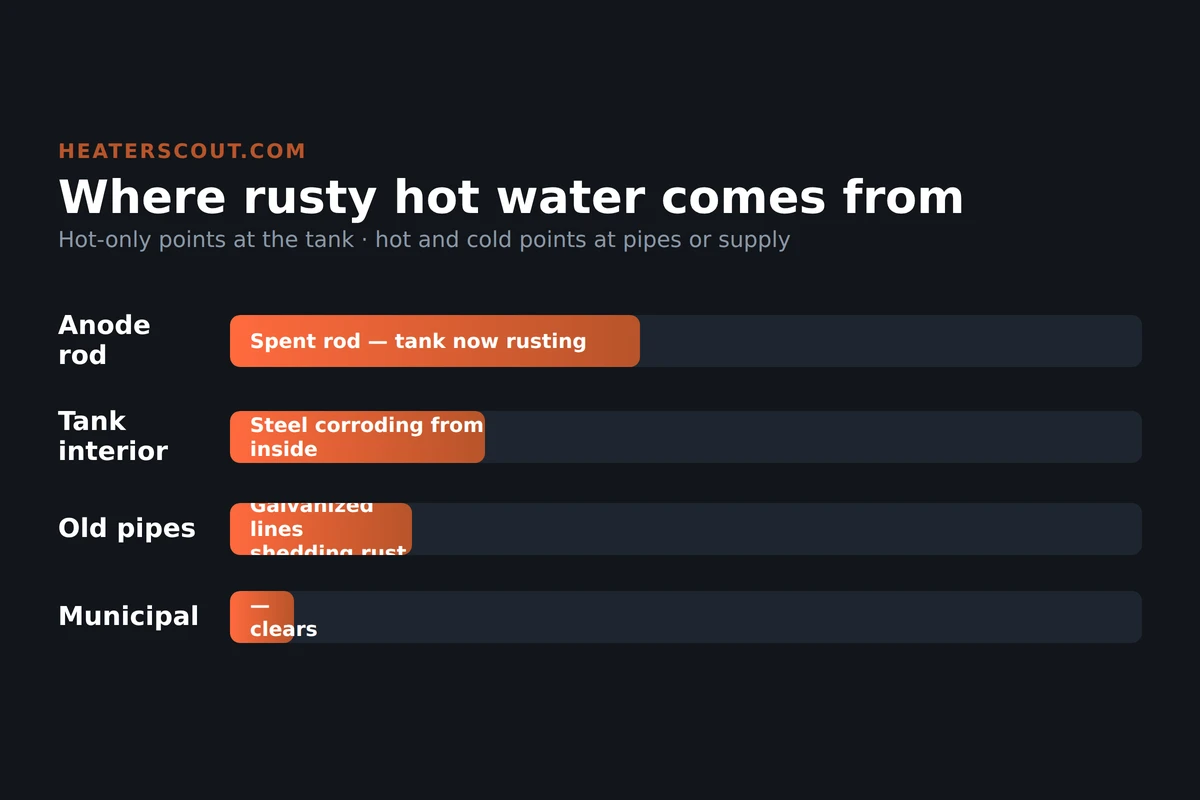
Brown or rusty water is iron. At the levels that discolor water — the EPA’s aesthetic limit is 0.3 mg/L — it stains laundry and tastes metallic but isn’t a health hazard. What matters is where the rust comes from. Hot-only means the inside of your tank is corroding. Both taps means your pipes or the city supply. That single distinction decides whether you flush a part, replace the heater, or just wait it out.
Read the color: what rusty water is telling you
Staining begins around the EPA iron limit of 0.3 mg/L. The darker it runs, the further the corrosion has gone.
Clear
Under 0.3 mg/L iron. Nothing to fix — water below the staining threshold.
Faint yellow
Anode nearing its end, or a little stirred-up sediment. Inspect the rod; a flush may clear it.
Amber
Tank corrosion starting. Anode spent, steel oxidizing. A new anode plus flush can still add years.
Rust brown
Advanced tank rust (6–12 yr lifespan reached), or a municipal event. If it never clears, budget a replacement.
The rust is being made inside your heater — a spent anode letting the steel corrode. This is your tank.
The heater is off the hook. Rust is in your pipes or the municipal supply, not the tank.
People replace perfectly good water heaters over rust that was actually in their pipes, and keep limping along with tanks that are quietly rusting through. Two minutes of diagnosis saves you from both mistakes.
Locate the source first
Run your taps and watch which ones are discolored, then whether the color clears after a minute. Those two answers put the rust in one of three places.
Where is the rust coming from?
1 — Which taps run discolored?
2 — Does it clear after running a minute?
Answer both questions
Pick which taps run discolored, then whether it clears after a minute of running.
When it’s the heater: the anode and the tank
A steel tank survives years of hot water because of one part designed to be sacrificed: the anode rod. It corrodes on purpose so the tank doesn’t. When the rod wears down — from about an inch thick when new to a bare core wire — there’s nothing left to protect the steel, and the tank itself starts to oxidize. That rust colors the hot water, faintly at first and darker as the corrosion spreads. Catch it early and a new anode plus a flush can add years; catch it late and you’re looking at a tank that’s rusting from the inside out.
Inspect the anode every two to three years, or yearly if you have a water softener, since softened water eats anodes faster. Once you see bare wire or the rod is down to roughly half an inch, replace it. This is the single maintenance step that most extends a tank’s life.
There’s a useful distinction between rust that’s stirred-up sediment and rust that’s the tank itself. Sediment rust tends to appear in bursts — the first draw of the morning, or right after the water’s been sitting — and clears as you keep running the tap. Rust from a corroding tank wall is more constant and comes back no matter how long you run it. A flush answers the question quickly: if the color is gone for good, it was sediment; if it’s back within days, the steel is going. That’s the moment to stop spending on parts and budget for a replacement instead.
Fix it or replace it?
Still fixable
- Tank under about six years old.
- No water pooling under or around it.
- Rust clears somewhat after a flush.
- Anode worn but tank walls sound.
Flush the sediment, fit a new anode, and keep an eye on it.
Time to replace
- Any weeping or dripping from the body.
- Rust that never clears, tank 10+ years.
- A wet spot or corrosion at the base.
Interior rust has no safe repair — a corroded tank eventually leaks or, rarely, ruptures.
When it’s the pipes or the supply
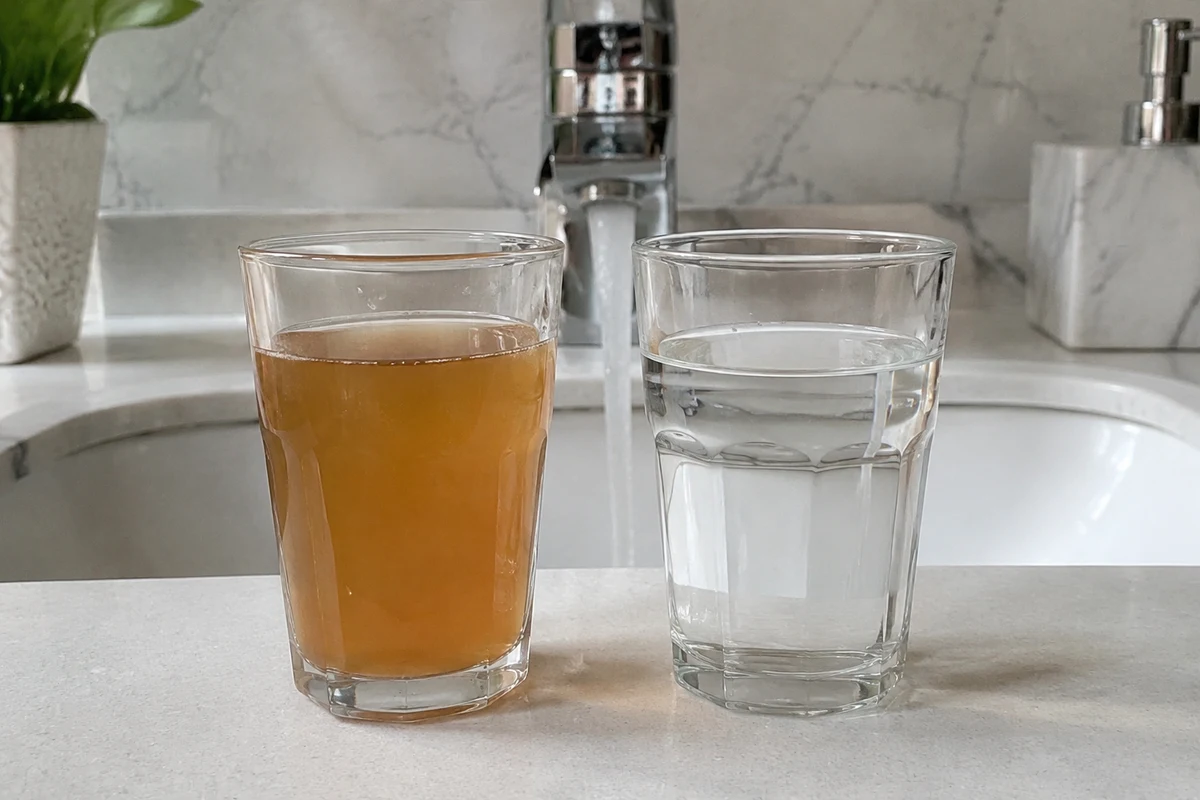
If both taps run rusty, the heater is off the hook. Two usual causes:
- Galvanized steel pipes rusting from the inside. Old galvanized plumbing corrodes internally and sheds iron into both hot and cold lines. A magnet sticks to galvanized pipe, which helps you spot it. The real fix is repiping; iron filtration manages the symptom in the meantime, but the pipes keep shedding.
- A municipal event. Water main repairs, hydrant flushing, or a pressure change stir up iron sediment that’s normally settled in the mains. This shows up on both taps, often citywide, and clears on its own after you run the water a while. If it clears and stays clear, there’s nothing to fix.
On a well, cold-side iron is a source-water problem. Depending on the amount, the answer is an oxidizing or air-injection filter, a greensand system, or chlorination for iron bacteria — sized to the iron level in a water test, not guessed at.
Matching iron treatment to the amount
If the rust is in your supply water, the right equipment depends on how much iron the water actually carries — which is why a water test comes before any purchase. Guessing usually means buying a system that’s either overkill or too weak.
| Iron level | Typical treatment |
|---|---|
| Under ~4 ppm, dissolved | Water softener (handles ferrous iron) |
| Up to ~10–15 ppm | Greensand or Birm oxidizing filter |
| Up to ~30 ppm | Air-injection / aeration oxidizing filter |
| Iron bacteria (slime) | Chlorination or peroxide injection |
These are supply-wide fixes and they sit ahead of the water heater, not inside it — another reason to confirm the rust is a cold-side problem before spending on treatment.
The galvanic trap that shortens tank life
Where a copper pipe meets the steel tank fitting, two dissimilar metals in contact set up a small electric cell that accelerates corrosion at the joint — the same galvanic process the anode rod is meant to absorb. Cheap installs skip the dielectric unions that isolate the two metals, and the tank pays for it with faster rusting at the connections. If your heater keeps rusting early despite anode care, have someone check the nipples and unions at the top of the tank; a couple of dielectric fittings are far cheaper than another premature replacement.
Is rusty water safe?
Iron is a secondary contaminant — the EPA regulates it for looks, taste, and staining, not health. Rusty water is generally safe to drink and shower in, though it can stain laundry and fixtures and taste metallic. The exceptions worth caution: iron bacteria (slimy reddish buildup) and any discoloration paired with a foul smell or a boil-water notice — then test before you drink it.
Before you spend anything, flush and watch
If the rust is hot-only and the tank isn’t old, start with a flush. Shut off the power or gas, close the cold inlet, connect a hose to the drain valve, open a hot tap, and drain until the water runs clear. On a tank that hasn’t been flushed in a decade, know that disturbing hardened sediment can occasionally start a drain-valve leak — so don’t do it right before leaving town. If the water clears and stays clear, you’ve bought time. If it’s rusty again within days, the tank’s interior is going and replacement is the honest call. Either way you’ve spent nothing but an hour, and you’ve replaced a guess with an answer — which beats buying a heater you may not have needed, or nursing one that’s about to leak on the floor.
Frequently asked
Is it safe to shower in or drink rusty water?
Generally yes. Iron is a secondary (aesthetic) contaminant the EPA limits at 0.3 mg/L for staining and taste, not for health. Rusty water can discolor laundry and taste metallic but isn’t toxic at those levels. Be cautious only if there’s a slimy reddish buildup (iron bacteria), a bad smell, or a boil-water notice — then have it tested.
Why is only my hot water rusty?
Because the rust is being made inside your water heater. When the sacrificial anode rod wears out, the steel tank starts to corrode and colors the hot water. The cold line bypasses the tank, so it stays clear. Hot-only rust points squarely at the tank — check the anode’s age and condition first.
Does rusty hot water mean I need a new water heater?
Not always. If the tank is under about six years old, has no leaks, and the rust eases after a flush, a new anode rod and flush can save it. If the tank is 10-plus years old, the rust never clears, or there’s any moisture around the base, the interior is corroding and replacement is the safe choice — interior rust can’t be repaired.
Both my hot and cold water are rusty — what does that mean?
The heater isn’t the cause. Both-tap rust comes from your plumbing (old galvanized pipes rusting inside) or the municipal supply (a main repair or hydrant flushing stirring up iron). If it clears after running the tap, it was a passing supply event. If it never clears, look at repiping or whole-house iron treatment.
Will flushing the tank fix rusty hot water?
Sometimes. If the color is from stirred-up sediment or a mildly worn system, flushing plus a new anode can clear it and extend the tank’s life. If the tank wall itself is rusting through, flushing only helps briefly before the color returns — that’s your sign the tank is at the end of its life.
How long does a water heater last before it rusts out?
Typically 6 to 12 years, with 8 to 10 common when the anode rod is maintained. Neglect the anode — or run softened water without checking it more often — and a tank can rust through in under six years. Replacing the rod every few years is the cheapest way to push toward the long end of that range.