Three quick flashes, a three-second pause, then three flashes again on a Bradford White ICON gas control does not mean the same thing on every heater, and that is the first thing to get straight. On a standard atmospheric-vent unit it means the water is not heating as fast as the control expects. On a power-vent or direct-vent unit with a blower it means an open pressure switch or blower temperature switch, the draft-proving circuit that has to confirm the vent is clear before the burner fires. Same count, two very different problems. What three flashes almost never means is a dead gas valve, so before you spend a few hundred dollars on the wrong part, read your own label and work the real causes in order.
Two heaters, one flash count
Bradford White puts a status LED low on the ICON gas control valve, and the number of quick flashes between pauses is the diagnostic code. The company is explicit that this LED is a tool for the professional plumber, and that the code tables are not identical across ICON generations. Units built January 2019 and later carry the ICON 2.0 control, identified by a serial-number date code of TA or later; earlier units run ICON 1.0 with a different table. That matters here because three flashes is one of the counts that reads differently depending on the control and, more importantly, on whether your heater has a blower.
If your heater vents straight up a metal flue with no fan, it is atmospheric, and three flashes is a heating-performance message. If it has a plastic vent pipe and you hear a fan spin up when it calls for heat, it is a power-vent or direct-vent model, and three flashes is a draft-proving fault. Figure out which one you have before you touch anything, because the fix lists barely overlap.
Key takeaways
- On atmospheric ICON models, 3 flashes means the water is not heating as fast as the control expects, not a broken part.
- On power-vent or direct-vent models, 3 flashes means an open pressure switch or blower temperature switch: a draft-proving fault.
- The blower must spin up and the pressure switch must close before the burner can light on a power-vent unit.
- 3 flashes is not the gas-valve-fault code on Bradford White, that is usually 5 flashes, so do not buy a valve for it.
- ICON 1.0 and ICON 2.0 tables differ, so confirm the meaning against the chart on your own heater's label.
Do not defeat the pressure switch
Never jumper or bypass a pressure switch to force the burner on through a three-flash code on a power-vent unit. That switch is proving the vent is clear and the blower is moving air. Defeating it can let a gas burner run into a blocked flue, which is exactly the condition the interlock exists to prevent. Clear the real cause or call a licensed tech.
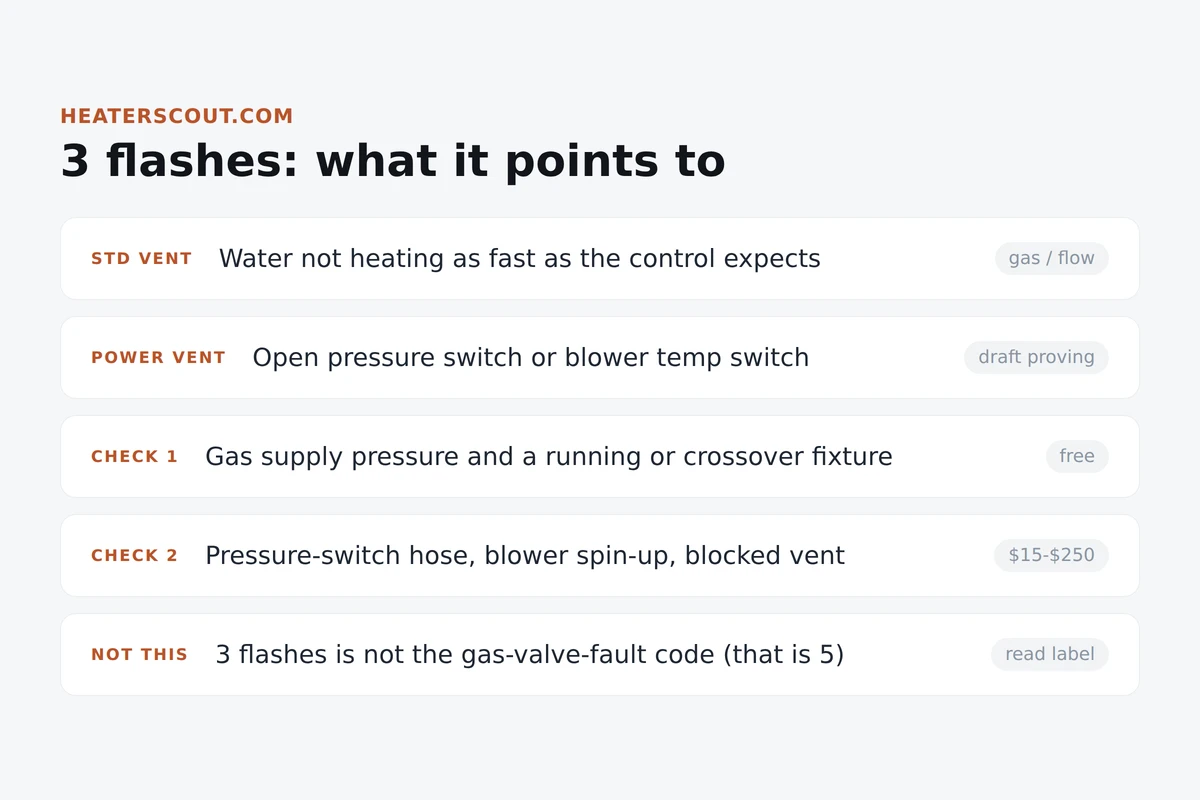
What three flashes points to, by vent type
Here is the split laid out. The left column is what your heater is and how to tell, the middle is what three flashes is actually reporting, and the right is where to start looking. Match your heater to the correct row before you diagnose, because chasing a blower on an atmospheric unit or a crossover on a power-vent unit wastes an afternoon.
| Your heater | What 3 flashes reports | Most likely causes | First checks |
|---|---|---|---|
| Atmospheric vent (metal flue, no fan) | Water not heating as fast as the control expects | Low gas supply pressure, or hot water leaving continuously | Confirm gas is fully on; find any running fixture or crossover |
| Power-vent / direct-vent (PVC pipe, blower) | Open pressure switch or blower temperature switch | Cracked or clogged pressure-switch hose, blower not spinning, blocked vent | Watch the blower spin up; inspect the hose; check intake and exhaust |
| Either type | A latched code that will not clear | The real fault is still present on the next heating cycle | Fix the physical cause first, then reset once to confirm |
Notice what is not in that table: a gas-valve failure. On Bradford White ICON controls the gas-valve-fault code is typically five flashes, not three. That distinction saves real money, because the reflex when any code appears is to assume the expensive part died. Three flashes is pointing you at the draft-proving circuit or at heating speed, both of which are usually cheap or free to fix.
Working the causes in order
Start with the free checks that apply to your vent type, then move to the cheap parts, then the diagnostic that needs a meter. Do not skip to the middle because a forum post named a part, since the same three-flash code has more than one root cause.
Confirm which heater you have
Look at the vent. A metal flue rising off the top with no fan noise is atmospheric, and three flashes is a heating-speed message. A plastic vent pipe with a blower that spins up on a call for heat is power-vent, and three flashes is a draft-proving fault. This one decision routes everything below.
Atmospheric: rule out a crossover or running fixture
If the tank is draining hot water nonstop, the control never sees the water heat fast enough and throws three flashes. Shut off every fixture, then feel the cold line at the heater. If it is warm with nothing running, you have a hot-to-cold crossover, often a bad single-handle faucet cartridge or a stuck check valve on a recirculation loop. Fix that before blaming the heater.
Atmospheric: verify gas supply pressure
Slow heating with no crossover points at gas. Check that the gas cock is fully open and that other gas appliances light normally and stay lit. If the range and furnace also act starved, the supply pressure is low and that is a gas-company or gas-line problem, not a water-heater part. A licensed tech can manometer-test the inlet pressure to confirm.
Power-vent: watch the blower and the hose
On a call for heat the blower should spin up first, and only then should the pressure switch close and the igniter fire. If the blower does not start, or starts weak, the switch never closes and you get three flashes. Inspect the small rubber pressure-switch hose for cracks, kinks, or trapped condensate, since a compromised hose gives a false open. Clearing or replacing that hose is cheap DIY.
Power-vent: clear the vent and intake
A partially blocked exhaust or intake, a bird screen packed with lint, a nest, or a long run with sag collecting condensate, can keep the pressure switch from closing under full fire. Inspect the termination outside and the pipe runs for obvious blockage or standing water. A clear vent is a prerequisite for the draft-proving circuit to pass.
Power-vent: test the switch, then the blower
If the blower runs, the hose is good, and the vent is clear but three flashes persists, the pressure switch may have drifted out of spec or the blower may be turning too slowly to make its rated draft. This is where a tech puts a meter on the switch for continuity and checks the blower under load. One of those two parts is usually the answer, not the gas valve.
The reset, done once
Reset only after you have addressed the cause. To clear a three-flash code, turn the gas control knob to OFF, wait three to five minutes, then relight or restore the knob per the burner-door instructions. On a power-vent model, cutting power for the same few minutes lets the board re-run its blower and pressure-switch startup check. Some ICON valves also clear a latched code if you toggle the knob between OFF and VERY HOT several times within about fifteen to twenty seconds.
Reading the label beats reading a generic chart
Because the ICON tables changed between the 1.0 and 2.0 controls, the safest habit is to count the flashes and then confirm the meaning against the diagnostic chart printed on your own heater. Bradford White prints it on the unit precisely because the LED is meant to guide a plumber through that specific control. If the label on your heater routes three flashes to something other than what a general article says, the appliance in front of you is right and the article is wrong. Pull the model and serial numbers off the rating plate while you are there. The date code tells you the ICON generation, TA or later is 2.0, and the model number is what a supplier needs if a pressure switch, blower, or hose turns out to be the fix.
Where the DIY line sits, and what it costs
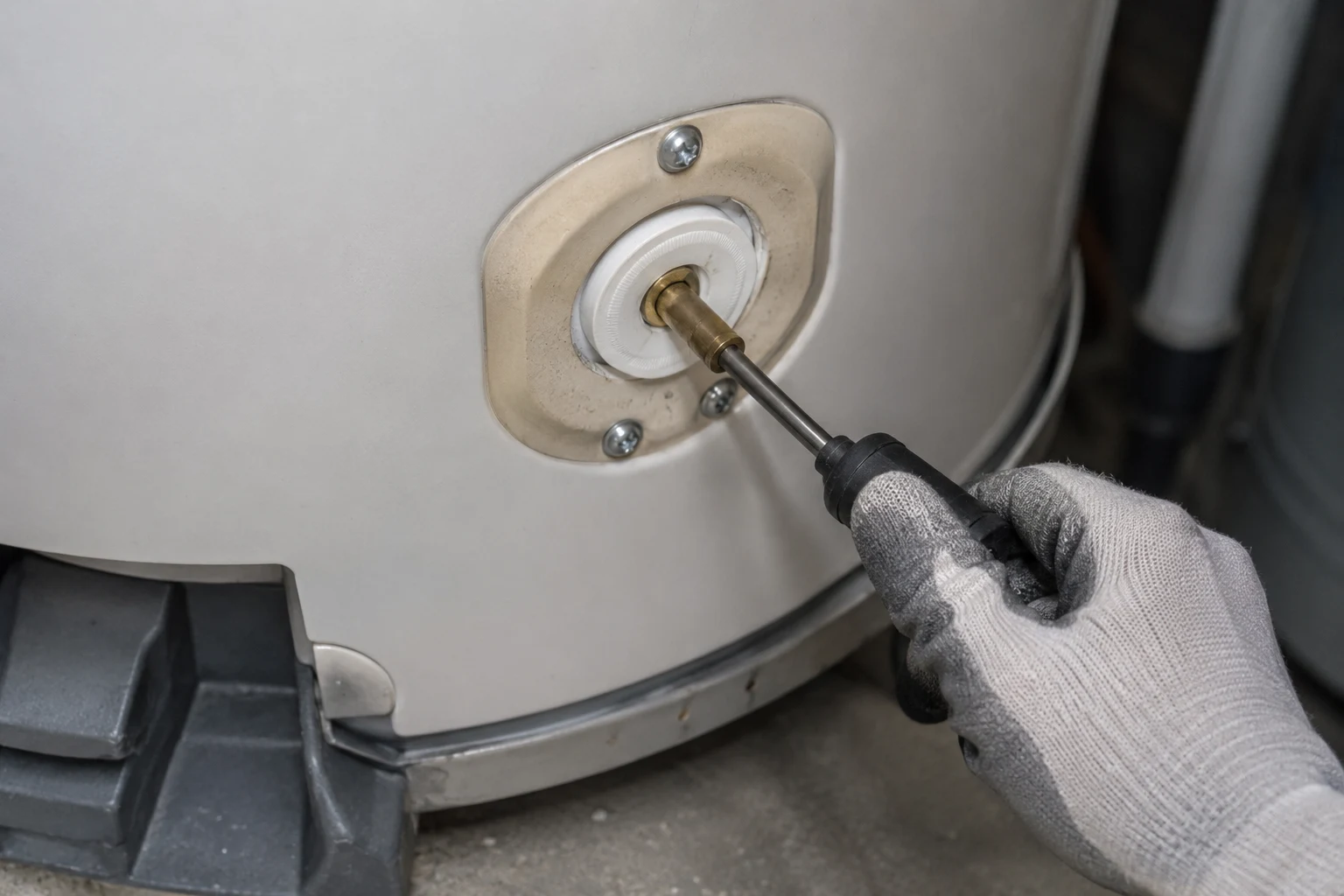
The free work is squarely homeowner territory: confirming the gas is on, hunting a crossover, closing a running fixture, eyeballing the blower spin-up, and inspecting a pressure-switch hose or a vent termination for obvious blockage. Clearing a kinked hose or a lint-packed intake screen is a reasonable afternoon. The line you should not cross without tools and combustion knowledge is meter-testing and replacing the pressure switch or blower motor, and anything involving the gas valve itself, which means draining the tank and disconnecting gas.
On price, three flashes is one of the cheaper codes to land on. A pressure-switch hose runs about fifteen to forty dollars, a pressure switch sixty to a hundred and fifty, and a power-vent blower motor roughly a hundred and twenty to two hundred and fifty for the part, with a plumber's diagnostic and labor putting most switch or blower repairs in the low hundreds. On an atmospheric unit the fix is often free, since correcting a crossover or getting proper gas supply pressure restored costs nothing in parts. The number to keep in perspective is the gas control valve itself, which for an ICON control runs somewhere between a hundred and seventy and four hundred and seventy-five dollars for the part and two hundred and fifty to four hundred and fifty installed. That valve replacement belongs to the five-flash gas-valve-fault code, not to three flashes, so if a quote pins three flashes on a new valve, get the pressure switch, blower, hose, vent, and gas pressure checked first. From there, the fix is whichever physical cause your vent type and your label point to, worked in order rather than guessed at.
Frequently asked
What does 3 flashes mean on a Bradford White water heater?
It depends on which ICON control and which vent type you have, and that is not a dodge, the code genuinely reads two different ways. On a standard atmospheric-vent ICON heater, three flashes with a three-second pause means the control does not see the water heating up as fast as it expects. It is a performance complaint, not a broken part, and it points at gas supply pressure or at hot water leaving the tank continuously, from a running fixture or a hot-to-cold crossover. On a power-vent or direct-vent model with a blower, three flashes means an open pressure switch or blower temperature switch, the draft-proving circuit that has to prove the vent is clear before the burner lights. The blower must spin up and the pressure switch must close, and if either fails you get three flashes. So before you buy any part, read the flash-code chart printed on your own heater's label, because the ICON 1.0 and ICON 2.0 tables are not identical.
Is 3 flashes on a Bradford White dangerous?
It is the safety system doing its job rather than a hazard by itself. On a power-vent unit, three flashes is the draft-proving circuit refusing to let the burner fire until it confirms the blower is moving air and the vent is clear, which is exactly the interlock you want. Running a gas burner with a blocked vent or a dead blower is the dangerous state, and this code prevents it. On an atmospheric unit, three flashes just says heating is slow, which is a comfort problem, not a combustion hazard. The genuinely dangerous move is never the blinking light, it is defeating a pressure switch by jumpering it or forcing the burner to run past the warning. If the code keeps returning after you clear the obvious causes, shut the unit down and get a licensed tech rather than bypassing anything.
How do I reset a Bradford White water heater showing 3 flashes?
First fix the cause, because a reset on top of a live fault just brings the code back. To clear it, turn the gas control knob to OFF, wait three to five minutes for the control to fully power down, then relight the pilot or restore the knob to your temperature setting following the lighting instructions on the burner door. On a power-vent model, cutting power at the switch or breaker for the same few minutes lets the board re-run its startup sequence, which includes spinning the blower and re-checking the pressure switch. Some ICON valves also respond to toggling the knob between OFF and VERY HOT several times within about fifteen to twenty seconds to clear a latched code. If three flashes returns immediately, the fault is still present and no amount of resetting will fix it.
Can I fix 3 flashes myself?
Some of it, yes. The free checks are homeowner work: confirm no fixture is running and no single-handle faucet or recirculation loop is bleeding hot into the cold line, and make sure the gas is fully on and other gas appliances in the house are working normally. On a power-vent model you can also look for an obvious problem, a pinched or cracked pressure-switch hose, water or debris in that hose, a blower that does not spin up when the unit calls for heat, or a blocked intake or exhaust vent screen. Clearing a kinked hose or a clogged vent is reasonable DIY. Where it stops is testing and replacing the pressure switch or blower motor, which needs a multimeter and combustion knowledge, and anything involving the gas valve, which needs draining and gas work. Most people handle the free checks and hand the rest to a plumber.
How much does it cost to fix a Bradford White 3-flash code?
Far less than people fear, because three flashes is rarely a gas-valve job. The most common power-vent culprits are cheap: a pressure-switch hose runs fifteen to forty dollars, a pressure switch itself sixty to a hundred and fifty, and a blower motor roughly a hundred and twenty to two hundred and fifty for the part. With a plumber's diagnostic and labor, a switch or blower repair typically lands in the low hundreds. On an atmospheric unit the fix is often free: correcting a crossover, closing a running fixture, or getting the gas company to restore proper supply pressure. The expensive number people quote, the two hundred and fifty to four hundred and fifty dollar gas-valve replacement, applies to the gas-valve-fault code, which on Bradford White is usually five flashes, not three.
Why does the 3-flash code keep coming back?
Because the underlying condition is still there. On a power-vent unit, a recurring three-flash almost always means the draft-proving circuit still cannot close: a marginal blower that spins slowly, a pressure-switch hose that is cracked or collecting condensate, a partially blocked vent that only chokes under full fire, or a pressure switch that has drifted out of spec. On an atmospheric unit, a repeating code means the heating really is slow, which points at low gas pressure that never got corrected or a crossover you have not found yet. Resetting clears the display but not the cause, so the code returns on the next heating cycle. Chase the physical condition, blower, hose, vent, switch, gas pressure, or crossover, and the code stays gone.
Does 3 flashes mean I need a new gas valve on my Bradford White?
Usually not. On Bradford White ICON controls the gas-valve-fault indication is typically five flashes, not three, so a three-flash code is pointing you at the draft-proving circuit or at heating performance, not at a dead valve. Replacing the gas control valve for a three-flash code is a common and expensive misdiagnosis. Before anyone sells you a valve, the pressure switch, blower, hoses, vent, gas pressure, and any crossover should all be checked and cleared first. Confirm the meaning against the flash chart on your own heater's label, because the ICON 1.0 and ICON 2.0 tables differ, and if your label routes three flashes somewhere other than what a generic article says, trust the appliance in front of you.