A Bradford White Defender that locks out is usually not broken. Nine times out of ten it is choking on a flame arrestor packed with lint and dust, and the safety system did exactly what it was designed to do: kill the pilot and burner before restricted air could turn into a problem. The Defender Safety System is Bradford White's FVIR design, flammable-vapor ignition-resistant, and its whole personality is that it shuts down first and asks questions later. Reset it right and it comes back. Reset it without fixing the cause and it locks out again in minutes.
What the Defender is actually protecting against
FVIR heaters exist because of a specific accident: gasoline or solvent vapors, which are heavier than air, pool near the floor, drift into a water heater's burner, and flash. The Defender stops that two ways. The ScreenLok flame arrestor, a fine screen and arrestor plate across the bottom, lets combustion air in but blocks a flame from flashing back out into the room. And a resettable thermal switch on the outer door watches for the restricted airflow and heat that come with a vapor event or a clogged screen. When either one sees trouble, the control cuts the pilot and main burner. That is a lockout, not a failure.
The important design detail, and the thing Bradford White markets hard, is that the Defender's primary safety device is resettable. Some competitor FVIR heaters use a one-time thermal cutoff that fuses open and forces a service call for even a nuisance trip. The Defender is built so a clogged-screen lockout can be cleared by cleaning the cause and cycling the gas, with no part replaced. That only holds, though, if the condition that tripped it is actually gone. A switch that will not reset is telling you the fault is still there.
The short version
Most Defender lockouts are a dirty ScreenLok flame arrestor starving the burner of air. Clean the arrestor and burner screen, then reset at the gas knob: OFF for five minutes, relight, hold the knob until the LED blinks. It resets without parts if the cause is gone. It will not reset if flammable vapors are still present or the thermal switch, FV sensor, or thermal well has truly failed, and those are the cases for a licensed tech.
Why a Defender locks out, most likely first
Before you touch the reset, figure out what tripped it. The order below is roughly how often each cause shows up in the field, and it decides whether you are cleaning a screen or calling for help.
Blocked ScreenLok flame arrestor (most common)
Lint, dust, pet hair, sawdust, and oily film build up on the arrestor screen and burner intake, especially in a garage or laundry room. Airflow drops, the pilot burns weak and drops out, and the control eventually locks down on restricted air. This is the top cause and the easiest to fix: clean the screen. If your heater sits in a dusty space and has never been cleaned, start here.
Flammable vapors near the heater
Gasoline, paint thinner, brake cleaner, or solvent fumes reaching the burner will trip the safety on purpose. If the lockout happened right after a spill, mowing, or painting nearby, do not reset into a room that still smells of fumes. Ventilate, remove the source, let it clear, then reset.
Poor combustion air or blocked venting
A heater in a closed closet, a blocked louvered door, or a partially blocked vent starves the burner the same way a dirty screen does. Confirm the space has the required combustion-air openings and the vent draws properly.
Weak or dirty pilot / thermocouple / thermopile
If the pilot lights but will not stay lit after you release the knob, the flame-sensing thermocouple or thermopile may be dirty, loose, or worn, so the valve never sees a healthy pilot and shuts the gas. This is a common relight failure that a clean arrestor alone will not fix.
Thermal well sensor or gas control valve fault
A status code that keeps returning, often four flashes, points at the immersion thermal well sensor or the gas valve. A hairline crack in the valve can wet and short the well sensor. This is a real component fault, not a nuisance lockout, and it usually means a valve or sensor replacement.
A truly failed or defeated thermal cutoff
If someone bypassed the resettable path, or a real vapor burn happened, a one-time cutoff in the safety chain can be open for good. A Defender that will not reset no matter what, with a clean arrestor and a good pilot, has an actual failed safety device that a pro replaces.
How much air the arrestor can lose before it quits
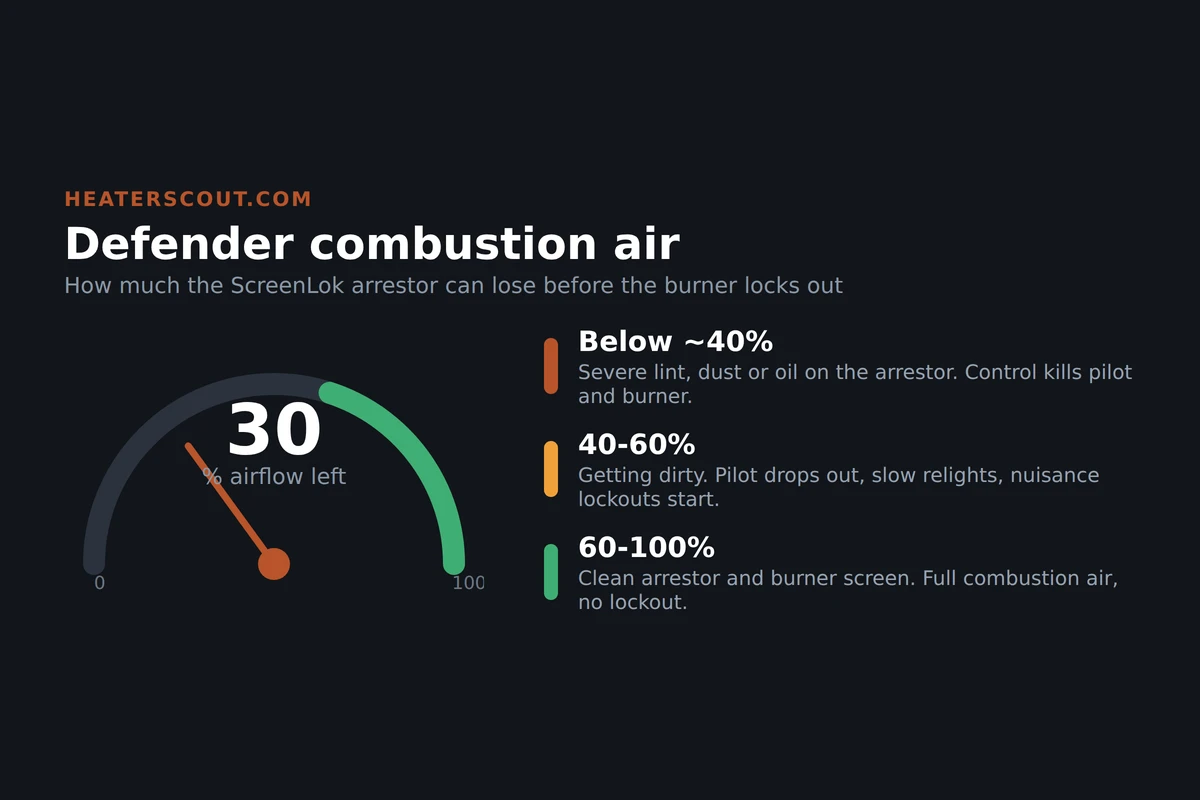
The gauge below frames the whole problem. The burner needs combustion air pulled through the ScreenLok screen. As lint and oil pack that screen, available airflow falls, and there is a point where the pilot will not hold and the control locks out. You cannot measure the percentage at home, but you can see the effect: slow relights and random lockouts mean you are already in the yellow, and a screen you can barely see light through is deep in the red.
The reset procedure, step by step
This is the full sequence for a Defender with an ICON gas valve, which is what most current units use. Do the cleaning first if the arrestor is dirty, because resetting into a clogged screen just locks out again. Have a flashlight and a long-reach lighter or the built-in piezo ready.
1. Turn the gas control knob to OFF and wait a full five minutes. This lets the resettable thermal switch and the internal control cool and clear the lockout, and it lets any lingering gas dissipate. Do not rush this. If flammable vapors were involved, ventilate the room during this wait.
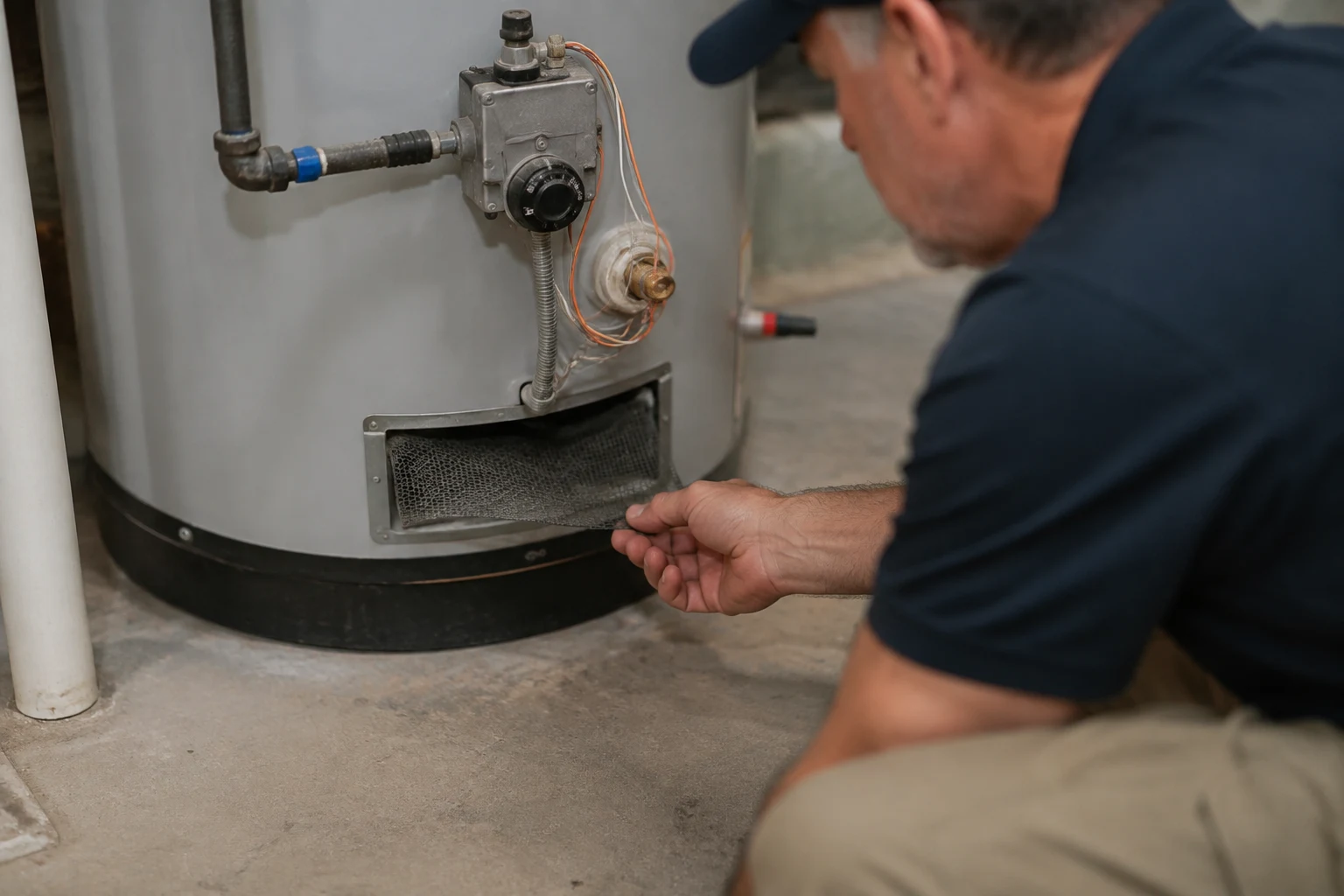
2. While it cools, clean the ScreenLok flame arrestor and burner intake screen. Use a stiff nylon brush, then a shop vacuum, and a short burst of compressed air. Clear the screen and the arrestor plate. Do not tear or bend the screen, and never poke holes in it.
3. Turn the knob to PILOT. Press the knob in and hold it. This sends gas only to the pilot.
4. With the knob held in, click the piezo igniter button up to about ten times rapidly until the pilot lights. If your unit has a viewing window, confirm you see a small flame.
5. Keep holding the knob in and watch the status LED. It can take up to ninety seconds for the LED to start blinking as the thermopile heats and the valve sees a healthy pilot. Hold until you count about the third blink, then release the knob. If there is no blink after ninety seconds, release, wait five minutes, and try the relight again from step three.
6. Turn the knob from PILOT to your temperature setting, usually the HOT mark around 120 degrees. The main burner should fire on the next call for hot water. Watch it run once to confirm the pilot and burner stay lit.
Never reset into a room with fumes
If flammable vapors were anywhere near the heater, do not reset until the room is ventilated and the source is gone. The Defender locked out on purpose. Resetting into a room that still has fumes defeats the entire safety system. This is also why code requires elevating a gas heater eighteen inches off a garage floor and keeping gasoline and solvents away from it.
Resettable switch versus one-time cutoff
People mix these two up constantly, so it is worth being precise. The Defender's primary door device is a resettable thermal switch. A nuisance trip from a clogged screen clears when you clean the cause and cycle the knob, no part needed, and that is the feature Bradford White sells against competitors. If that switch itself has genuinely failed, it is a cheap part, roughly twenty dollars, but replacing it means opening the sealed combustion chamber, so many owners hand even that to a tech.
A one-time thermal cutoff is a different animal. It is a fuse-link style device that opens permanently and does not reset. On FVIR heaters it sits in the safety chain as a backstop, so if the resettable path is defeated or a real vapor burn occurs, it takes the heater out of service until a qualified person replaces it. If your Defender will not reset no matter what you do, and the arrestor is clean and the pilot is healthy, you are likely looking at a failed safety device or a failed FV sensor rather than a nuisance lockout. That is the line where this stops being a homeowner job.
My Defender relit fine but locked out again an hour later. What now?
That pattern almost always means the cause is still present. The most likely culprit is a flame arrestor that is still partly clogged, so airflow is marginal and the pilot starves again once the burner has run and pulled the last of the loose lint into the screen. Re-clean the arrestor and burner screen more thoroughly. If it repeats on a genuinely clean screen, suspect a weak thermocouple or thermopile that cannot hold the valve open, or a marginal draft. A lockout that returns on a clean heater with a good pilot is a component fault, not something more resets will cure.
Reading the status light before you reset
The Defender's integrated thermal well and gas control includes a status LED, and it is worth reading before you cycle the knob, because a reset clears the display. A slow, steady blink is normal operation. A repeating burst of quick flashes separated by a pause is a fault code. Count the flashes through two full cycles and match the number to the chart on the heater's label.
Four flashes is the one owners hit most. It points at the thermal well temperature sensor or the gas control valve, and a frequent real-world cause is a hairline crack in the valve body that lets water reach and short the immersion sensor. You can clear a one-time four-flash by turning the knob to OFF for five minutes, but if the count comes right back, the sensor or valve has actually failed and needs replacing. The rule is the same across every code on this heater: reset once to see if it was a fluke, and if the same fault returns, stop resetting and diagnose the part.
Keeping it from locking out again
Prevention on a Defender is mostly about air. Once a year, and more often in a dusty garage or a laundry room full of lint, brush and vacuum the flame arrestor and burner intake screen. That one habit prevents the majority of the lockouts this heater ever throws. Keep the area around the base clear so the screen can breathe, and do not let a dryer vent, workbench dust, or drywall work dump debris on it.
The other half is placement. In a garage, elevate the heater eighteen inches off the floor so gasoline vapor, which is heavier than air and hugs the ground, stays below the burner. Keep the manufacturer's clearances to combustibles and make sure the space has the combustion-air openings the installation requires, because a starved closet lockout looks identical to a dirty-screen lockout. And keep flammable liquids, gasoline, paint thinner, brake cleaner, off the shelf near the water heater entirely. The Defender will catch the vapor, but the goal is to never make it work that hard.
If you clean the arrestor, run the relight correctly, keep the fumes away, and the heater still will not hold, that is your signal. A Defender that refuses to reset on a clean screen with a good pilot is not being stubborn. It is reporting a failed thermal switch, flammable-vapor sensor, thermal well, or gas valve, and that is the call for a licensed plumber or Bradford White's support line at 800-334-3393 rather than another round of resets.
Frequently asked
How do I reset a Bradford White Defender water heater?
The Defender does not have a big red push button like an electric heater. You reset it at the gas control knob. Turn the knob to OFF, leave it there a full five minutes so the resettable thermal switch on the outer door and the internal control can cool and clear, then relight. On an ICON gas valve that means turning the knob to PILOT, holding it in while you click the piezo igniter up to ten times, and keeping the knob pressed until the status LED blinks, which can take up to ninety seconds. Release after about the third blink, then turn the knob to your setting, usually the HOT mark near 120 degrees. If it lights and stays lit, the lockout was a one-time event. If it will not relight or trips again within minutes, the fault is real and you move on to cleaning the flame arrestor or calling a tech. Reset once to confirm, not over and over.
Why does my Bradford White pilot keep going out or won't stay lit?
On a Defender the number one reason is a dirty ScreenLok flame arrestor. That fine screen under the tank feeds combustion air to the burner, and in a garage or laundry room it clogs with lint, dust, and oily film. As airflow drops, the pilot starves, burns weak, and drops out, and eventually the safety system locks the whole thing down. The second common cause is a tired or dirty thermocouple or thermopile that no longer senses the pilot flame, so the valve shuts the gas the moment you release the knob. Start by vacuuming and brushing the arrestor and burner screen clean. If the pilot still will not hold after a good cleaning and a proper ninety-second knob hold, the thermocouple, thermopile, or gas valve is the next suspect.
What is the ScreenLok flame arrestor and how do I clean it?
The ScreenLok is the flammable-vapor arrestor built into the bottom of a Defender heater, a fine metal screen and arrestor plate that lets combustion air in but stops a flame from flashing back out to ignite vapors in the room. It is the heart of the FVIR design. It also collects everything floating near the floor: lint, dog hair, sawdust, drywall dust, oily mist. Clean it with the burner off and the gas at PILOT or OFF. Use a stiff nylon brush, then a shop vacuum, and a short burst of compressed air to clear the screen and the arrestor plate. Do not poke holes in it or bend the screen. A clean arrestor is the single biggest thing you can do to stop nuisance lockouts on this heater.
Does the Bradford White Defender thermal switch need to be replaced when it trips?
Usually not. The primary safety device on a Defender is a resettable thermal switch, which is the whole point of the design. When it trips on restricted airflow it can be reset by clearing the cause and cycling the gas knob, no part required. That is different from some competitor FVIR heaters that use a one-time cutoff that fuses open and forces a service call. The catch is that a resettable switch only resets if the underlying condition is gone. If you clean the arrestor, hold the relight correctly, and the heater still will not stay lit or the switch still reads open on a meter, then the switch, the flammable-vapor sensor, or the thermal well has actually failed and gets replaced. A replacement thermal switch is a cheap part, around twenty dollars, but on a real vapor event the safe move is a licensed tech.
What does the flashing status light on my Bradford White mean?
The Defender has an integrated thermal well and gas control with a status LED that reports diagnostic codes by flash count. A slow steady blink is normal. A repeating burst of flashes is a fault. Four flashes is the common one, and it points at the thermal well temperature sensor or the gas control valve itself, often because a hairline crack in the valve let water reach and short the well sensor. Count the flashes through two full cycles, write the number down, and match it to the chart on the label before you reset, because cycling the knob clears the display. If a fault count returns after a clean reset, treat it as a real component fault rather than something a reset will fix.
Can flammable vapors trip a Bradford White Defender?
Yes, and that is exactly what the Defender is built to catch. If gasoline, paint thinner, brake cleaner, or similar solvent vapors reach the heater, the ScreenLok arrestor and the thermal switch act to shut down the pilot and burner before the vapors can ignite and flash into the room. If your heater locked out right after someone spilled gas, ran a lawnmower, or painted in the garage, do not just reset it. Ventilate the space, find and remove the source, let the fumes fully clear, then reset. Resetting into a room that still has vapor in it defeats the safety. This is also why code makes you elevate a gas heater eighteen inches off a garage floor and keep flammables away from it.
When do I need to call a pro versus reset it myself?
Do it yourself when the fix is cleaning the flame arrestor, relighting the pilot, backing the temperature off, or clearing a one-time nuisance lockout after you removed the cause. Those are homeowner tasks with a brush, a shop vac, and a careful relight. Call a licensed plumber or gas tech when the pilot will not hold after a clean arrestor and a good relight, when a status code keeps returning, when the resettable switch or flammable-vapor sensor has actually failed, when there was a real vapor burn, or when the fix means replacing the gas control valve or draining the tank. Gas work and safety devices are not the place to improvise, and bypassing a tripped safety to force the burner on is the one thing you never do.